‘More important than ever’: What went wrong with OzAsia?
Between declining ticket sales and rising anti-immigration rhetoric, the closure of Adelaide’s OzAsia Festival has left some corners of the community wondering why.
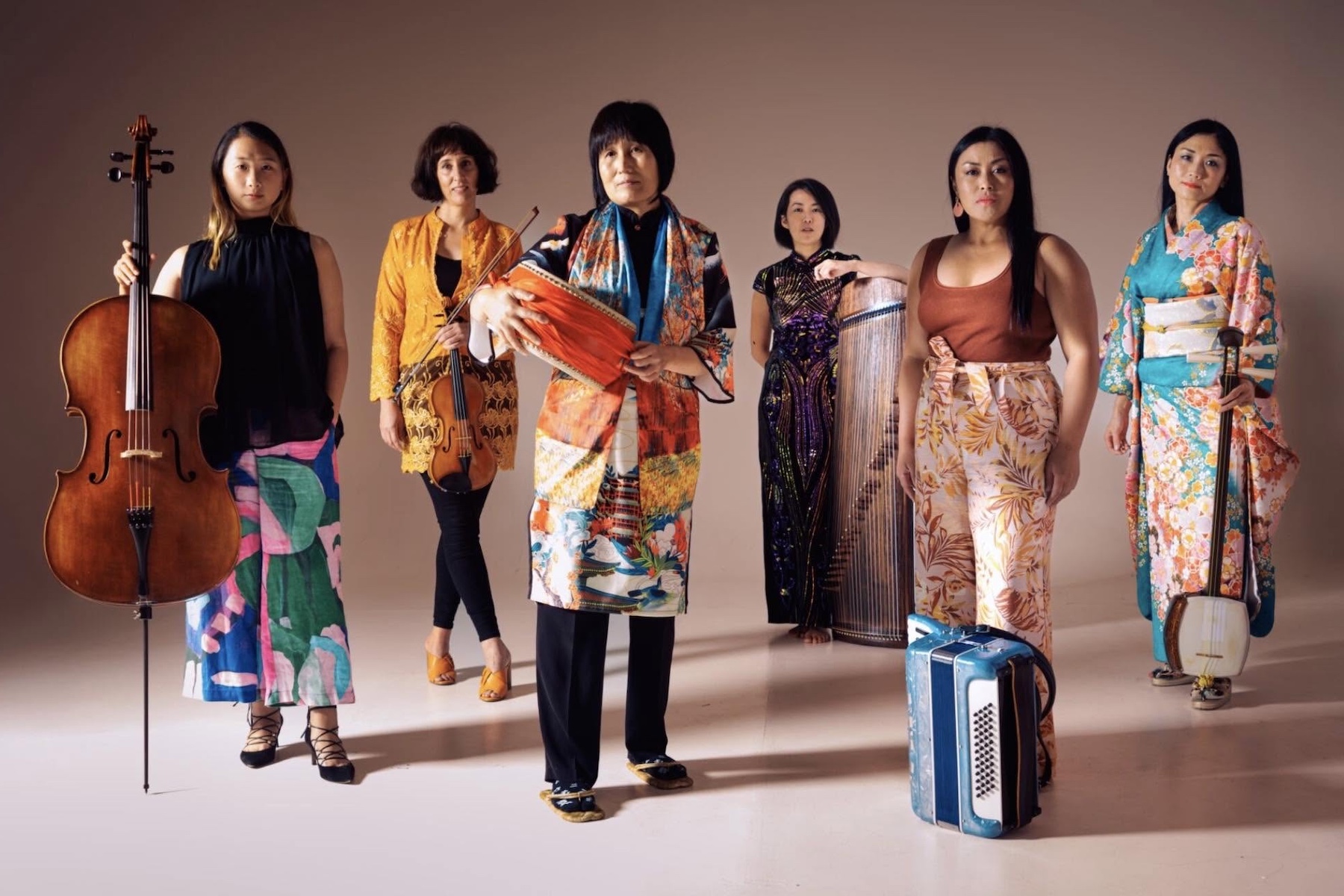
When Hyoshi in Counterpoint hits the OzAsia Festival stage this Saturday, it won’t be for the first time: this local supergroup wouldn’t exist without the festival.
The ensemble’s six members — which includes leader and percussionist Satomi Ohnishi, celebrated shamisen player Noriko Tadano, and guzheng player Zhao Liang – first came together to perform in an art exhibition as part of the 2022 OzAsia program. They were back the following year to perform an outdoor concert, and later appeared as musical guests at a farewell function for the festival’s founder, outgoing Adelaide Festival Centre CEO Douglas Gautier.
This Saturday’s concert, however, will be their last appearance at the festival, which is currently in the middle of its final season after Adelaide Festival Centre announced its 20th-anniversary year would be its last.
“It does bring us joy,” Zhao Liang tells InReview. “But also very sad times – because without a festival like that, we wouldn’t have had the chance to be commissioned, or collaborate, or really speak about culture through music.”
Liang first became involved in the festival in its second year, participating as an ambassador not long after relocating from Singapore.
“I was a young girl in town,” says Liang, who is now co-CEO of west end multicultural arts space Nexus Arts. “It’s not just music or theatre; it’s many, many genres, and so for a lot of artists, they saw OzAsia as a platform to bring their work further into the limelight.”
In August, however, the Festival Centre confirmed the 2026 OzAsia program would be its last – the second long-running festival to be scuppered as part of the Festival Centre’s new strategic direction, with Adelaide Guitar Festival also wound down last year.
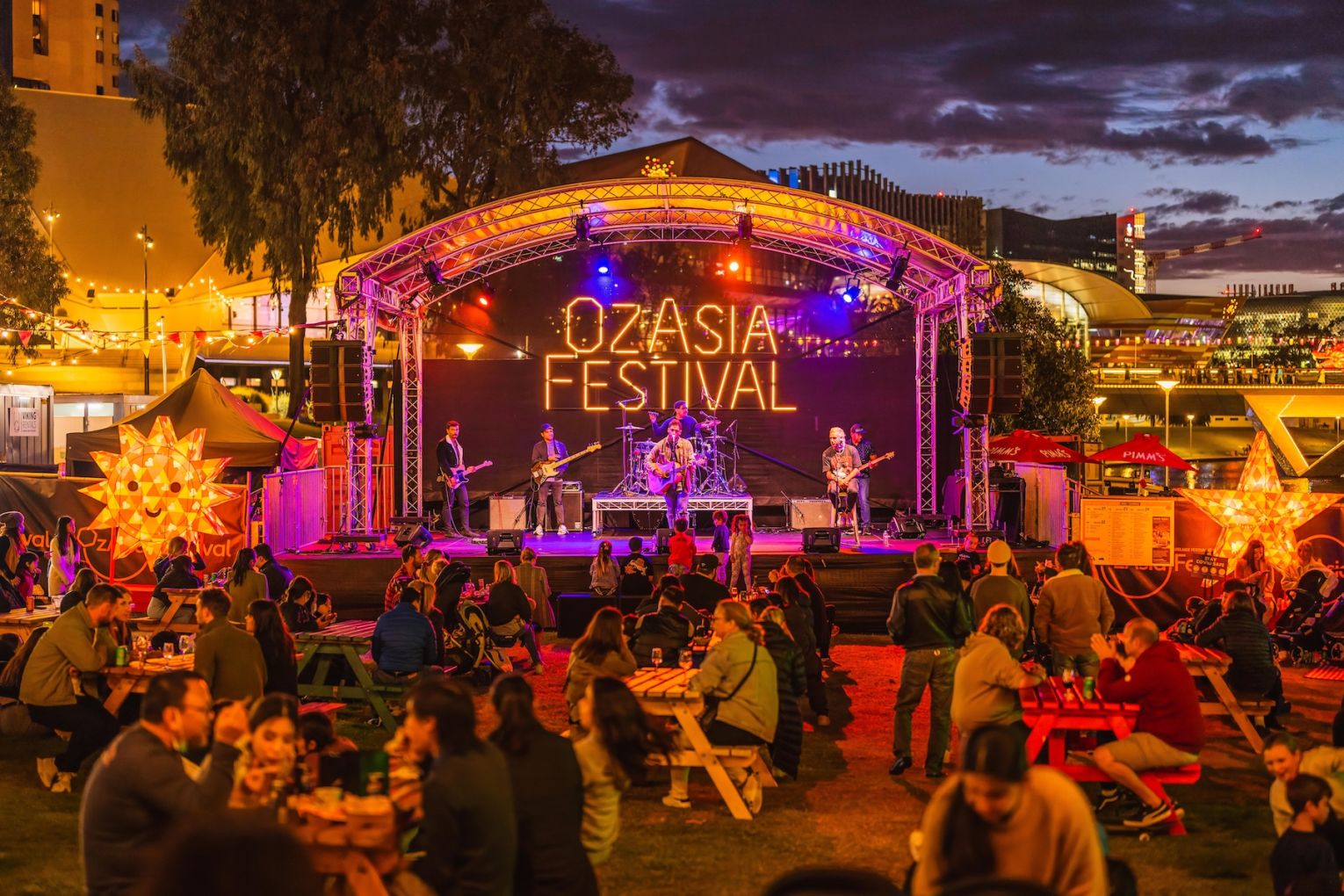
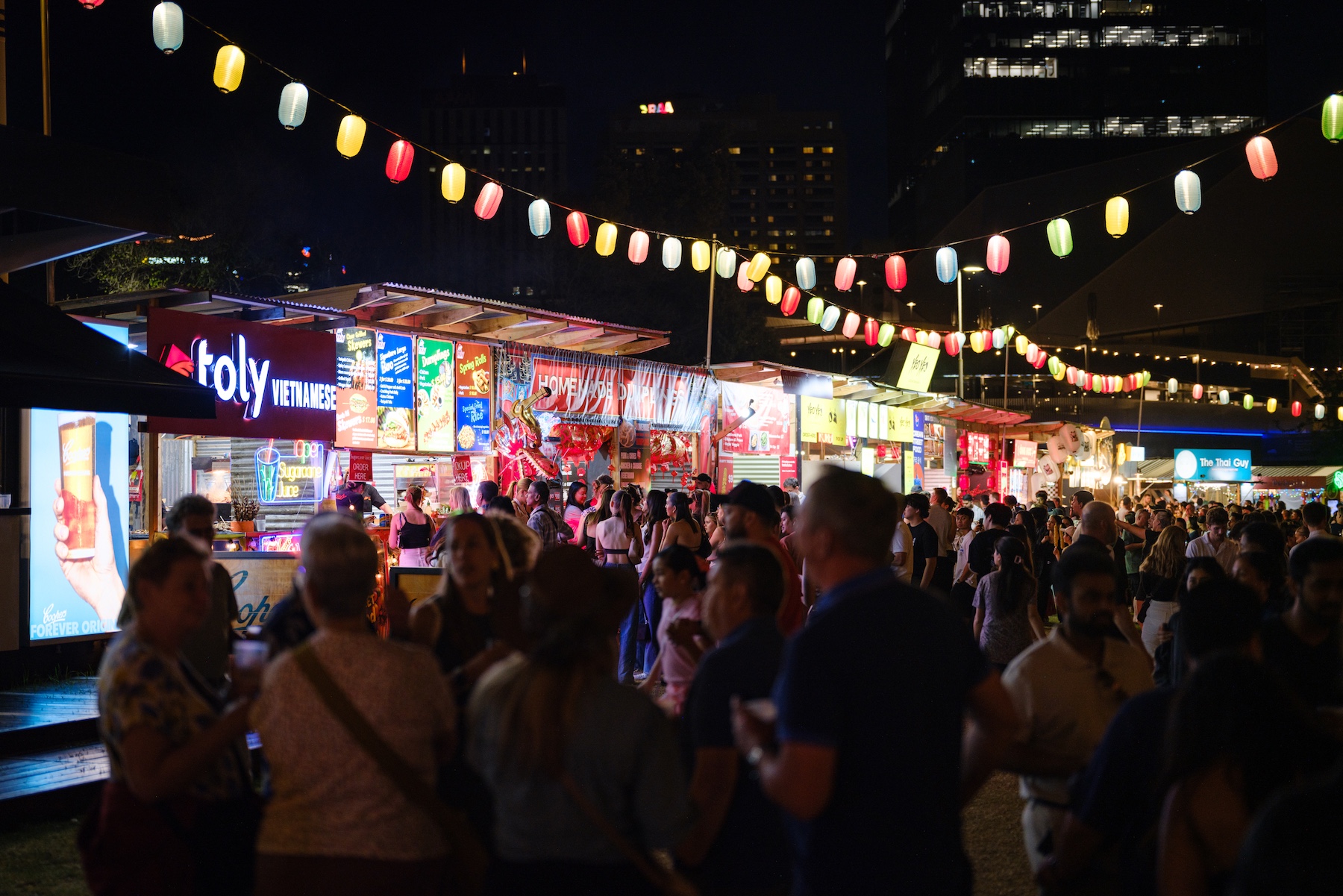
Based on publicly released data, OzAsia had maintained strong attendance figures, peaking in 2024 and 2025 at 210,000 – 10,000 above its pre-Covid record. Like many major events, however, those figures don’t necessarily equate to box office returns – for the past decade OzAsia’s numbers have also been bolstered by the popular open-air Good Fortune (2016) and Lucky Dumpling (2017-onwards) food markets in Elder Park.
You might like
A Festival Centre spokesperson has told InReview that although attendance at free community events “remained strong”, sales for ticketed OzAsia events had fallen over time.
In 2025, multimillion-dollar refurbishment works at the Festival Centre drove much of its ticketed program – from photographer William Yang’s 80th birthday retrospective Milestone to Monica Lim and Mindy Meng Wang’s Opera for the Dead 祭歌 – to alternative venues away from the crowd magnet at Elder Park.
In August, Festival Centre CEO Kate Gould told InDaily that “nothing is forever”, citing feedback from stakeholders that “having a dedicated OzAsia Festival that’s about Asian arts doesn’t really represent the fact that Asian voices also want to see a year-round presence at the centre”.
But Liang was one of many “Asian voices” blindsided by the move.
The festival’s former artistic director Annette Shun Wah, who was at the helm from 2020 to 2023, says she was also “deeply disappointed by the lack of foresight and insight that this decision shows”.
“What will be lost is 20 years of connection with local communities,” she tells InReview. “Also, 20 years of building artistic and cultural relationships within Asia. Many Asian colleagues have not yet heard about this being the last OzAsia and those who have are shocked that this window to collaboration and presentation in Australia is closing.”
“For Australian audiences it is a rare window into contemporary Asian art through which they can connect and better understand our region – what is it that amuses, angers, provokes, moves or inspires our Asian neighbours right now?”
Shun Wah says while cost pressures are always a factor in international festivals, ticket sales and budget considerations need to be considered against more intangible values.
"Audience members and participants walk away challenged, transformed and inspired. You can’t put a dollar value on that."
“Festivals provide a showcase for exceptional arts, and allow a specific context and focus for audiences to appreciate those works. Audience members and participants walk away challenged, transformed and inspired. You can’t put a dollar value on that.”
When the festival opened last week, it did so with a smaller ‘reimagined’ program, consisting primarily of free concerts at the Lucky Dumpling Market from artists including Regurgitator, Lastlings and Hyoshi in Counterpoint, the long-running Moon Lantern display, and art exhibits from Damien Shen, Sharifah Sorayya and Jake Yang.
Subscribe for updates
The literary festival Weekend of Words, curated by Sami Shah and featuring recent Miles Franklin winner Siang Lu, Benjamin Law, Nam Le, Antoinette Latouf, and Durkhanai Ayubi will also return.
For some longtime participants and punters, the timing of the festival’s closure – at a moment when migration and multiculturalism are increasingly under attack – is another sore point, coming just months after One Nation won a record vote at the March state election, followed by its leader Pauline Hanson calling for Australia to become ‘monocultural’.
“A festival focused on Asian and Asian-Australian art and culture matters even more right now, given the renewed social division around migration,” Adelaide University lecturer Boram Lee wrote in a recent op ed for The Conversation. “Anti-Asian racism was widely documented during the COVID pandemic. And we have since seen a number of anti-immigration demonstrations held across major cities, including Adelaide.”
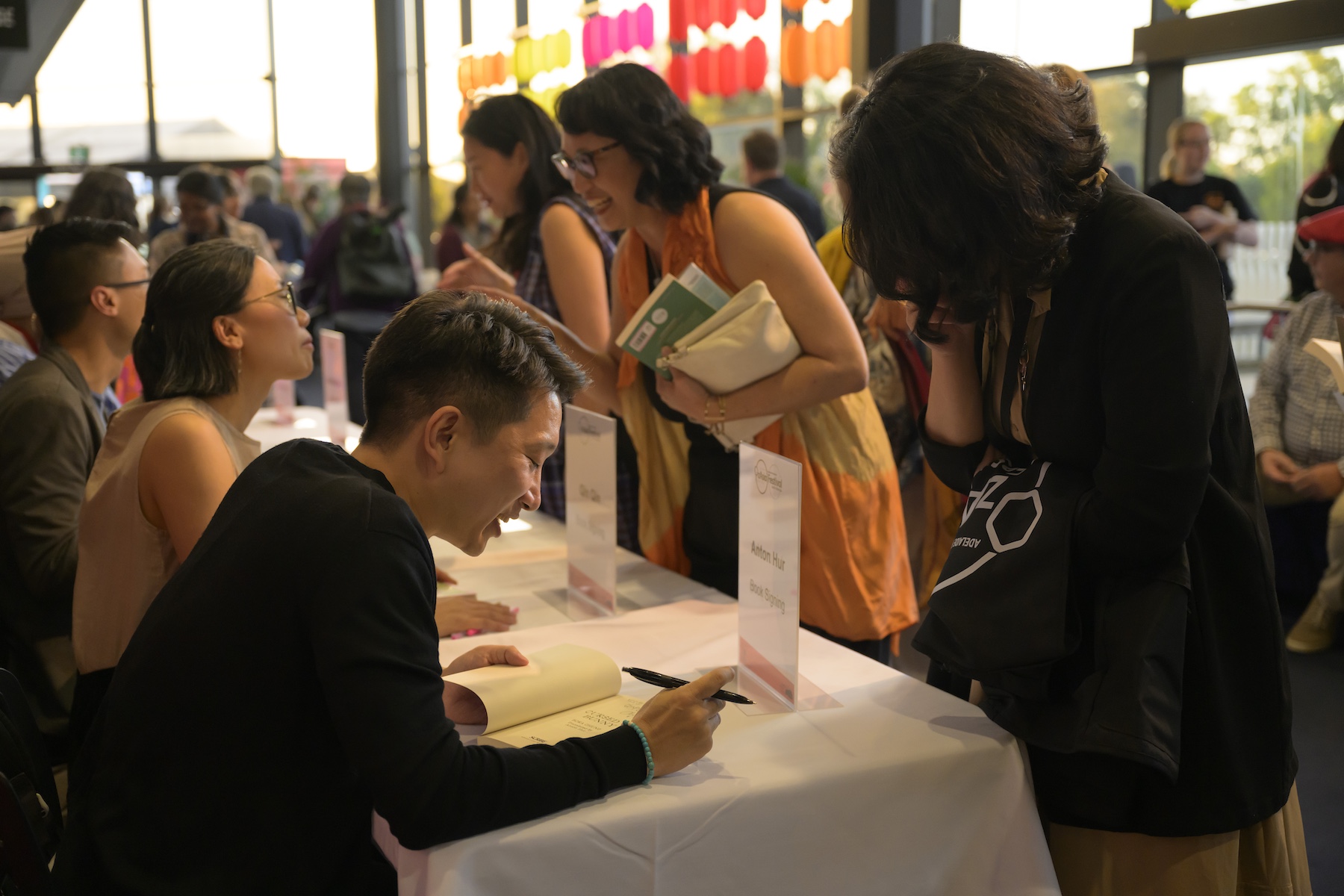
Journalist, Lamestream podcast host, and regular Weekend of Words panellist Osman Faruqi shares similar concerns.
“Festivals like OzAsia are important because of their focus on both writers and creatives from Asian-Australian backgrounds, as well as from Asia – something no other literary or arts festival in the country does,” Faruqi tells InReview.
Faruqi says the rise in far-right and anti-immigrant rhetoric has coincided with many Australian festivals and events “retreat[ing] into their comfortable and preferred default of being overwhelmingly unrepresentative”.
“That’s why festivals like OzAsia are more important than ever to ensure writers and artists who aren’t white still have platforms and places to discuss their work and ideas,” Faruqi says.
"Defunding the only arts festival in the country focused specifically on voices from Australia’s biggest migrant communities is a retrograde move, and something that Pauline Hanson would be proud of doing."
Liang has felt a similar change across her two decades spent living and working in Adelaide, and attending OzAsia.
“When I first came to Adelaide back in 2002, I felt I really had to assimilate to the culture,” Liang tells InReview. “I had to lie low, but over the years I felt like I could be true to myself, my identity.”
Liang worries that the loss of initiatives like OzAsia signals a “shying away from culture and identity”, despite the diverse reality of modern Australia.
“The biggest impact is going to be on the younger children,” she says, noting that two of her children have grown up with the festival. “They started asking me, ‘Oh wow, what is wrong with the festival? Why is it not getting celebrated anymore?’”
They will, at least, get to see Liang and her Hyoshi in Counterpoint bandmates on the OzAsia stage one last time.
“It’s a bit of a pity,” Liang reflects. “It’s just closed a doorway for us from Adelaide to international communities.”
The final OzAsia Festival program continues until November 1.
Want to see more stories from InDaily SA in your Google search results?
- Click here to set InDaily SA as a preferred source.
- Tick the box next to "InDaily SA". That's it.
Free to share
This article may be shared online or in print under a Creative Commons licence