Slava Grigoryan strikes new chord after ‘gut-wrenching’ Guitar Festival axing
Slava Grigoryan reflects on the demise of the Adelaide Guitar Festival, and his hopes to keep the spirit of guitar-playing alive in Australia.
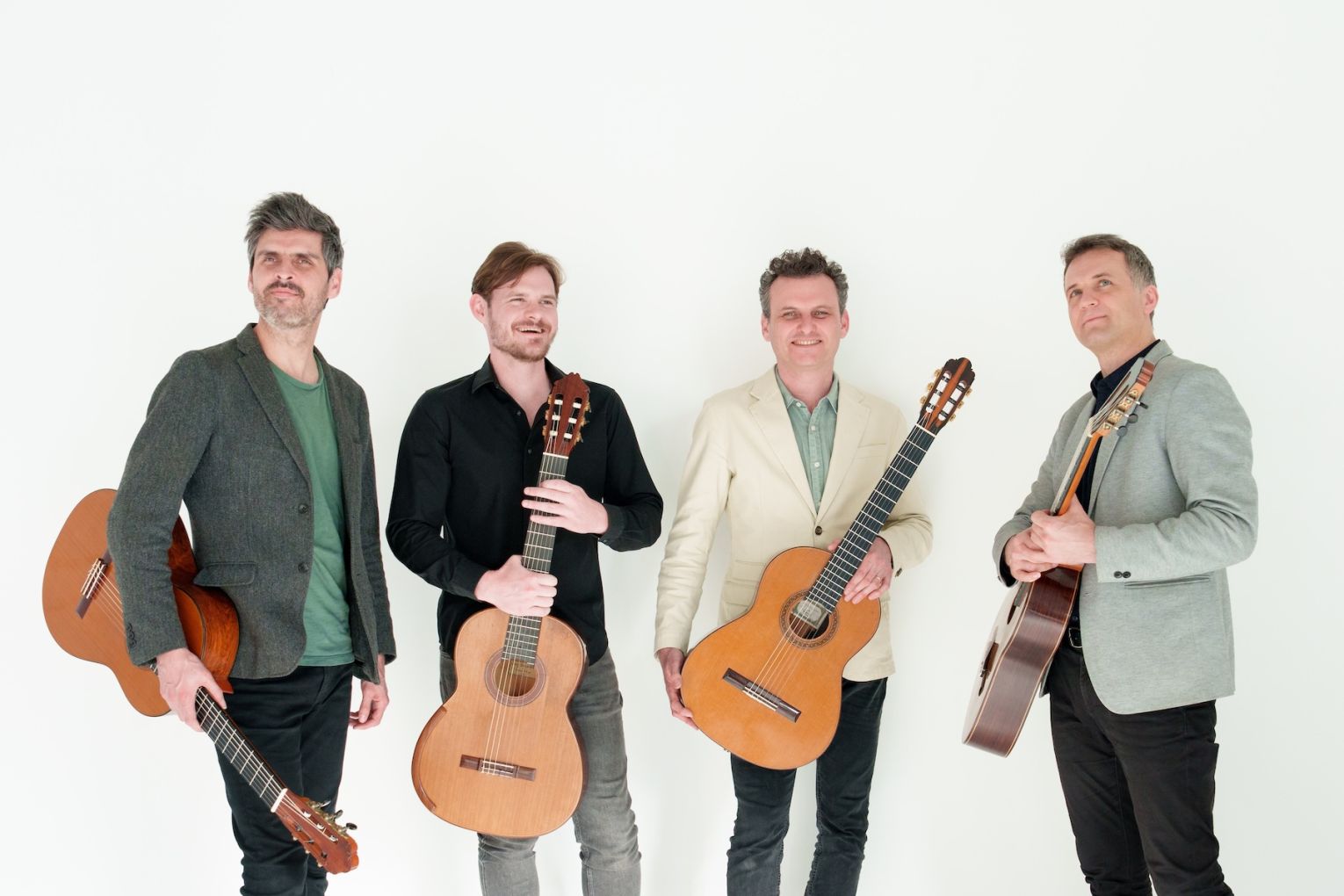
As he prepares to perform at UKARIA with the Australian Guitar Quartet, award-winning classical guitarist Slava Grigoryan is looking to the future.
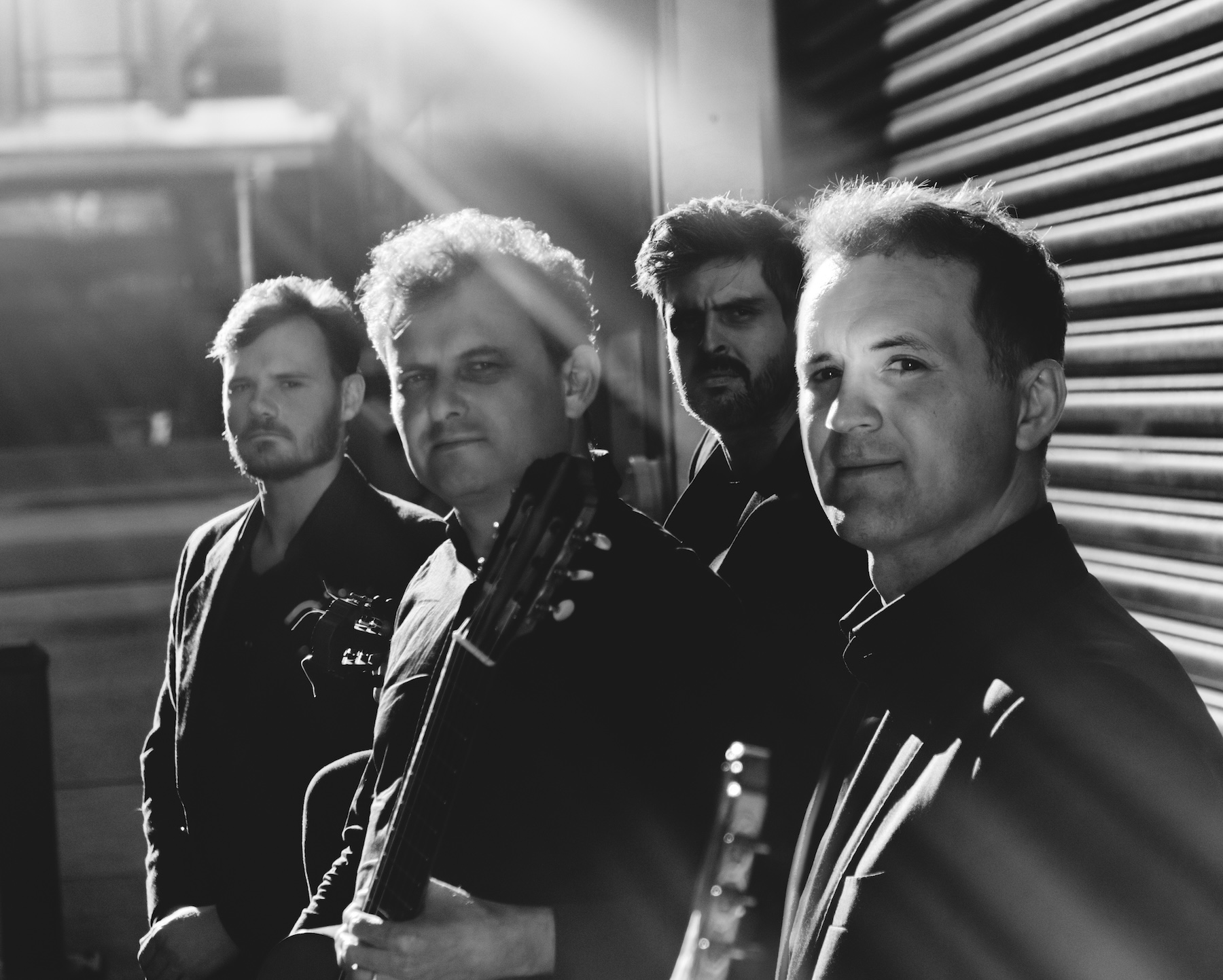
The quartet sees the 49-year-old play alongside his brother Leonard, as well as world-renowned guitarists Vladimir Gorbach and Andrew Blanch in a program that includes the world premiere of new work by Australian composer Nigel Westlake.
“We are all huge Nigel Westlake fans,” Grigoryan tells InReview. “He has contributed so much to guitar repertoire over the years but he’s written a massive piece called The Book of Fish, a six-movement piece which we received the music to about three weeks ago – and we’re all frantically learning at the moment.”
For Grigoryan, playing in a quartet is reassuringly familiar ground.
“I love playing with the quartet, I’m a serial collaborator and I don’t really enjoy playing on my own. I like playing solo pieces but I don’t like being on stage on my own, I don’t like that sort of solitary existence.
“Lenny and I were members of a guitar quartet which ended about 20 years ago called Saffire, so when this new opportunity came up to form a new quartet a few years ago it was a great platform for trying new music, commissioning new music and developing something new and interesting for Australian audiences.”
You might like
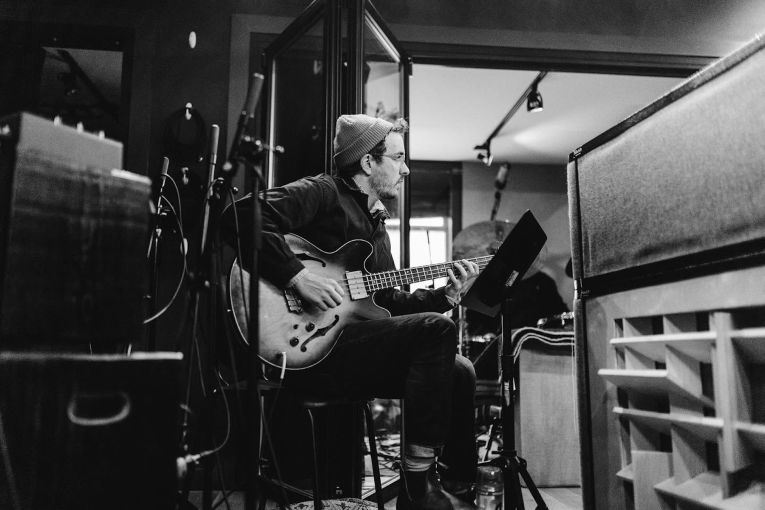
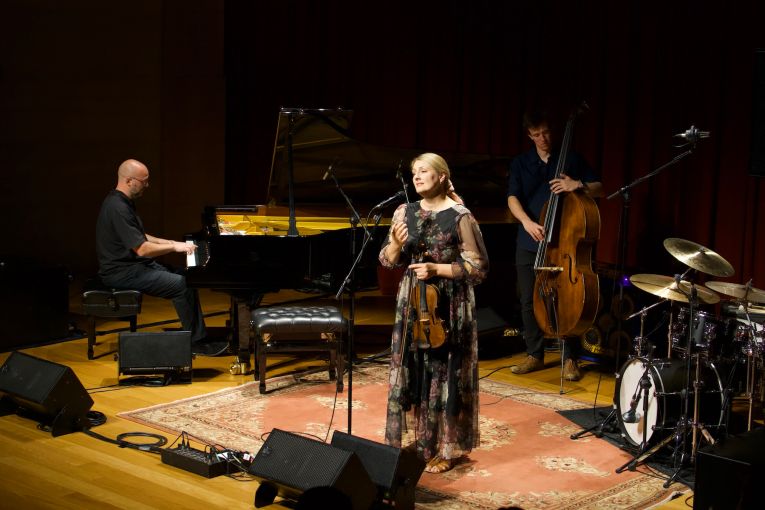
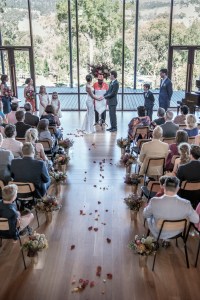
The Australia Guitar Quartet’s performance at UKARIA will also feature the 2021, six-movement composition Road to the Sun by jazz legend Pat Metheny as well as work by Brazilian guitarist/composer Paulo Bellinati. Grigoryan says he enjoys the surrounds of UKARIA, not just because it’s a beautiful and unique Adelaide Hills location with world-class acoustics – it’s also where he and wife Sharon, a classical cellist and former member of the Australian String Quartet, married a decade ago.
“Our wedding was actually the first non-concert function they had in that space,” he says. “I’ve got such fond memories of that.”
Grigoryan now has more time for collaboration and performing following the decision to retire the Adelaide Guitar Festival last November – an event he had led as artistic director since 2009.
Speaking publicly for the first time since the axing – which at the time was attributed to a “shift in strategic direction” for the festival’s presenting body, the Adelaide Festival Centre – Grigoryan says that while he understands the thinking behind the move, he had hoped for more discussion before the decision came down.
“For me, the amazing thing, the thing we really took pride in, was the fact that we balanced an incredible free program across the whole state with the ticketed program,” he says. “That was the model – and it was the ticketed program that paid for all the regional stuff, and the educational programs, the Resonance program in aged-care facilities and hospitals, all that stuff was paid for by the ticketed shows.”
Such community reinvestment, he says, made the festival seem inherently less profitable. “I guess the sad thing is that there was no conversation as to whether we could change that. So, I guess, in how it was terminated after such a long history, that for me was a big part of the shock.”
Grigoryan was appointed artistic director in 2009, two years after the Festival Centre’s then-CEO and artistic director Douglas Gautier established the Adelaide International Guitar Festival as a biennial affair. Over the subsequent decade Grigoryan broadened the scope of the festival, which went annual in 2021.
Subscribe for updates
With Grigoryan at the helm the festival attracted several big-name artists including Tommy Emmanuel, Lior, John Butler and Paco Pena, while the director also introduced the International Classical Guitar Competition, which attracted emerging players from around the globe, and expanded the festival’s educational offerings through its in-school programs, workshops and the introduction of the Adelaide Guitar Festival Orchestra. Some of the Guitar Festival’s initiatives, such as its On The Road regional program, will continue in 2026 as part of the Festival Centre’s ongoing programming.
Grigoryan says he also had to contend with base funding that remained stagnant, even as the festival’s ambitions grew.
“The funding was exactly the same every single year, it didn’t change even though it went from being a four-day festival biennially to almost a month-long festival every single year,” Grigoryan says. “We were doing that off exactly the same grant that we were given in 2008, and we were applying for other funding every year and relied on grants from local councils and from federal arts funding as well.
“So that kind of helped, but essentially whatever the ticketed shows were, that was the income that helped pay for everything else. I also think it’s important to point out that every one of our budgets was approved before each festival and we never had a short fall. The entire Guitar Festival team was very proud of that fact.
He says that while he understands that change is inevitable, particularly following Gautier’s departure, he worries the move reflects a broader shift across the arts world as economic demands create a growing “corporatisation” – where programs without a clear revenue base are “perhaps seen as a waste of time”.
While Grigoryan says the axing of the festival is “gut-wrenching” for the guitar community of South Australia and beyond, he’s grateful for what the festival was able to provide.
“For me, I’ve got so many different ways of looking at it. From a personal perspective, in terms of my own kind of history, and the length of time that I was involved, every part of it was wonderful, and I feel so blessed to have had that experience and I miss it tremendously. It was just great,” he says.
“Once the dust settles, there’s a huge audience and, more importantly, an incredible amount of young musicians and students who don’t have anything to fall back on and look forward to – we’ve had quite a few generations that have grown up with this festival, and there is literally nothing like this on the Australian landscape anymore and something needs to change.”
For now, at least, Grigoryan can be reassured that the appetite for guitar music is still out there – the Australian Guitar Quartet’s upcoming UKARIA concert has already sold-out.
“There’s a strength to Australian guitar music that’s kind of celebrated everywhere,” Grigoryan reflects.
The Australian Guitar Quartet will perform at UKARIA Cultural Centre on Sunday March 22
Want to see more stories from InDaily SA in your Google search results?
- Click here to set InDaily SA as a preferred source.
- Tick the box next to "InDaily SA". That's it.
Free to share
This article may be shared online or in print under a Creative Commons licence