Music review: Leonkoro Quartet
Making their Australian debut, the Berlin-based Leonkoro Quartet boasts a musicality beyond their years and a technical finish second to one.
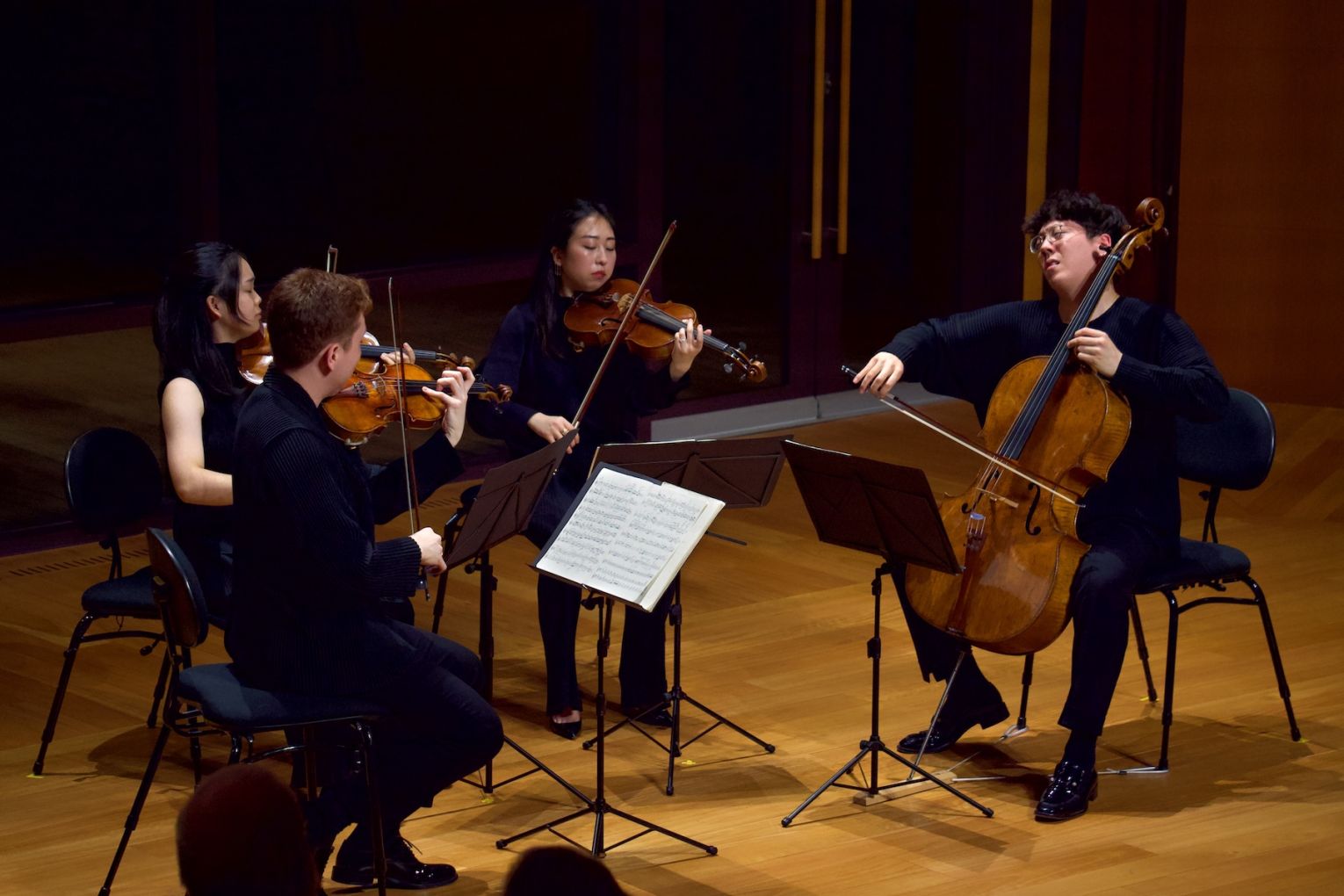
The appearance of Leonkoro Quartet at UKARIA was one of the more talked about chamber music events of this year. Having earned a fistful of awards since they began in 2019, including first prize and nine special prizes at London’s Wigmore Hall, this young, high-profile group from Berlin has gained a reputation as the ascendant new string quartet in recent years.
And the more intriguing thing about them was to learn that their ethos is to perform “everything in the moment”. What that amounted to was one of the many intriguing aspects of their Australian debut – though one hoped that here wasn’t just another lean and brittle-sounding group of speed demons.
No, the verdict was unqualified: Leonkoro were wonderful.
To say their playing was technically flawless was only part of the story, and that hardly came as a surprise given their level. In musical measures, this group possessed unique qualities: they were affectionate, tightly woven, and intimately involving.
Their weekend appearances at UKARIA also included Beethoven’s extraordinary seven-movement Op. 131, but one of the severest tests of any quartet was nevertheless to perform Schubert’s Death and the Maiden on the preceding day. At the pinnacle of the composer’s string quartet output, this work steps into treacherous waters on account of its personal trajectory as well as its outward scale.
You might like

The qualities that these young Berliners brought to Schubert felt intrinsically right.
Something of an obstacle course lay in the way first, though. Two other quartets lay in wait. First was a rarely heard piece by the early 20th-century Dutch-Jewish composer, Henriëtte Bosmans. Colouristic like Debussy and Ravel, it called for a special sensitivity toward sound well beyond the notes themselves.
Here was the opportunity to enquire into what Leonkoro are about as a group. They are most finessed. Contained and closely blended, their sound was not as forceful or expansive as one may be used to hearing from other top-tier quartets, but their playing especially satisfies at an interior level. This dreamily expressive piece by Bosmans could not have been played better.
One admired how all four musicians work together ‘invisibly’ to craft a highly blended core of sound. An exception is the cellist. The very dynamic young Lukas Schwarz can leap out in an instant where the others are content to stay inside the fabric of the music. All groups have their own dynamics, but this young man has a charisma and force that lends Leonkoro a very physical energy.
Subscribe for updates
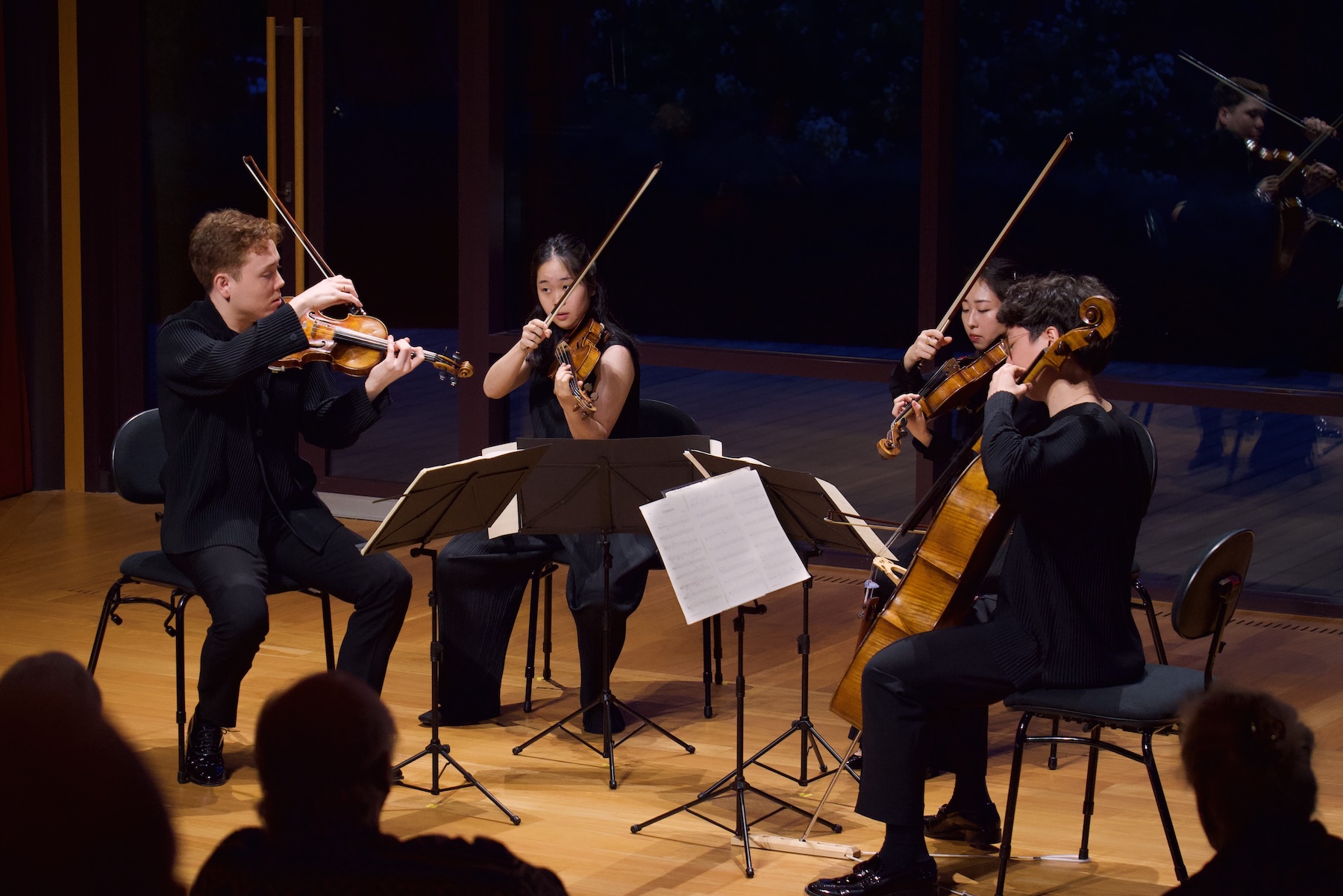
Not that he ends up overbalancing the others. His elder brother, Jonathan Schwarz, is a most exquisite first violinist. Composed, poised and balanced, his musicianship actually supplies most of this quartet’s distinctiveness.
One could simultaneously study and enjoy what he does in Mendelssohn’s String Quartet No. 2 in A minor, Op. 13. Not only does Jonathan Schwarz boast a wide sonic palette: he also has the finest judgement as to how to apply it. Generally, this young violinist plays with elegant understatement, using a tapered bowing shape and a very beautiful vibrato that warms up some notes while leaving others flat and clean. Together, this makes his playing conversationally alive and ‘well mannered’.
The Mendelssohn was a joy thanks to his natural gift with melody and the group’s immaculate blending of sound.
All boded well for Schubert in the second half, although his Death and the Maiden String Quartet, No. 14 in D minor quite obviously demands a whole lot more. Not only does it require great maturity, but its strident dynamics – especially in its harsh opening fortissimo chords – mean that players need to resist the temptation to give it a sleek, ultra-modern edge.
Leonkoro were razor clean and quick, but not brutal. Expressively strong but contained, they allowed lyrical line flourish. That was the best news, and one quickly began to love their performance for its judgement and architectural thinking.
Coached to a high level (by the Alban Berg Quartet’s Günter Pichler, who tragically died recently in a car crash), are a model of discipline. They maintain the strictest tempo. Without really noticing it, this helped with the inexorable feeling of a narrative that underpins Death and the Maiden, starting with the song that gave birth to it: Schubert’s lied of the same name, from seven years before, deals with very personal subjects of mortality.
Cruelly in that song, death becomes a friend. One felt this carried over to Schubert’s second-last string quartet. Deep tensions underscored Leonkoro’s performance through much of it staying sweet and restrained, heightening its internal sense of struggle.
The other two members of this group, violinist Emiri Kakiuchi and violist Mayu Konoe are keenly interesting players as well. Where Schubert writes almost orchestrally for the quartet medium, being ‘inner voices’ just won’t do. These two musicians’ ability to flesh out a full string texture while simultaneously staying unified within it, was another great pleasure to witness.
Based on Leonkoro’s Schubert program on the Saturday, the conclusion was clear. This group has acumen and polish of the highest order. The extraordinary thing is how young they are: one of its members had turned 20 only days earlier. Already a force of reckoning, one can only look forward to hearing them again.
Leonkoro Quartet performed at UKARIA Cultural Centre on May 2
Want to see more stories from InDaily SA in your Google search results?
- Click here to set InDaily SA as a preferred source.
- Tick the box next to "InDaily SA". That's it.
Free to share
This article may be shared online or in print under a Creative Commons licence