Adelaide Festival review: El Niño – Nativity Reconsidered
Originally presented at the 2002 Adelaide Festival, John Adams’ ‘nativity oratorio’ makes its return in a more intimately powerful and spiritually attuned incarnation led by soprano Julia Bullock.
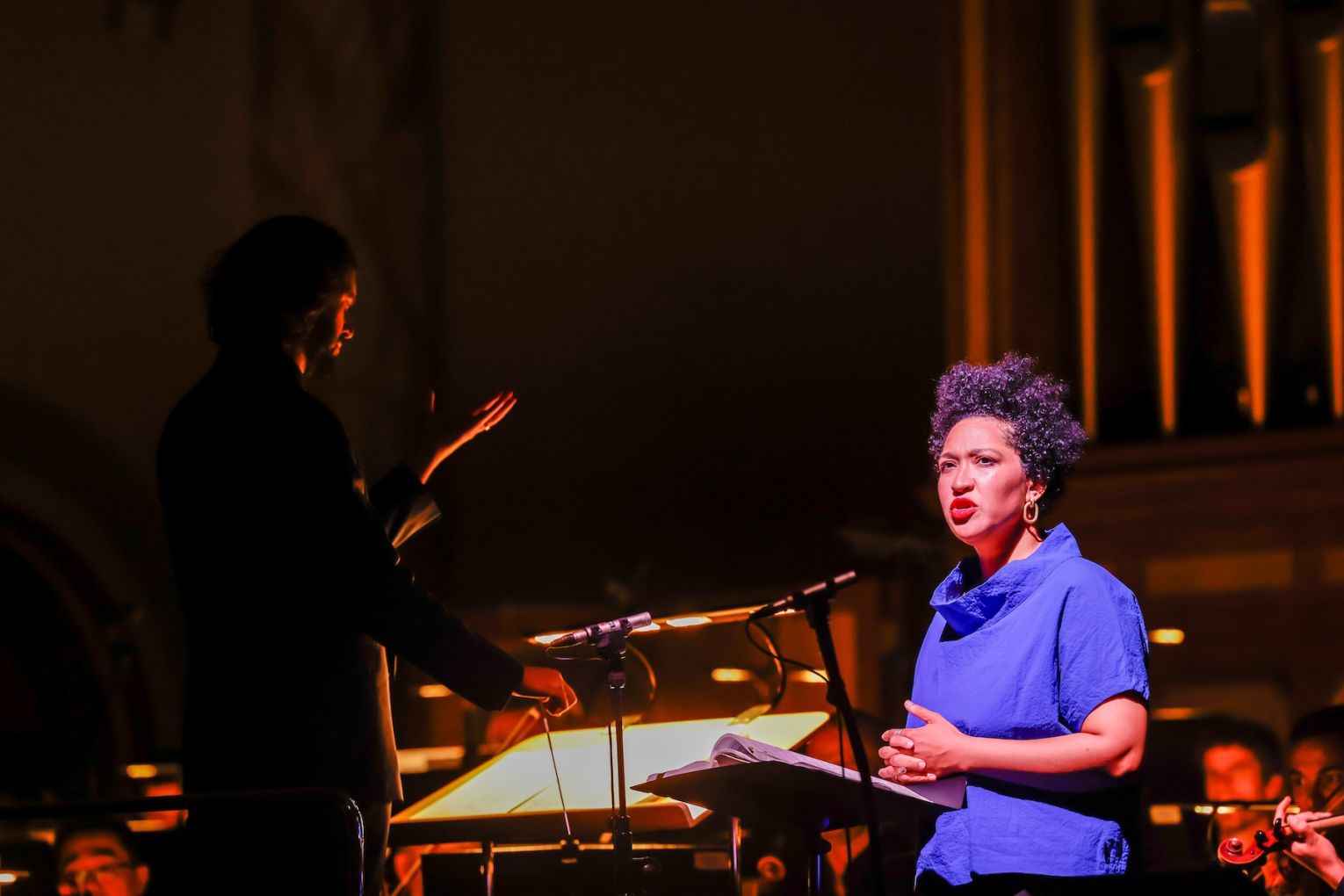
After Julia Bullock’s much praised performance in Perle Noire: Meditations for Joséphine, interest turned to seeing what this renowned American soprano would be like in John Adams’ El niño.
It turned out that there was a lot to unpack, especially if one had seen this work all the way back in Peter Sellars’ 2002 Adelaide Festival and sought to trace similarities with this ‘reconsidered’ version by Bullock and conductor-arranger Christian Reif.
What is clear about El niño is that it possesses a spiritual power and beauty that owes directly to the biblical themes that Adams has embraced.
Translating as “little boy” or Christ Child, it can fairly be described as his ‘nativity oratorio’, consisting of a series of scenes or meditations centred on the birth of Jesus as told in the Gospels. Of particular interest is how the range of texts El niño draws on is vast: there are lines of verse and prose from Hildegard von Bingen, the Wakefield Mystery Plays, Martin Luther and a clutch of twentieth-century Hispanic women writers.
Sellars, as a long-time colleague of Adams, brought all this textual material together to create a libretto that speaks across the ages.
El niño can in fact be performed as an opera, but the performance given here in 2002 was a concert version accompanied by a controversial but nonetheless beautiful film by Sellars presenting prosaic, grainy images of contemporary urban America: one scene showed the boy child’s birth in a parking lot.
You might like
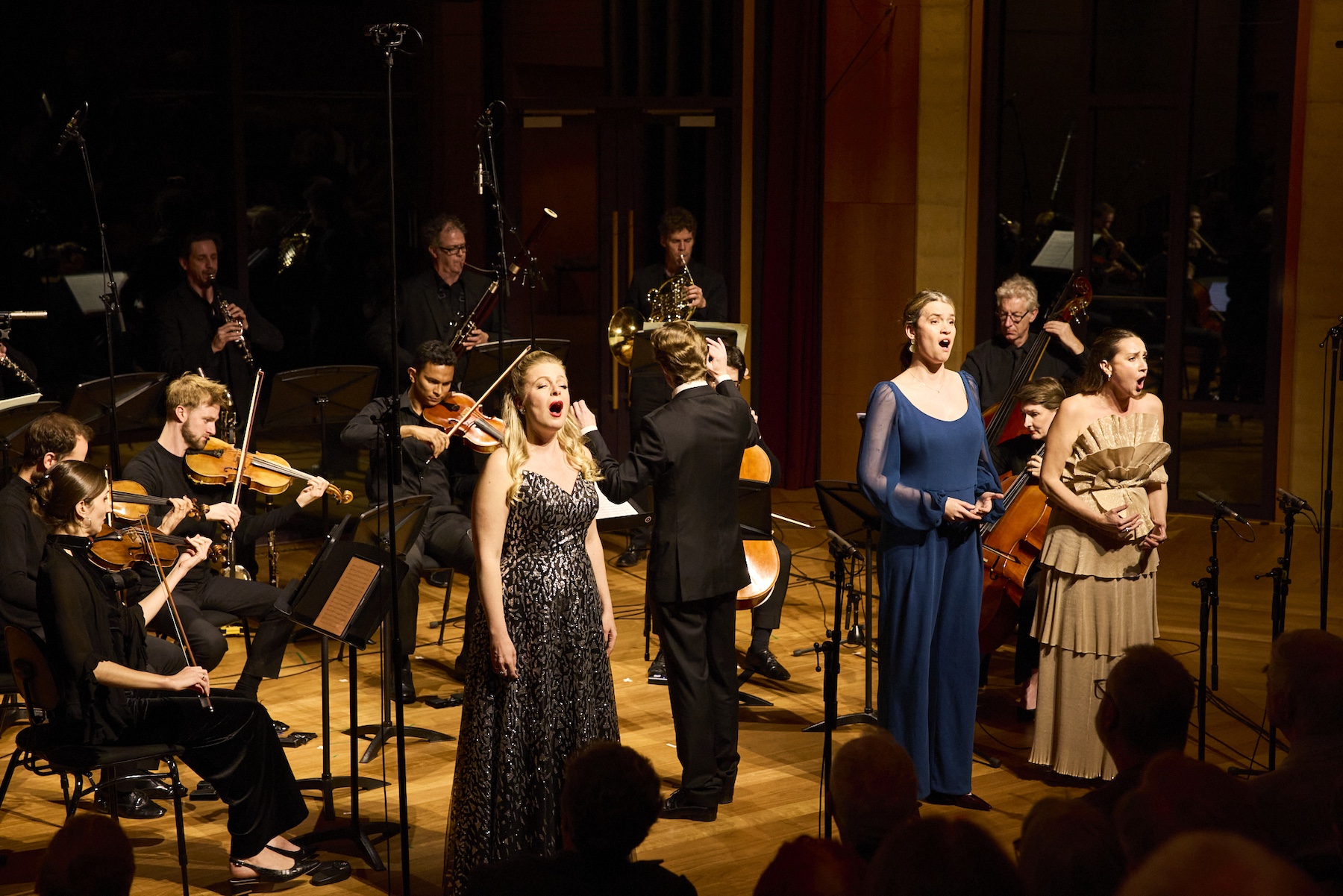
Bullock has produced, with Adams’ blessing, a condensed concert version of this work that succeeds in giving it a more spiritually attuned focus.
At the heart of El niño is a maternal voice. Many of its texts relate a female perspective, and in Adams’ music we hear and feel these as it surveys experiences of pregnancy, motherhood and emotional empathy.
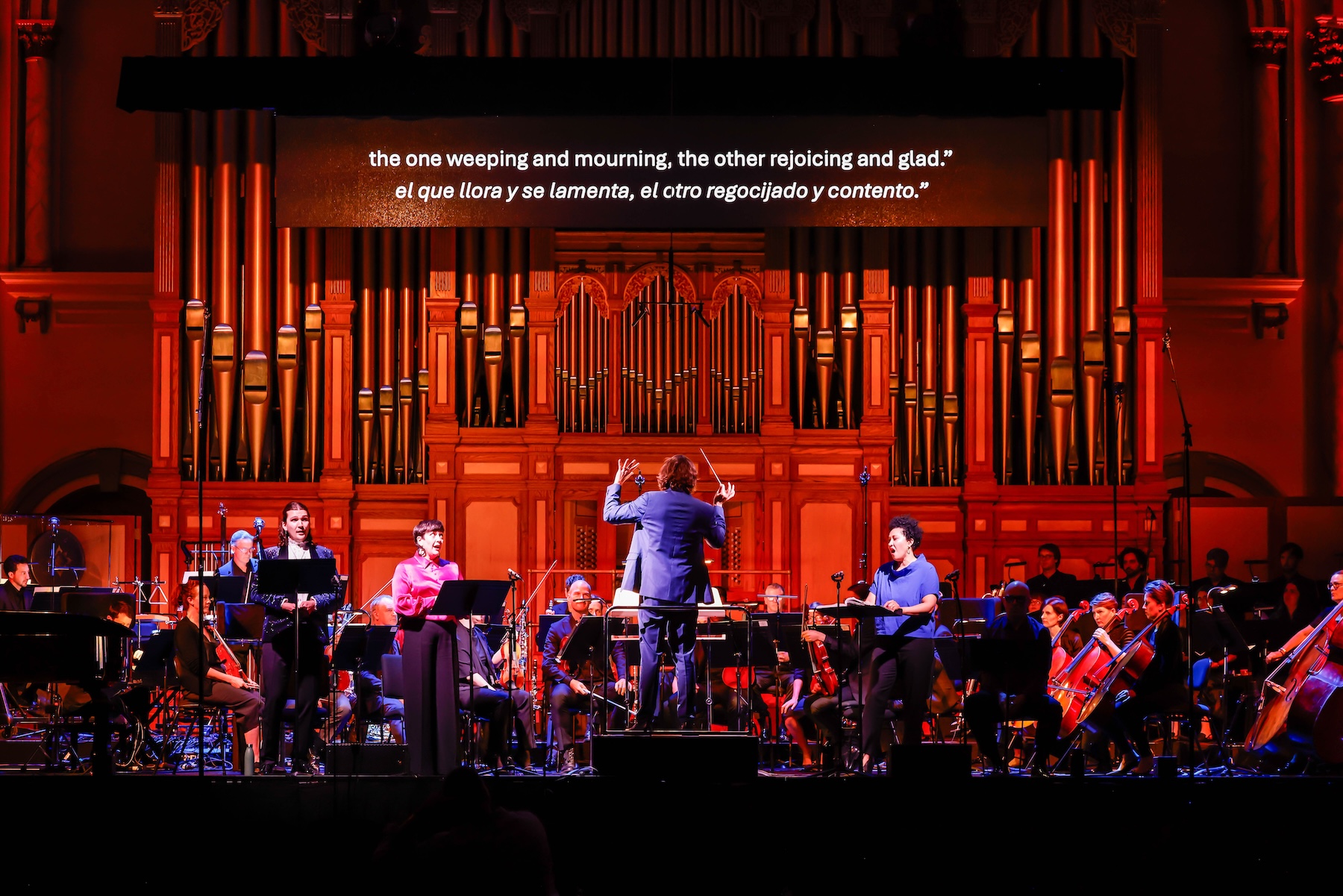
Particularly we hear the voice of Mary, whose perspectives have been all but ignored in two thousand years of male-constructed Biblical history.
This is where Bullock makes her singular contribution. With her round, warm vocal colour and intense communicative ability, she brought humanness and realism to her portrayal of Mary.
It began in ‘Talk of Gabriel’, where verses by the 20th-century Mexican poet Rosario Castellanos confess the pain, solitude and longing that accompany motherhood, contrary to all societal expectation.
Subscribe for updates
El niño explores far and wide. Later, it moves into the political arena, and this is when Bullock gave her most emotive performance. Almost sobbing, she more lines by Castellanos from the poem ‘In Memory of Tlatelolco’. This describes the massacre that took place in the 1968 student uprising in Mexico but how news outlets took virtually no notice.
El niño appeals to social justice at this point, and a degree of confusion arises between its maternal and political voices. How they might marry up is left unsaid, leaving it up to the individual to think about it. Perhaps that is the point; Adams opens up a wide introspective space where reflection prevails.
Simultaneously, as a cultivator of the ‘beautiful sounds’, Adams’ score is radiantly melodic but disrupted by unexpectedly violent rhythms.
This happens most of all in ‘Shake the Heavens’, where baritone Simon Meadows as Joseph vents in full fury at discovering Mary’s pregnancy. He stabs the air in off-beats that strike a note of pure terror as well as anger. El niño explores emotional chaos in fullest degree here through the figure of Joseph.
In this more compact version, we had a quartet of soloists who took on a multiplicity of roles. Mezzo-soprano Margaret Plummer and countertenor Austin Haynes were also excellent.
Missing, however, were the trio of countertenors that we had in 2002 and make El niño so distinctive in its sound. Haynes did well though in conflating the Three Wise Men into one.
Orchestrally, it was thinned right down as well, to just over two dozen players. Reif has done a fine job of concentrating the sonority to a combination of strings, winds, synthesiser and guitar. It enhances the work’s intimacy. Here in Adelaide for this performance, he conducted a group of Adelaide Symphony Orchestra musicians and the Adelaide Chamber Singers with great authority.
It was a wonderful performance even if El niño remains a confusing work in some respects. Adams has said how “I always wanted to write my own Messiah” – and took that work as his inspiration. Yet where Handel conveys a simple message, this modern reincarnation presents us with a set of imponderables.
Certainly, if looking for uplifting sentiment, one is in for a shock when jarring discords and rhythms erupts in Adams’ score. Apparently, the parallel between El niño and the cyclical weather pattern of the same name is thoroughly intentional. The boy child has been reinterpreted in this work as a force of nature whose appearance in the world precipitates ‘miraculous’ unpredictability.
For sure, a work like this is going to reflect where society has headed since Handel’s time. El Niño is a very twenty-first century work in which uncertainty reigns. Its wide emotional oscillations stand in the face of simple explanation.
All we can say is that it felt as powerful this time around as it did in 2002, only more so. In this distillation, its strenths have become stronger.
El Niño: Nativity Reconsidered was performed at Adelaide Town Hall on March 12 as part of the Adelaide Festival

Want to see more stories from InDaily SA in your Google search results?
- Click here to set InDaily SA as a preferred source.
- Tick the box next to "InDaily SA". That's it.
Free to share
This article may be shared online or in print under a Creative Commons licence