Peter Sellars makes Adelaide Festival return: ‘I hope I am coming back as an old friend’
Nearly a quarter century since his own tenure as Adelaide Festival artistic director was controversially cut short, Peter Sellars reflects on his onetime home and the timely body of work he is bringing to the 2026 festival.
It has been 24 years since I last spoke to Peter Sellars and, at that time, both he and the Adelaide Festival were facing considerable trouble.
The original 2002 program had collapsed as its ambitious community-based projects ran out of money, momentum, and management. Sellars resigned and a hastily cobbled, but in many ways intriguing, patch-up was announced. There was blood in the water by then, however, and the bewildered audience either stayed at home, or hightailed it to the Fringe.
The great sadness at that time – and even more now, as I reflect on it – was that there was never any opportunity to fully recognise and celebrate what a remarkable, accomplished, and original artist Peter Sellars is.
We had already seen, in Rob Brookman’s 1992 festival, his masterwork, the opera, Nixon in China, the most celebrated of many brilliant collaborations with US composer John Adams, including The Death of Klinghofer, Dr Atomic, and The Gospel According to the Other Mary.
Even with his earliest works while at Harvard, Sellars approached classic works with energetic invention: Handel’s Orlando set in outer space; a Mikado in modern day Japan; and the Mozarts – Cosi fan Tutti in a diner in Cape Cod, Don Giovanni set in New York’s Spanish Harlem, and The Marriage of Figaro (in 1988) located in an apartment in Trump Tower. Other memorable works at that time included his brilliant Handel oratorio Theodora, about a Christian martyr put to death (in his version, by lethal injection), and an intriguing recreation of Brecht and Weill’s Seven Deadly Sins.
Since that time his career has continued to flourish and expand. He has collaborated with composer Kaija Saariaho whose opera, Innocence, was the highlight of last year’s festival. Other Sellars productions include Desdemona, with novelist Toni Morrison and Malian singer Rokia Traore, a concert staging of Pelleas and Melisande with the Berlin Philharmonic, and Flexn featuring choreographer Reggie Gray and 21 flex Hip Hop dancers in New York City.
"There’s a lot going on with Planet Earth at the moment but that’s when the best art is most frequently made – in the most difficult times. As artists we have our job description in front of us."
He has been artistic director of New Crowned Hope, a month-long festival in Vienna gathering artists from diverse backgrounds together to develop new works in celebration of Mozart’s 250th birthday. In 2016 he was appointed musical director of the Ojai Music Festival in California celebrating its 70th anniversary. Sellars is a Distinguished Professor at UCLA, a curator at Telluride Film Festival and has had residencies at English National Opera and the Berlin Philharmonic. He has gathered awards – the MacArthur Fellowship, the Erasmus Prize for contributions to European culture and – wait for it – The Lillian Gish Prize for “outstanding contribution to the beauty of the world and to mankind”.
All these laurels, and he is still not resting. I spoke to him from Los Angeles a few days into the new year and he was already full speed ahead.
You might like

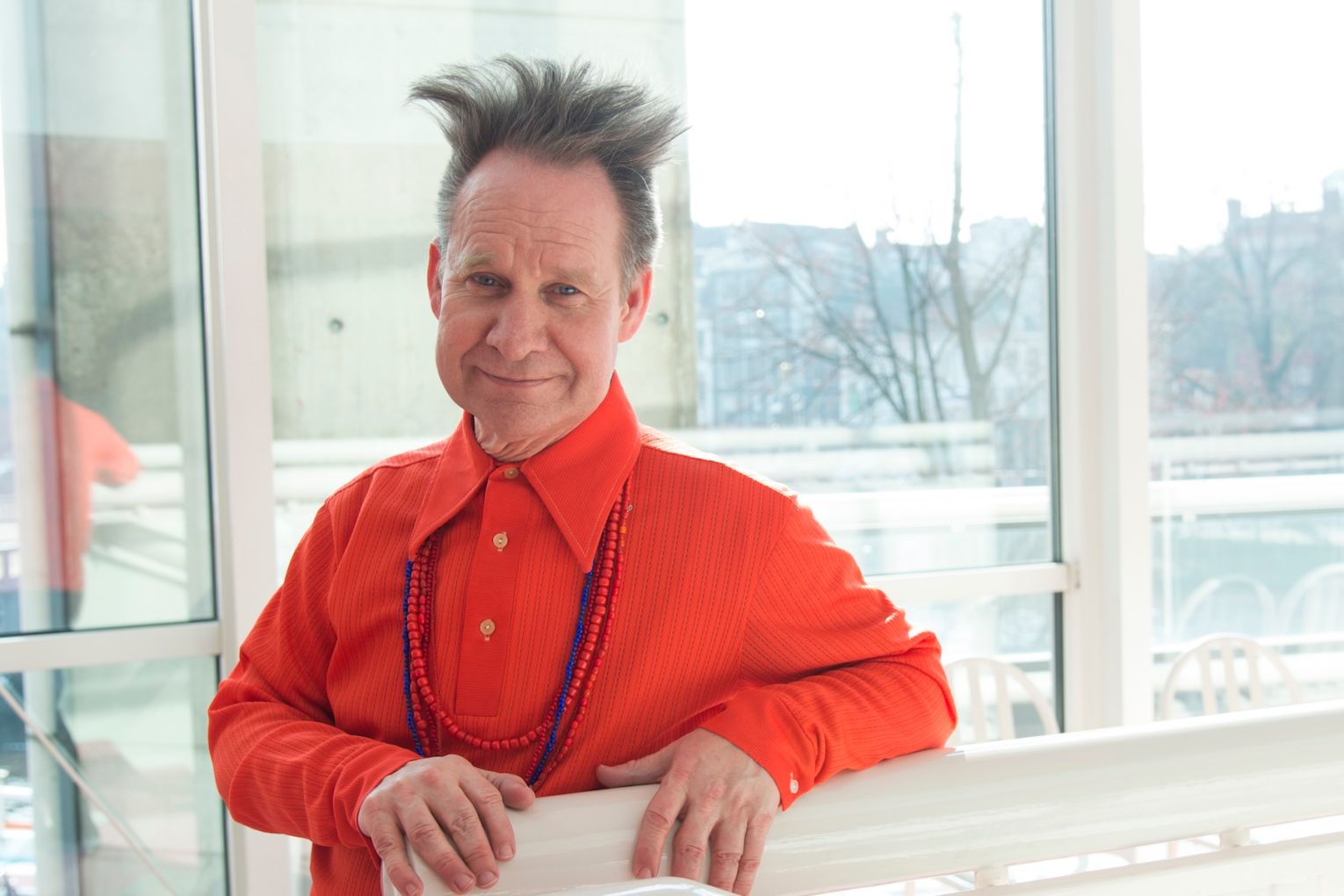
Bristling with energy and always articulate, he is unchanged by the years. He still wears his ceremonial beads and tightly buttoned shirts with sleeves down to the knuckles. His hair still stands in vertical spikes like antennae communing with the spheres, or maybe, touchpapers for a new cascade of creative pyrotechnics. His charm and fascination remain agreeably evident. Asked how he feels about returning to Adelaide, his response is instant.
“It’s a great thing and the works I am bringing are very good pieces so I am in a very good mood,” Sellars says. “There’s a lot going on with Planet Earth at the moment but that’s when the best art is most frequently made – in the most difficult times. As artists we have our job description in front of us.”
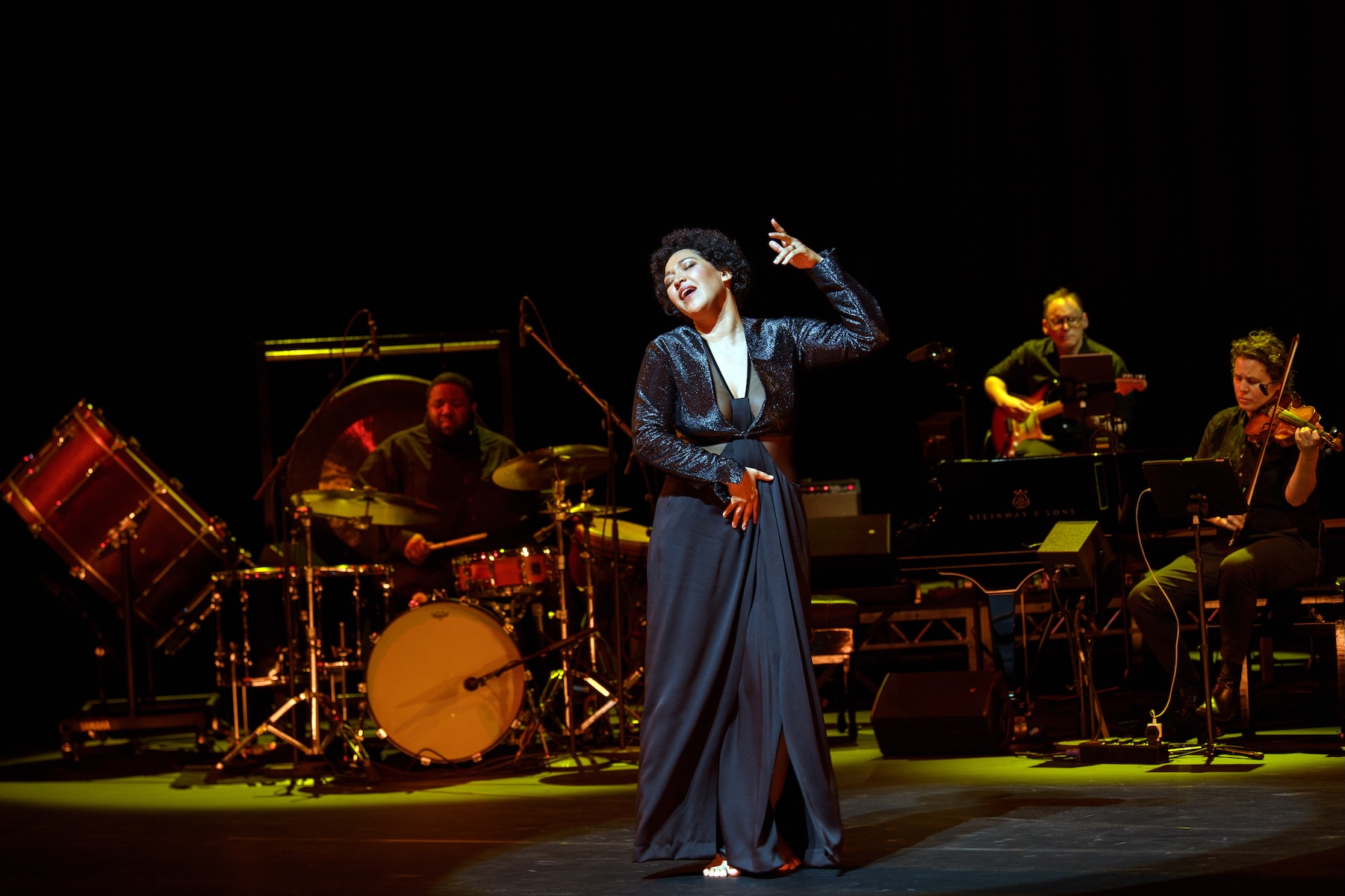
Sellars is bringing two works, Perle Noire: Meditations for Joséphine and a chamber version of El Niño: Nativity Reconsidered, his opera written with John Adams, which was originally performed as a work in progress in Adelaide in 2002.
“I am thrilled to be working with Julia Bullock,” he beams. “I met her when she was a student at Juilliard. I had asked the head of the school’s vocal department if I could meet some new singers because I felt I needed to replenish and work with the next generation. The next afternoon I met Julia and the bass baritone Davone Tines. It was an amazing day, incredible in fact. Julia started working straight away.
“She had made her debut with a solo recital in New York. It was a program of Medieval Spanish songs and Oliver Messiaen – and the second half was (jazz pianist) Billy Strayhorn and Joséphine Baker. People went out of their minds. I wasn’t there but a producer I work with rang me and said, ‘What are we going to do with this Joséphine Baker piece?’”
Originally from St Louis, Missouri, soprano Julia Bullock, at 39, has gathered plaudits from the New York Times and a Grammy for Best Classical Soloist. John Adams has called her his muse, and she featured in his operas, Girls of the Golden West and Dr Atomic.
“She is so self-directed,” Sellars observes. “And in such powerful ways. She had the research ready to go. She wanted to make a whole evening around it. She spoke to the International Contemporary Ensemble (ICE – the good one!) and they recommended the composer Tyshawn Sorey. He and I met. He is a great musician. Then he and Julia started making notes and Tyshawn began composing.”
Sellars was happy to play matchmaker for the show, which premiered at Ojai Festival before continuing to evolve across venues in Chicago, Houston and even the Metropolitan Museum of Art.
“It’s always a pleasure to bring people together and then the artists take it from there, and go to places only they can go.”
Perle Noire includes five musicians, led by Sorey on piano and percussion who continues to encourage improvisation and reinterpretation each night.
“They take it to such incredible places. Tyshawn creates these beautiful chordal wind ensembles. You are getting something like Kurt Weill or a Bach chorale. Then he has these gospel harmonies. It is very mysterious and beautiful music.”
Subscribe for updates
Perle Noire brings Joséphine Baker back into recognition. A performer in Harlem she sailed to Paris in 1925 and became a sensation of the Jazz Age. In La Revue Negre and the Folies Bergere she experienced a freedom impossible in St Louis Missouri, or anywhere else in segregated Jim Crow America. And unlike the bleak life and times for ‘Lady Day’ Billie Holliday, Baker enjoyed success and recognition. She was perhaps the Beyoncé or Lady Gaga of the 1920s.
“We are reminded,” Sellars notes, “that Joséphine Baker was the best known and most financially successful Black person in the world at that time. She knew exactly what she was doing and she did it. She had her dark moments because she was up against overwhelming odds, but she kept coming back.
“Late in her life she was evicted from her castle but at the same time was awarded a Legion of Honour for her services to the Resistance in World War II. She was the only woman standing next to Martin Luther King in the March on Washington. She was just an extraordinary person.”
For the libretto Sellars invited in Jamaican American poet Claudia Rankine who provided “page after page” of drafts which were incorporated into the work. Sellars describes her as an “incredibly subtle, precise and clear-eyed poet.”
“We have worked for ten years or so on this piece and it has evolved and the way the text is integrated does tend to change as Julia is feeling it. We are not re-creating Baker’s performances. They are not an imitation of her. Instead we are presenting everything she herself, as a nightclub entertainer, was not able to do.”
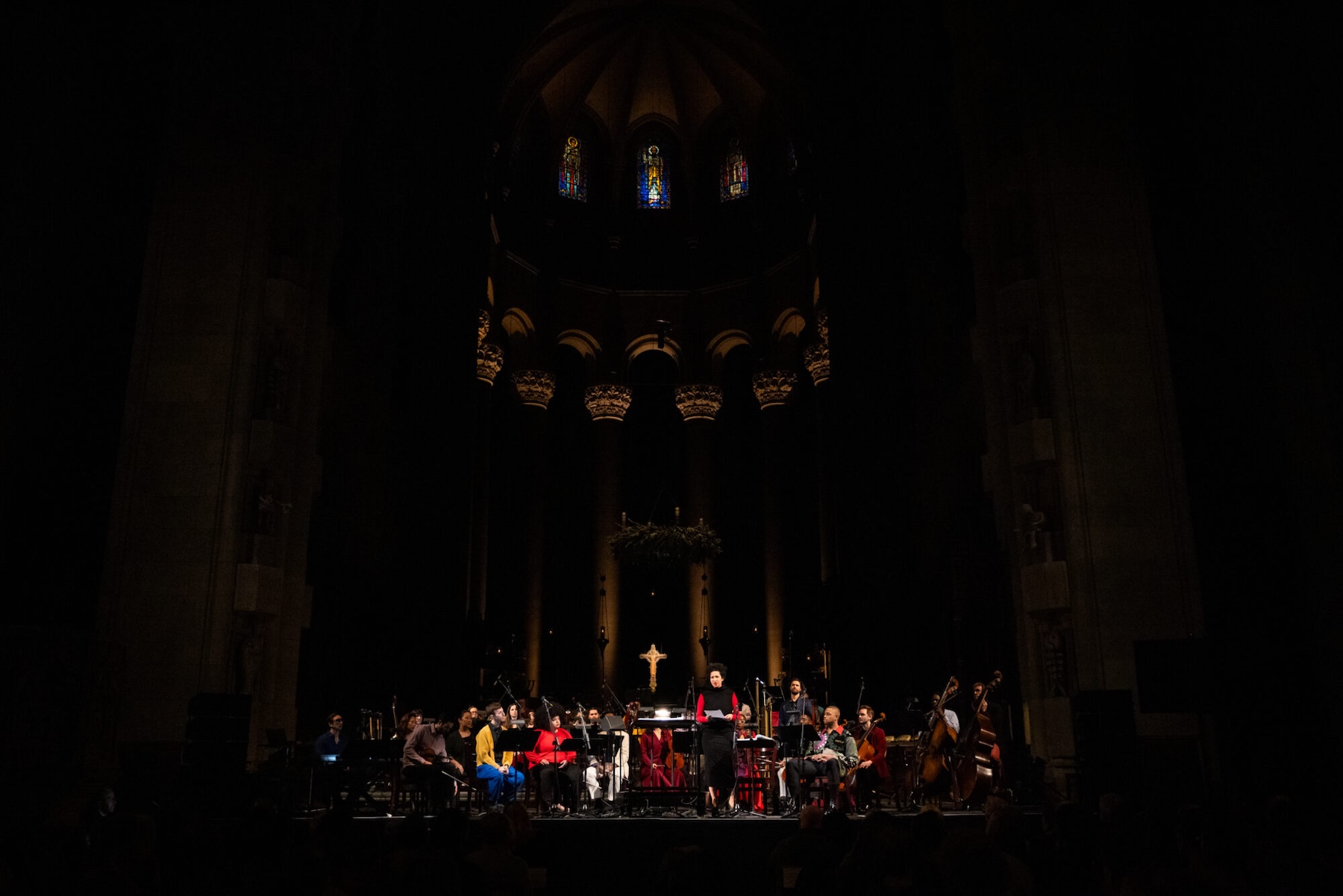
El Niño is also focused around Bullock. She had performed the work in full operatic mode with the LA Philharmonic but, as Sellars explains, she wanted to perform it more and take it everywhere.
“She wrote directly to John Adams and said, ‘Can I turn it into a chamber version so this piece can live on with many more performances?’ And John said ‘Go ahead’. This mini version that sits in the palm of your hand was created by Julia and her circle of friends. It has been circulating for about ten years.”
"So much of my time in Adelaide was such a joy and I had some of the best times in my life there."
Sellars hopes to spend extended time at the Festival catching up with friends and reconnecting to the city. “So much of my time in Adelaide was such a joy and I had some of the best times in my life there. I hope I am coming back as an old friend because I lived there for three years.”
At the time we spoke, early in January, neither of us I had any inkling that 2026 would be mired in controversy with the collapse of Adelaide Writers’ Week – Sellars was among the signatories to an open letter from past festival leaders calling for the reinstatement of Dr Randa Abdel-Fattah. In a follow-up message, Sellars says Writers’ Week is “one of the glories of Adelaide”, and he is “relieved” the writers’ festival will return in 2027 with Abdel-Fattah’s invitation reinstated.
This latest festival controversy offers a reminder that artists and their work can prove inconvenient and challenging; they uncomfortably remind us what is at stake and that the response can be hostile and recriminating.
“This is a time for working hard,” Sellars observed back in early January. “Artists should work hard. But Art doesn’t lecture anybody, it’s an actual experience. It’s not an argument, it’s not ideology. It is, ‘Taste this’. There is no substitute for art because we say things that can’t be said in any other way.“
Perle Noire: Meditations for Joséphine runs from March 1-4 at Her Majesty’s Theatre. El Niño: Nativity Reconsidered opens at Adelaide Town Hall on March 12. Tyshawn Sorey will also perform at Her Majesty’s Theatre on March 2.

Want to see more stories from InDaily SA in your Google search results?
- Click here to set InDaily SA as a preferred source.
- Tick the box next to "InDaily SA". That's it.
Free to share
This article may be shared online or in print under a Creative Commons licence