Theatre review: Commentary
Sharp, funny and deeply discomforting, State Theatre Company South Australia’s Commentary turns a disgraced filmmaker’s attempt to reclaim his past into a provocative examination of power, memory and who gets to control the story.
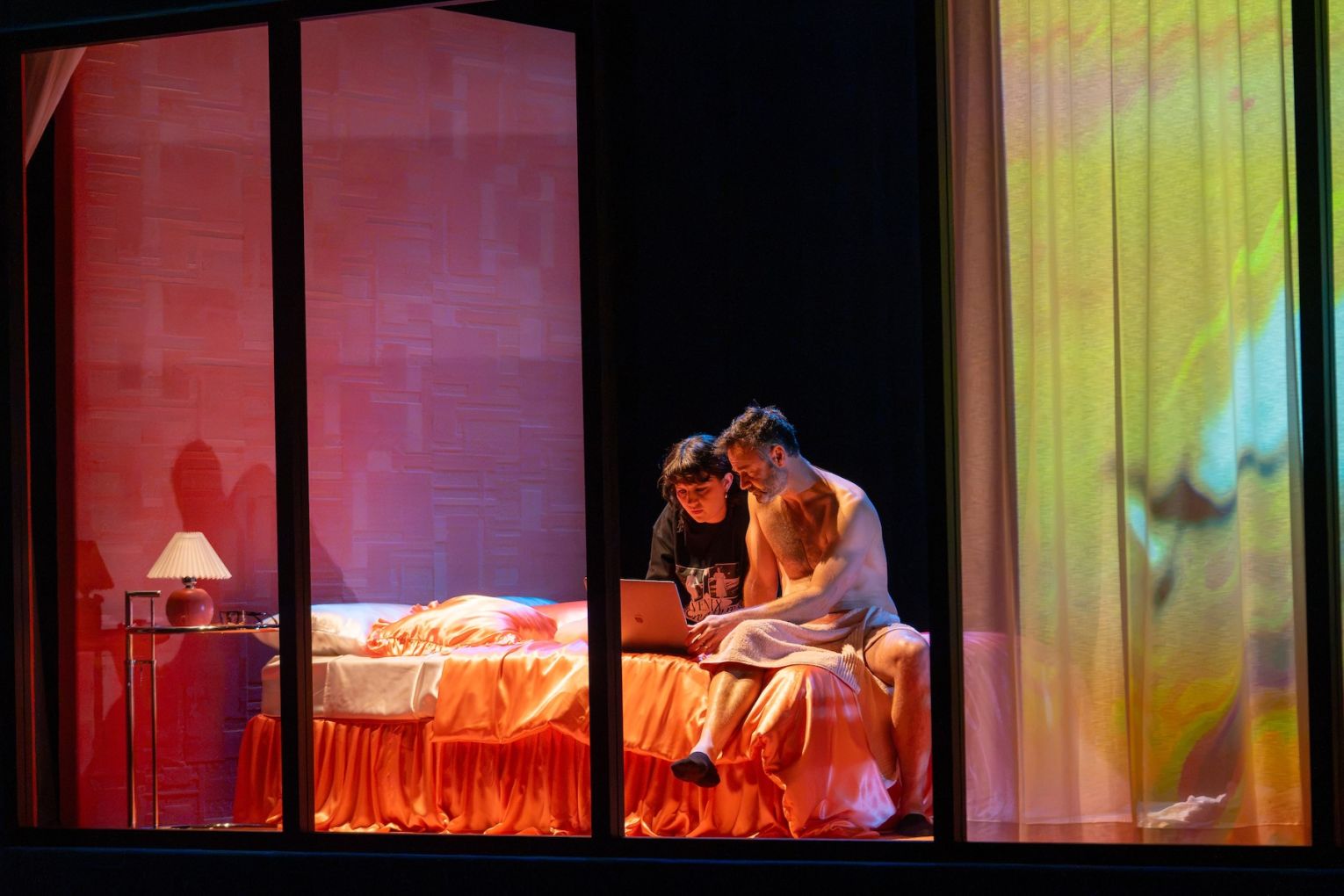
There’s a wickedly uncomfortable atmosphere to State Theatre Company’s latest work that has audiences shifting uneasily in their seats. Commentary is a prickly piece that courts controversy every time a character opens their mouth; a work that asks questions about power, culpability and ethics in artmaking and refuses to offer easy answers. Written by award-winning playwright and screenwriter Ash Flanders and directed by State Theatre’s Artistic Director Petra Kalive, this bold and cleverly structured piece holds a harsh light up to the world of contemporary art-marking and watches everyone squirm.
At the centre of the storm is Nick Atkinson (Gyton Grantley), a filmmaker turned university lecturer. Twenty years ago, he made a film called Low with his best friend and filmmaking partner Hamish. For one shining second, the piece was a huge success, winning the prestigious Silver Bear at the Berlin Film Festival. Then Hamish was arrested for stalking an underage girl and taking clandestine photographs of her, a turn of events that horrifically mirrored the plot of the film. In the resulting cloud of controversy, Low sank from view, Hamish vanished, presumed dead, and Nick survived with a massive chip on his shoulder about how the best thing he’d done in his life was ruined by forces beyond his control.
Now, Low has been resurrected – the Adelaide Film Festival wants to screen it – and Nick has been asked to record a director’s commentary track. At first, Nick agrees, seeing his chance to remind people of his former success and finally debunk the ‘film about paedophilia made by a paedophile’ narrative that has dogged both the film and him for 20 years. But as old relationships, allegations and memories surface, Nick finds that revisiting the past becomes much more complicated (and problematic) than merely recording his version of events.
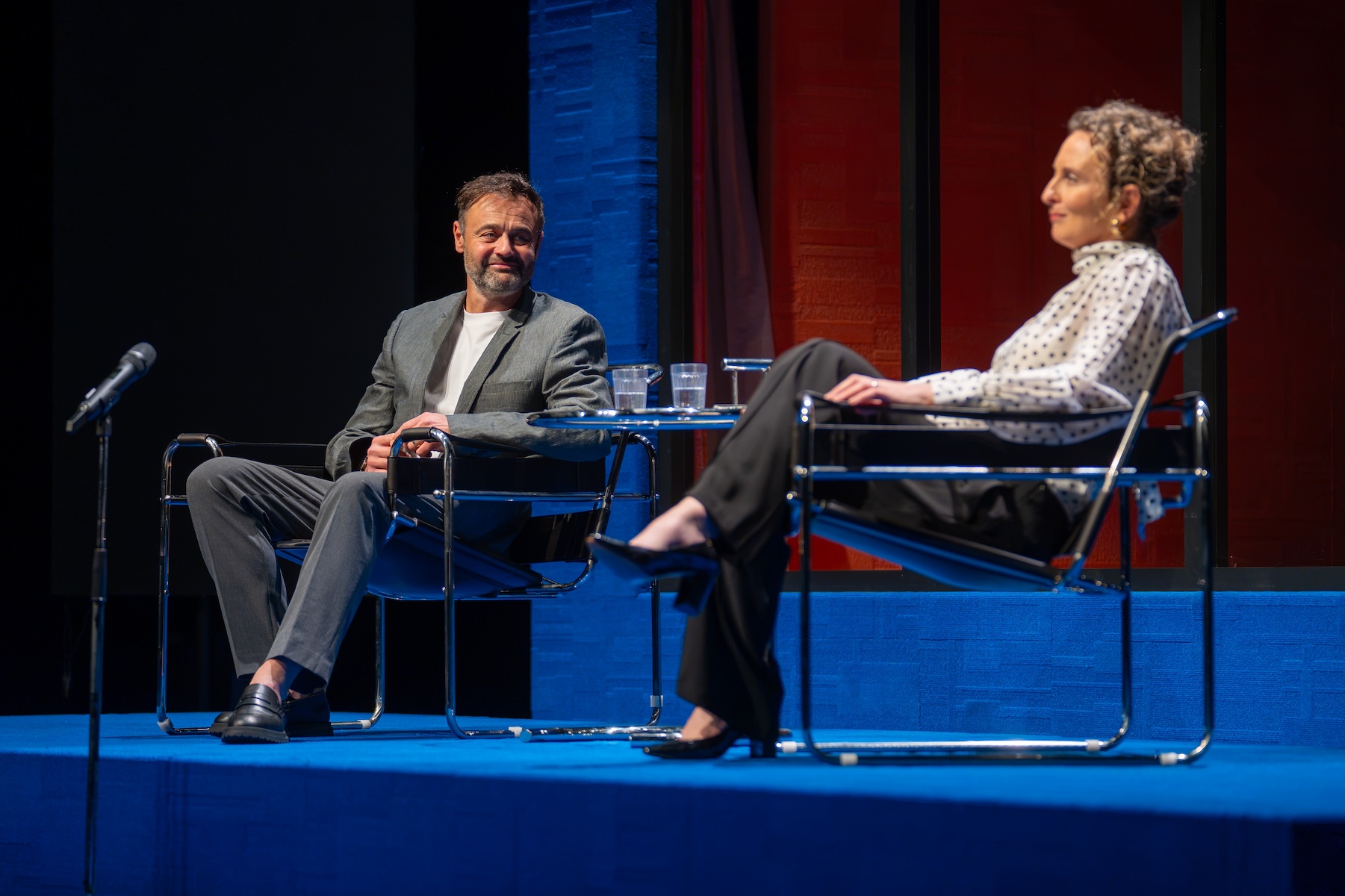
Grantley is excellent in his central role of charismatic white male lecturer forced onto the back foot as he is hit with a cavalcade of controversy – of his own making. The play cleverly introduces him as playful and charming, only to steadily complicate his character as he becomes progressively more defensive and self-centred in the face of criticism, constantly rewriting his narrative every time his version of events is challenged. The more he talks, the more the audience comes to question how much is the effect on memory of 20 years of distance, and how much is Nick’s self-serving edit of the past?
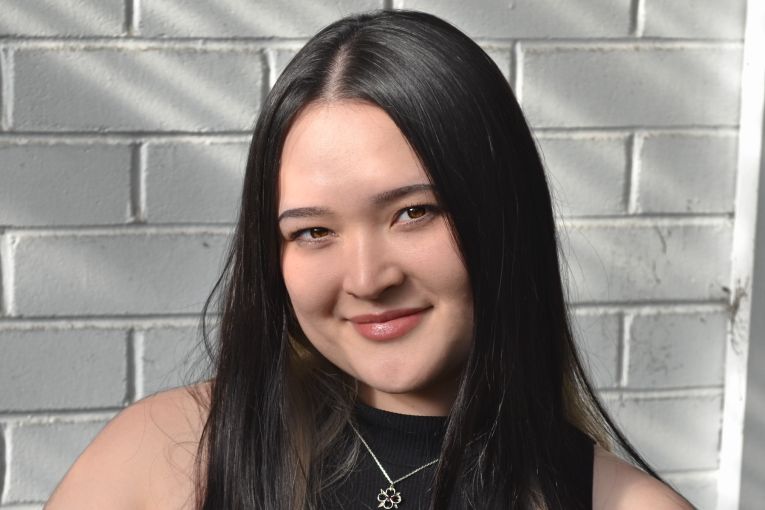
The complications arise from the women surrounding Nick – three actresses each taking on two roles in the chorus of voices challenging his version of the story. Anna Steen plays Nick’s wife Mish and tabloid journalist Anna Whitehead, Kate Cheel is brilliant as both Saskia, Low’s underage ingenue now successful LA actress as well as Clea the AFF director and Shardae Santos plays both Nick’s savvy lover Gen and Hamish’s daughter Frankie. Their voices continually destabilise Nick’s defensive take on the past, puncture his persecution complex and shine harsh light on the narrative he’s cobbled together over the years, allowing the audience to see where he’s made the edits.
While the underlying story is clever, what makes Commentary truly stand out is the ingenuity of its storytelling structure and use of visuals. The plot is pieced together not in traditional scenes but as a series of modern social interactions. Matilda Woodroofe’s design, sound and video by Dan Thorpe and Matt Byrne, and Nic Mollison’s lighting all work together to cunningly meld the worlds of theatre and filmmaking.
Subscribe for updates
The play begins with Nick giving us a DVD commentary-style voice-over that swiftly morphs into glimpsing an intimate scene with his lover Gen, the audience watching like voyeurs through bedroom windows. There are Zoom calls in which can see both the screen projection and beyond-the-frame action, a recording booth, a media interview, meetings in pubs, voice calls, a phone’s photo roll; all of these communication fragments placed side-by-side to give us a pixellated version of the story and reinforcing that everything can be framed, edited and presented from a particular point of view with no single version representing the truth.
And as the audience, we become especially aware that while we passively receive this patchwork of narratives, we do hold a great deal of power over whose version is accepted – much to Nick’s horror.
This play does not hold back when asking questions about artistic ethics, cancel-culture and the role of social media in transforming audience appetite for gossip into a bloodsport – and then sits back to let us make up our own minds. Fortunately, it also allows us to laugh. Because in a narrative where everyone is editing their own version of the story, there’s no such thing as a final cut.
Commentary continues at the Dunstan Playhouse, Adelaide Festival Centre, until September 5
Want to see more stories from InDaily SA in your Google search results?
- Click here to set InDaily SA as a preferred source.
- Tick the box next to "InDaily SA". That's it.
Free to share
This article may be shared online or in print under a Creative Commons licence