Opera review: Carmen
With its recycled set, this Carmen already creates a precedent. But Charlotte Kelso’s performance in the title role makes it uniquely worth seeing.
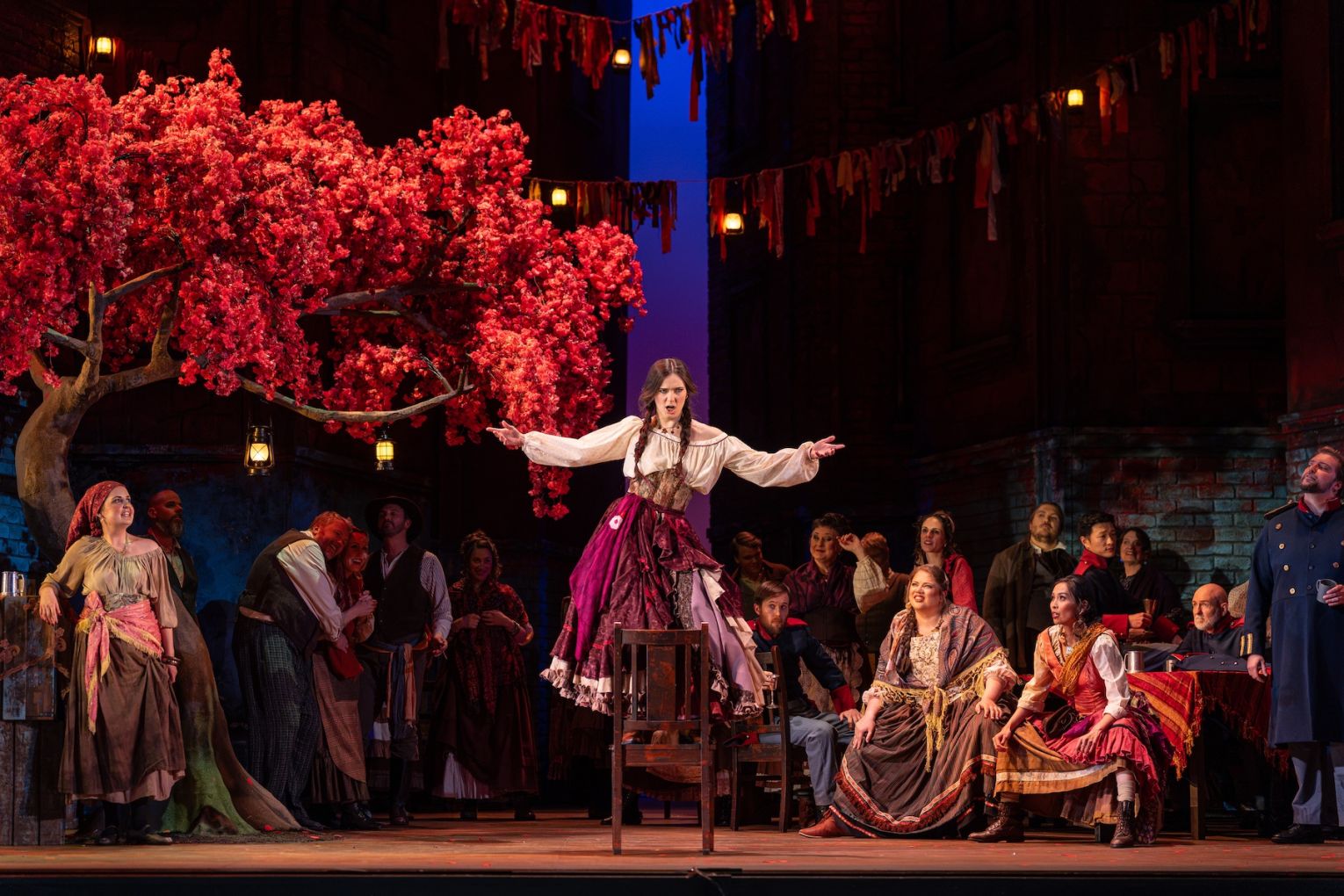
It is no exaggeration to say that 2026 goes down as the best year in living memory for State Opera SA. With five new productions in its Golden Jubilee that were built in their entirety here in South Australia, that’s quite an achievement for the local company. It can rightly be proud. Carmen is the fifth, and it’s a production of multiple strengths and definitely one to see if you love this opera (and who doesn’t?), and for the fact that this is Adelaide-born Charlotte Kelso’s first time in the title role.
Those who have seen her before will know that Kelso is a highly talented, cool-headed soprano who tends to do things her way. Last year, she took the trouser role of Stéphano in State Opera’s Roméo et Juliette and was extremely funny in that. Here she makes an absorbing and most interesting Carmen, a character who of course is the very personification of defiance. Kelso interprets the central character as moxie-fuelled and spiritedly independent in a Gen Z way. Old boundaries don’t interest her, and neither do trouble-prone men.
This is Queensland director Laura Hansford’s first Carmen, too. A props manager early in her career before moving into directing, one can see her ingenuity with staging. The whole set is recycled from past productions – which normally gather dust in old warehouses or end up in the tip. Dane Lam, as conductor and State Opera’s artistic director, delightfully shares this lowdown with the audience heading down to the pit. According to further inside information, the set comes from a Cavalleria rusticana production more than 30 years ago, and although freshly painted, it looks perfectly rusticated for a Spanish streetscape in the 1820s.
Bravo for being environmentally sound, and may this set a new trend.
Things get off to a fine start. The overture is brisk and spirited, its massed trilling in the woodwinds sounding slightly wild – exactly in character with Carmen’s untameable drive and the collision of forces in this opera.
You might like

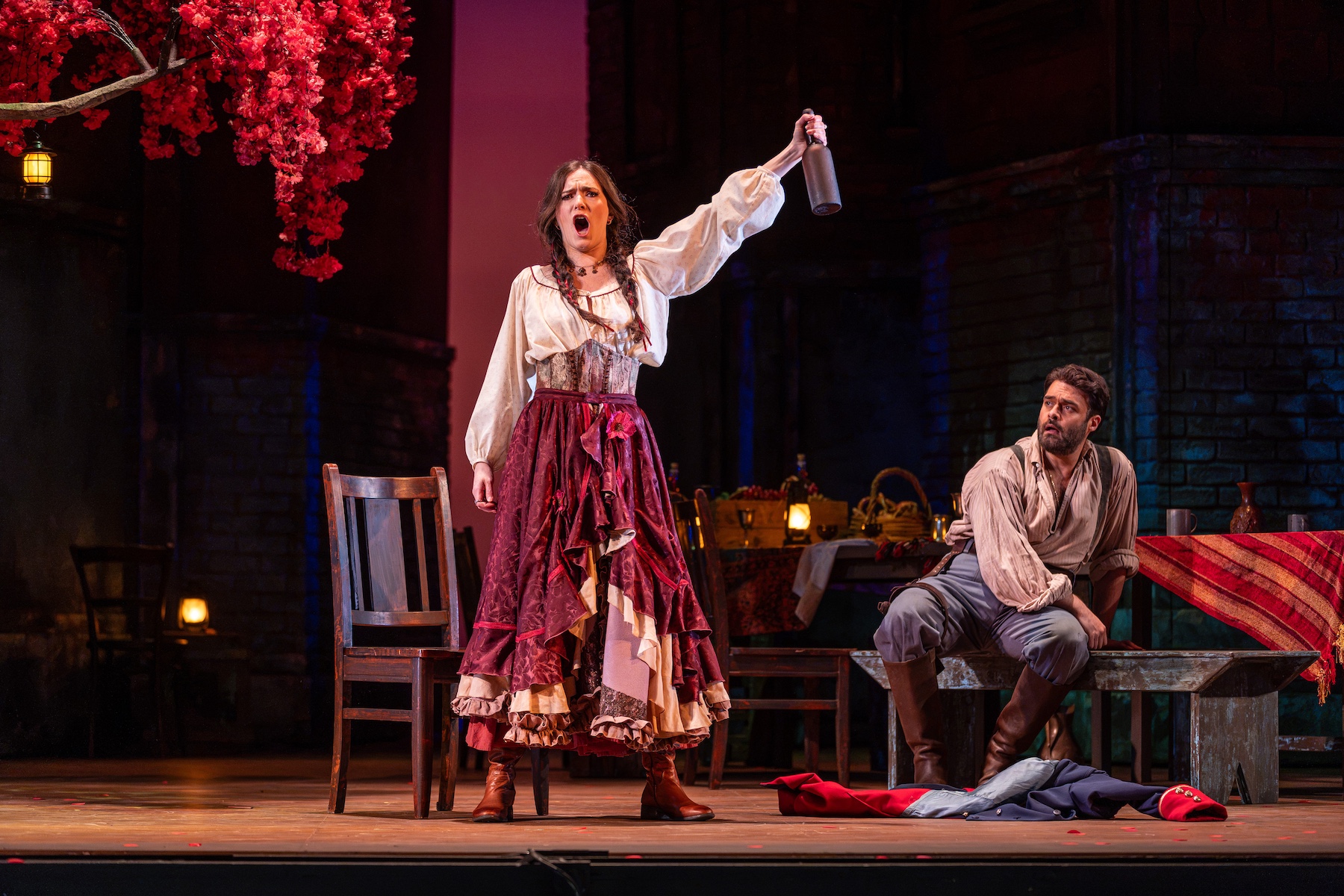
Kelso excels vocally, and she fills all the well-known arias with vivid colour. She has excellent chest resonance and rhythmic timing in Act 1’s Habanera (‘L’amour est un oiseau rebelle’) and ‘Près des remparts de Séville’; and when she mocks her lover Don José in Act Two for his controlling behaviour, she snarls with wonderful through-the-teeth intensity.
Instead of predictably playing the hot-headed seductress, Kelso is a calm-thinking Carmen who is terrific at meting out cold hard justice. It feels like a grittier, more contemporary opera for her treatment.
Carmen’s offsider, Micaëla, is sung most beautifully by Desiree Frahn. Her warm-hearted and smoothly delivered singing brings much quality to the production. Next to her, Cathy-Di Zhang is a delightfully vivacious, quick-minded Frasquita. She hits her high soprano notes with great accuracy, and she moves beautifully in the opera’s busier scenes.
Subscribe for updates
On the male side of the ledger, Gerard Schneider is a psychologically riveting Don José. An outstanding tenor, he expresses every shred of emotion that José goes through, from romantic jealousy to madness. Once winces at every turn.
Meanwhile, Samuel Dale Johnson is magnificent as Escamillo. Commanding in his presence in the famous Toreador song, and possessing an attractively smooth yet agile baritone voice, he is singer to particularly admire.
This is a remarkably static-looking Carmen, though. Sometimes it is as visually beautiful as an oil painting, for example in the opening scene when the cast and chorus are artfully arranged across the stage. But for an opera that relies on bustle and energy, it could use more coordinated movement around the stage. Having the chorus planted on bleachers while watching the bullfight in the last act is not ideal, and neither is having them face the rear when Escamillo celebrates his victory.
Counterbalancing that is excellent French diction. The whole cast and chorus – numbering 48 singers – are superb in this department. The colour and rhythm of this opera’s text, by librettists Ludovic Halévy and Henri Meilhac, are there to fully enjoy. Balance could be improved in some of the ensembles: although she possesses good power, Kelso needs to come out more strongly.
Some uncharacteristic lapses in the pit also raised an eyebrow or two on opening night. Normally on the button when it comes to intonation and timing, the Adelaide Symphony Orchestra felt unsteady at times. They might also want to up the tempo in the Second Act’s ‘Les tringles des sistres tintaient’ to give that a scene a more balletic feel.
All else was solidly in place though. The strengths are plenty. From its recycled sets to Kelso’s splendid debut in the lead role, this Carmen is to be counted as another success for State Opera.
State Opera South Australia’s Carmen continues at Her Majesty’s Theatre until October 17
Want to see more stories from InDaily SA in your Google search results?
- Click here to set InDaily SA as a preferred source.
- Tick the box next to "InDaily SA". That's it.
Free to share
This article may be shared online or in print under a Creative Commons licence