Adelaide Festival review: Slingsby’s A Concise Compendium of Wonder
Slingsby Theatre hits the Botanic Garden for an ambitious three-part swansong that reframes classic fairytales to ask probing questions about humanity and storytelling. The result is a Baroque storybook brought to life.
Tucked in next to the Adelaide’s urban grid, the Adelaide Botanic Garden always feels like a place of awe and astonishment. But for Slingsby’s A Concise Compendium of Wonder, a triptych of plays addressing the climate emergency, the gardens become more far than a picturesque setting – they are a reminder of the incredible beauty and crucial diversity of the natural world.
The triptych unfolds inside ‘The Wandering Hall of Possibility’, a bespoke wooden meeting house erected among the garden’s plane trees, its interior continually readjusted for the setting of each of the three plays.
Spanning famine-era Europe, the age of enclosure of the commons in the 17th century, and a speculative future on the moon, The Childhood of the World, The Giant’s Garden and The Tree of Light are each inspired by a classic fairytale and each test a different mode of wonder. Taken together, they reframe their fairytale source material, placing environmental destruction at the heart of each performance, asking questions about how humanity arrived at this point and how we might transform our values to live more gently among other species in a shared future.
The Childhood of the World
The opening work, The Childhood of the World, written by South Australian author Jennifer Mills, is an adaptation of the Grimm Brothers’ Hansel and Gretel. Set during a time of relentless rain and famine, it follows siblings Ré and Crann, who live with their father on a failing farm after the death of their mother. When a village “roll call” selects children for apprenticeship in the town, Crann is chosen and Ré immediately volunteers to join him. Loaded into a cart and rolled away from their home, the siblings begin to suspect the apprenticeship story is a ruse. They are to be the food that keeps the rich alive.
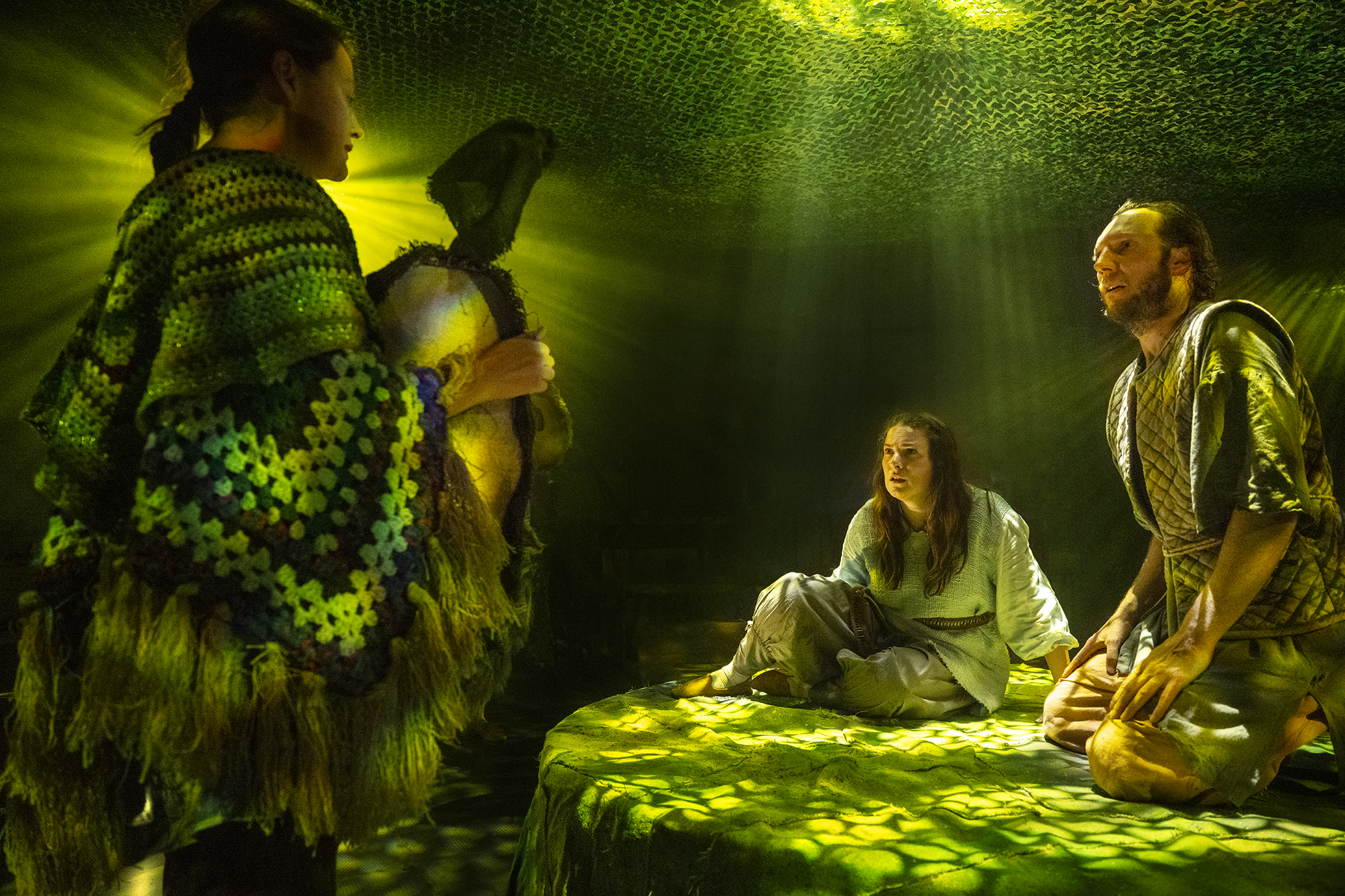
The pair escape into the forest, only to find themselves in an ‘out of the saucepan and into the fire’ situation. To those raised on farmland, the forest is terrifying: dense, strange and obeying its own laws. The lost children stumble through the leafy labyrinth, gradually learning how to listen and take only what is needed. They are rescued by a group of children who have formed a sanctuary within the heart of the forest. The group is led by a figure known as ‘Mother’ – an ageless prophetess who understands the world as being in its “childhood”, a phase of interdependence that will be lost once the forest is swallowed up and destroyed by those driven by hunger.
You might like


This first production in the triptych relies heavily on sound and light to evoke this medieval world. A soundscape of rain, insects and birdsong evoke this rain-drenched landscape and shifting patterns of light do the work of scene changes, taking the siblings from farmland to cart to the dim and dappled world of the forest.
Of the three pieces, this is the most unapologetically didactic in its ecological message, beautifully setting the thematic tone by laying out the problem and clearly stating the transformations needed to humanity’s values and views if we are to avoid our own version of the ‘The Hunger’. The siblings’ eventual choice – to return home carrying what they have learned rather than remain in sanctuary – rejects the fantasy of escape in favour taking ethical responsibility. It is a sober beginning, but one that perfectly establishes the triptych’s message.
The Giant’s Garden
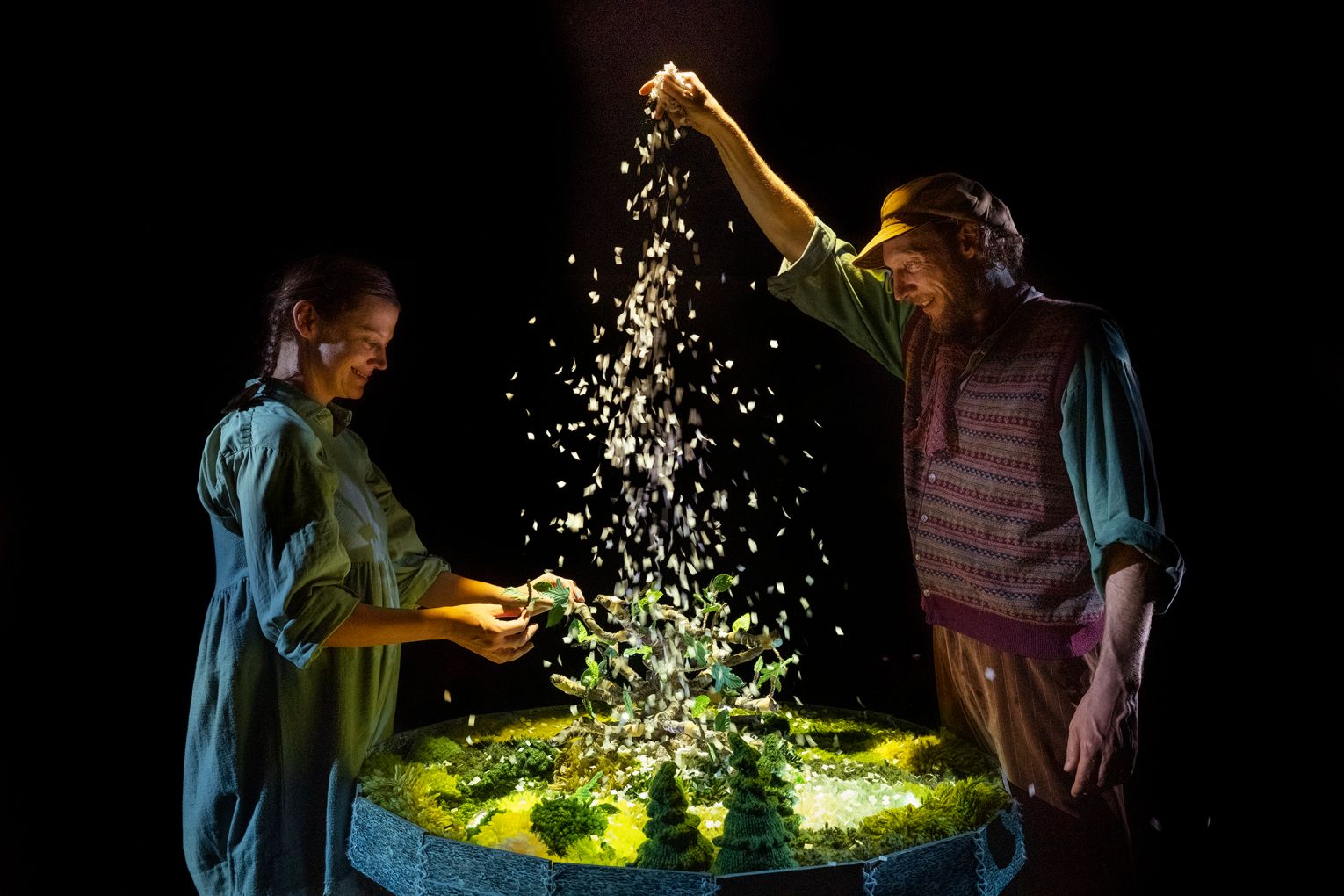
In the second play, Ursula Dubosarsky’s reimagining of Oscar Wilde’s The Selfish Giant unfolds like a Baroque storybook brought to life. The three performers play children who gather around a magnificent tree, its scale and significance brought to life through exquisite stage design, puppetry and the use of shadows. While some children climb and play in the branches, Ida – a quieter, more attentive child – plays among the roots with her beloved snail, Quill.
The arrival of the giant is conveyed through sound and scale rather than literal representation. Claiming the tree as his own, he builds an impenetrable stone wall, hangs a KEEP OUT sign, and expels the children. This expulsion and exclusion brings about a perpetual winter. The tree sickens. Even the giant, hoarding warmth and ownership, begins to freeze in the world he has created.
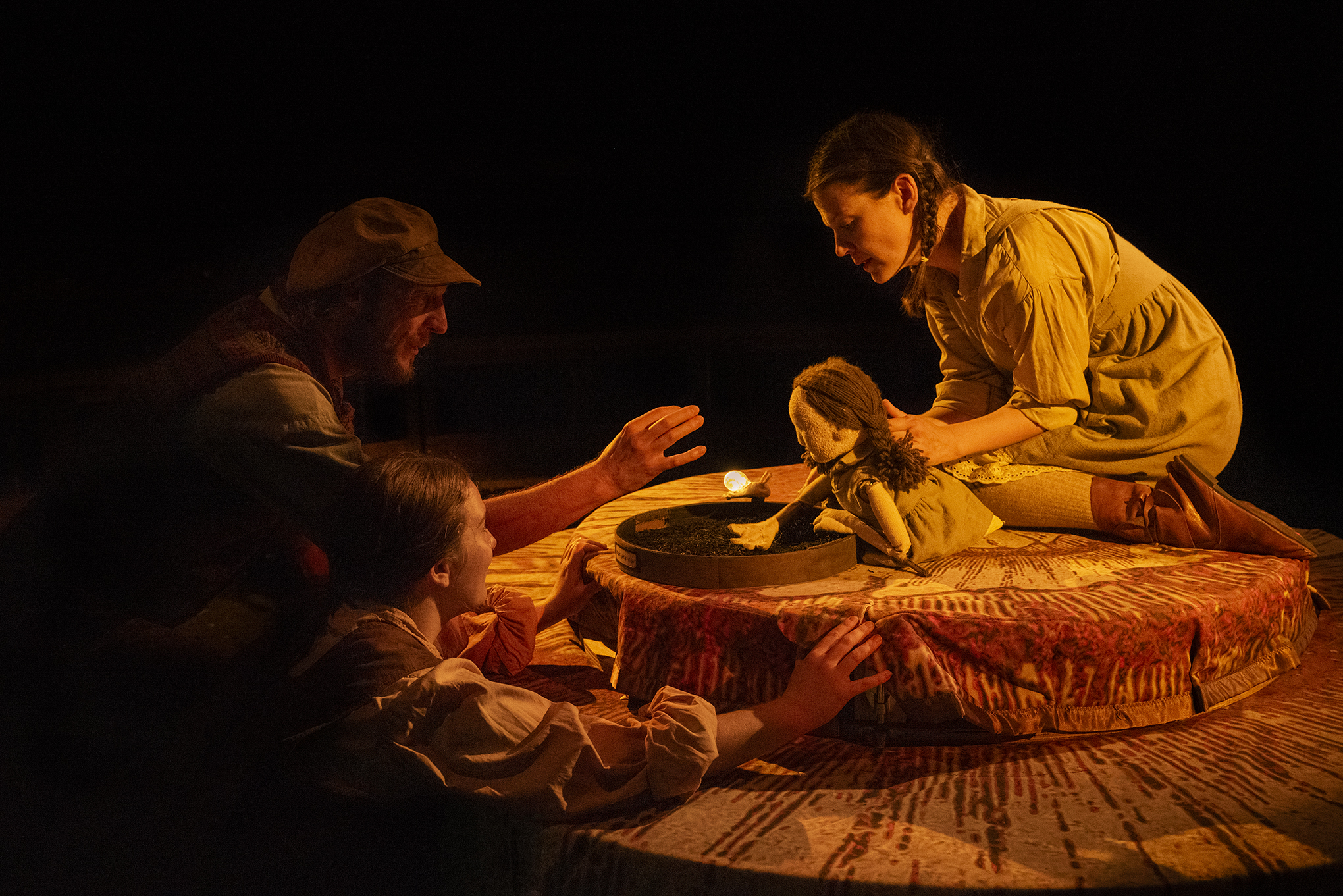
Slingsby’s trademark artistry is on full display here. Shadow-plate chapter titles pull the audience through the story like turning pages, while projections, lighting and sound create a world of extraordinary delicacy. The effect is delightfully immersive and whimsical. Beneath this quaint aesthetic, however, the politics are unmistakable. The wall recalls the enclosure of the commons, while the endless winter gestures toward climate collapse. Ida’s quiet courage, compassion and her refusal to accept exclusion become the story’s moral lynchpin. Crucially, the giant is not exempt from the consequences of his actions, reinforcing the message that those who hoard wealth and resources are not immune to the damage they unleash.
The Tree of Light
Subscribe for updates
The final work, The Tree of Light, written by Ceridwen Dovey as an adaptation of Hans Christian Andersen’s The Little Match Girl, shifts again in tone and register, moving into the realm of science fiction. It is the last day of the year 3099. Humanity now lives on the moon, having adapted to a life of cold and hunger. Survival is paramount; leisure is unimaginable. Storytelling itself is regarded as an absurd luxury.
The audience is addressed directly by a twelve-year-old elder, who calls a meeting inside the hollow trunk of the last remaining tree on the moon. Grandmother Tree, the final living link to Earth’s ecosystems, is dying, and she wishes to tell one last story before she goes.
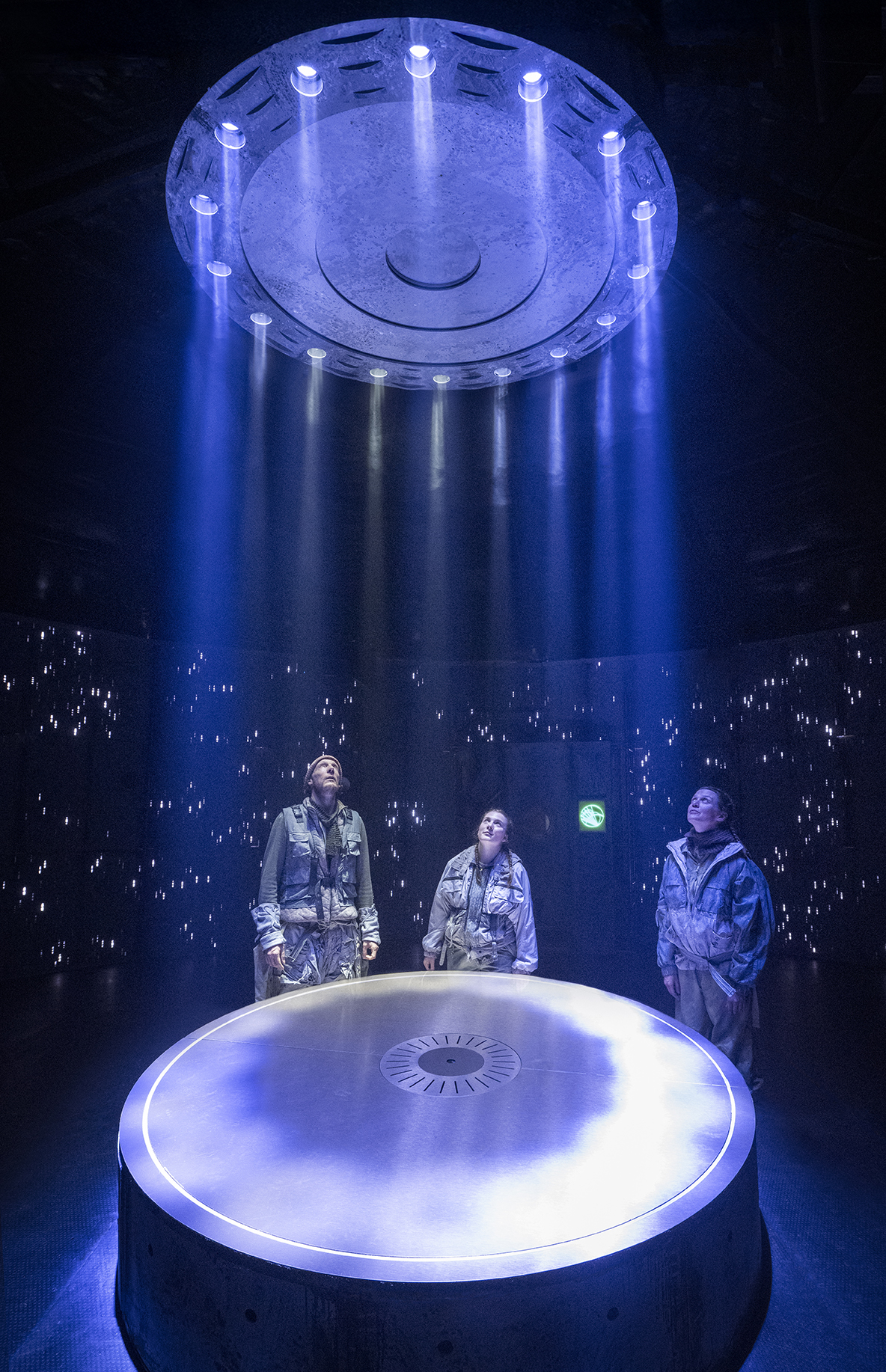
That story carries us back to Earth in 2087, to a poor girl surviving by selling refurbished electric candles. She sleeps by a radiator in the basement of a towering building, while her shadow self – a wealthy girl living high in the building above her – embodies everything she lacks: warmth, wealth, food and the power to move beyond the city. Determined to see the last trees on Earth that survive in the desert beyond the walls, the girl sells her candles for a single token that allows her to leave. What follows is a journey into quiet, darkness and finally into the body of Grandmother Tree herself.
In this final piece, Slingsby touches on the power of storytelling itself – as a means of transmitting history, connecting with ancestors and imagining different futures. The Moonfolk’s refusal to look back at Earth, or to imagine a world beyond labour, is as chilling as the environment they inhabit. This is a world of black and silver where dead satellites clog the sky. Nothing grows. Yet the act of listening to a story from centuries past finally opens up the possibility of a different future.
“Powerful and perfect”
Across the three works, the performances of the three actors – Elizabeth Hay, Nathan O’Keefe and Ren Williams – link the chapters of the triptych together. The trio demonstrate extraordinary skill, performing every on-stage role: narrators, characters and puppeteers. Packer’s direction across all three performances is confident and sharp, giving each panel of the triptych its own tone and logic while clearly holding to the thematic spine.

Seeing A Concise Compendium of Wonder as a whole, the setting within the Botanic Gardens feels powerful and perfect. Surrounded by living trees while listening to stories of forests – wild, enclosed, or dimly remembered from the future – we are all gently but unavoidably implicated in the plays’ message.
What Slingsby offers in this incredible final show is far from a nostalgic farewell. The Concise Compendium of Wonder is not looking back but continuing to look forward – reinforcing the message that it has always held close to it heart – that it is stories and connection that will save us – between people and non-human species.
A Concise Compendium of Wonder is playing The Wandering Hall of Possibility at the Adelaide Botanic Gardens until March 15 as part of Adelaide Festival

Want to see more stories from InDaily SA in your Google search results?
- Click here to set InDaily SA as a preferred source.
- Tick the box next to "InDaily SA". That's it.
Free to share
This article may be shared online or in print under a Creative Commons licence