Adelaide Festival director breaks silence on Writers’ Week, reaffirms ‘defiant spirit’
EXCLUSIVE: Back from overseas, artistic director Matthew Lutton speaks to InReview about the Adelaide Writers’ Week controversy that threatened to engulf his first Adelaide Festival program – starting next week.
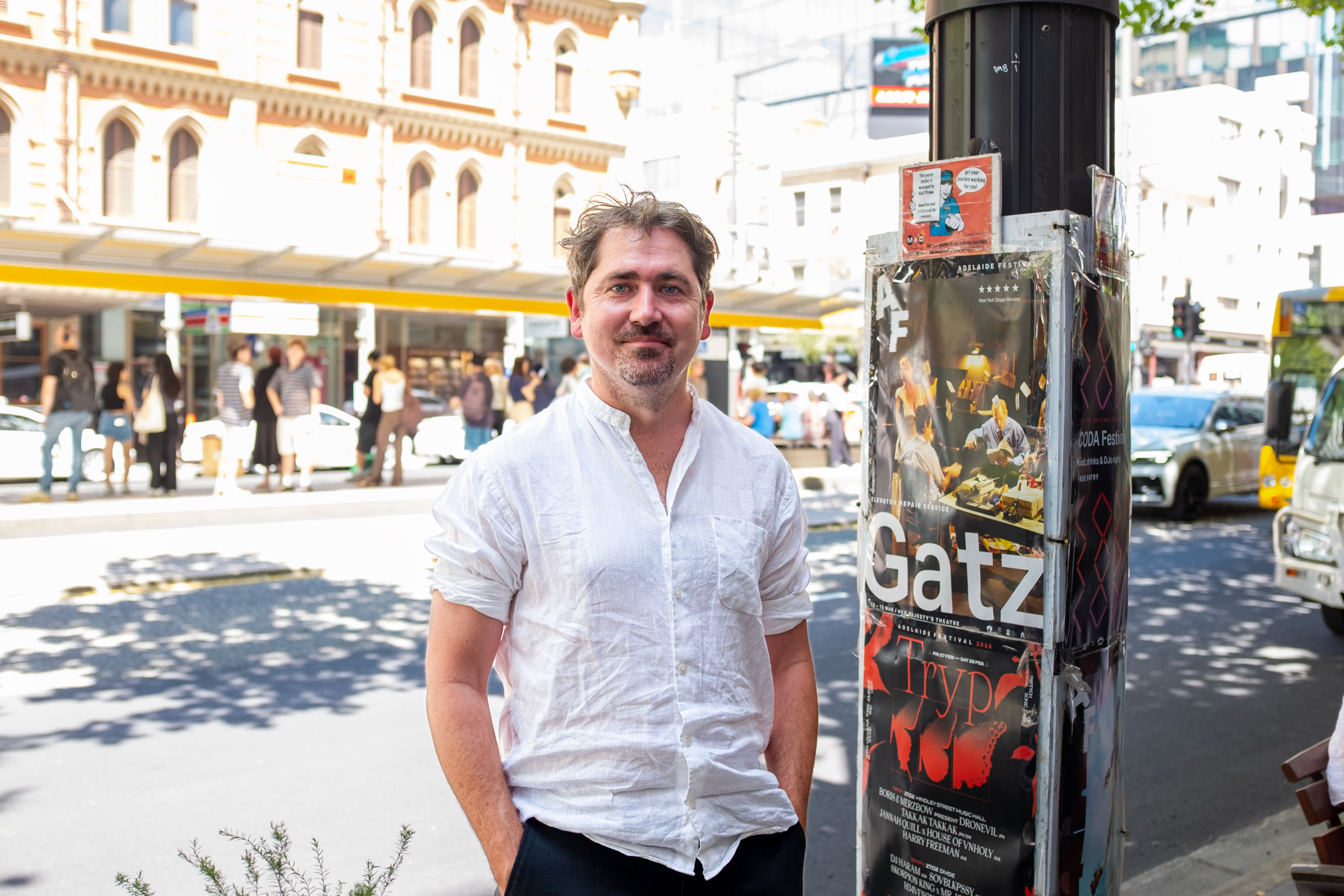
Matthew Lutton was overseas in early January when, back home in Adelaide, the arts festival he helps lead underwent a once-in-a-generation crisis.
“I think it’s fair to say I didn’t expect this to be occurring,” Lutton tells InReview of the turbulent months leading up to his first Adelaide Festival program.
Before he boarded the plane for a two-week trip through Santiago and New York, Lutton had been drafted into what he describes as an “intense amount of meetings” between the festival’s board of directors and executive team over a push to disinvite Palestinian Australian author Dr Randa Abdel-Fattah from Adelaide Writers’ Week – the long-running literary festival presented as part of the broader Adelaide Festival program.
On January 2 those conversations culminated in a letter to the board from Premier Peter Malinauskas stating that “the South Australian Government fundamentally opposes the inclusion of Dr Randa Abdel-Fattah on the 2026 Adelaide Writers’ Week program and reserves the right to make public statements to this effect”.
Lutton and the festival’s executive director Julian Hobba had advised the board to stay the course, conscious of the potential backlash that had derailed the Bendigo Writers’ Festival just months earlier.
“Our collective advice was to not rescind the invitation, and the board heard that, they took that on board, and they made a decision based on other factors,” he says. “But we provided significant advice on what we would anticipate the results of that decision to be.”
Lutton says he had “mixed feelings” about heading overseas before the board’s decision was announced, but he and his team decided it was essential to the 2027 program to go ahead with.
When the board did publicly disinvite Abdel-Fattah, it sparked weeks of controversy and an exodus of local and international authors – including this writer – from the Writers’ Week program. By mid-January Writers’ Week had been cancelled, its director Louise Adler resigned, the festival board quit en masse, and a newly appointed board reinvited Abdel-Fattah after Adelaide Festival headliner Pulp threatened to pull out of its opening night concert.
Arts festivals are often magnets for controversy, but by any measure it was an explosive start to Lutton’s tenure.
Lutton had been appointed less than a year earlier, moving to Adelaide to begin a three-year term after the brief stints of his immediate predecessors Ruth Mackenzie and Brett Sheehy.
Despite being a new arrival, Lutton says Adelaide has a lot in common with his hometown of Perth, where the local arts festival helped offset a sense of geographic and cultural isolation.
“I found the isolation of Perth to be something that bred a necessary creativity, and actually, almost in a good way, of peculiarity,” Lutton says of his childhood out west. “I realised I wasn’t being influenced by a lot of art – I mean, the biggest influence for me was Perth Festival.
“That was when I saw Romeo Castellucci or Robert Wilson and all these things coming through, and just being blown away by them. But throughout the rest of the year, there wasn’t a lot, and therefore I was just drawing on my own imagination or watching scratchy VHS tapes I could find in libraries.”
Music was Lutton’s first creative passion; as an adolescent he harboured dreams of being a conductor, and even submitted an early composition to the Perth Symphony Orchestra at the age of 15.
“I think I got a nice note back,” he says with some embarrassment.
Defying the advice of his high school drama teacher against pursuing theatre professionally – the teacher suggested getting a day job first – Lutton went on to study at the Western Australian Academy of Performing Arts, before starting his own production company, ThinIce.
“I realised very quickly that the best way to learn how to direct is to make – you don’t do it in a classroom,” he says. “So I started a tiny little company called ThinIce, and twice a year we’d put on shows, basically.”
The company grew over the next decade as Lutton made inroads across the continent via co-productions with Sydney Theatre Company, Malthouse Theatre and Opera Australia.
"I realised very quickly that the best way to learn how to direct is to make – you don’t do it in a classroom."
As he dipped his toe into the eastern states, he came to value the isolation Perth afforded.
“I would talk to a lot of young artists, and they would all sort of be evaluating their own work and possible careers in relation to artists [older than them] in Melbourne,” he says. “I was just living in my own fantasy bubble.”
He eventually left Western Australia to join Melbourne’s Malthouse Theatre, first as an associate director and then as artistic director and co-CEO from 2015. Looking back, Lutton cites Malthouse’s “iconoclastic” 2016 production of Joan Lindsay’s Picnic at Hanging Rock as a formative experience.
“We used to joke that the opening of the show should be some pan pipes dropped from [above] the stage – and then someone stomps on them,” he says, invoking the 1975 Peter Weir film adaptation that remains a high point for South Australia’s film industry.
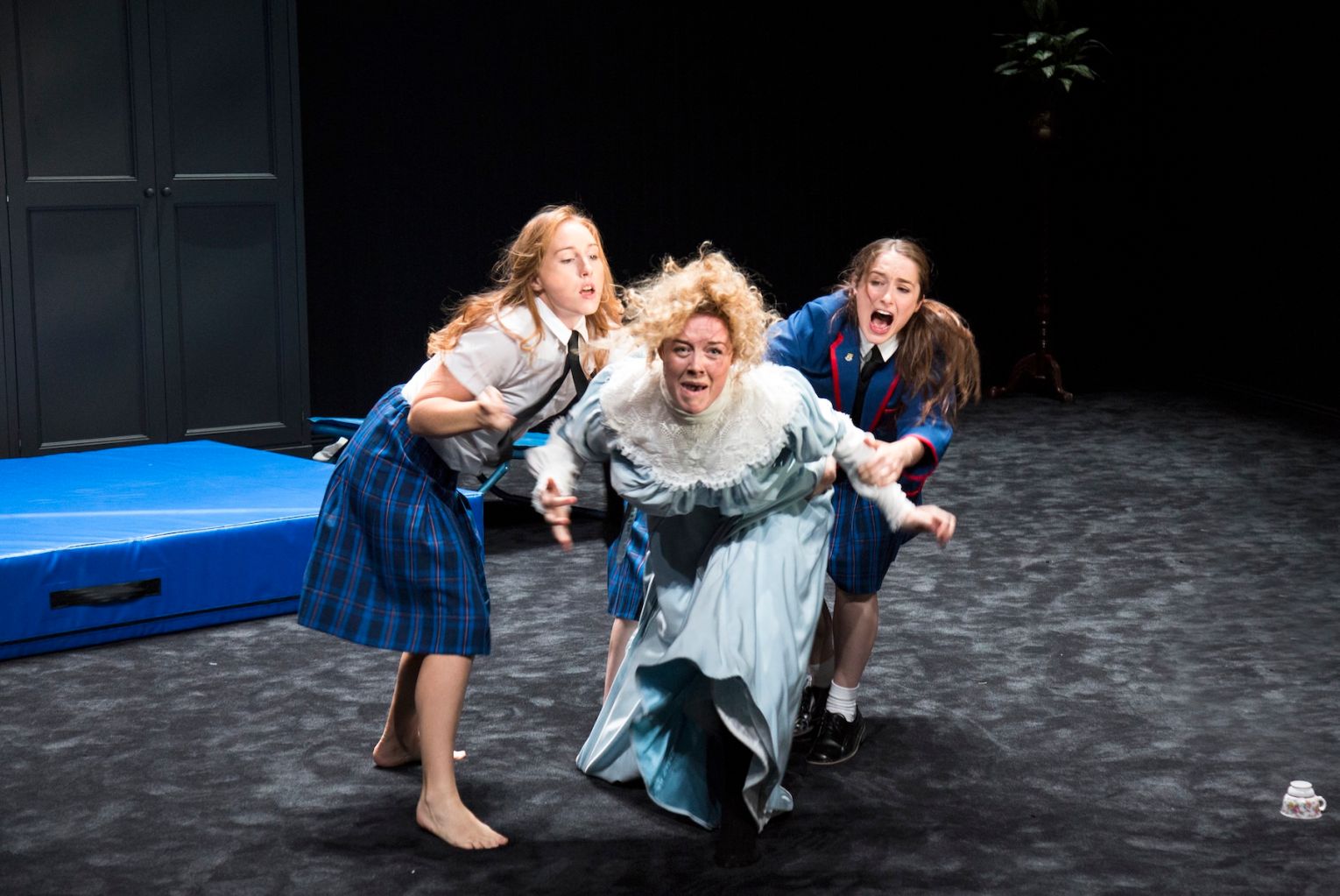
“Doing Picnic was scary. But then, in that show, there were two moments when the audience every night would scream out loud in terror – and I never knew that we were going to have that response. That really excited me.”
In his decade running Malthouse Lutton navigated many of the challenges Australian theatre companies have faced in recent years, from straining budgets to a global pandemic. He thinks Australia’s arts landscape is still recovering from the loss of those who walked away from their practice during those shutdowns.
“The amount of self-producing hours, the enormous energy that it takes to put on shows is full on,” he reflects. “And I think Covid stopped all that, and a lot of people haven’t started doing it again. They’ve just gone once the rhythm was broken, it was too much to restart. It’s sad that I think we’ve lost a lot of artistic voices because of Covid, but also it just exposed a problem that was there, but it became exacerbated.”
It also drove home the role of major festivals to help local artists make ambitious work and connect with their peers overseas. When the Adelaide Festival job came up, he leapt at the chance to be its custodian.
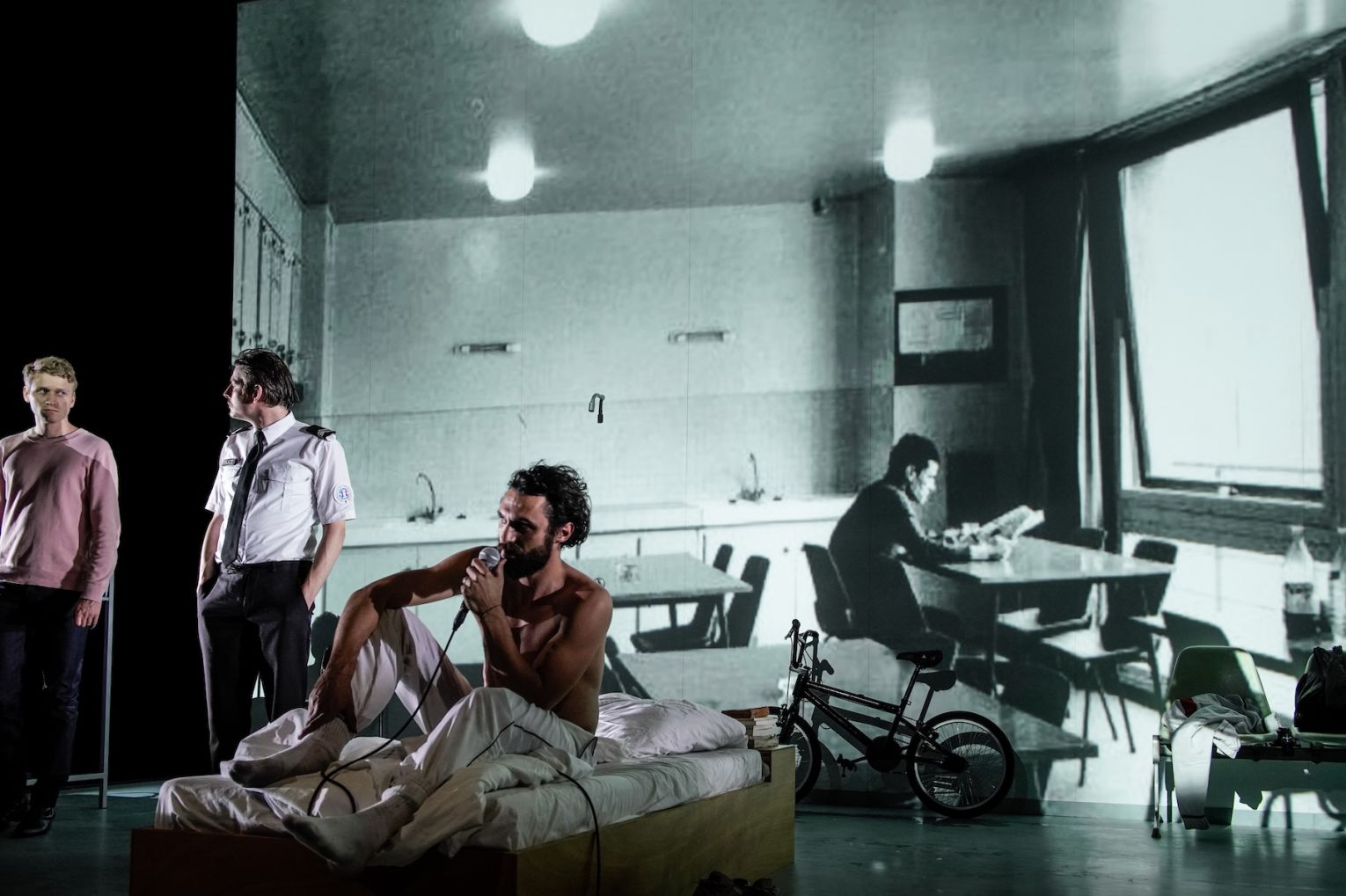
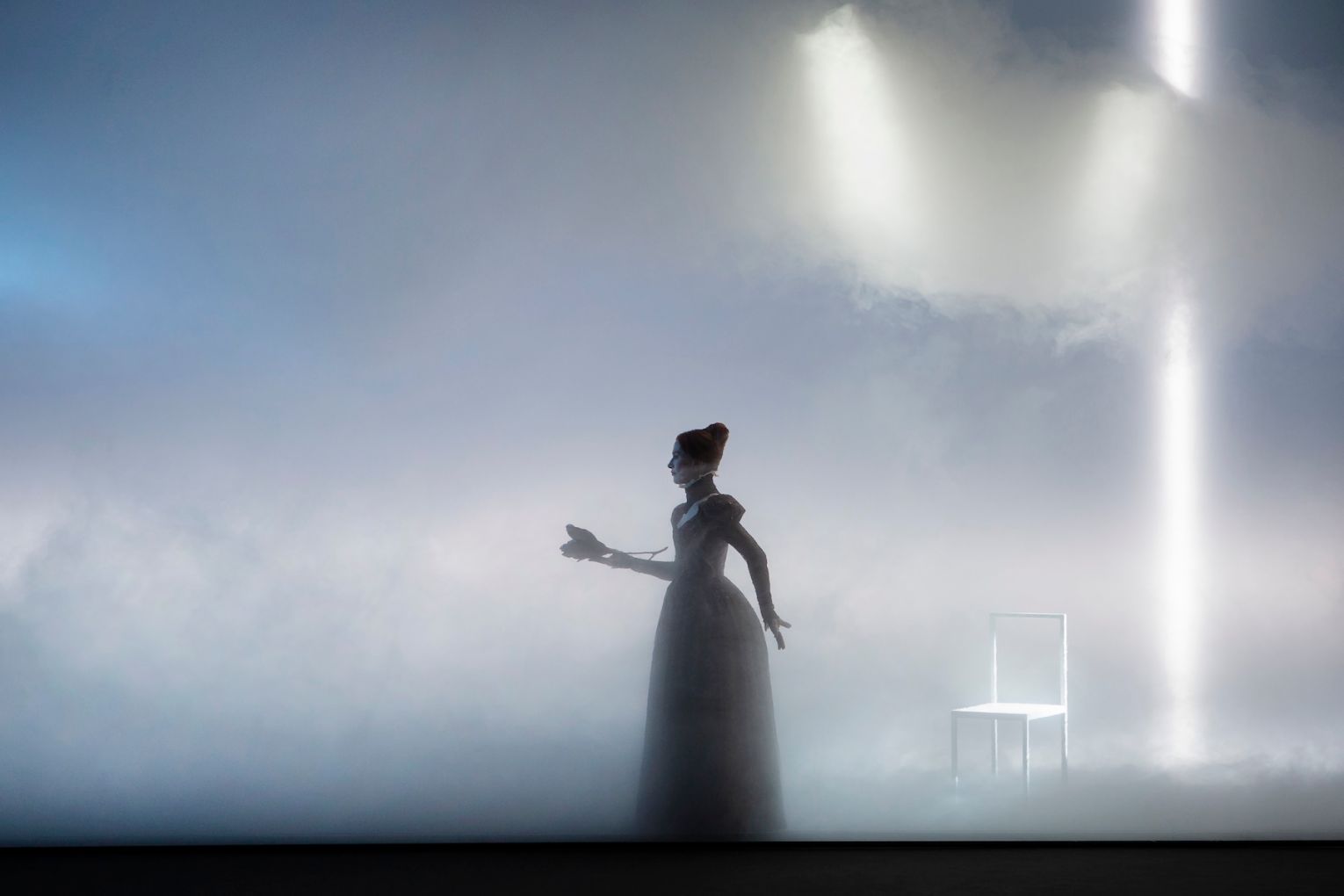
While some of the 2026 program – like theatrical centrepiece The Cherry Orchard – was commissioned before his appointment, Lutton wasted little time securing works by some of his old inspirations like the late Robert Wilson, whose Isabelle Huppert-starring turn as Mary Queen of Scots in Mary Said What She Said is another headliner. Lutton cites Édouard Louis’s History of Violence as another key plank in his first program.
“When I got the job one of the first emails I wrote, was to [director] Thomas Ostermeier to invite History of Violence because it’s the most dynamic, thrilling piece of theatre I’ve seen in years. And it was amazing to hear back in 24 hours with ‘I would love to attend’.
“It was an affirmation that this festival is in that top tier of international festivals in the world, that I can make that contact and receive a warm and strong response very quickly.”
"The loss of [Adelaide Writers’ Week] feels really massive. The focus for me is now, absolutely, on rebuilding Adelaide Writers’ Week for next year."
This was part of the reason Lutton went ahead with his overseas trip in January – even if it meant being conspicuously absent when the Writers’ Week time bomb went off.
“I’m still very much, like many people, upset and sad by there not being an Adelaide Writers’ Week, and the loss of that feels really massive,” he reflects. “The focus for me is now, absolutely, on rebuilding Adelaide Writers’ Week for next year.
“But my focus has really been, for the last six, seven, eight weeks, on how to deliver this year’s Adelaide Festival; how to support artists during all the pressure that occurred as Writers’ Week was being cancelled, about how to reassure our audience that we are a place that is all about creative freedom and creative expression.
“I’ve been spending my time trying to make sure that we don’t lose that celebrated spirit of Adelaide Festival – and in some ways, to make it a defiant spirit.”
Adelaide Festival runs from February 27 to March 15

Want to see more stories from InDaily SA in your Google search results?
- Click here to set InDaily SA as a preferred source.
- Tick the box next to "InDaily SA". That's it.