‘Incredibly surreal’: Miles Franklin longlisting caps big week for Adelaide writers
A debut novel inspired by Colonel Light’s mixed heritage has been longlisted for the Miles Franklin, while two more local writers have scooped $60,000 in prizes at the NSW Literary Awards.
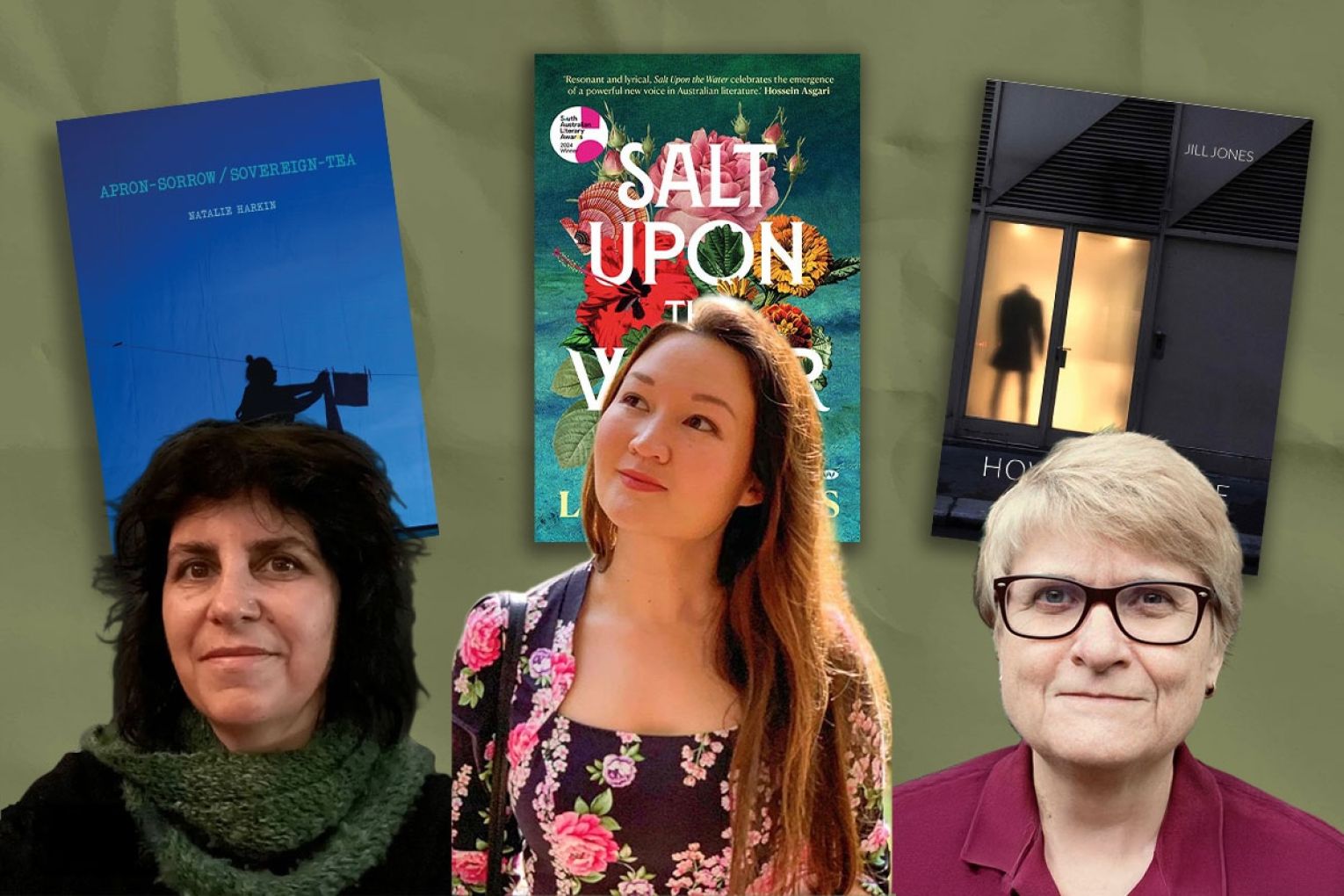
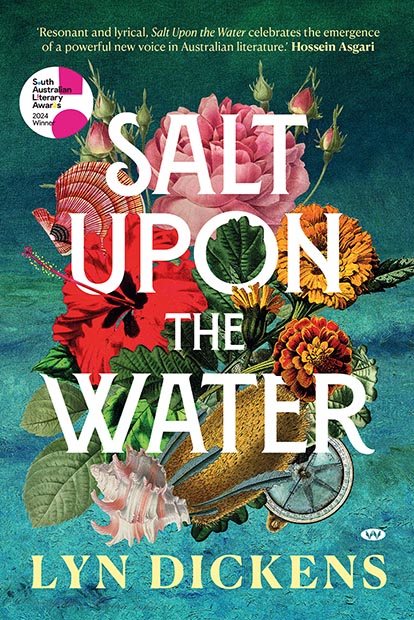
Adelaide novelist Lyn Dickens is in the running for Australia’s most prestigious literary prize, with her debut book Salt Upon the Water longlisted for the $60,000 Miles Franklin Literary Award on Wednesday.
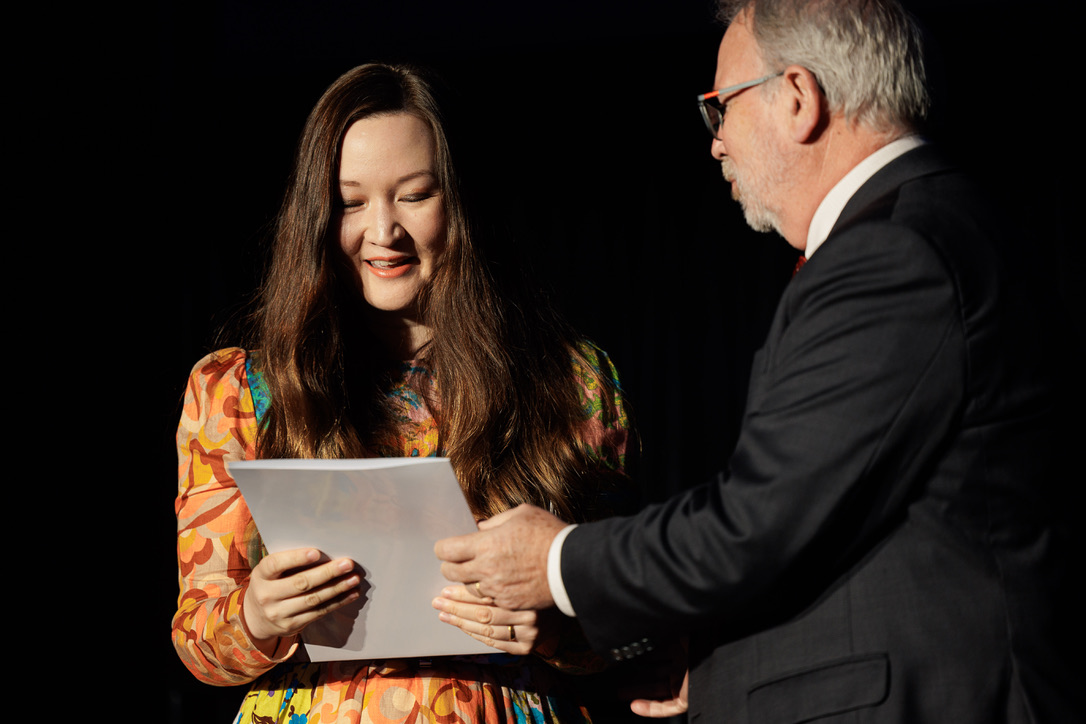
A work of historical fiction inspired by the often-overlooked Asian ancestry of Adelaide’s city planner Colonel William Light, Salt Upon the Water was published last year after winning the Wakefield Press Unpublished Manuscript Award at the 2024 South Australian Literary Awards.
Dickens was surprised to hear her book would join this year’s longlist, which features ten novels praised by the Miles Franklin judging panel for their “destabilised histories, faltering memories and chequered geographies”.
“To say I was shocked to be long-listed is a bit of an understatement – when I first got the news it was incredibly surreal, and it’s definitely not something I expected from my debut novel!” Dickens told InReview.
“It’s a wonderful honour to be part of a prize like the Miles, which has awarded and listed so many other writers I admire, and I’m thrilled to be placed among such a fascinating longlist of novels this year.”
Joining Salt Upon the Water on the Miles Franklin longlist is Randa Abdel-Fattah’s Discipline, the book that scored the Palestinian Australian author and academic spot on the 2026 Adelaide Writers’ Week program.
You might like

Abdel-Fattah’s subsequent removal from the lineup by the Adelaide Festival’s then-board prompted a widespread author walkout, the resignation of director Louise Adler, and Writers’ Week’s eventual cancellation.
Abdel-Fattah is currently the only confirmed author to be invited for the 2027 Writers’ Week program under new director Rosemarie Milsom, after appearing in Adelaide in conversation at the artist-run alternative festival Constellations: Not Writers’ Week in February. Discpline has previously taken home the People’s Choice award at the 2026 Victorian Premier’s Literary Awards in February.
The winner of the 2026 Miles Franklin Literary Award will be announced in August.
Poets take home NSW Literary Awards
It’s been a big week for South Australian writers, with the New South Wales Literary Awards also recognising two respected figures of the local literary community on Monday night.
Narrunga poet Natalie Harkin took home the $30,000 Indigenous Writers’ Prize for her latest work Apron-Sorrow / Sovereign Tea, which explores the “unfinished business” of South Australia’s decades-long history of Aboriginal women being compelled into domestic servitude. The book was also longlisted for the Stella Prize in March.
“This book was a long time in the making – a collaborative mixed-media project with many amazing and generous women in my family and community to document South Australian Aboriginal Women’s stories, and the suppressed and hidden labour history that represents an epic backdrop to all of our lives,” Harkin said in a statement shared with InReview.
Subscribe for updates
Harkin spent years on the project, exploring around 2500 files held by South Australia’s Aboriginal Domestic Service archive while also capturing the testimony of First Nations women touched by the long-running practice.
“There can be no truth-telling in this country without access to our archives, and this award is also for all our ancestors who wrote with such dignity and defiance, letter after beautifully handwritten letter, to the state.”
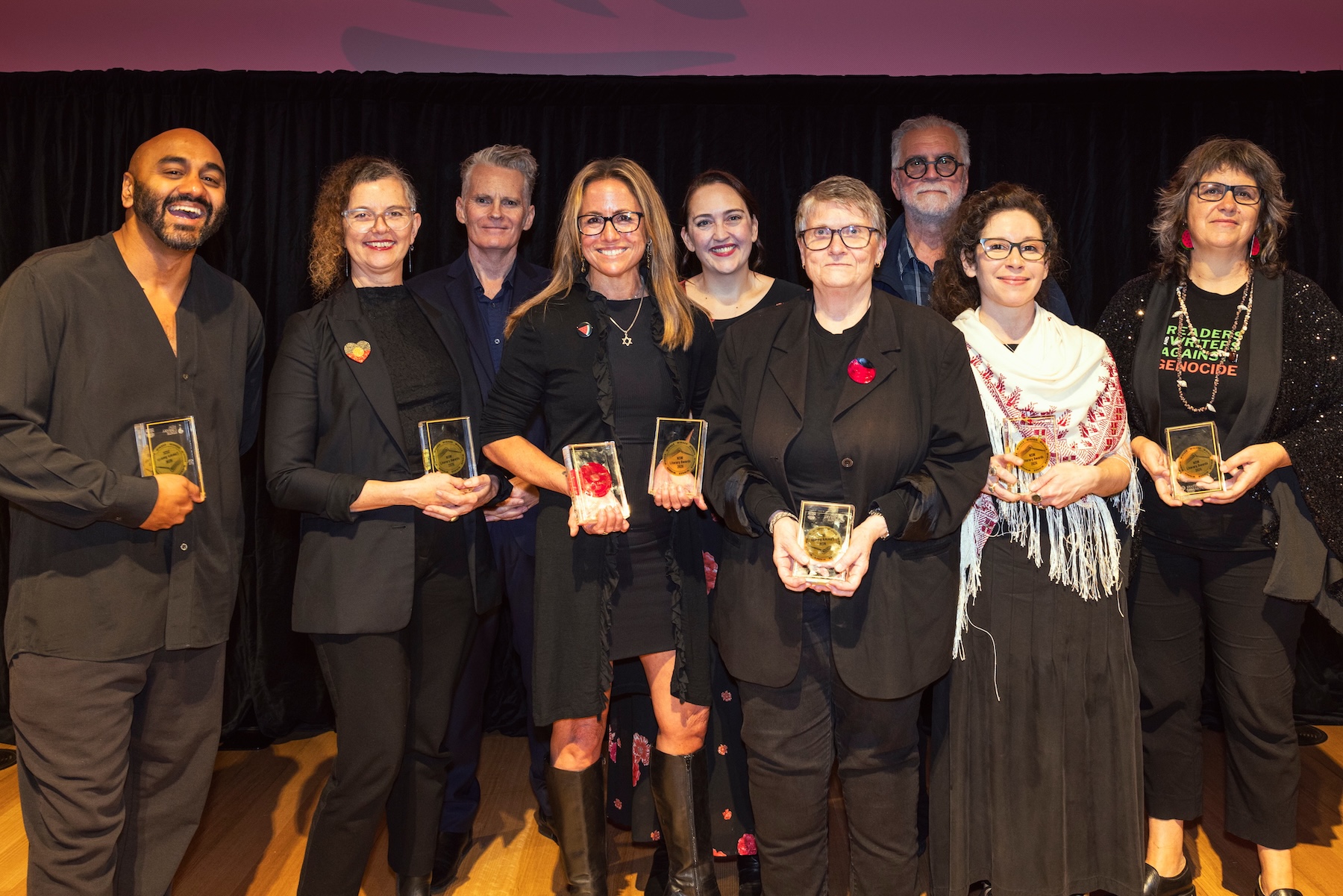
Poet Jill Jones was also awarded the $30,000 Kenneth Slessor Prize for Poetry for her latest collection How To Emerge.
“The poems came about through observation and attention to the world, from the infinitesimal to the cosmological, that is, I was looking at the human as part of a much bigger world,” Jones told InReview. “I also was interested in how language itself unfurls and renews itself, particularly through accumulation and echo.”
The prize’s judges highlighted “a quiet, depth-defying resonance throughout the book as it skates between sky, asphalt, weed, wharf, vulnerability and memory”.
“That word ‘resonance’ is important to me not only as a welcome interpretative response, but also as a way of recognising that everything resonates, vibrates, moves continually, the human and the non-human,” Jones reflected.
“I was also pleased they noted the book also contains warmth and humour, as well as being a work of care and concern about the current state of the world. It is political as well as personal. I hope other readers might find some of that in the book, along with their own resonances between the poems and their experience of the world.”
Historian Clare Wright won Book of the Year and the $40,000 Douglas Stewart Prize for Non-fiction at the awards for her Näku Dhäruk The Bark Petitions.
Reflecting on their wins, both Dickens and Harkin recognised independent Adelaide-based publishing house Wakefield Press, which published both Salt Upon the Water and Apron-Sorrow / Sovereign Tea.
“As an independent publisher, as they do a lot for the South Australian writing community and for literary fiction,” Dickens said.
Want to see more stories from InDaily SA in your Google search results?
- Click here to set InDaily SA as a preferred source.
- Tick the box next to "InDaily SA". That's it.
Free to share
This article may be shared online or in print under a Creative Commons licence