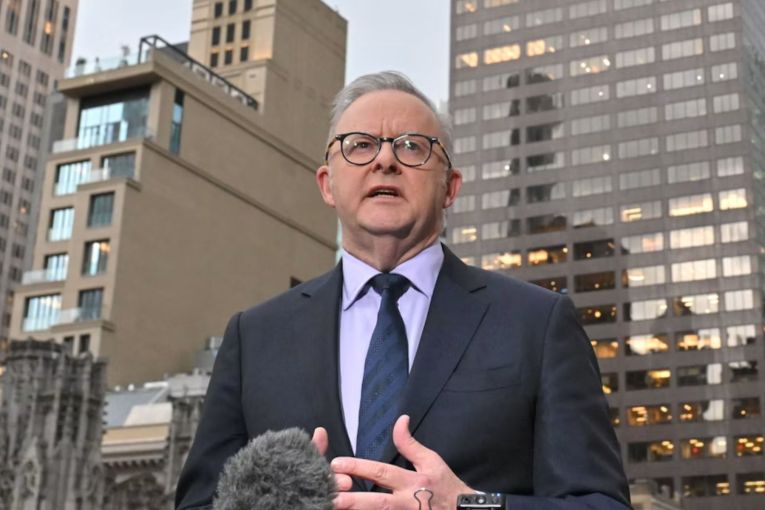
‘Premier’s tin ear’: Former Writers’ Week director claims amid cancelled author appearance
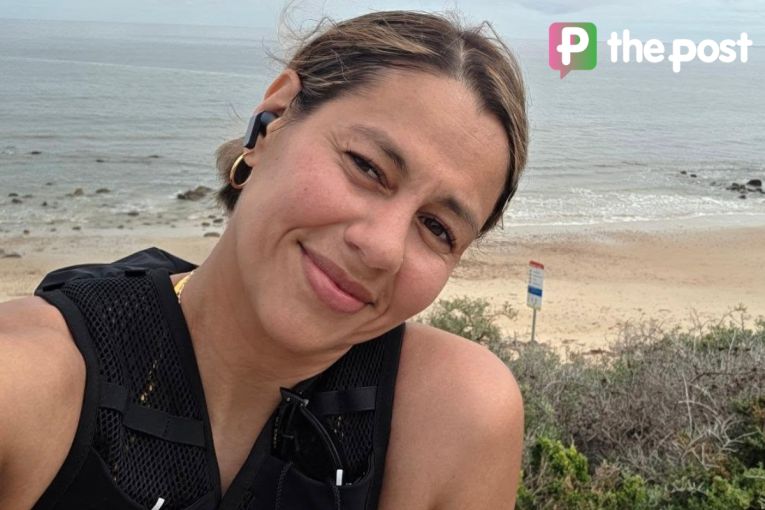
“The first thing every person I know does [when they wake up] is reach for their phone and check if their friends are still alive”, the Palestinian-Australian author at the centre of the Writers’ Week implosion said in Adelaide on Sunday.
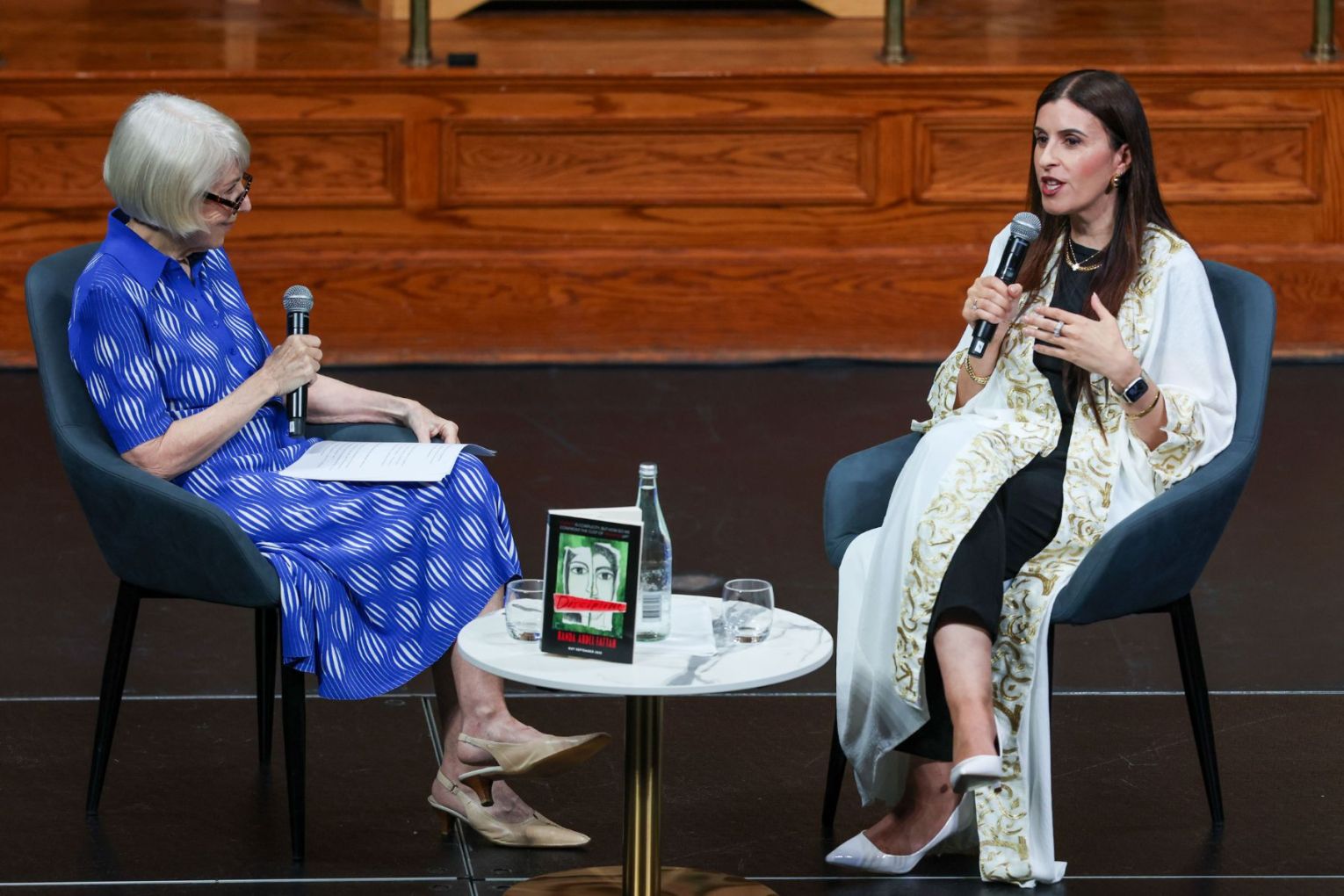
When Dr Randa Abdel-Fattah visited the Adelaide Festival website on January 8 to read the statement about her cancellation from Adelaide Writers’ Week, she first had to click through an acknowledgement of country.
She claimed it was an example of the “juxtaposition of performativity and then racism” prevalent in Australian institutions, she told a sold-out room at Adelaide Town Hall on Sunday night.
It’s a juxtaposition canvassed in her 2025 novel Discipline, which she would have discussed at Adelaide Writers’ Week on an hour-long panel with other authors.
Instead, she joined former Writers’ Week director Louise Adler speaking to a crowd of about 1100 people – which sold out in three days and grew a sizeable waitlist for tickets – and received a standing ovation.
The event, organised by the Australian Friends of Palestine, was part of an alternative festival Constellations, and hosted by Greens federal senator Sarah Hanson-Young, with opening remarks from high-profile journalist Peter Greste – a press freedom advocate known for being imprisoned in Cairo.
Had Writers’ Week gone ahead without intervention from the former Adelaide Festival board – board minutes linking its decision to feared government defunding – Abdel-Fattah would have been one of three Palestinian writers, alongside 12 Jewish writers on the lineup, Adler told the crowd on Sunday night.
Correspondence revealed by InDaily confirmed the government said it would not reduce the festival’s base funding, but the board still removed Abdel-Fattah from its Adelaide Writers’ Week lineup.
Though the Premier was central to the freedom of expression debate that evolved amid the Writers’ Week saga – fielding daily questions on the literary festival – he copped only one direct mention at Sunday night’s event.
Adler said she marvelled at Malinauskas’ “tin ear” and claimed he was insensitive to Abdel-Fattah and the Australian Muslim community. A spokesperson for the Premier was contacted for comment.
You might like
Premier Peter Malinauskas consistently said he did not support Abdel-Fattah’s programming and disagreed with Adler’s statement that Abdel-Fattah’s exclusion was racist on Monday morning. In a letter to the Islamic Society of SA in January, he wrote, “my government rejects all racist or antisemitic behaviour, remarks or sentiment”.
Malinauskas has stood by his view that Abdel-Fattah should not have been programmed for Adelaide Writers’ Week, and when asked about Abdel-Fattah’s Adelaide appearance on Sunday morning, only said “we live in a robust, rich, diverse liberal democracy and that’s a good thing”.
Most of the conversation between Adler and Abdel-Fattah at Sunday’s event focused on the novel Discipline, which follows a young journalist fighting racism in the newsroom and an opportunist academic working for a university with ties to an Israeli weapons manufacturer.
Abdel-Fattah said when she first pitched the book to an Australian publisher, the feedback she got immediately was that “the first page is too political”.
But she said to move through life as a Palestinian is inherently political when “the first thing every person I know does [when they wake up] is reach for their phone and check if their friends are still alive”.
“It came to me when I was watching Avatar with my kids on the holidays, and we went to one where you wore the 3D glasses,” she said.
“I was sitting there pretending to enjoy the film with my kids but these 3D glasses, when it got too much, I put it down.
“But as Palestinians, we are literally, I’m not exaggerating, moving every single second of our day as if we are wearing 3D glasses and we are seeing the genocide as we are talking to you, pretending that the world is in a 2D space.”
Responding to a question about how she coped with being at the centre of the Writers’ Week controversy, Abdel-Fattah said “you don’t have time as a Palestinian to self-indulge…because you’re very conscious of the fact that every experience is compared to Gaza”.
“When you’re with your kids, you’re not Randa the activist or Randa the academic, you’re just mum.
“But at the same time, I look at my children and I say to myself, they look like the kids on my phone, and the world that I’m fighting for is for them.
“The world that they deserve, and that all children deserve, is the world that we have to fight for, and those are the sort of things I tell myself to go on.”
Stay informed, daily
Director slams Writers’ Week “propaganda campaign” at work
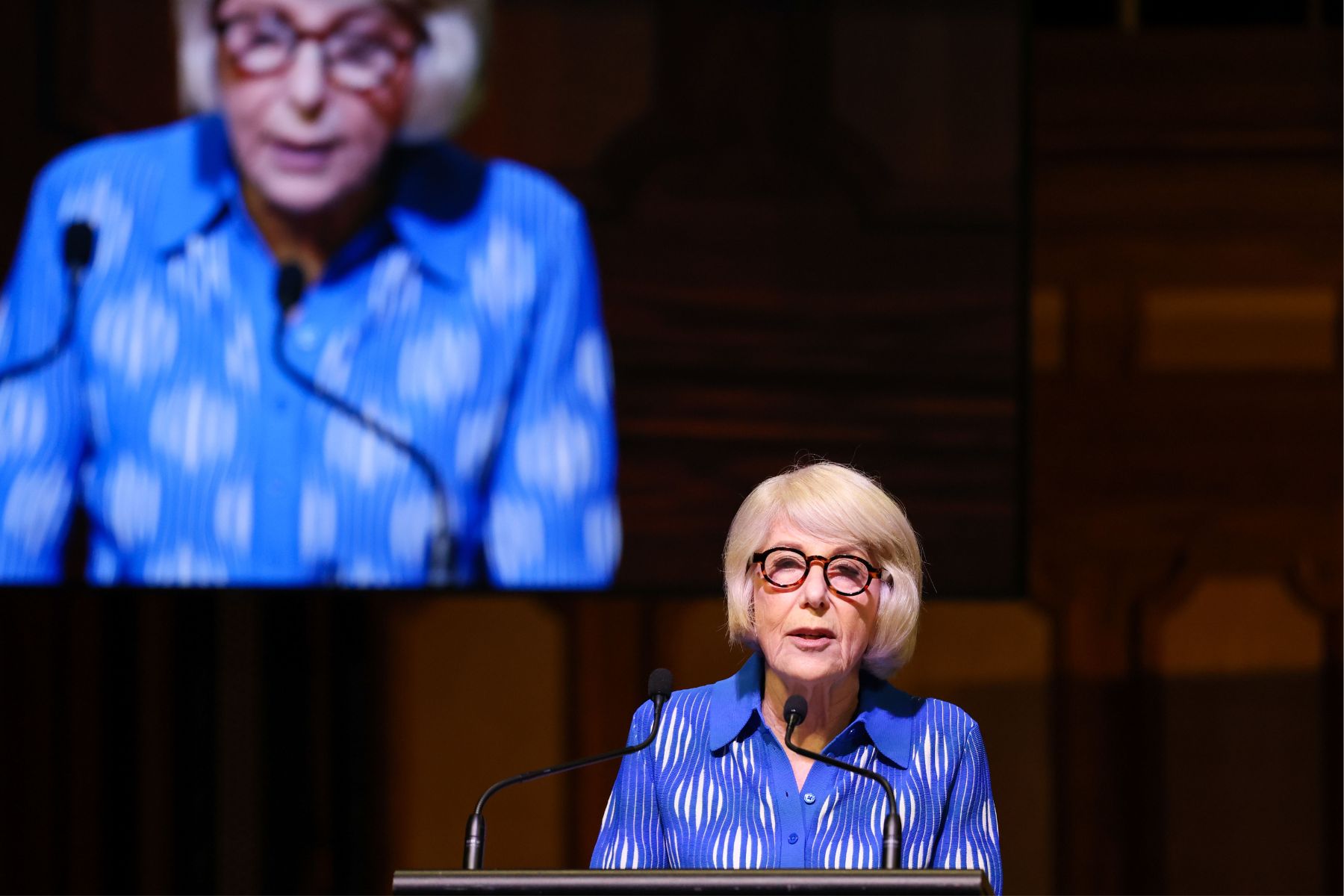
The Sunday evening event was Adler’s first Adelaide appearance since her resignation as Writers’ Week director, a role she began in 2023 which also saw controversy over her programming.
Adler publicly addressed allegations of hypocrisy levelled at her by former Adelaide Festival board member Tony Berg, who resigned from the board in October, before Abdel-Fattah was uninvited from the 2026 event.
Adler was accused of uninviting New York Times columnist Thomas Friedman from Writers’ Week 2024, off the back of a letter signed by Abdel-Fattah and 11 others with concerns over an op-ed Friedman had written that compared various Middle Eastern groups to insect vermin requiring eradication.
Correspondence between Friedman and former Adelaide Festival Chair Tracey Whiting confirmed Friedman did not attend Writers’ Week 2024 because of a scheduling conflict.
Berg – who is also a former governor of the Australia-Israel Chamber of Commerce – had alleged that Adler gave the board an “ultimatum” in 2024 that she would resign if Friedman was not disinvited.
Though not addressing Berg specifically, Adler said it was a “false equivalence” to compare Friedman and Abdel-Fattah’s circumstances.
“On the one hand, you have a New York Times columnist, a figure at the heart of the journalism establishment, and on the other, a Palestinian academic and author who despite being at the centre of the saga and despite being a respected scholar and award-winning writer, she’s unable to get an opinion piece published in a mainstream media outlet,” Adler said.
Adler said the “Friedman fixation” was part of a “propaganda campaign” that swirled around the high-profile literary festival’s cancellation.
“To suggest that a change in scheduling or indeed to suggest any objection to his appearance amounts to a denial of Friedman’s free speech is risible,” she said.
“Friedman has not complained about having been silenced. Unlike Dr Abdel-Fattah, he has not been vilified, defamed, or treated with disrespect.”
Friedman – a Pulitzer Prize winner – would have appeared at one 2024 event via livestream and told Nine Newspapers in January that he “was told by email that the timing would not work out”.
“I said, no problem. End of story. That is all I know,” Friedman said.

Want to see more stories from InDaily SA in your Google search results?
- Click here to set InDaily SA as a preferred source.
- Tick the box next to "InDaily SA". That's it.