Art for Takayna reflects on beauty and consequence
An exhibition of art and music grounded in the Bob Brown Foundation’s long-running artist residency in Takanya in Tasmania’s northwest, Art for Takayna reminds us change through art isn’t just possible – it’s already happening.
The Bob Brown Foundation works to defend nature’s treasurable ecosystems around the world, with sights well and truly set on ensuring Takayna, in Tasmania’s northwest, is recognised as a national park with World Heritage listing and that it’s returned to Aboriginal ownership. Like much of our earth, Takayna is in serious danger of disappearing, due to mining and logging. Since 2015, the Bob Brown Foundation has hosted the Art for Takayna annual residency, culminating in a fundraising exhibition. For five days, artists from around Australia camp in remote areas of this 450,000-hectare temperate rainforest, living with the land that will inspire the art. The description of Liz Savchuk’s magnified photographs of fern fronds, Noticing I and II, read, “Give her time. Take your time to notice.” This feels like a gentle directive for the exhibition, a fairly small one that begs a respectful viewing. If we’re to care about the Takayna at all, we need to enter into it from the confines of the Immersive Light and Studio space, and tread slowly.
I was particularly struck by Heidi Kenyon’s anthotype in circular triptych, called Decomposing / Recomposing. An anthotype is an image made with light-sensitive plant pigments, and Kenyon’s are a reproduction of the invasive orange pore fungus found in the Takayna. The retro-rich colour of Decomposing / Recomposing comes from turmeric on cotton rag, and the pieces are backed with handmade recycled paper sowed with native seeds, manifesting the significance of biodiversity.
There’s a triptych canvas print by Walkley award-winning cartoonist Jon Kudelka called The Boneyards, which depicts endangered Tasmanian devils with their sharp teeth bared, and the words “in the long run”, “the devils will eat our bones”, “but not today / (amen)” spread across the three canvas prints. Kudelka died of brain cancer last February, so the work also has a decomposing / recomposing theme, though one with a preparatory, accepting lens.
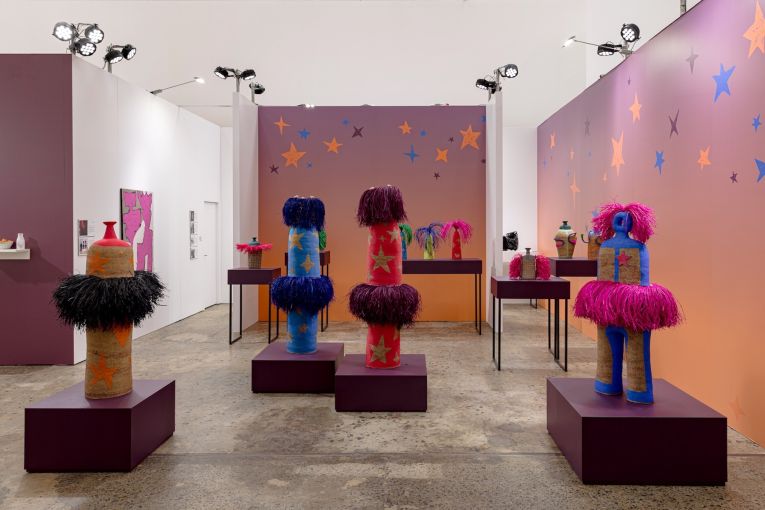
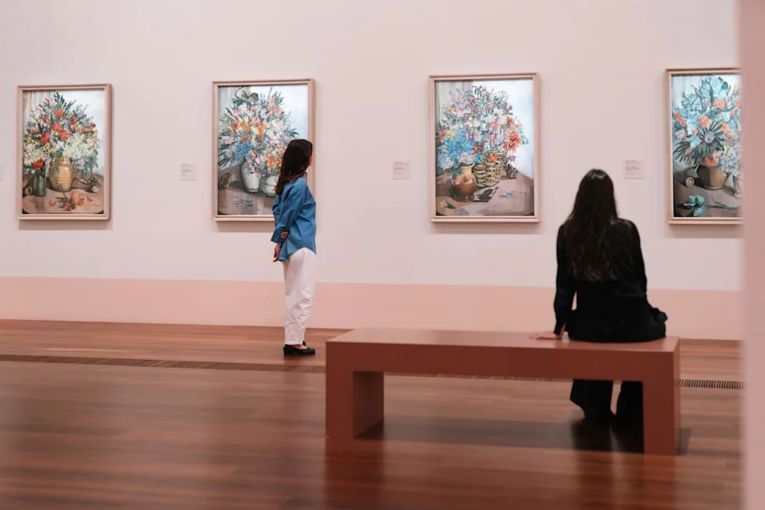
Corrie Hosking’s illustrations of three masked owls appear as an en memoria for those that she used to see in her home state of South Australia, and statement of precarity for those very small numbers that could use protection in Takayna.
You might like
Three of the four artists I just mentioned are SA-based, and indeed there’s a large sample of South Australian artists – reflecting, perhaps, the local setting and the exhibition’s place in this year’s Adelaide Nature Festival program. Either way, they’re remarkable pieces to spend time with.
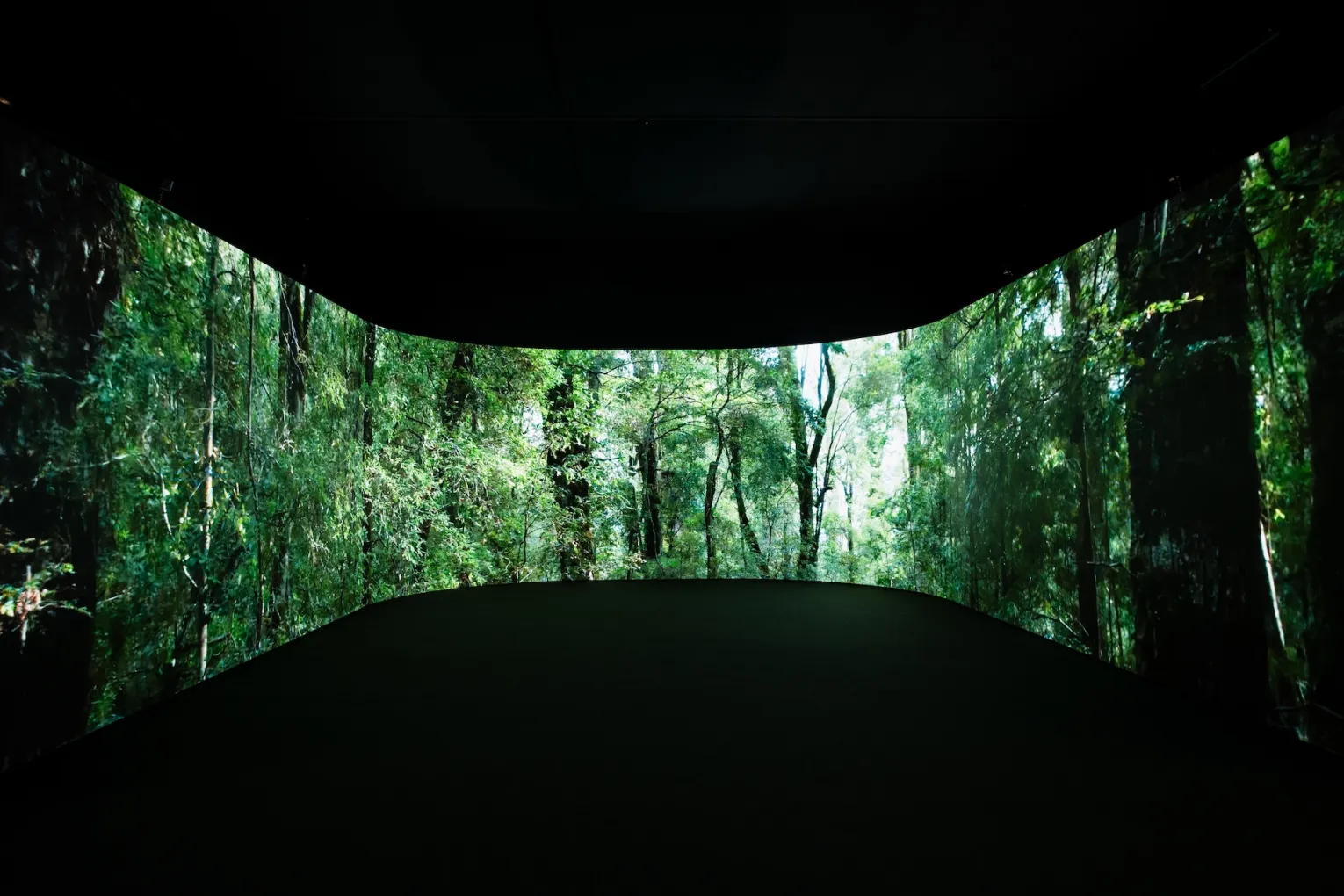
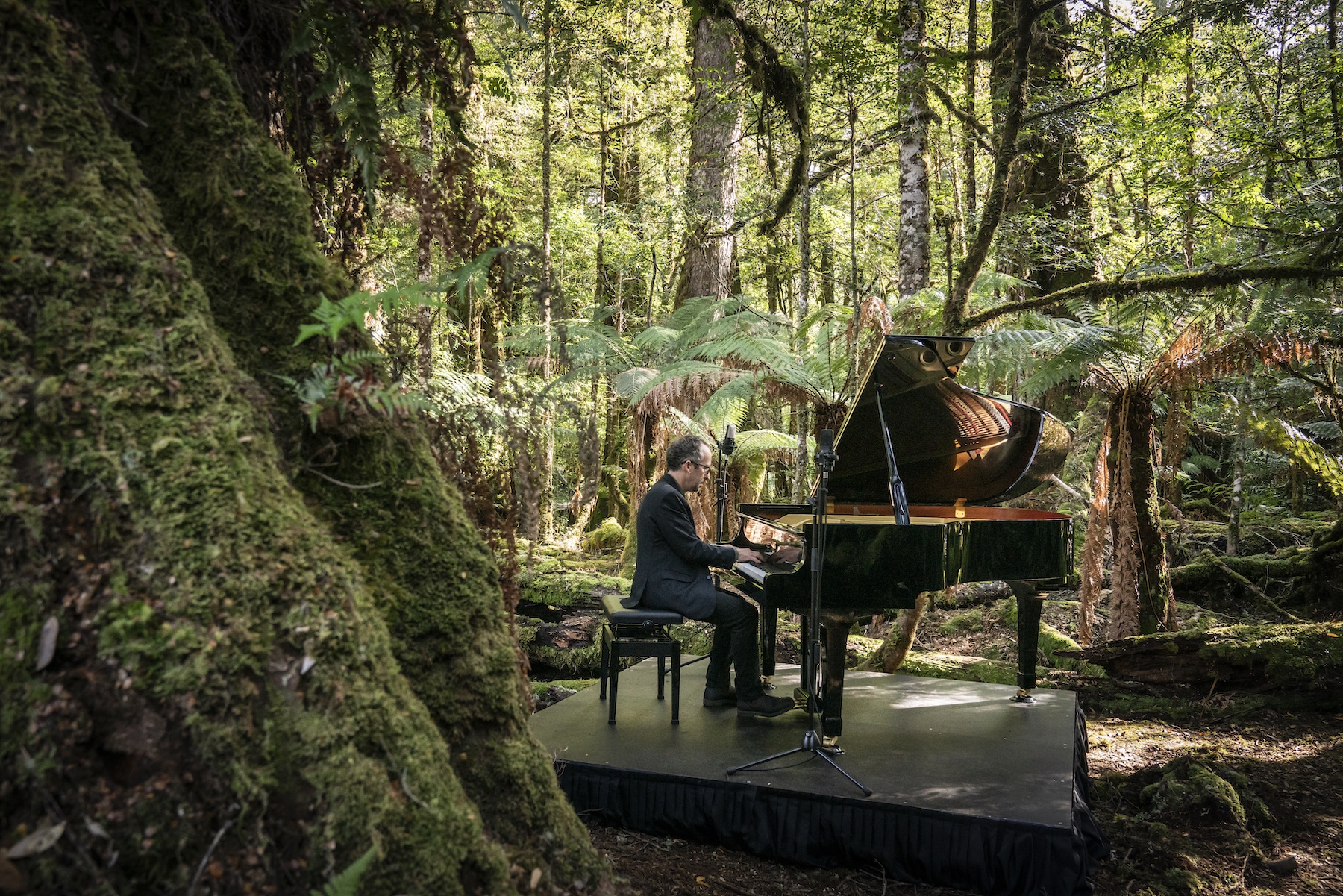
The first room of the exhibition showcases these and other artworks – woodcuts and jewellery, digital photographs, video and watercolours – while the second room is filled with two floor-to-ceiling screens. One is of an elegant one-take video of composer and performer Dave McEvoy in the forest, playing on a grand piano, followed by a chorus of birdsong and the sound of wind and insects – both sublime compositions. It’s amazing how very right a grand piano appears smack in the middle of a rain forest – imagine the difficulty of getting it there. The other screen is a specially built curved screen, running the length of the remaining three walls, reflecting dreamy landscapes of Takayna. If we’re not in a bird’s eye position flying over the land, we’re moving closer or already up close, so that we feel the claustrophobic and simultaneous opening up of the forest, and we’re amongst it, a part of it, taking notice for the eighteen minutes the film runs. In short, it’s an immersive space, where we feel like maybe, somehow, we’re there in the Takayna. And how stunning it would have been to be in attendance when McEvoy performed – but then he wouldn’t have presented as alone in the setting, and the piece would not have felt as though it’s a projection of how he reacts, as an artist, to the space, which is what every artist in this collective is doing. The art is personal; it’s the curation of it that creates the sense of collaboration.
The Art for Takayna exhibition is about the beauty and consequence of one of the largest temperate rainforests on earth, and I feel the artists have been successful in creating work that is meant to inspire action. A merch desk sits just outside the space, with flyers about the forest and the foundation, with postcards you can send to add your name to those opposing mining and logging in the region, and with t-shirts you can buy to openly pass on the message further. I can’t imagine too many people pass by without stopping – and if they do, will they later find themselves regretting it?
We need more proactive exhibitions like this – where art is not for art’s sake, but for the sake of saving out planet.
Art for Takayna continues at Immersive Light and Art (ILA) until October 10
Want to see more stories from InDaily SA in your Google search results?
- Click here to set InDaily SA as a preferred source.
- Tick the box next to "InDaily SA". That's it.
Free to share
This article may be shared online or in print under a Creative Commons licence