Adelaide Festival review: POV
A meta-layering of perspectives and storytelling mediums gives re:group performance collective’s POV a bubbly charm, even as the show delves into the serious territory of how parental mental health affects children.
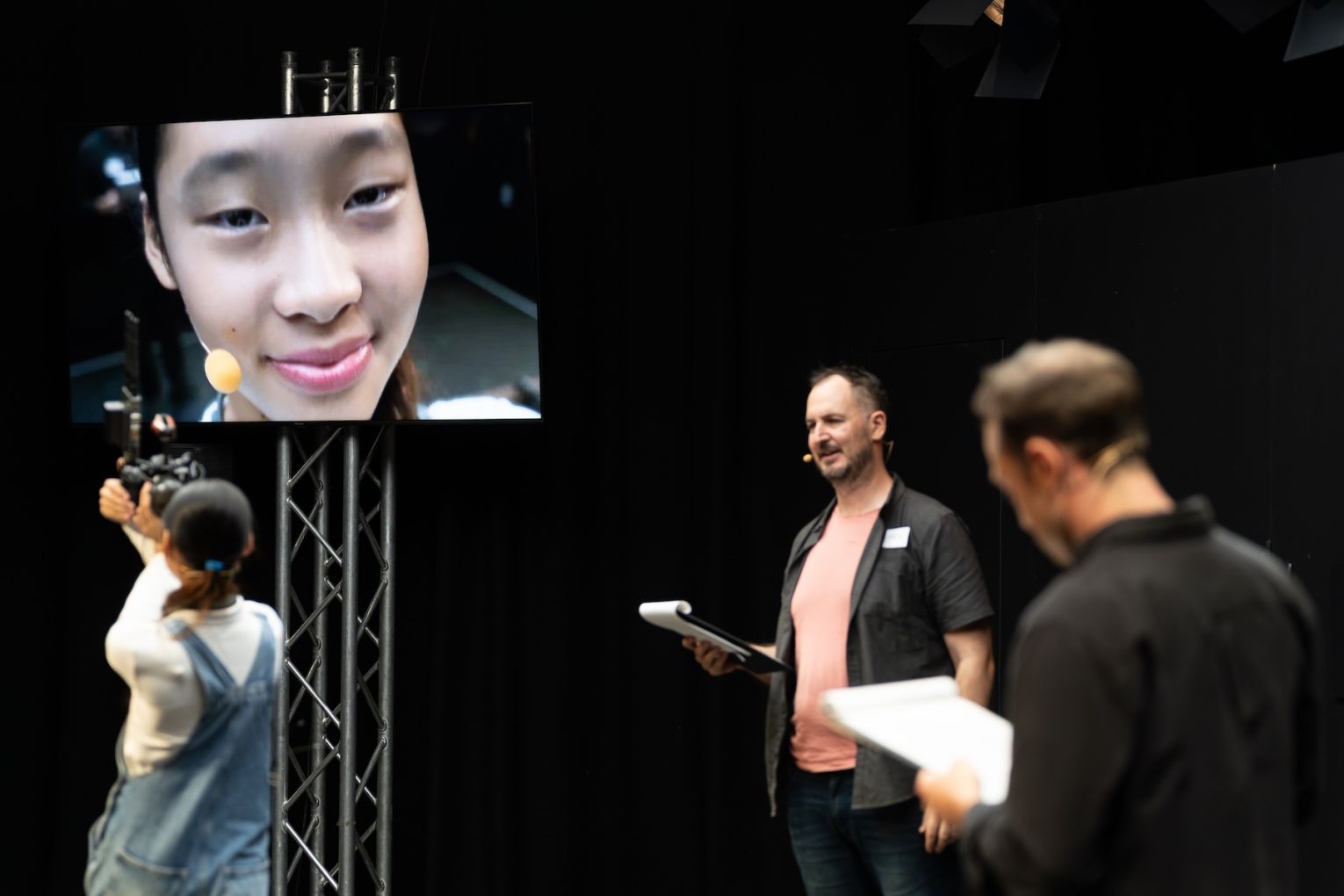
A polaroid photo develops in front of a camera lens. The image’s slow emergence is livestreamed to four screens hung around the Space Theatre. The audience watches on as two people sitting uncomfortably alongside each other gradually appear between the photo’s familiar white borders.
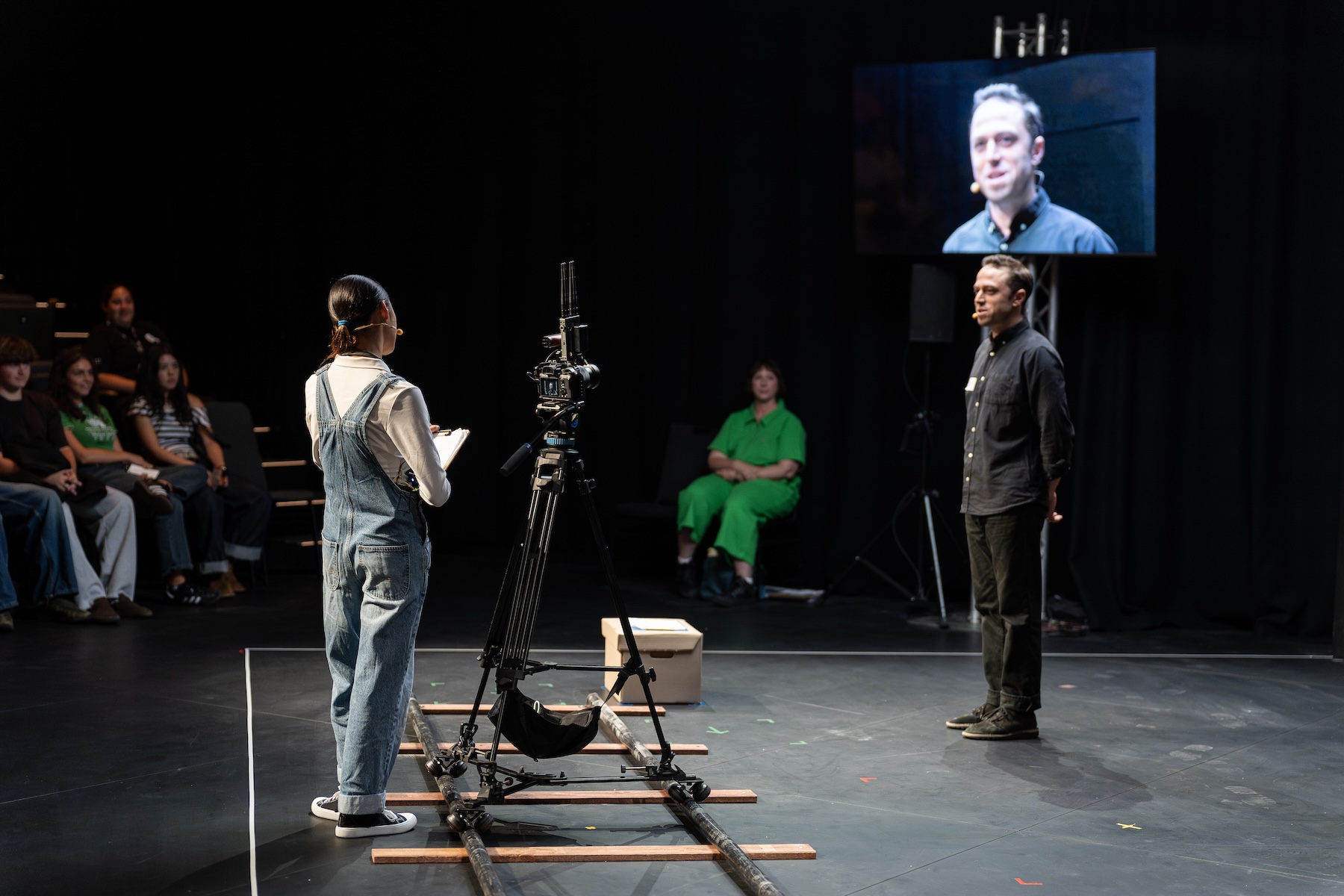
This is how POV begins – with 11-year-old Bub (Yuna Ahn, alternatively portrayed by Grace Tione), photographing the actors she has enlisted to play her mum and dad in re-enactments for her documentary. The theatre show goes on to follow Bub as she directs the unsuspecting actors – recruited fresh each night and arriving on stage unprepared and unscripted – in recreations of scenes for her film. Already, the layers are piling up – actors who are both themselves and Bub’s parents, a young person who we similarly know concurrently as Yuna the actor and Bub the character, a real theatre show co-existing with a fictional documentary film production. And that is all before the letters from Werner Herzog start arriving.
For the Wednesday evening performance of POV’s Adelaide Festival run, Mum and Dad are played by local actors James Smith and Hew Parham respectively. The pair, both likely familiar to Adelaide audiences, look simultaneously uncomfortable and willing as Bub directs them to their first marks. In the show’s early scenes, a great deal of genuinely funny comedy is harvested from this dynamic. Huge laughs fill the theatre as Hew and James are directed to dance, to improvise with household objects, and to read out ironic quotes from texts like An Actor Prepares by Constantin Stanislavski. But even in these establishing scenes, cracks are showing – Mum is initially reluctant to be interviewed for the documentary and isolated, before a surprising switch that sees her speaking in a rapid stream of consciousness to Bub’s camera. Dad is running interference between Mum and Bub, and Bub is acting out.
You might like
After a six-minute break in the show (in which Yuna’s chaperone offers the audience biscuits), the second half of the work leans more heavily toward unpacking its core themes. Mum has moved out and Dad is unwilling to take Bub to visit. Bub is confused and desperate for answers, but the adults are steadfast in their supposedly-protective silence. The tonal step-change doesn’t quite carry the audience along with it. Primed to laugh after the first half and with the initially humorous set-up of child directing under-prepared adult actors persisting, there aren’t enough indicators in the text or staging to help the audience’s frame of mind shift toward more serious engagement. As a result, some dramatic scenes early in the second half don’t land with as much emotional weight as they could. The turning point is an excellently-crafted moment during which an air mattress inflates, slowly, under the prone form of James’/Mum’s unmoving body. This is one of a handful of truly stunning and highly rhetorical (although not too obvious) images the creative team orchestrates on stage – a true achievement given the work’s deliberately DIY aesthetic.
From the air mattress scene onward, the show’s title – POV – emerges clearly as its central strength (which, of course, it has been all along). Watching either through Bub’s camera lens, or via her first-person commentary and engagements, we see her navigate what she can control and what she can’t. It becomes clear how damaging “protective” adult silence about parental mental health can be for kids. At times, the mode of this messaging feels didactic, but this is unapologetic – an intentionally direct approach to a subject that requires more discussion.
The focus on Bub’s experience is also clever in that it alleviates the need for the unscripted and unrehearsed actors to embody episodes of acute mental health crisis on stage. There is one time the production veers near this territory, and it is a dead spot in the show – something that is surely predictable given the weight of the ask on the actors. This, though, is an aberration. For most of its run time, POV speeds along, alternating between laughs and poignancy. Throughout, it is powered by the generosity of a talented cast doing their best to support one another (a fitting metaphor for how some families navigate mental health needs) and the big hearts of a creative team that devised an entirely original method for conducting an important conversation.
POV is showing at the Space Theatre until March 8 as part of the Adelaide Festival
Want to see more stories from InDaily SA in your Google search results?
- Click here to set InDaily SA as a preferred source.
- Tick the box next to "InDaily SA". That's it.
Free to share
This article may be shared online or in print under a Creative Commons licence