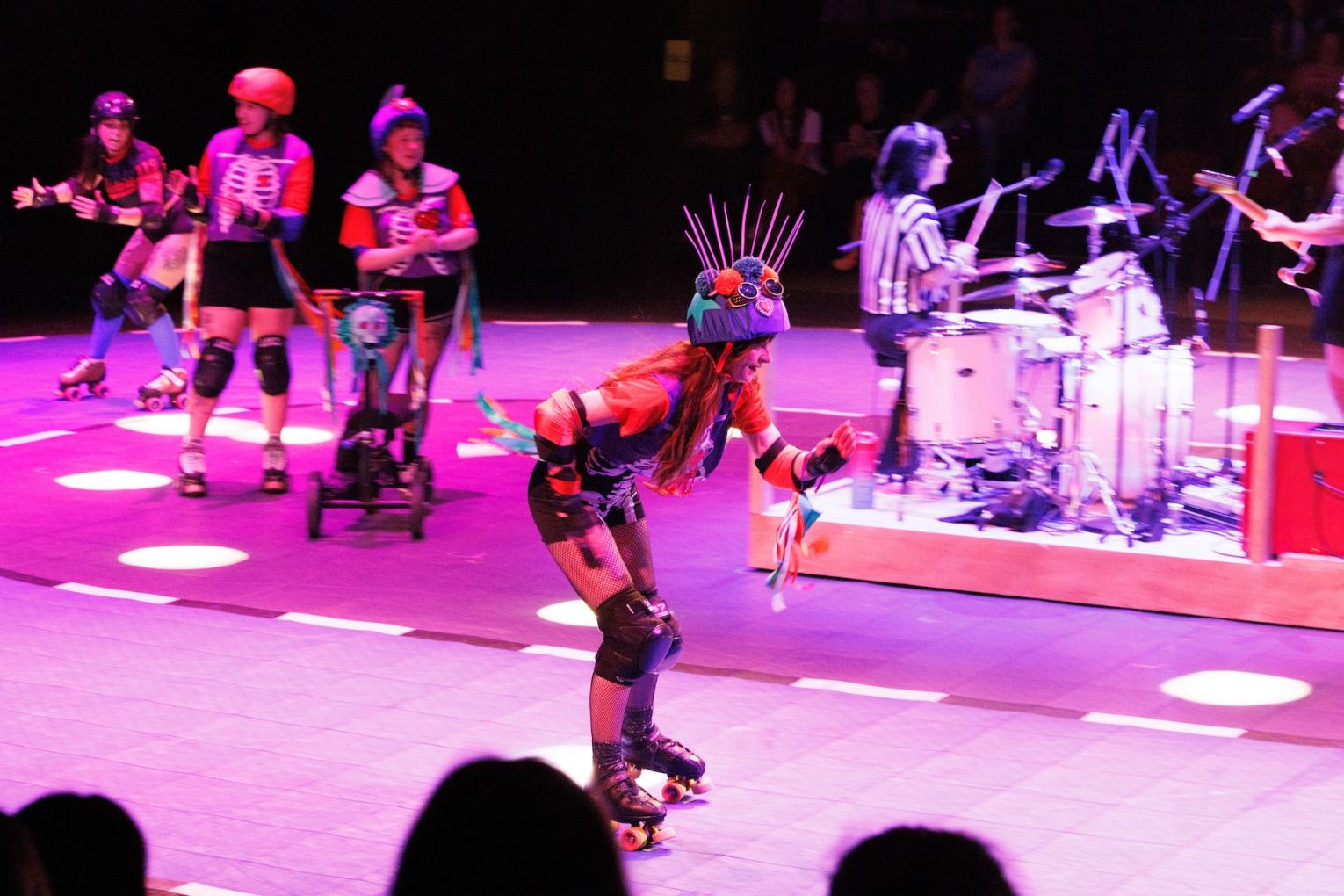
This is a performance in constant motion. Already, when we enter the theatre, a team of skaters (real-life members of the Adelaide Roller Derby League) are circling a projected track. The audience is arranged in two halves, facing each other across the stage, the actors turning this way and that to deliver their lines. Like the performers, most of the set is on wheels. The segments roll under the spotlights, revolve, connect, part, and re-form. All this wheeling and whirling is a fitting backdrop to Clare Watson and Virginia Gay’s tale of a nomadic young family and the propulsive sport they get drawn into.
Maxine and Billie – the duo at the centre of Mama Does Derby – enjoy a mother-daughter dynamic straight out of Gilmore Girls. The irrepressible single mum and her brilliant, reserved sixteen-year-old share a closeness that blurs the boundary between the parent and child roles, and a snappy private dialect with which to amuse each other and baffle outsiders. Naturally, pop-culture references abound. A request from neighbour Weird Neil – a charming oddball straight out of Stars Hollow – to use their Netflix password to watch Gilmore Girls is a knowing wink to the audience; Freaky Friday also scores a mention.
Where that TV series never ventured was into the realm of comedy horror. Mama Does Derby, however, takes a turn into delightfully bizarre territory with the arrival of a svelte sleep paralysis demon at the foot of Billie’s bed. Her journey with this eerie – and remarkably flexible – manifestation of her fears provides some strong comic moments (there’s a lot of admin involved in being an agent of darkness, apparently), as well as a moving reminder that managing anxiety doesn’t necessarily mean banishing those feelings but rather reframing our relationship with them.
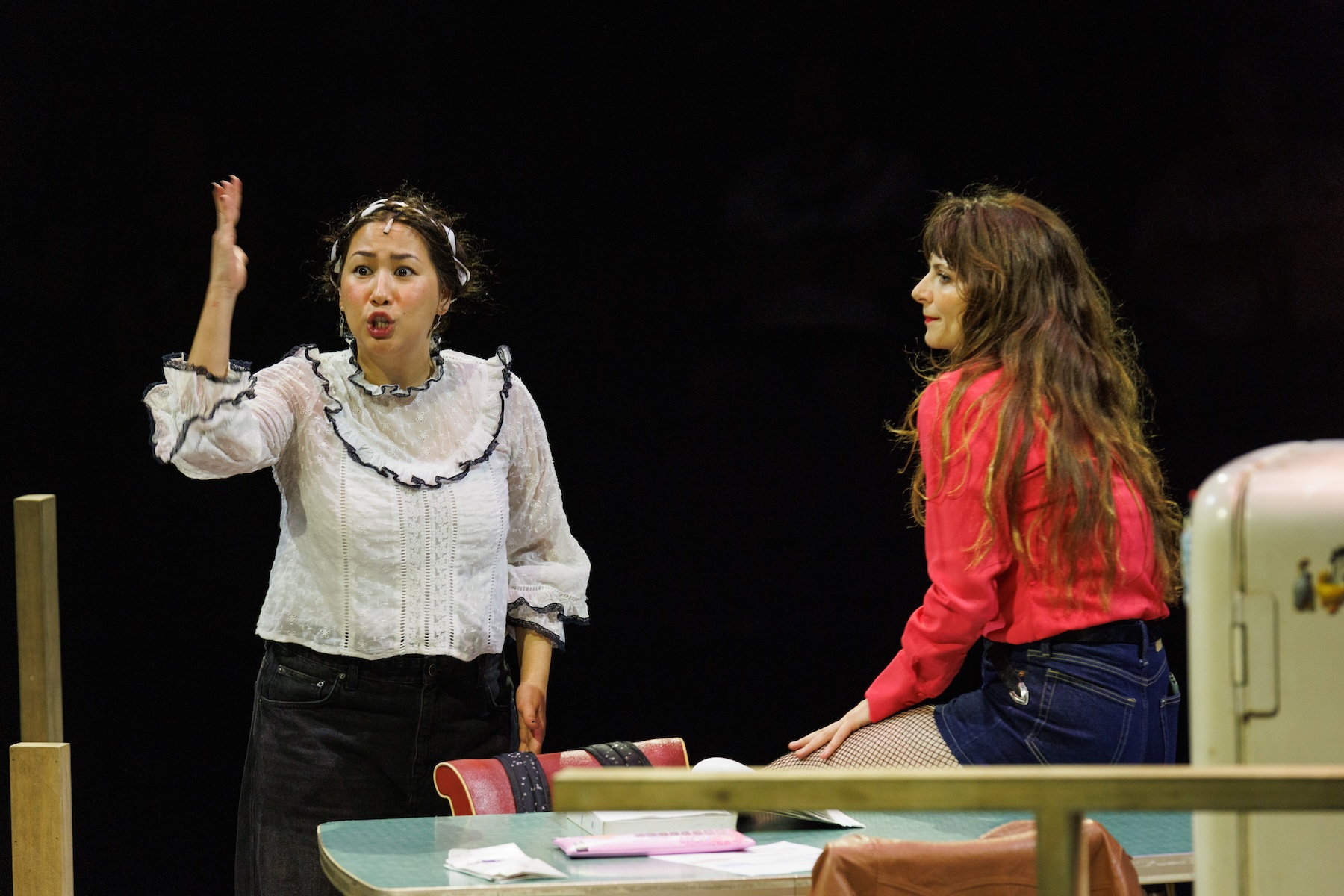
Billie’s ambivalence about having a mother who treats her like a peer and doubles as a best friend adds a compelling tension to their interactions, even if the consequences aren’t reckoned with as fully as they might have been (their requisite climactic shouting match resolves with a band-aid apology: “I’m sorry!” / “No, I’m sorry!”).
Amber McMahon as Maxine and Elvy-Lee Quici as Billie make an engaging duo. Quici in particular gives a standout performance in her portrayal of a teenager juggling competing anxieties and unsure whether she wants to be treated as a child or an adult. Annabel Matheson and Dylan Miller are charming and very funny in their multiple supporting roles.
Along with live roller derby, we are treated to music by an onstage band. Music director Joe Paradise Lui and team play a full-blast soundtrack that includes the Pixies, the Beastie Boys, and Janis Joplin. Charli XCX also features as Billie’s favourite artist, with her danceable and thematically bang-on hit ‘Apple’ (which references intergenerational trauma) used repeatedly. Seamlessly timed sound effects add to this immersive soundscape.
The real-life skaters, as well as demonstrating their athleticism on the roller derby track, are responsible for lightning-quick set changes, moving set pieces (and sometimes actors) around the performance space.
The use of roller derby is both visually exciting and an effective plot mover, but amidst the various storylines and the larger discussions of parenthood, trauma, and coming-of-age, it would have been interesting to explore in more detail why the characters (and the writers) were drawn to this sport specifically. What makes it unique, and what does Maxine need from it at this point in her life, beyond it being something to do of an evening? Is it the community, the noise, the danger, the full-bodied intensity, the diversity of players it attracts, or perhaps the theatricality of the nicknames and costumes?
Subscribe for updates
Mama Does Derby manages to combine complex themes with high entertainment value, delivered with quick wit, a light touch, and an infectious playlist.
Mama Does Derby is playing at the Adelaide Entertainment Centre Theatre until March 8 as part of Adelaide Festival
Want to see more stories from InDaily SA in your Google search results?
- Click here to set InDaily SA as a preferred source.
- Tick the box next to "InDaily SA". That's it.
Free to share
This article may be shared online or in print under a Creative Commons licence