Adelaide Festival review: Sergej Krylov with Konstantin Shamray
This year’s Adelaide Festival ended on an unusually introspective note in a partnership of discipline, warmth and empathy. Krylov and Shamray are two extremely complementary musicians.
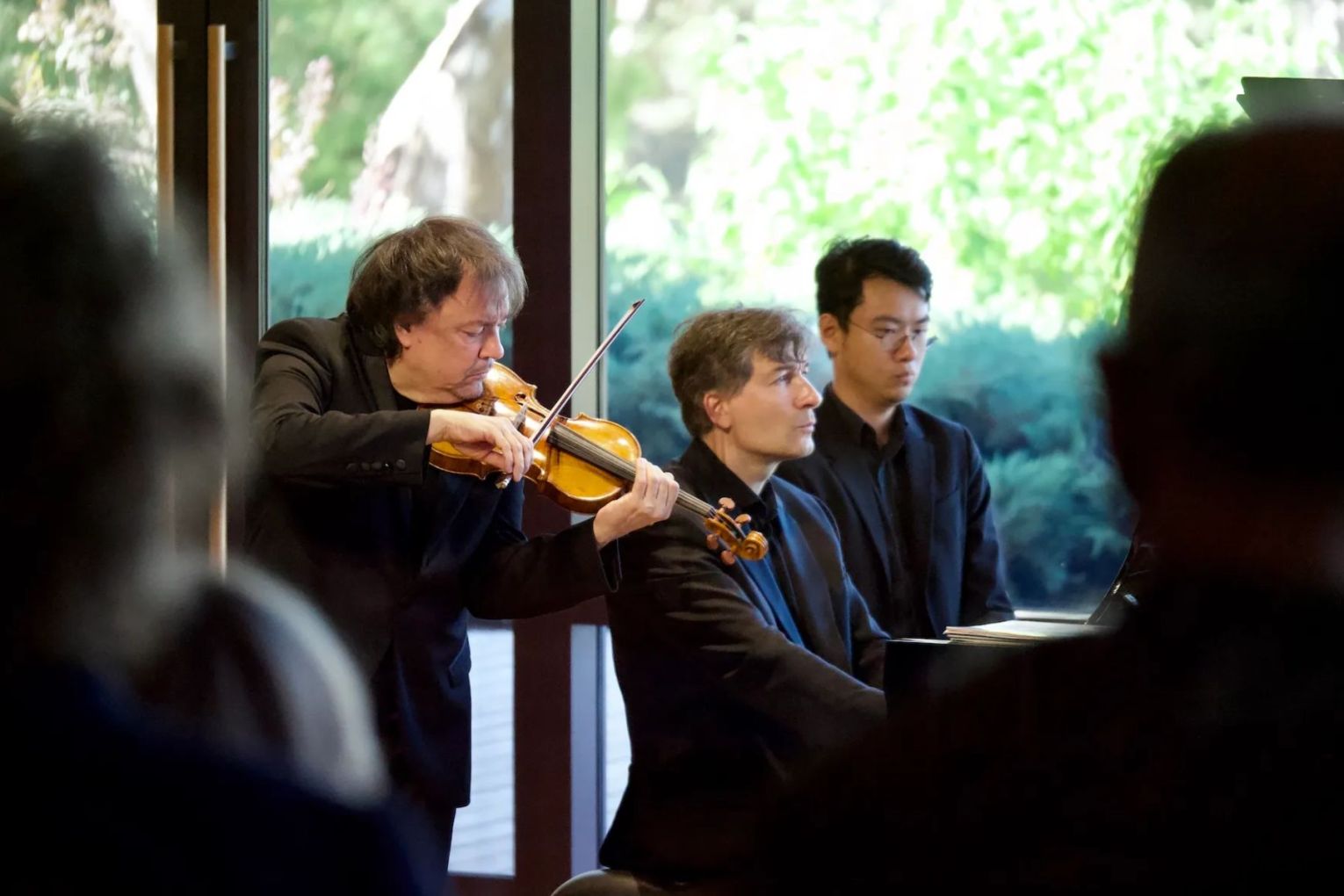
While it did not feel like a festival finale, the inspired pairing of Sergej Krylov and Konstantin Shamray made for a fitting triumph to these arts-mad 17 days. These two Russians had never met before, and this was the main fascination: a highly-rated violinist making his Australian debut partnering with a pianist of equal calibre who of course needs no introduction.
In a 12-day tour that took them first to Melbourne and Sydney, and then to UKARIA, it was curious to know how these musicians might coalesce. In short, they are immediately different, but are able to merge on the same wavelength.
This all-French program seemed to be of Krylov’s devising, and it was very much up his alley. Technically brilliant works tend to be his domain, and here were two celebrated examples. Ravel’s Tzigane and Saint-Saëns’ Introduction and Rondo Capriccioso are displays of the highest order: lesser violinists will walk into them unwittingly and get incinerated.
The first surprise is that Krylov, while clearly belonging to the Russian school, plays with a thinner tone and more finessed touch than other compatriots such as Maxim Vengerov or Vadim Repin, for example. Speed, agility and delicacy are his ace cards, not lavish vibrato or sustained follow-through in his bowing. You could say he plays almost like a Baroque violinist.
However, he has evolved his own mercurial style, and he is so damned listenable. Both these showstoppers were a sheer delight. Tzigane was exactly like Ravel must have meant it to sound: unbelievably virtuosic and inspired by the earthy directness of Hungarian folk fiddling.
You might like
The only problem, if there was one at all, was that the pianist occupies a servile accompanying role in both of these showpieces. So, it was welcome to have two substantial works in this concert that truly engage both musicians in dialogue.
The delight in Ravel’s Violin Sonata No. 2 is indeed the way the piano leads over the violin to begin with, how they separate away from each other as distinct meandering voices, and then chase each other at speed in the moto perpetuo third movement.
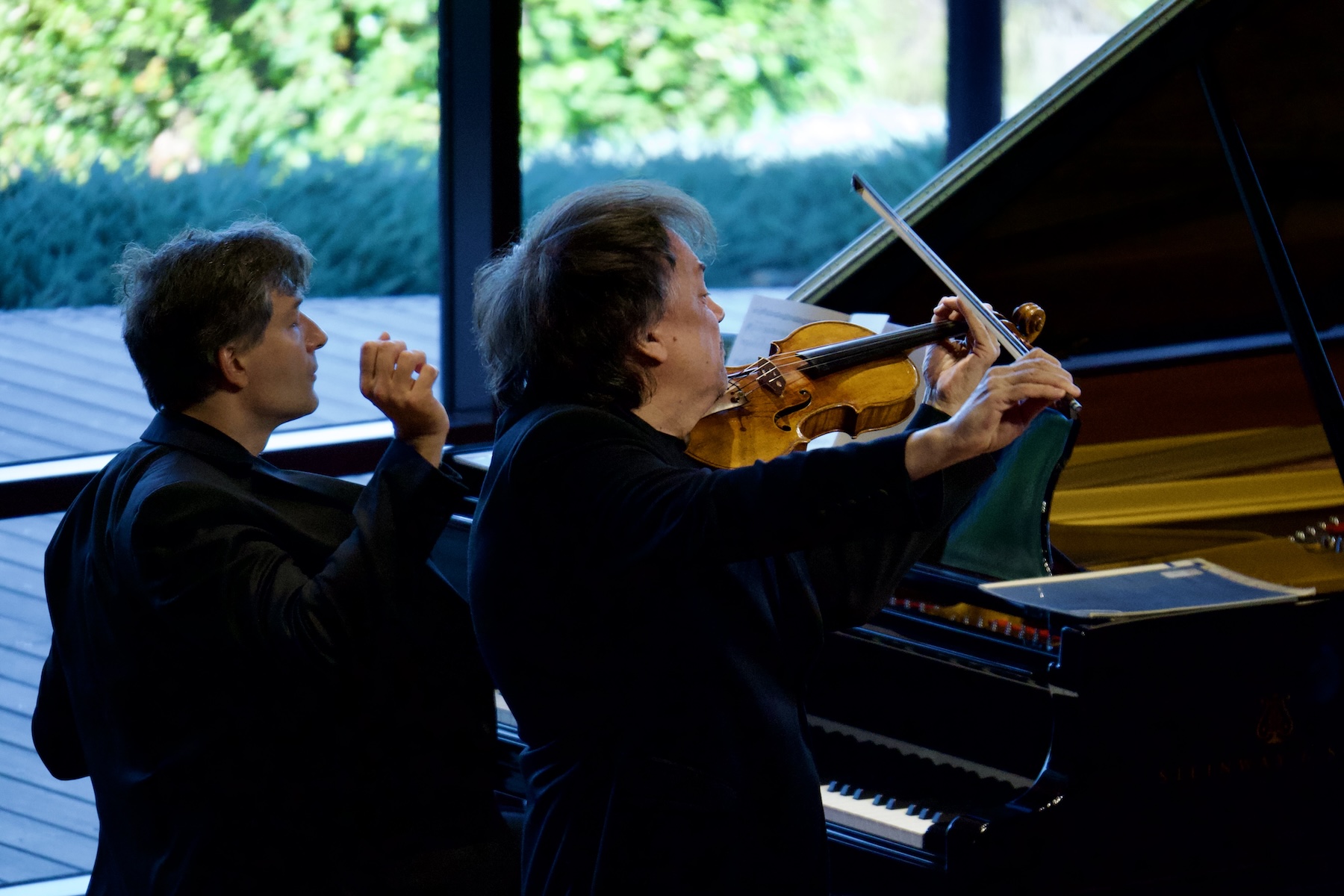
The way Krylov and Konstantin Shamray did this, with understated lightness and finesse, felt just so right. Full of melodic whimsy, rhythmic kick, and bluesy notes, one could see Ravel’s wry smile in ridding the sonata medium of its Germanic tendencies. His textures are alarmingly yet beautifully sparse, and these two musicians’ crystalline textures laid it all bare.
Subscribe for updates
And yes, while they are both Russian, they are not alike. Krylov is the more daring of the two. He plays with more feeling of physical movement through the musical line. At times, it is as if one is swept up in a wild dance. Shamray meanwhile, as we know, is poised and resolutely disciplined. Both have untouchable techniques and are utter perfectionists, but one is the bedrock for the other. Shamray is the structural player, allowing Krylov to engage in magic tricks and dance around at will.
Seeing how they connected was constantly interesting. The warmth and empathy they visibly shared on stage was lovely to witness Rather than join (or compete) in the same mind-space, they complement each other as two sides of the same coin.
Naturally, it helps to have the right tools for the job. Krylov has on loan a 1710 ‘Camposelice’ Stradivari violin, a prized instrument said to be in almost mint condition. He does not play it loudly, but it has a sweet, complex tone of big projection.
That other pinnacle of the French repertoire, César Franck’s Violin Sonata in A, possessed more than usual tender melancholy. Its languid invention seemed to stretch out endlessly, blissfully. Again, these two musicians come to French music from somewhat different directions, but their elegance, naturalness and understated classical rigour made for an ideal partnership.
Franck’s music is said to express ‘serene anxiety’. One hears this in the troubled dreaminess of this most beautiful sonata. A couple of dazzling encores by Fritz Kreisler lit up smiles, but this was a strangely introspective note upon which to finish this year’s Adelaide Festival. Given the way the world is presently headed, maybe it was particularly fitting.
Sergej Krylov with Konstantin Shamray played at UKARIA Cultural Centre on March 15 as part of Adelaide Festival

Want to see more stories from InDaily SA in your Google search results?
- Click here to set InDaily SA as a preferred source.
- Tick the box next to "InDaily SA". That's it.
Free to share
This article may be shared online or in print under a Creative Commons licence