Adelaide Festival review: Anthony Marwood
Violinist Anthony Marwood’s musicianship seemed to know no bounds in this year’s Adelaide Festival, especially when he teamed up with pianist Olly Mustonen in Elder Hall’s final all-Russian program.
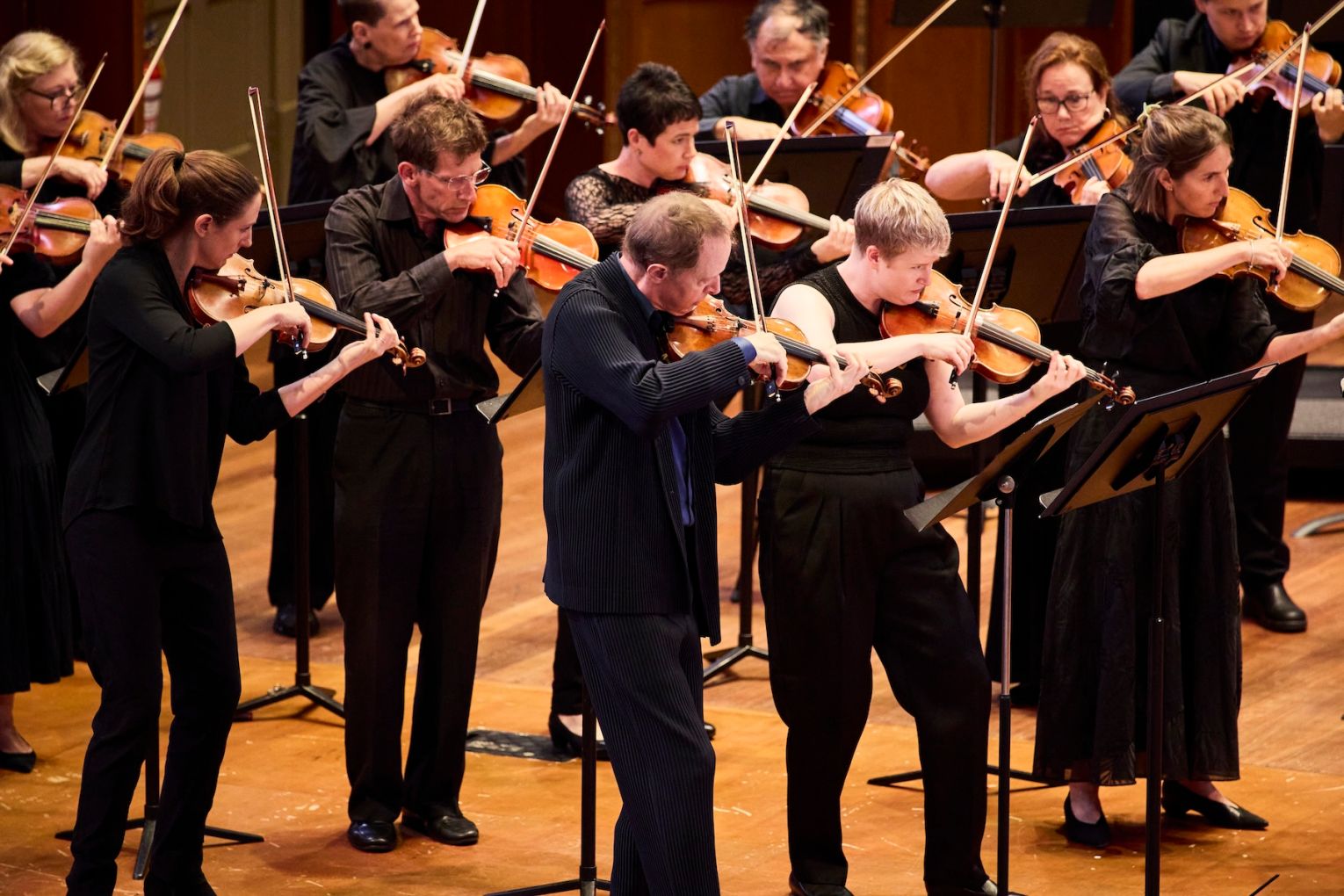
In lieu of another Chamber Landscapes series at UKARIA, this year’s Festival held a concert series of Elder Hall of a broadly similar nature under the curatorial direction of UK violinist Anthony Marwood. It has to be said that three short lunchtime programs never looked quite enough for one of Britain’s foremost violinists – by rights he should have been given a concerto appearance. But he has plenty of admirers here, and it was interesting to sample more of this renowned musician in this series.
The final concert with Olly Mustonen was always going to be the one to see, since these two high calibre artists have apparently never played together before. It was fascinating to see how they might mesh on stage.
Additionally, it was interesting to have members of the Adelaide Symphony Orchestra on board in this series. One of the concerts, Breath & Bow, featured the ASO brass section in three of Henri Tomasi’s Fanfares liturgiques. The most unusual work being performed, this was of immediate interest. Born of Corsican parents, Tomasi was a significant figure in French music group of the 1930s, cofounding the group Triton with Milhaud, Poulenc, Honegger and Prokofiev.
These brilliantly colourful fanfares, which he adapted from his opera Don Juan de Mañara, bristle with drama. In the vein of Dukas’ fanfare for La Péri, they use an expanded sound palette with mutes and percussion. The final one, ‘Procession du Vendredi-Saint’, marks Good Friday and begins with a pall of doom much like the ‘March to the Scaffold’ from Berlioz’ Symphonie fantastique. Vivid and expertly played, they were great to hear.
Beethoven’s Septet in E flat major, Op. 20, made an unexpected but joyous pairing. For mixed ensemble, Marwood distinguished himself with characteristic silver sweetness and precision in this work. Some of the ASO’s best players were with him, clarinettist Dean Newcomb making a special contribution in his lyrical dialogues with the violin.
You might like

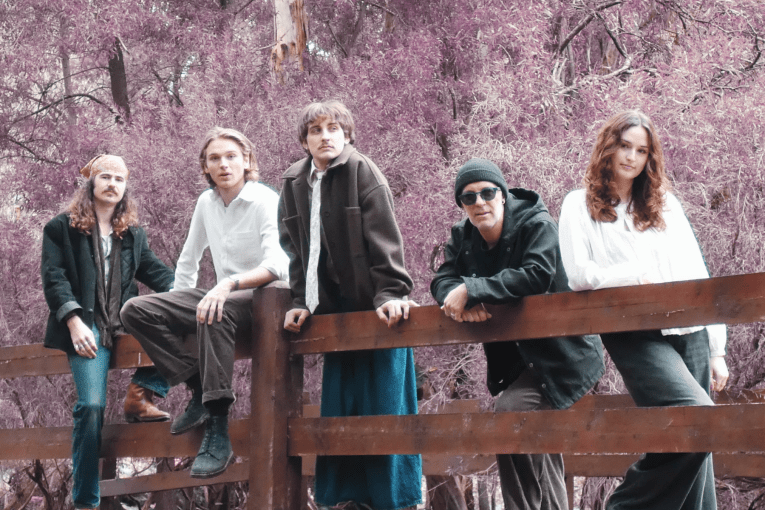
But the fun of this septet (which became so popular that Beethoven said he wished he’d burned it), is that the players each have a turn in the spotlight, and they all seemed to enjoy it. It is that kind of music: entirely sociable in spirit.
Even so, the violin steals most of the attention, and Marwood was dazzling in its ornate passagework and cadenza, which pops out at the end as if the piece has suddenly turned into a concerto.
All the same, one was hankering to learn more about Marwood’s art and what makes him tick. That opportunity finally came in his partnership with Mustonen in the final, all-Russian program.
Subscribe for updates
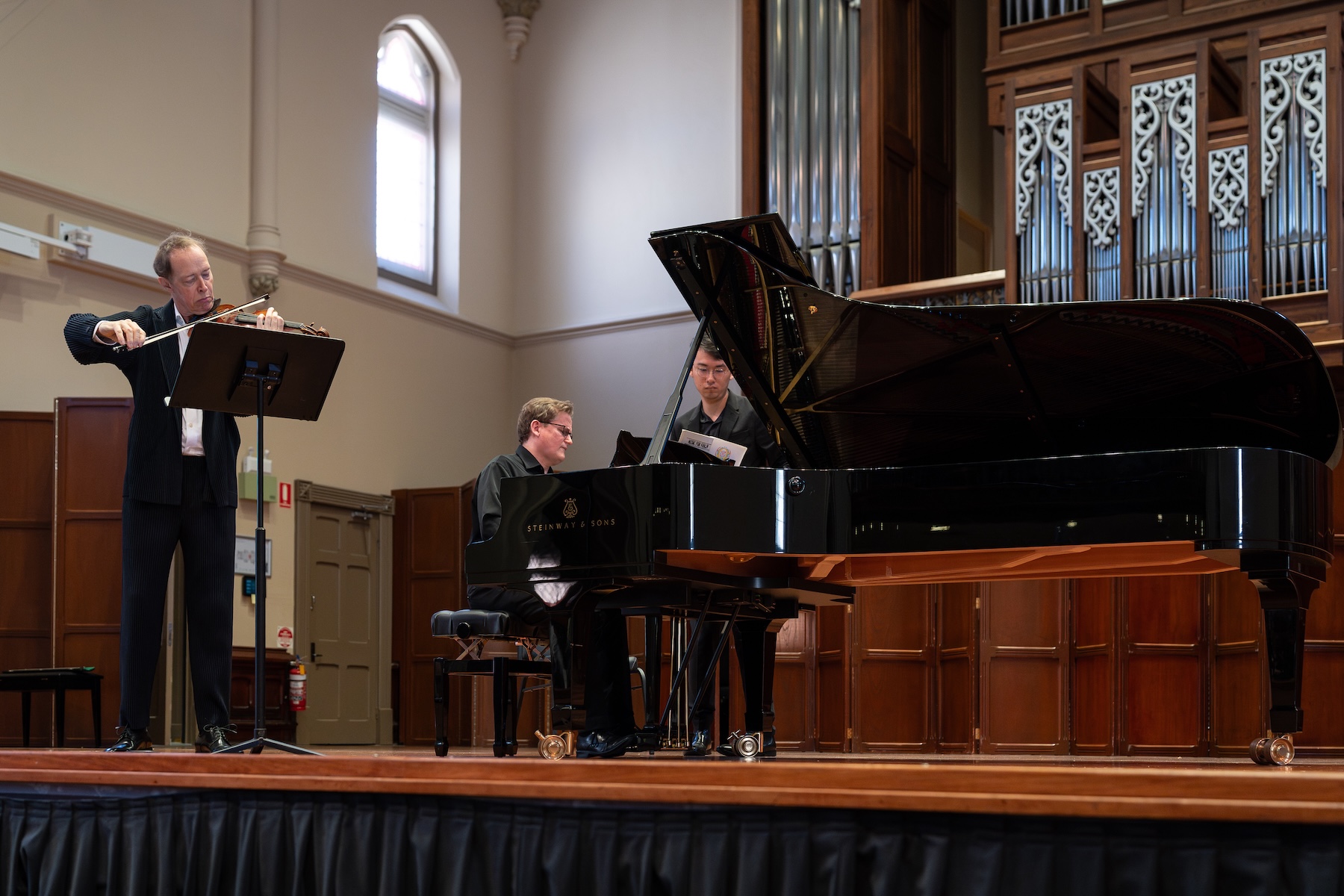
It started with Prokofiev, and it was interesting to see how differently they play this composer: Mustonen with craggy strength and Marwood with a more classical restraint. In Music for Children, Op. 65, the Finnish pianist was commanding. Playful and acerbic at the same time, he turned these dozen miniature pieces into towering creations via the most extreme contrasts. Mustonen has a punctuating way of accenting melody that does feel completely right with Prokofiev, at it filled Elder Hall’s air space with sharp clarity.
By way of answer, Marwood’s Prokofiev was elegant, not rugged at all, yet equally filled with spirit. In Sonata for Solo Violin in D major, Op. 115, one felt he totally understands Russian music but comes to it from a different angle, where balance and concision are foremost. In this sonata in neoclassical style, it feels exactly right.
Marwood is absolutely not of the Russian school, which means there is no heaviness of tone or thick shredding when this sonata rises in virtuosity. Instead, his playing is agilely light, and it was flawlessly finished as if laser-cut in precision. Kind on the ear, it was kind on his violin thankfully as well, as just it might be: Marwood now plays a Stradivari from circa 1709, ‘Scotta’, which was recently acquired by UKARIA and is currently loaned to him. This is his second Australian appearance with that precious instrument.
Everything of course gets ramped up with Shostakovich. Following a delay caused by Elder Hall’s air-conditioning, his towering in his late-period Sonata for Violin and Piano in G major, Op. 134, received a most masterful performance, and one could amply see why it is often rated alongside the Eighth String Quartet as one of this composer’s most important chamber works.
Converging from their different respective aesthetic positions, Marwood and Mustonen gave it fullest unanimity and conviction. This sonata begins with bare octaves in the piano that sketch out a bleak landscape which is gradually filled with lonely murmurings from violin. This duo played with great deliberation, Marwood’s half whisper against the piano’s atonal octaves saying everything about this Soviet-era composition: it is filled with the deepest trepidation.
With increasing turmoil but resolute coolness, intensity reaches an almighty apex in its mighty second movement, and one could only marvel at these musicians’ perfectly seamless playing and mounting energy.
Hearing Shostakovich played with such deadly accuracy as Marwood and Mustonen delivered can sound unfamiliar, but here it was: a work that stares one in the face simultaneously with intimacy and brutality.
From half a century ago, this sonata’s strife-torn depiction of the world remains as true today as it did 56 years ago thanks to this epochal performance.
Breath & Bow and Marwood & Mustonen were performed at Elder Hall on March 3 and 4 as part of Adelaide Festival

Want to see more stories from InDaily SA in your Google search results?
- Click here to set InDaily SA as a preferred source.
- Tick the box next to "InDaily SA". That's it.
Free to share
This article may be shared online or in print under a Creative Commons licence