Adelaide Festival review: Olli Mustonen – The Beethoven Sonatas
Wilfully original, Olli Mustonen is about as different as one could imagine with Beethoven. In the piano sonatas, he met all their defiant originality with his own unique heroic insights.
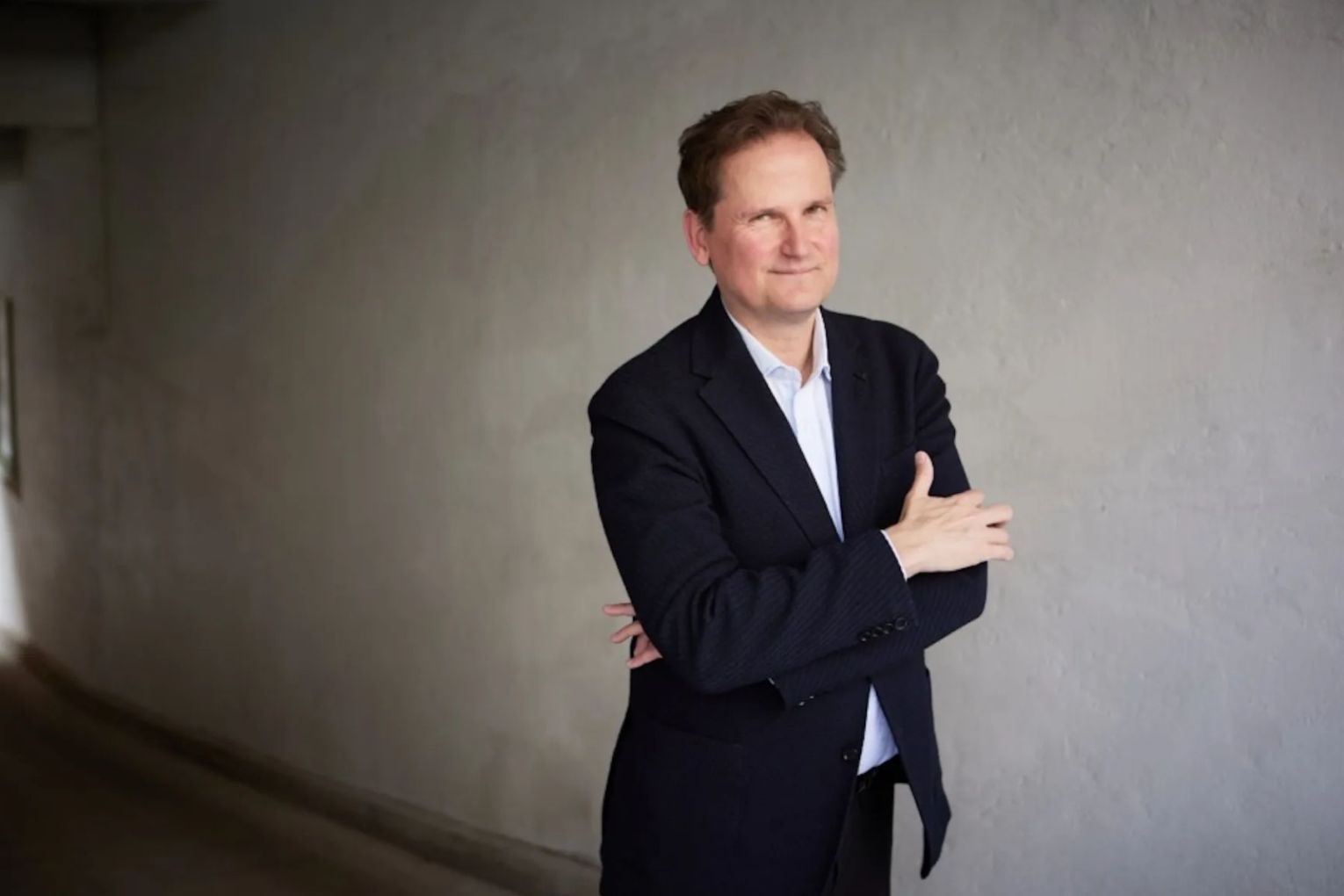
Here he was again, this extraordinary Finnish composer-pianist. Many will well remember Olli Mustonen from 2024 when he came out to curate UKARIA’s Chamberfest (then named UKARIA 24). Some at that event were probably thinking that this artist was the very living reincarnation of Beethoven when he played various of his own works, which at times share an uncanny similarity.
And it’s true. Mustonen does have a defiantly original streak that reminds one of what we might fondly imagine Ludwig was like in real life. You see it in his serious bearing over the keyboard, the vigorous head shaking while he plays, and the pounding force that erupts as if from nowhere. But most of all it shows in his will to strike it out alone. With Mustonen, schooled and accepted ways of playing are left miles in the distance.
In the third of his concerts, it showed abundantly in the ‘Moonlight’ Sonata (No. 12 in A-flat major, Op. 26), the two sonatas that precede it, and in one of Beethoven’s late sonatas, No. 31 in A-flat major, Op. 110.
Things did not go altogether well in the first half. Clearly Adelaide’s recent spate of tropical weather was evidently partly to blame, as conditions just didn’t seem to suit this North European pianist. In Sonata No. 12 in A-flat major, Op. 26, voicing slipped in the opening Andante melody, signalling an unease between finger and key. Mustonen was frequently mopping his brow and missing notes. Accents were excessively applied in what looked like recovery mode in what should be one of Beethoven’s more graceful sonatas.
Focus reassuringly returned in the second movement. This is where syncopations predominate. With an ear to jazz, Mustonen is great at delivering pushed notes and swinging accents around. Where Beethoven gets terse and rugged, this worked a treat: his snatchy rhythmic drive defied all regularity of beat, just as the music asks.
You might like


Mustonen’s specialities are a kind of jazz-derived timing and a particular approach to staccato notes where accents fall unpredictably within a phrase in exceedingly swift time. He achieves this by flicks of finger that bounce away from the keys in an instant. It is quite theatrical to watch. But where gravitas is required, notably in Op. 26’s Marcia funebre third movement, weight and length felt underdone.
It was a similar story with Sonata No. 13 in E-flat major, Op. 27 No. 1: flashes of brilliance hampered by a sense of underlying unease. At interval, the piano technician was called in to rectify matters that appear to have been bothering Mustonen with UKARIA’s Steinway, undoubtedly triggered by the humidity.
After interval, the hall’s air conditioning kicked in more effectively, and things were markedly better in the ‘Moonlight’ Sonata. Tempo felt right, those broken chords flowed smoothly, and melody seemed to spontaneously invent itself at each turn. Mustonen compressed rhythm in places while allowing longer notes to dwell and develop a haze through liberal use of pedalling (Beethoven actually instructs that the sustain pedal is to be used the whole way through the first movement, although debate continues over what he meant by this).
Lightness and fewer accents would have helped the Allegretto, but the Presto agitato final movement thundered along with impressive, unstoppable energy.
Subscribe for updates
It has to be said, Mustonen’s interpretations can be wilfully idiosyncratic. But then, so too is Beethoven’s music. He frequently invites musicians to play ad libitum and throw caution to the wind.
It was most curious to see what he would do with Op. 110. Beethoven’s late piano sonatas are another world of course, and with Mustonen it was the road less travelled, or more like the road never before travelled. His playing was concise and pithy, moving again in unpredictable but interesting ways. The first movement’s arpeggios had an unusually detached lightness instead of the rolling smoothness that one frequently hears. And Mustonen may be absolutely right, because staccato markings abound in these passages, and Beethoven instructs no use of the sustain pedal.
The second movement felt overplayed, accents again becoming overly aggressive. However, the last movement, with its improvisatory adagios and immensely clever mirror fugue, was veritably an exploration into the unknown. Mustonen’s reading was brimming with new ideas, even if execution turned out to be inexact. Part of the reason comes back to how this pianist is simultaneously a composer: he thinks as a composer while he plays, sensing the music as a moment in time, not a theatre script.
Occasionally, it was a bit like watching a painter heroically throwing buckets of paint at a canvas. A part of you wants to shout ‘hooray’, but another thinks about the consequences and how things might have turned out differently if more discipline and care were taken.
In the end, it was decidedly more Mustonen than Beethoven. Yet this unique artist is reinventing the art of piano playing where few others dare to do so. And for that we can be thankful.
Olli Mustonen performed the Beethoven Sonatas, Concert 3: Moonlight, on Sunday March 1 at UKARIA Cultural Centre as part of Adelaide Festival

Want to see more stories from InDaily SA in your Google search results?
- Click here to set InDaily SA as a preferred source.
- Tick the box next to "InDaily SA". That's it.
Free to share
This article may be shared online or in print under a Creative Commons licence