Bound by the page: The literary power of the sisterhood
Sisterly relationships figure prominently in classic literature, from Jane and Elizabeth Bennet in Pride and Prejudice to Hasina and Nazneen in Brick Lane, as as new book confirms.
In fairy tales and legend, sisters often come in threes, and the youngest always seems to suffer the most.
Pretty Cinderella is enslaved by her two cruel stepsisters. The youngest princess in folk tale Love Like Salt is condemned to death or banished. And in Shakespeare’s version of King Lear, youngest daughter Cordelia is punished for her honesty while her elder sisters win the kingdom through lies and flattery.
In more recent times, the rule of three is grasped and subverted – as in Alix Harrow’s wonderful The Once and Future Witches (2020), in which the youngest sister is the most dangerous and the eldest the most cautious – and the land of fairy tale is reinvented in the context of women’s emancipation, a theme which emerges often in novels about sisters.

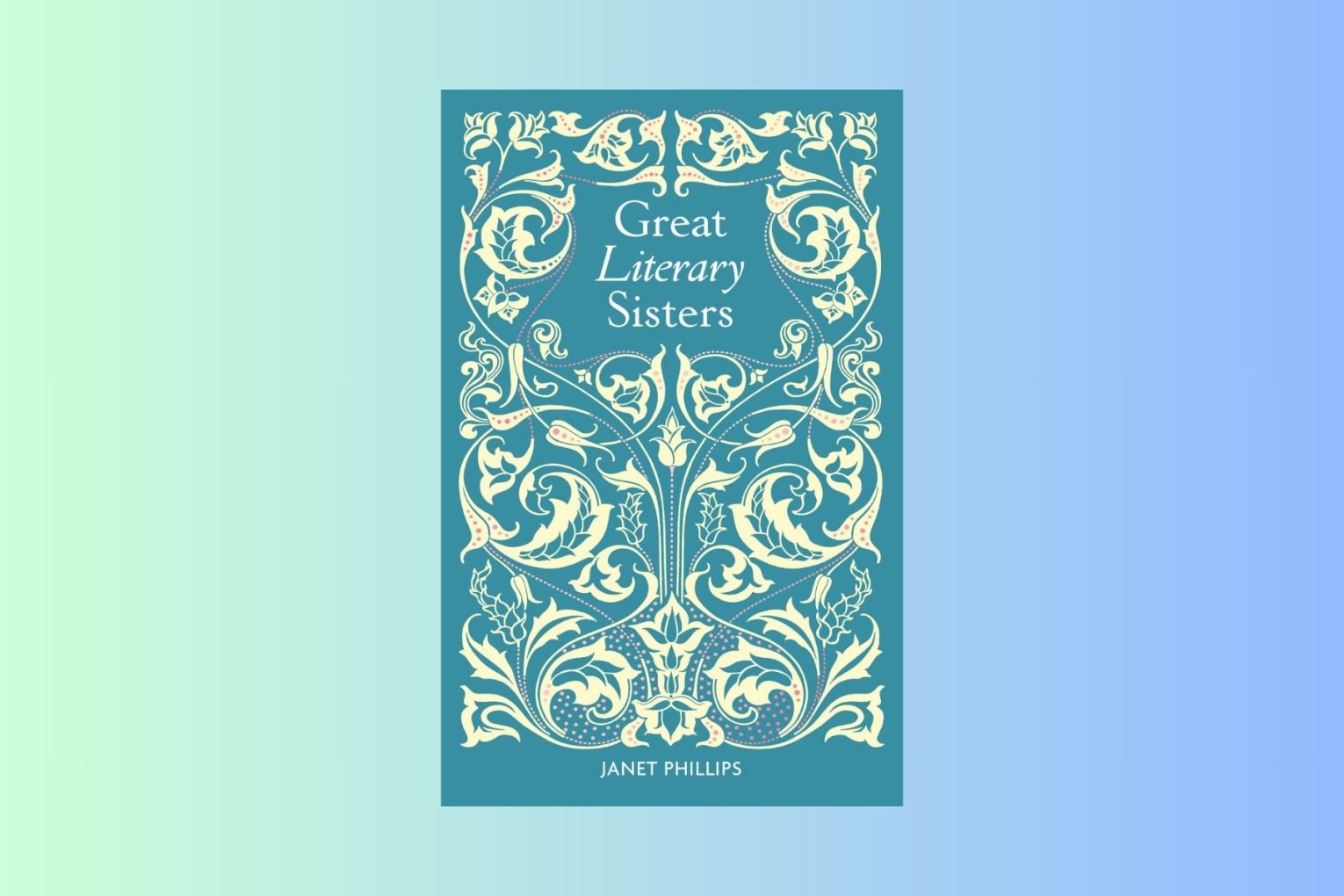
Indeed, as Janet Phillips’ latest compilation for the Bodleian Library, Great Literary Sisters, demonstrates, sisters provide a wonderful opportunity for writers to explore women’s rights, friendships, conflicts, envy, responsibilities, freedom and the power of beauty.
Largely ignored by early British novelists such as Henry Fielding and Daniel Defoe, they really come to the fore in the novels of Jane Austen, whose Sense and Sensibility is excerpted here. Austen was writing at a time when there was an increased interest in psychology, an interest which could be fruitfully explored through characterisation in fiction.
Women writers in particular embraced this idea by writing novels centred on two strikingly contrasted sisters. It is Austen who thoroughly developed the characterisation of sisters, allowing them to be three-dimensional women, different to each other in crucial details, but not necessarily judged for those differences.

Austen herself had a very close relationship with her only sister Cassandra (they had six brothers), and it is tempting to see the influence of their closeness and friendship in her work, in particular her first two published novels, Sense and Sensibility and Pride and Prejudice.
The eldest two sisters of the family in both cases – Elinor and Marianne, and Jane and Elizabeth – share a room. They are each other’s chief confidantes. They nurse each other through illnesses. They rejoice in each other’s happiness and feel each other’s pain.
As a compliment to these intense relationships Austen includes other sisters who are often portrayed with wonderfully comic effect, either disastrously competitive with one another, like the Bertrams in Mansfield Park, or, as with Mary, Kitty and Lydia in Pride and Prejudice, representing the chaos and laughter of a large sibling group.
Elizabeth Bennet, quite possibly Austen’s favourite character, has dark features, and her elder sister Jane is fair. This pattern is repeated in Sense and Sensibility, where Marianne has dark hair and Elinor’s is a light brown.
The convention of having two sisters with contrasting looks continued into Victorian times: in Middlemarch, which is also excerpted in this volume, Dorothea is dark and Celia is fair; in Wilkie Collins’ The Woman in White Laura is fair and feminine and her stepsister Marian dark and masculine.
As Phillips’ judicious choice of extracts from both historic and contemporary works illustrates, this contrast transmutes into a beautiful sister and one who is less conventionally attractive in later novels. For instance, Constance and Sophia in Arnold Bennett’s 1908 novel, The Old Wives’ Tale, and more recently Korede and Ayoola in Oyinkan Braithwaite’s 2018 novel, My Sister, the Serial Killer, thus allowing writers not only to explore how such a comparison affects the sibling relationship and the way in which they behave in adult life in interesting and sometimes surprising ways, but also to provide a commentary on how society values beauty.
Other choices of novels excerpted in Great Literary Sisters demonstrate how sisters continued to proliferate in novels during the era of reform in the UK, when the role of women in society was fiercely debated and there was a movement towards giving the vote to a wider sector of the population.
In response to the debate, George Gissing was inspired in 1898 to write The Odd Women, in which the three Madden sisters and their friends struggle to navigate a life of independence in London with very little financial security.
Subscribe for updates
Three decades earlier, of course, American writer Louisa May Alcott had penned one of the best-known novels of sisters, Little Women, and British novelist George Eliot had published Middlemarch. Published within three years of one another, they narrated the lives of sisters whose ambition outpaced the slow progress of reform in their lifetimes. Indeed, “the sisterhood”, a phrase which came into use in this context in the early 20th century, seems the perfect term for a community of women united by a desire for female equality.
Marriage is often regarded by the unmarried sister as an unbearable wrench, fraught with separation and danger
It’s not surprising, then, that Wilkie Collins, a lawyer by training, shone a light on the vulnerable status of the married woman in his riveting Victorian detective story, The Woman in White, showing how marriage gave control of inheritance to the husband and made previously wealthy women utterly dependent on their spouses, illustrated by the dastardly behaviour of Sir Percival Glyde to Laura Fairlie.
Marriage is often regarded by the unmarried sister as an unbearable wrench, fraught with separation and danger: Jo March in Little Women feels this when Meg becomes engaged; Middlemarch’s Celia rightly fears for Dorothea; and Laura’s half-sister Marian’s severe misgivings about her match are justified. By contrast, the unmarried Marian is free to use her albeit limited income just as she likes and, in fact, she deploys it to save Laura from a lifetime of incarceration.
What makes Great Literary Sisters such compelling reading is the breadth and depth with which Phillips has chosen her literary examples of sisterhood. What marks each of her choices is the intensity of the relationship between the sisters, whichever sector of society they belong to and whatever fate and circumstance throw at them. It is clear that Elizabeth and Jane Bennet are best friends. And although Celia is thoroughly exasperated by Dorothea, she clearly loves her and will do anything for her. As will Little Dorrit for her proud sister Fanny.
Little sister Phoebe in J.D. Salinger’s 1951 cult classic The Catcher in the Rye is the only person in the book who intuitively understands what troubled teenager Holden Caulfield needs and is, therefore, the only person he truly trusts. Often sisters play creative and memorable games in childhood that either give them an intuitive understanding of one another later in life or are lamented when adult responsibilities pull them apart.
Twin sisters Kainene and Olanna in Chimamanda Ngozi Adichie’s 2006 novel Half of a Yellow Sun move from being able to read each other’s minds in childhood to mourning the loss of their comforting sibling connection. The flip side is that a strongly interlinked relationship in childhood can lead to contested territory and painful rivalries later on. Real-life sisters and writers A.S Byatt and Margaret Drabble both explore this in their fiction, which played a part in their own estrangement later in life. Helen Dunmore uses crucially differing memories of childhood to devastating in her excerpted work, the 1996 novel Talking to the Dead.
Whether their relationships are driven by envy, rivalry, intimacy or stoicism, the fictional sisters Phillips has chosen for Great Literary Sisters are those whose attachment is explored in psychological detail alongside their chosen paths in life. She has grouped the novels into five categories: Growing Up, Heroes at Home, Affairs of the Heart, Trauma and To the Rescue.
older sisters in fiction … tend to have taken on the role of the responsible older sibling
Each category explores sibling rivalries and ambition in childhood (alongside a couple of brothers); sisters who show redoubtable courage and perseverance in the domestic sphere; sisters who support and sometimes betray each other in affairs of the heart; those whose relationship is coloured by issues of mental health; and those who fiercely protect each other at any cost. These categories, Phillips writes, “reflect themes which emerged and interested me as I read the books and found echoes between them, though another reader could easily organise them in an entirely different way”.
Phillips also makes the salient observation that, more often than not, older sisters in fiction, from Sir Walter Scott onwards, tend to have taken on the role of the responsible older sibling: Jeanie Deans walks from Scotland to London to save her younger sister’s life in 1818’s The Heart of Mid-Lothian; Bobbie takes on a parental role while her father is in prison in the 1905 children’s classic The Railway Children; Nazneen steals money from her husband to send to her sister Hasina in Monica Ali’s 2003 novel Brick Lane, and Katniss Everdeen bravely volunteers to take the place of 12-year-old Prim in Suzanne Collins’ 2008 novel The Hunger Games, though she would say she had no choice in the matter.
As Helen remarks in E.M. Forster’s 1910 novel Howard’s End, all of these lives, whether in the domestic sphere or on a public stage, are “heroic”. Even Henry James, in 1878’s The Europeans, describes quiet, stoic, conservative Charlotte in these terms as she slowly reconciles herself to, and then supports, her striking sister Gertrude’s bold actions: “Charlotte, in her small, still way, was a heroic sister.”
The deeply felt power of the sisterly relationship in fiction gives us unforgettable and inspirational stories, inextricably linked as they are to universal themes of equality, fortitude and love. Great Literary Sisters draws from works of fiction spanning the 19th to 21st centuries with heart, insight, warmth and an admirable generosity. It is an important and immensely enjoyable piece of work.
Great Literary Sisters by Janet Phillips, The Bodleian Library, $34.99.
Want to see more stories from InDaily SA in your Google search results?
- Click here to set InDaily SA as a preferred source.
- Tick the box next to "InDaily SA". That's it.
Free to share
This article may be shared online or in print under a Creative Commons licence