From stage to page: Tracy Crisp launches memoir and new cosy-crime Fringe show
With her new book Pearls and Fringe production Who Killed Gough Whitlam? set to land within days of each other, Tracy Crisp talks about adapting her acclaimed stage shows for readers, and launching new work in a disrupted festival season.
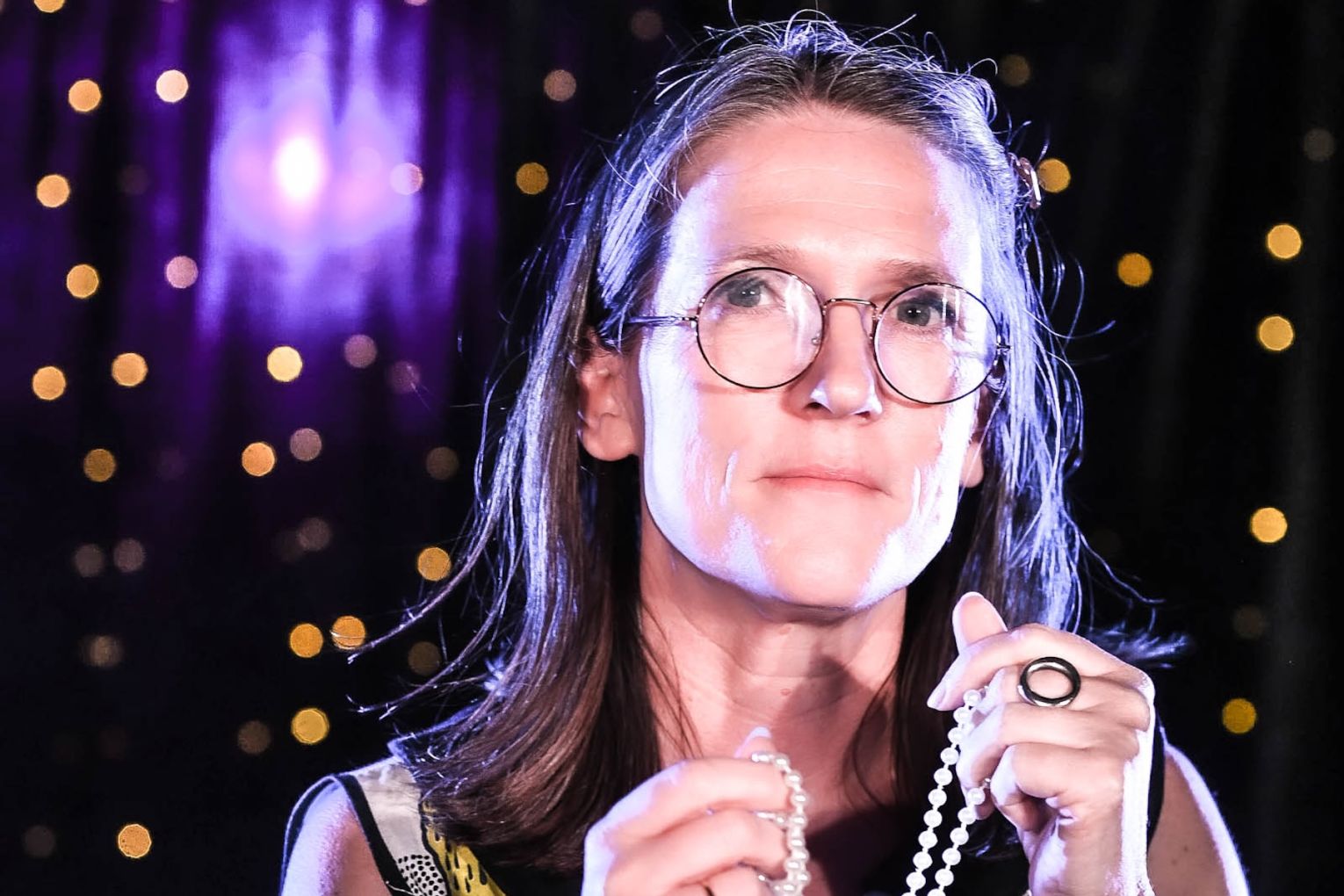
Tracy Crisp doesn’t present as someone with one of the most unusual resumes in the business. Writer, performer and funeral celebrant – she’s an icon of the South Australian arts scene who appears to glide between artistic modes as if simply changing lanes.
But it hasn’t always been an easy road, her origin story as a performer springing not from childhood dreams of the spotlight, but from a writer’s frustration with the waiting game as manuscripts languish for months on publishers’ desks.
“I only really think of myself as a writer,” she tells InReview. “The reason I started performing was because it’s really hard to get your work published. I got to a certain age where I was sick of having stuff sitting around on editors’ desks for six months. I wanted to find a way to share the work.”
This pragmatism also explains the precision of Crisp’s work. For her, the writing always comes first and she’s quick to deflect the label of actor. “I would never call myself an actor because I have no acting training,” she says. “And my flirtation with stand-up comedy was brief. Not my natural home at all!”
"I got to a certain age where I was sick of having stuff sitting around on editors’ desks for six months. I wanted to find a way to share the work."
Yet humour coupled with keen emotional insight are unmistakably part of Crisp’s signature, from her Fringe monologues to the dry warmth of her much-loved email newsletter Naive Psychologist. And if comedy isn’t her ‘natural home’, its craft has certainly left its fingerprints.
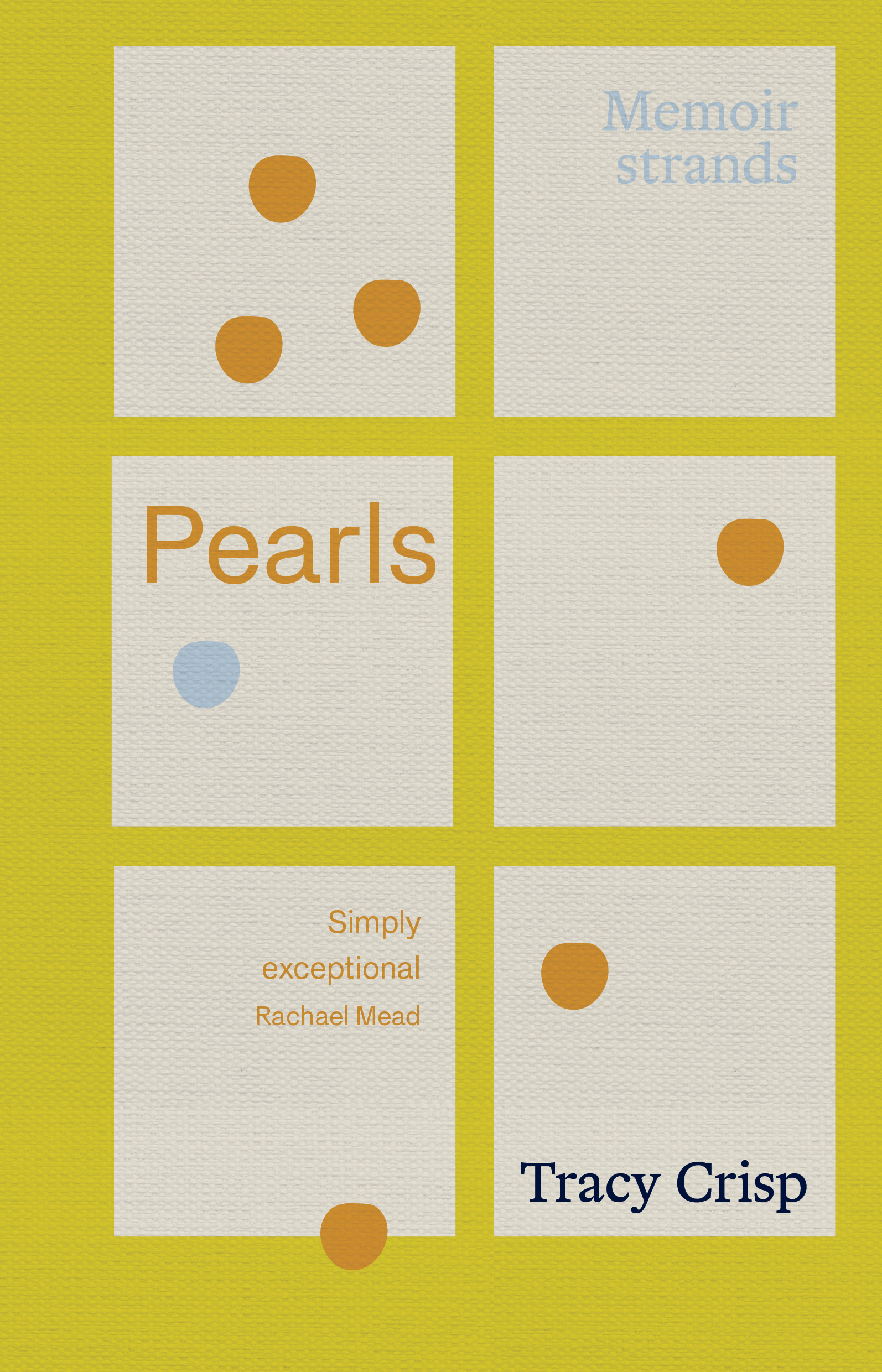
“I feel so lucky to have the book published right now, because it’s a bit of a risk, right?” she says of Pearls, her new book that draws together the material from her much-loved Fringe monologues into a strand of memoir pieces that sit together beautifully, just like the pearl necklace that gives the collection its name.
On stage, these pieces have been building a committed following for years: memoir threaded with comedy, grief, razor-sharp observation and a comedian’s instinct for timing. In the shift from stage to page, Crisp admits she wasn’t entirely convinced it would translate.
You might like

Working with her editors at Pink Shorts Press, Crisp has trimmed away the material that belonged more in front of an audience than a reader. “We’ve taken out some of the more stand-uppy, gaggy bits,” she says. What remains is still undeniably Crisp: her meticulous control of rhythm and pace and her ability to use laughter as the point of entry for difficult moments.
If the sentences in Pearls: Memoir Strands feel as if you can hear Crisp speaking in your ear, it’s because every word has been honed, on both page and stage. “When I’m writing, I’m repeating it over and over,” she says. “Everybody tells me, ‘Oh, it’s amazing you can remember it all!’ But by the time I’m on stage, I’ve said it hundreds of times in my head.”
Translating her scripts into a memoir also allowed her to draw a line under her series of performances. “Putting them into the form of a book made it finished. Because you can publish plays, but nobody really reads plays, except people like me,” she chuckles. “This gives it a finished form.”
"I’m definitely starting something new, but it’s still grounded in that old work. It’s just that now I’m creating a character who isn’t me."
This sense of completion matters, because Crisp is already stepping into a new phase. Moving away from memoir and non-fiction, her new Fringe show Who Killed Gough Whitlam? is fictional, yet it’s not entirely a clean break. “I’m definitely starting something new, but it’s still grounded in that old work. It’s just that now I’m creating a character who isn’t me.”
Crisp began her writing career, as many do, with a narrow idea of what being a writer looks like. “I thought writers write novels,” she says, recalling her first two publications with Wakefield Press, Black Dust Dancing and Surrogate. “My novels aren’t bad. But they didn’t set the world on fire. The dream is to be the writer who goes to a hotel over summer, sits by the pool and sees people reading her novel.”
So why the return to fiction? Partly, because Crisp has learned how to build a larger body of work by writing in connected units. Her monologues became a trilogy and then a second trilogy through sustained writing, Fringe show by Fringe show. This method is now being transposed onto her new project which she calls “a light-hearted series of cozy mysteries with political undertones.”
Her upcoming Fringe production is the first phase of this new project, and she has a hook too good not to use. “The idea for Who Killed Gough Whitlam? just came to me, and it was such a great title I couldn’t not write around it.”
Subscribe for updates
This genius swerve will be familiar to fans of Crisp’s work as a call-back to a character in her show Stitches – Gough Whitlam is a Bichon Frisé. Turning Gough Whitlam into a dog with a hairstyle like the former Prime Minister was partly about softening the politics and partly about comic delight. “I didn’t want to scare people off by framing it as this big political sort of show,” she says, “which is why I turned him into a Bichon Frisé. Because then he’s clearly not Gough Whitlam, right?”
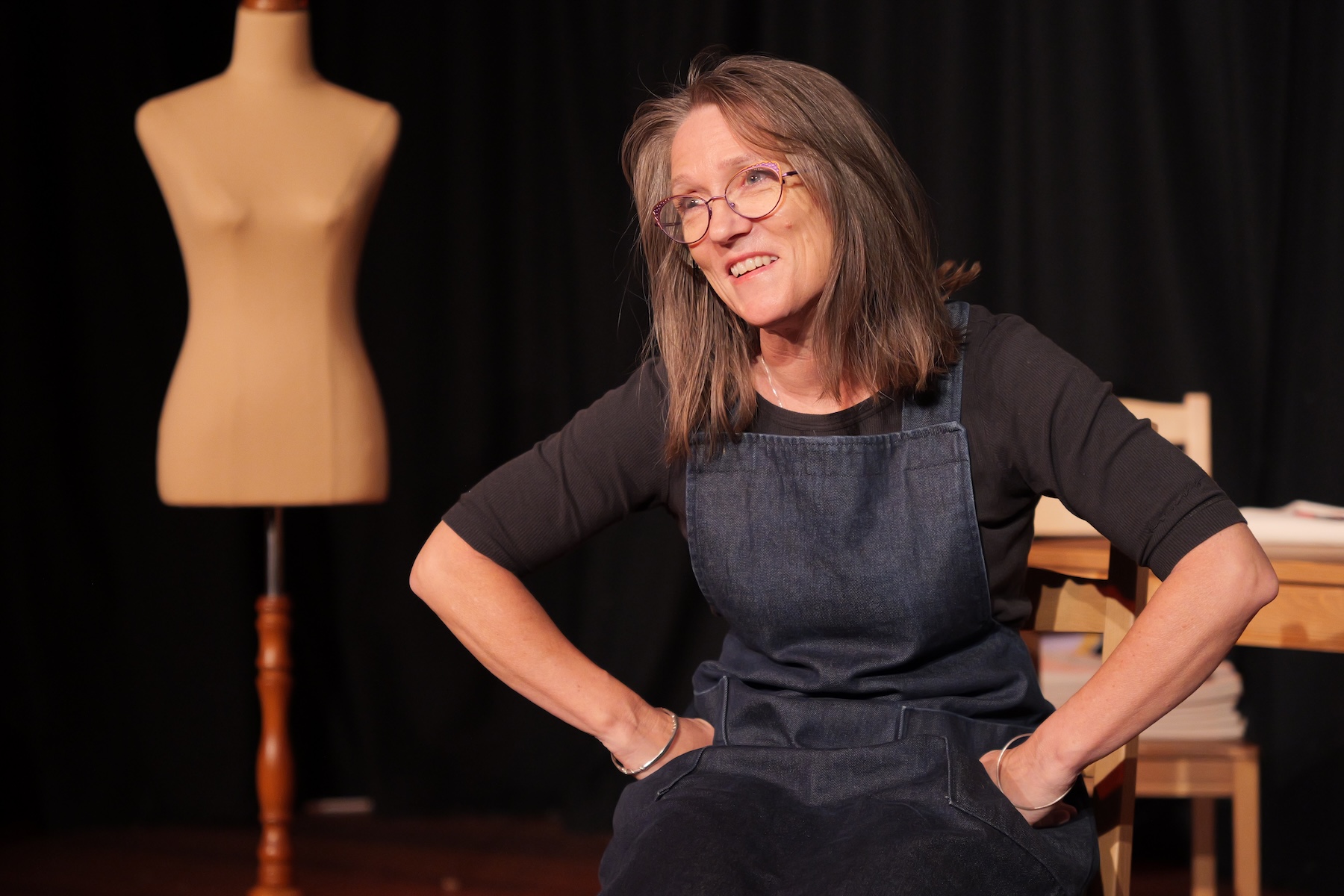
In the plot we are drawn back into the friendship dynamics of the Stitch and Bitch sewing group (from Stitches). Gough Whitlam’s owner has died, and her friends must decide amongst themselves who will become his guardian. Beneath the comedy is a serious preoccupation: how to stay civil across political differences without betraying your values.
“We’ve got such an issue at the moment with maintaining civility. I want to explore that idea… that we can still be friends even if we don’t agree politically. It’s so difficult. But we all have to live together and not be so polarised.”
The dog (despite the title) does not die. But he is kidnapped and a detective character takes on the case. Friendships are tested, with the mystery becoming a mechanism for asking what we owe each other.
This question is a pertinent one, in the wake of Adelaide Writers’ Week’s cancellation. Crisp describes her own decision to withdraw as immediate and rooted in what her book Pearls is trying to do.
"The whole point of the book is about uniting us and giving us the power of our voices."
“For me, it wasn’t even really a decision,” she says. “Given what Pearls is about – the whole point of the book is about uniting us and giving us the power of our voices. My mum would strike me down! When the news hit, I thought ‘that’s the absolute antithesis of Pearls’ message’.”
If there’s a through-line connecting all of Crisp’s work, it might be emotional honesty and respecting her audiences’ capacity for complication. Which brings us back to the looming launches of both her book Pearls and her Fringe show Who Killed Gough Whitlam?
“I always want people to feel surprised and enriched,” she says. “I want them to feel that I delivered on the promise that they came for, but… also I want them to think ‘Oh, I wasn’t expecting that.’”
For the new show, she’s pinned a kind of mission statement to her wall: “Hope is our spark, and friendship is our fuel.” She wants audiences to leave with hope, she says, “because the world is on fire,” but she also wants space for sadness too, as a pathway for empathy.
And given all the new year has brought so far, this sounds like a worthy strategy.
Pearls: Memoir Strands (Pink Shorts Press) is available from February 24. Who Killed Gough Whitlam? runs from February 21 – March 15 at Goodwood Theatre

Want to see more stories from InDaily SA in your Google search results?
- Click here to set InDaily SA as a preferred source.
- Tick the box next to "InDaily SA". That's it.
Free to share
This article may be shared online or in print under a Creative Commons licence