‘I know shame and that’s why I live in pride’: The embodied oppositions of Troy-Anthony Baylis
This year’s SALA Festival feature artist Troy-Anthony Baylis unravels the colourful and complex influences that have shaped his decades-long body of work, and his new exhibition, Pile-Up.
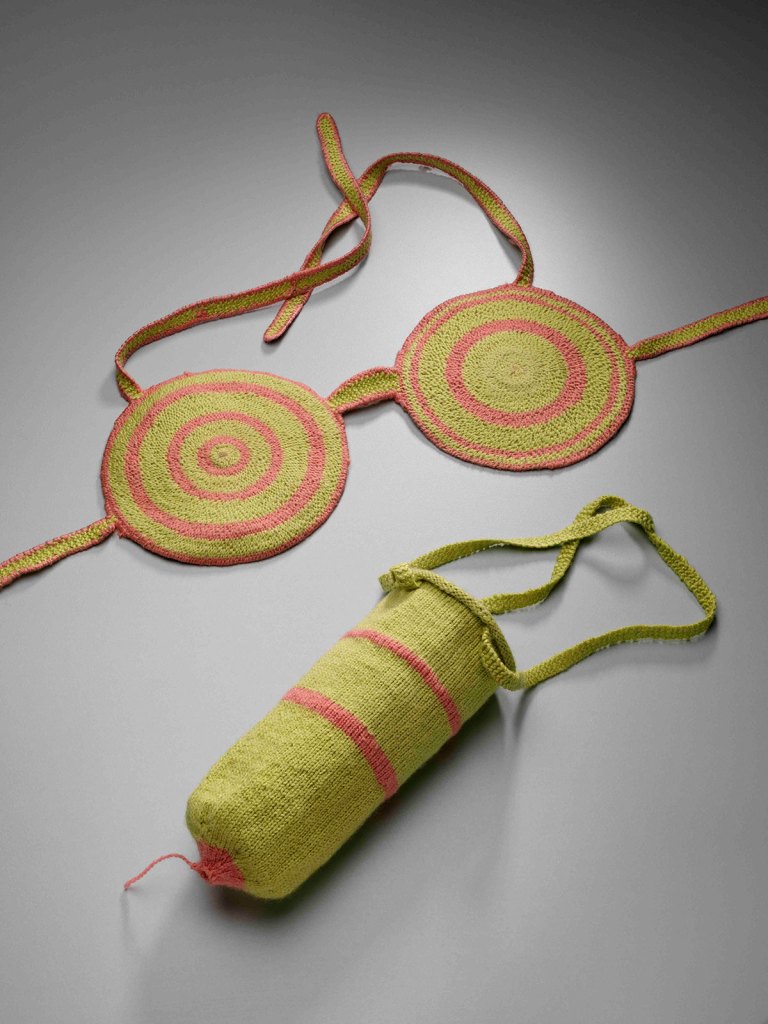
At first glance, the piece of weaving pictured on the glossy cover of the 2026 SALA Festival program could be a basket or a bag, crafted from reeds using the kind of technique First Nations communities have used for countless generations. Look inside, however, and the work in question Modesty Set 1 (pink and apple green) is revealed to be a two-piece set, comprised of a bra-like top and cod piece woven from acrylic and jute.
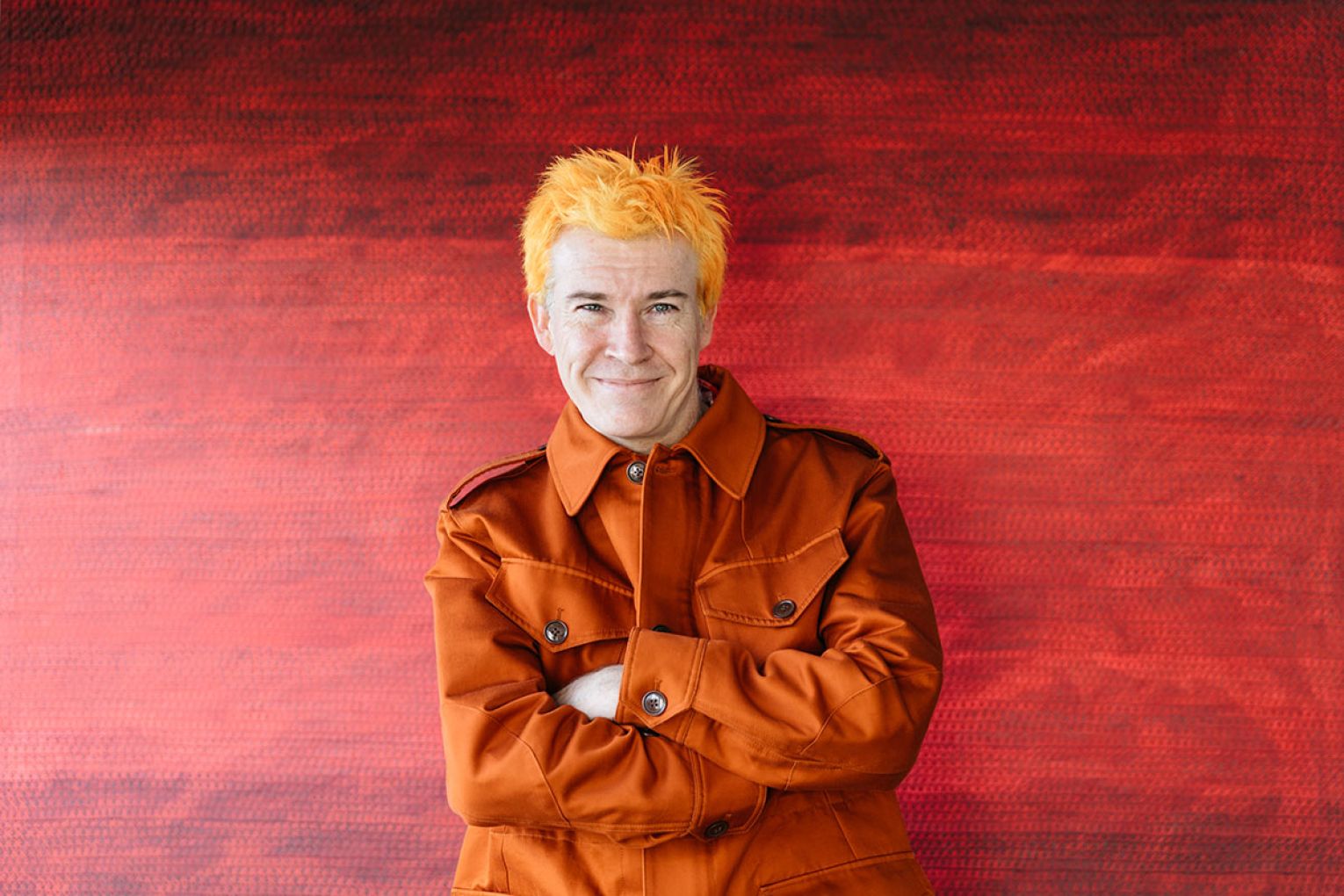
It’s the creation of Troy-Anthony Baylis, this year’s SALA feature artist and an artist, writer and performer whose work traverses the worlds of music, textiles, painting, Aboriginal and queer identity, history, and performance.
“I like that the photo on the front is a detail because it’s like an invitation to look inside the guide and see what else there is,” says Baylis, who is a descendant of the Jawoyn people from the Northern Territory, and of Irish ancestry.
“I’m interested in history and with artefacts that are maybe collected by museums, certainly at a point in time, that there might be other meanings to the objects, other possibilities,” he says of his work, and the layers of nuance and, occasionally, subversion, they weave together.
“So, I kind of started from that and I guess a lot of my work is based around queerness and Aboriginality. And sometimes I work with humour, so it’s like a parody of a parody. It takes me a long time but it’s creating something that’s difficult and then you kind of get that release at the end when you know you’ve achieved it and contributed to some discourse.”
Baylis’s 2026 SALA exhibition, Pile-Up, includes new works as well as pieces from across his 30-year career, including his signature glomesh creations, part of a series called Postcards which he began in 2010.
It’s painstaking work to make the pieces, with Baylis unpicking and reimagining almost 1000 glomesh handbags.
“I have to source the mesh which is through hunting and gathering in thrift stores and then I skin and fillet the bags, then I unpick the little cross-shaped latches,” he says. “The design of the glomesh art works is based on the breast plates that Governor Macquarie bestowed onto Aboriginal people – so, it has a mixed and complicated history.”
You might like
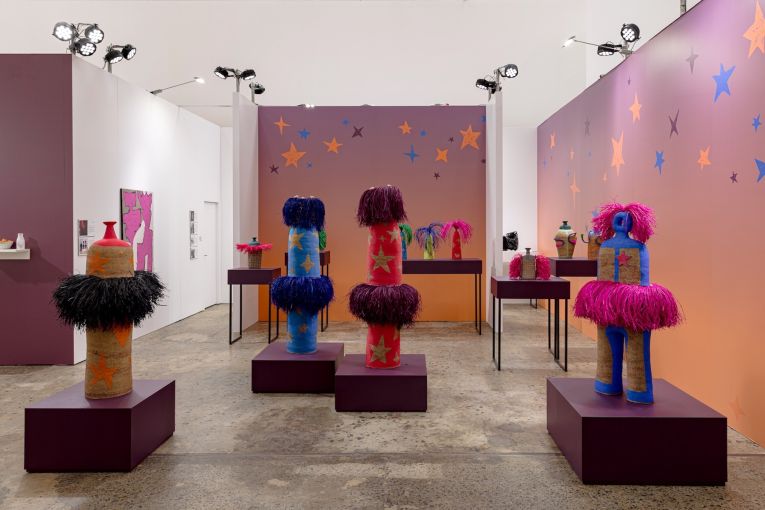
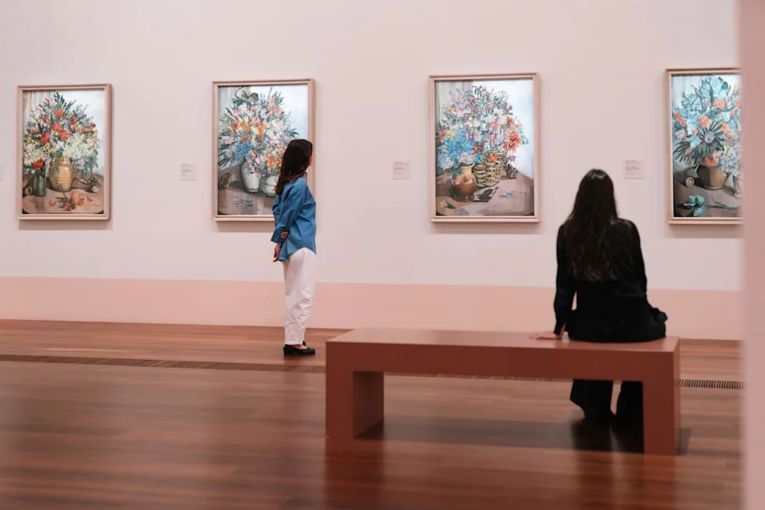
“These days, I’m into creating anti-monuments, I guess you could say,” he explains.
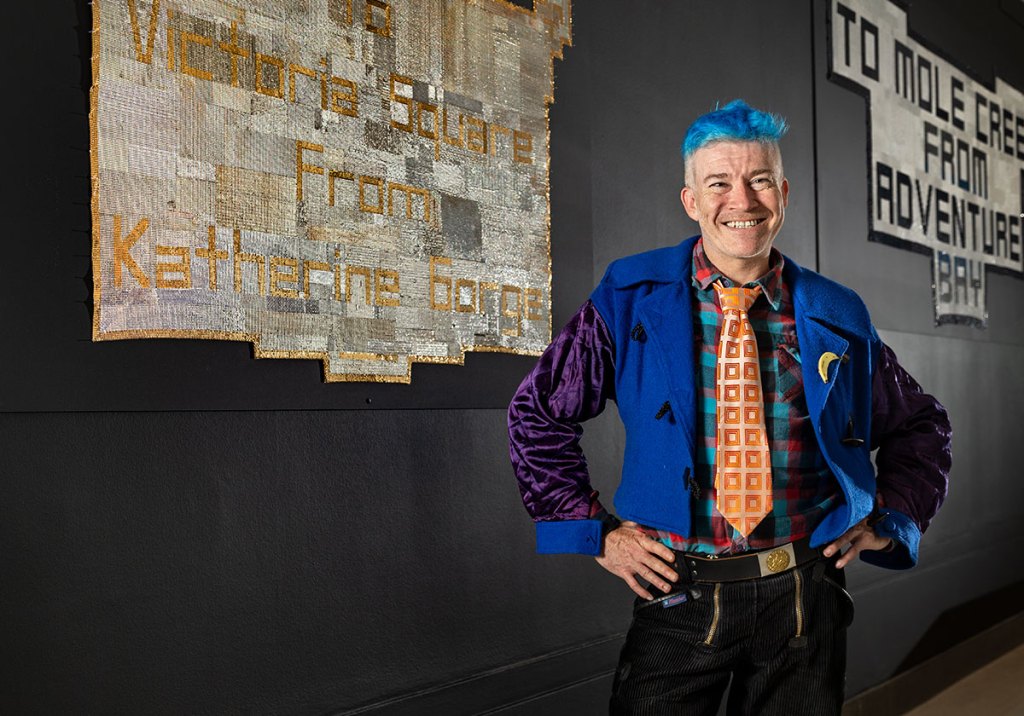
Music is also key to Baylis’s life and work. He still owns over 9,500 CDs, and lyrics by queer icons such as Kylie Minogue and Mariah Carey, as well as Australian bands Kids in the Kitchen and The Masters Apprentices, can be found across his work, like the 2019-2020 series Tell Them Their Dreaming,
“I’m finding more and more that I’m allowing myself to delve into history and culture everywhere. People like Andy Warhol, Tina Turner and Kylie,” he says.
“A lot of my work does also deal with performance and the body. I’m one of those people who likes to dress up and mimic things and pose in front of paintings or whatever.”
The title of Baylis’s SALA exhibition, Pile-Up, is derived from a compilation album by ’90s punk band Pansy Division, but also invokes the complicated subject of cancel culture.
“A pile up is also what people do on social media, pile up on each other, or like a human pile up in a war zone,” he says. “At the end of the day I like work that’s about ideas. I’m an ideas person.”
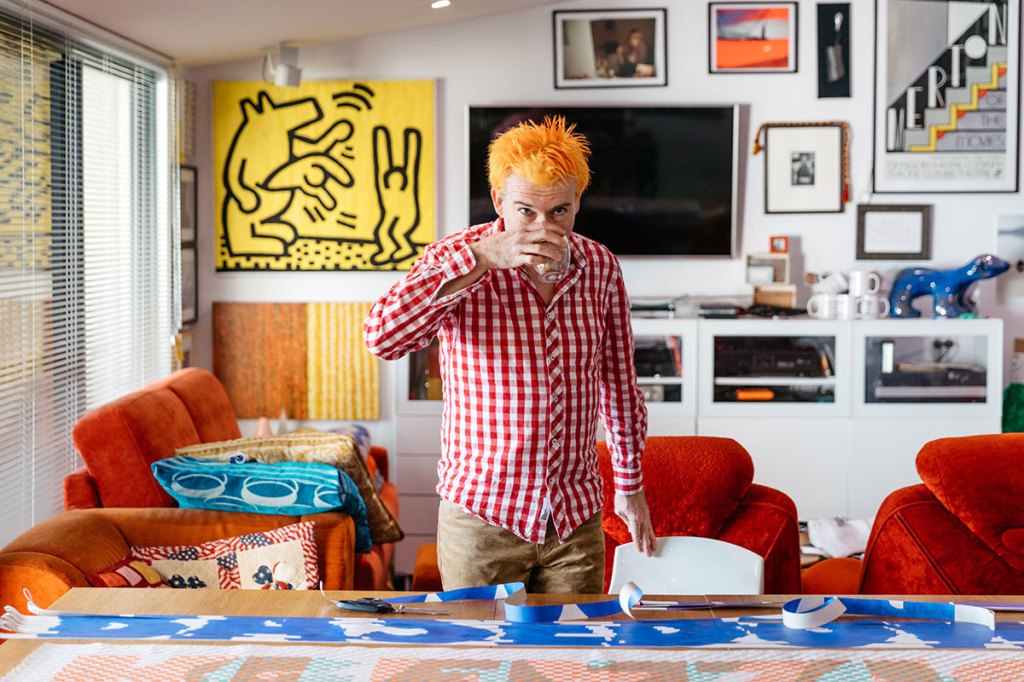
Music is a constant motivator in his studio, with The Rolling Stones’ Exile on Main Street a regular soundtrack.
“I have that on high rotation,” he says of the group, whose 1969 album Let It Bleed shares a title with his upcoming SALA monograph, to be launched during Pile-Up. “It is as if on Exile the Stones have adopted a different ‘black’ sound from America’s south and really made their own elevated sound.
“It’s super musical, with very gospel back-up vocals, including American/Australian singer Venetta Fields, who was once an Ikette and recorded and performed with John Farnham, Jimmy Barnes, and others. It’s my all-time favourite album.”
Pile-Up is comprised of 25 works across multiple series, with about half of the collection making its Adelaide debut.
Subscribe for updates
“It’s meant to read like a compilation and includes some key historical works – the hits – some oddities, and some new ones,” Baylis says.
Amongst the new works is an enamel painting on an album sleeve by the late US televangelist Jimmy Swaggart, and a seven-object woven work with embroidery that expands on a ‘truism’ by American artist Jenny Holzer.
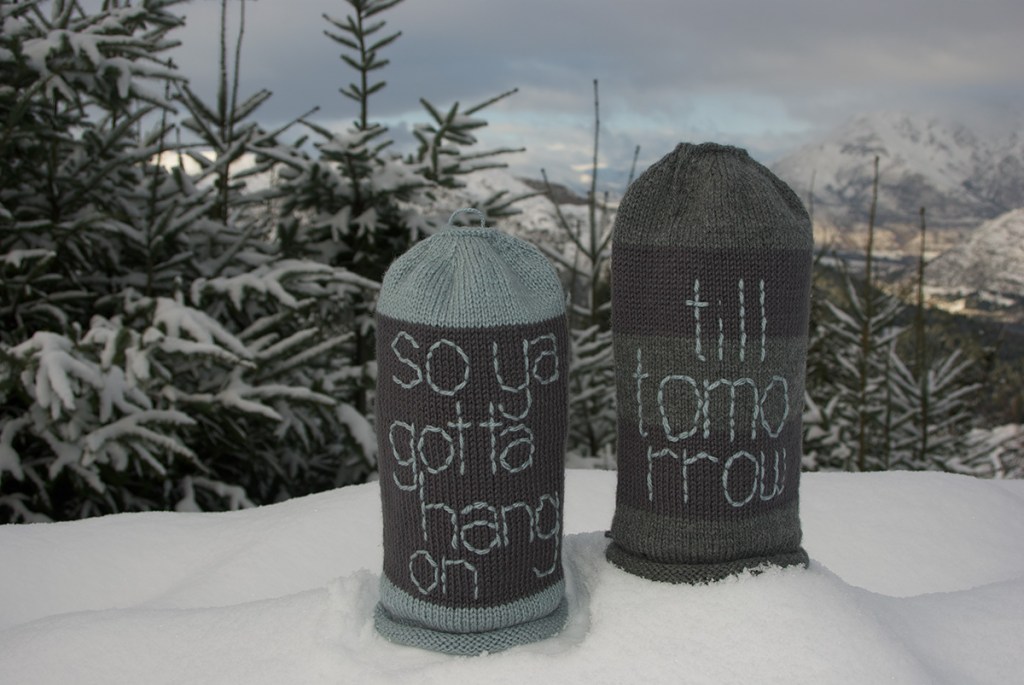
Baylis’s work Tomorrow (2009), which consists of 27 hand knitted dillies with the song lyrics to ‘Tomorrow’ from the musical Annie embroidered into the knit, will also be included in Pile-Up.
As a young adult, Baylis, now 50, was homeless for a short time before finding secure housing and taking up studies at the Queensland University of Technology.
“I was then able to move into cheap share housing and shortly after, Prospect House, which was a bequest to the state of Queensland to offer minimum rent housing to support vulnerable at-risk queer youth.,” he says.
Over his long career, Baylis has had 24 solo exhibitions and numerous group exhibitions, performances, and works published, and his recent institutional solo exhibitions include Nomenclatures (Art Gallery of South Australia, 2020-2021) and I Wanna Be Adorned (QUT Art Museum, 2023).
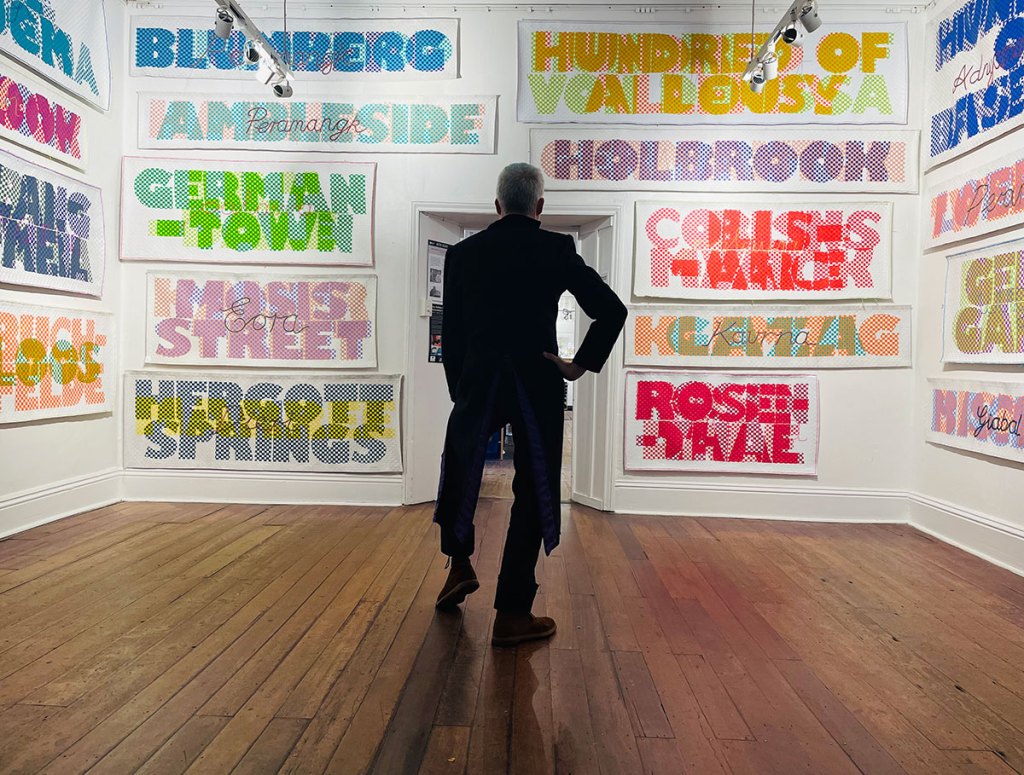
“I Wanna Be Adorned was a mid-career survey exhibition where I opted to focus on work that either represented bodies or suggest being worn upon bodies,” he says. “None of the work had been exhibited in Queensland before. I included most of the glomesh Postcard works, a new series of woven paintings appliquéd with buttons called Two Hearts, and a range of knitted works such as Modesty Sets (2013) (pink) poles (2006-2007), mimis (2013-) and a few other earlier knittings.”
Identity, masking and reinvention are common themes in the works, which are created through craft practices such as sewing, knitting and weaving.
When InReview asks Baylis about a post he’s written on his social media stating – “I know shame and that’s why I live in pride” – he explains that this goes to the very heart of who he is and the messages his works convey.
“That’s really a theme in a lot of my work,” he says. “Like a lot of people, I’m super mixed and nuanced. So, you know, I’m Aboriginal and I don’t look it. I know on some level that this body represents the bastardisation of everything for some people, including some Aboriginal people, some non-Aboriginal people.
“I use my work to deal with those sorts of oppositions which I embody. So, mixed geographies, mixed appearances, mixed ethnicities, mixed sexuality – all of that stuff.”
Pile-Up on display at the Adelaide Central School of Art from July 29 to September 4. The SALA monograph Troy-Anthony Baylis: Let it bleed, written by Sasha Grbich and Tikari Rigney and published by Wakefield Press will also be launched during the festival. As the 2026 SALA featured artist, Baylis will also take part in an artist talk on August 11 at the Art Gallery of SA at 12.30, giving insights into his work.
Want to see more stories from InDaily SA in your Google search results?
- Click here to set InDaily SA as a preferred source.
- Tick the box next to "InDaily SA". That's it.
Free to share
This article may be shared online or in print under a Creative Commons licence