New takes on old treasures at Adelaide’s most gilded gallery
David Roche Gallery celebrates its 10th anniversary by inviting ten contemporary artists to speak back to the opulent – and idiosyncratic – collection of its late namesake.
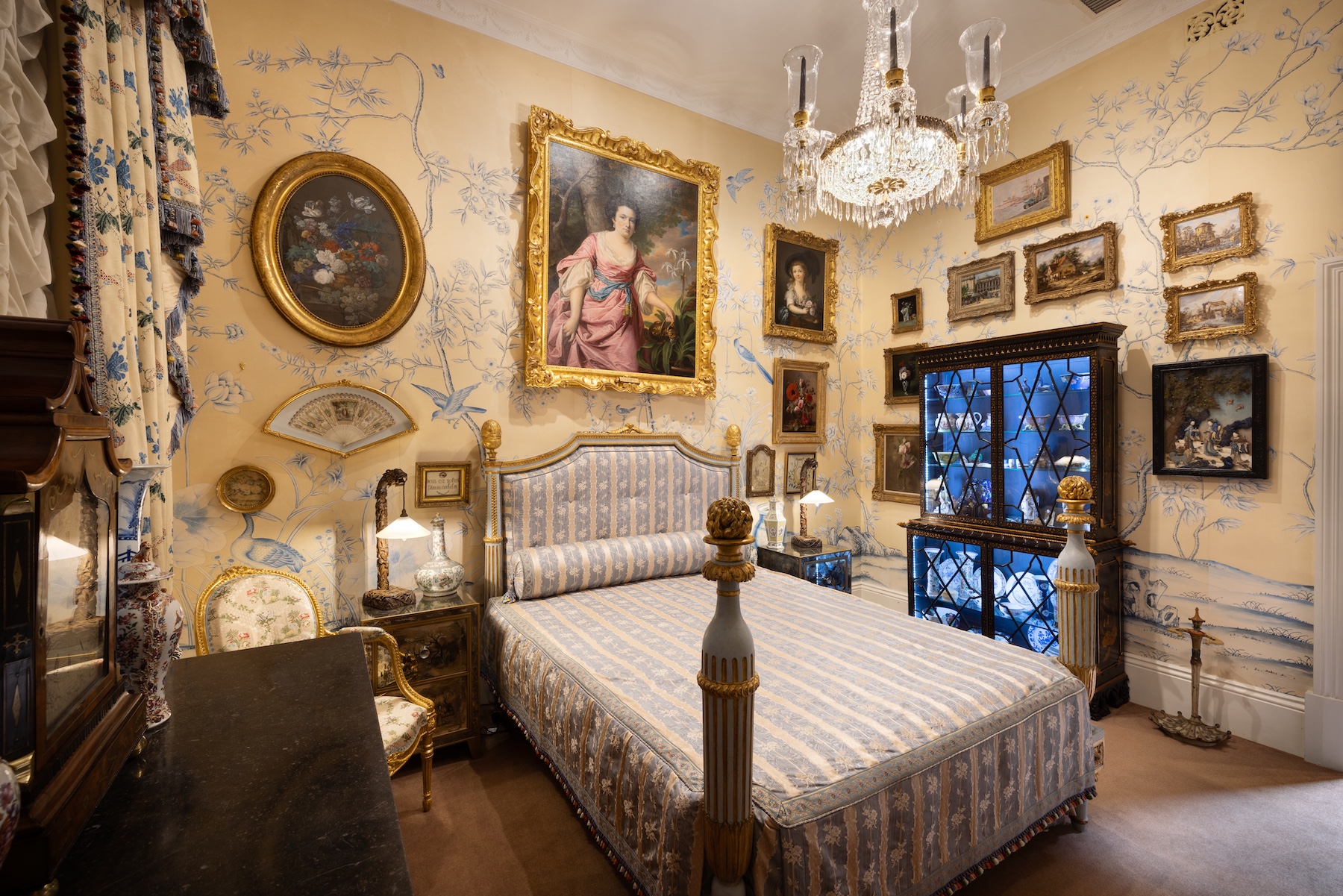
David Roche Gallery (DRG) is celebrating its tenth anniversary with a lavish exhibition which highlights both the splendours of its own collection and the virtuosity of twenty designer-makers associated with Adelaide’s JamFactory. Since opening to the public for guided tours in 2016, the late David Roche’s gilt-edged collection of English and European decorative arts, spanning the late 18th to early 20th century, has been on display in Fermoy House, North Adelaide. The villa’s opulently furnished rooms are filled to overflowing with decorative arts, statuary, urns, and paintings, artfully arranged against a backdrop of richly patterned wallpapers, drapes and carpets. They are a testament to Roche’s wealth and the idiosyncrasy of his tastes as a collector, recalling F. Scott Fitzgerald’s famous words, “The rich are different to you and me”.
Under director Robert Reason the Fermoy house collection has been a foundation stone for his development of an ambitious program of touring and in-house curated exhibitions, all staged in the adjacent museum-standard display spaces of David Roche Gallery. There have been some 40 exhibitions presented to date, from sources including the National Gallery of Australia, National Portrait Gallery and Bundanon, establishing DRG as this state’s unique museum gallery dedicated to historical and contemporary decorative arts. Despite the calibre and appeal of its programs, DRG is still relatively under-recognised, with the admission charge for these exhibitions being a likely deterrent for some would-be visitors. It is welcome news that this special 10th anniversary exhibition is free admission.
For Making Old New ten eminent South Australian craft practitioners with continuing connections to JamFactory were selected by Reason, and in turn he consulted with JamFactory’s CEO Brian Parkes in the selection of ten more recent JamFactory alumni from across the past decade. These artisan-designers were commissioned to spend time with the DRG collection and to select an object as the source for their creation of new work. It is fascinating to discover what each exhibitor has selected from this overwhelming collection, and intriguing to see their unpredictable and occasionally inspired responses.
You might like
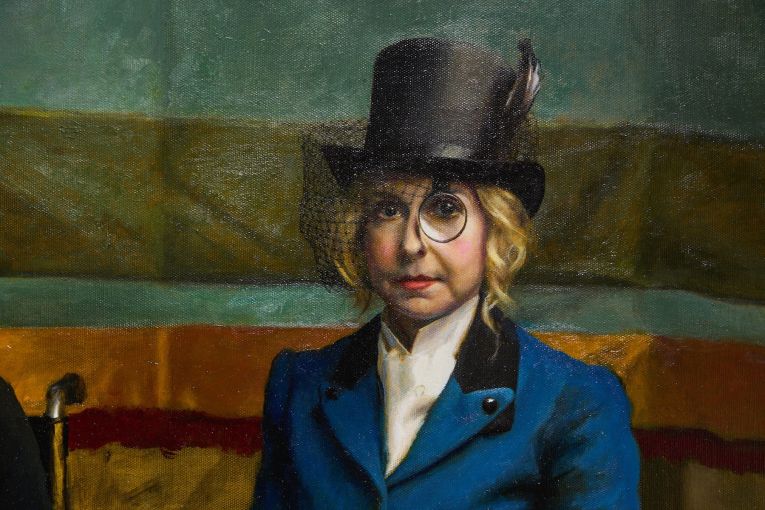
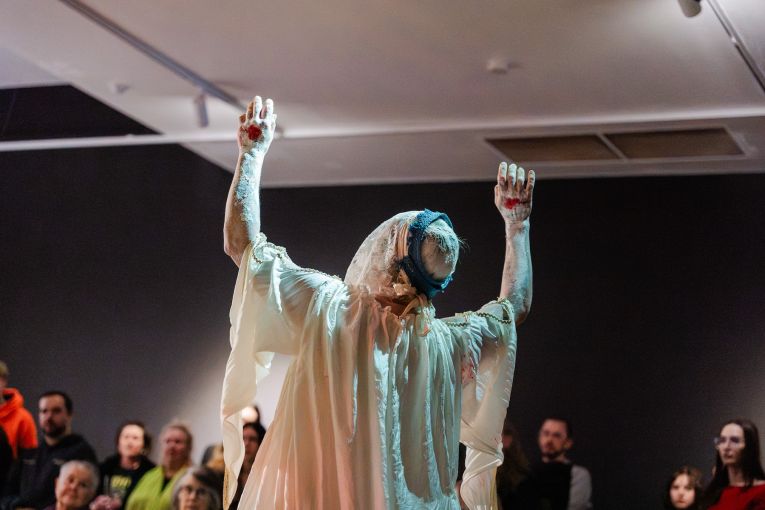
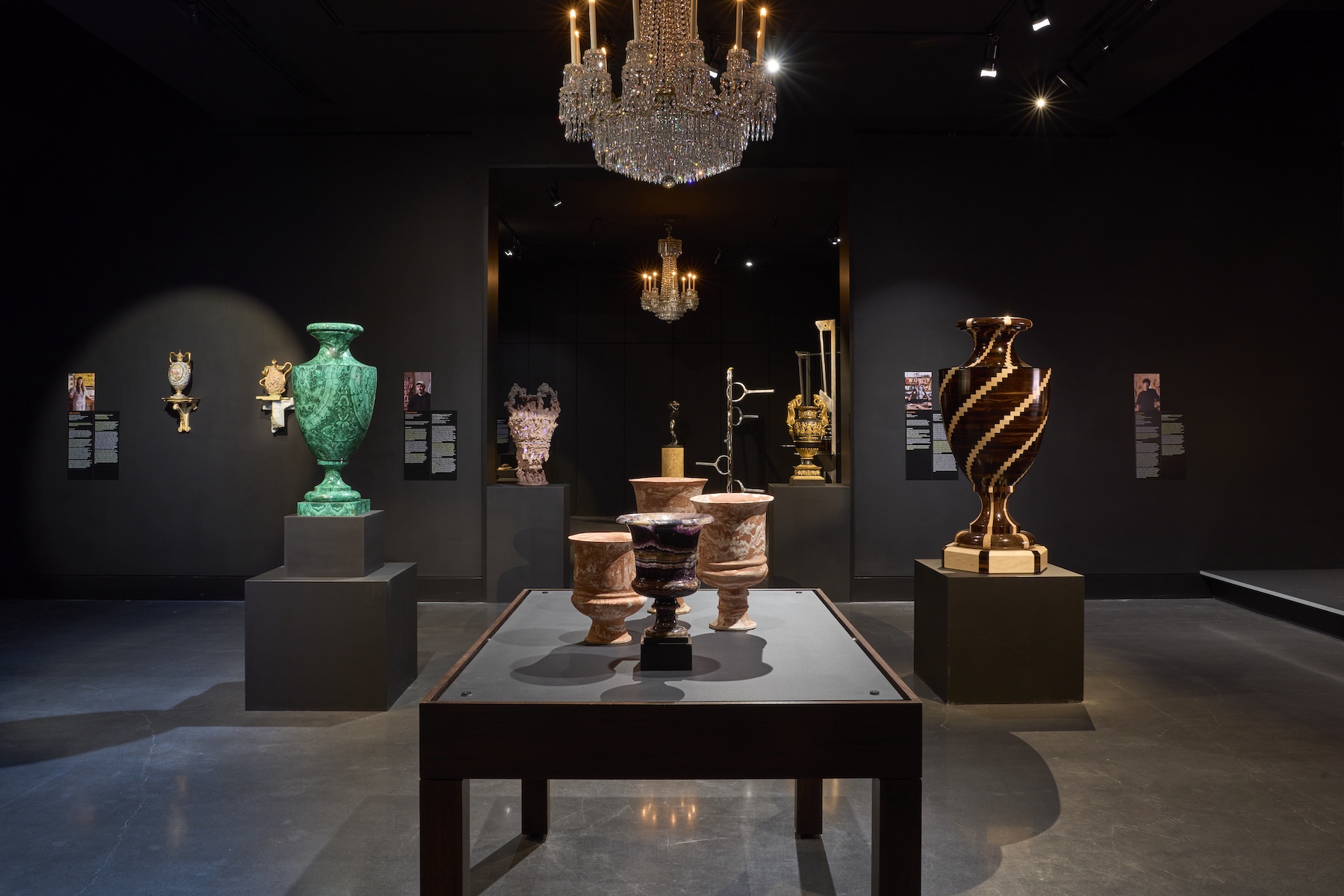
There is an undercurrent of “upstairs/downstairs” in the artists’ choice of objects, which range from monumental to the intimate, and from treasures, custom-made for a vanished aristocracy, to the humblest of utilitarian tools. Noted furniture designer/maker Gray Hawk chose one of the signature pieces in the DRG collection, the magnificent neo-classical malachite vase and cover, made by Carl Woerffel lapidary workshop in St Petersburg, Russia 1860-70. Reason writes in his catalogue note that this vase was made from a mosaic of thousands of pieces of malachite veneer. In his response Hawk has drawn on his exceptional carpentry and wood-working skills to create an equally monumental vase, Return, crafted from rare timbers, macassar ebony and rock maple.
In contrast, Sue Lorraine has responded with ironic humour to an 18th century painting attributed to Jean Jacques Bachelier, a leading painter of flowers and animals who is known to have worked for Louis XV and Madame de Pompadour. This painting, depicting a pampered but rather sad little ‘breeding bitch’, is one of many dog-themed works in the collection, reflecting Roche’s occupation as a successful dog show exhibitor and judge. For Lorraine it embodied subjugation of animals to human needs and desires. Her occasional timber table with canine hind legs is an ‘up yours’ to the world of wealth and privilege.
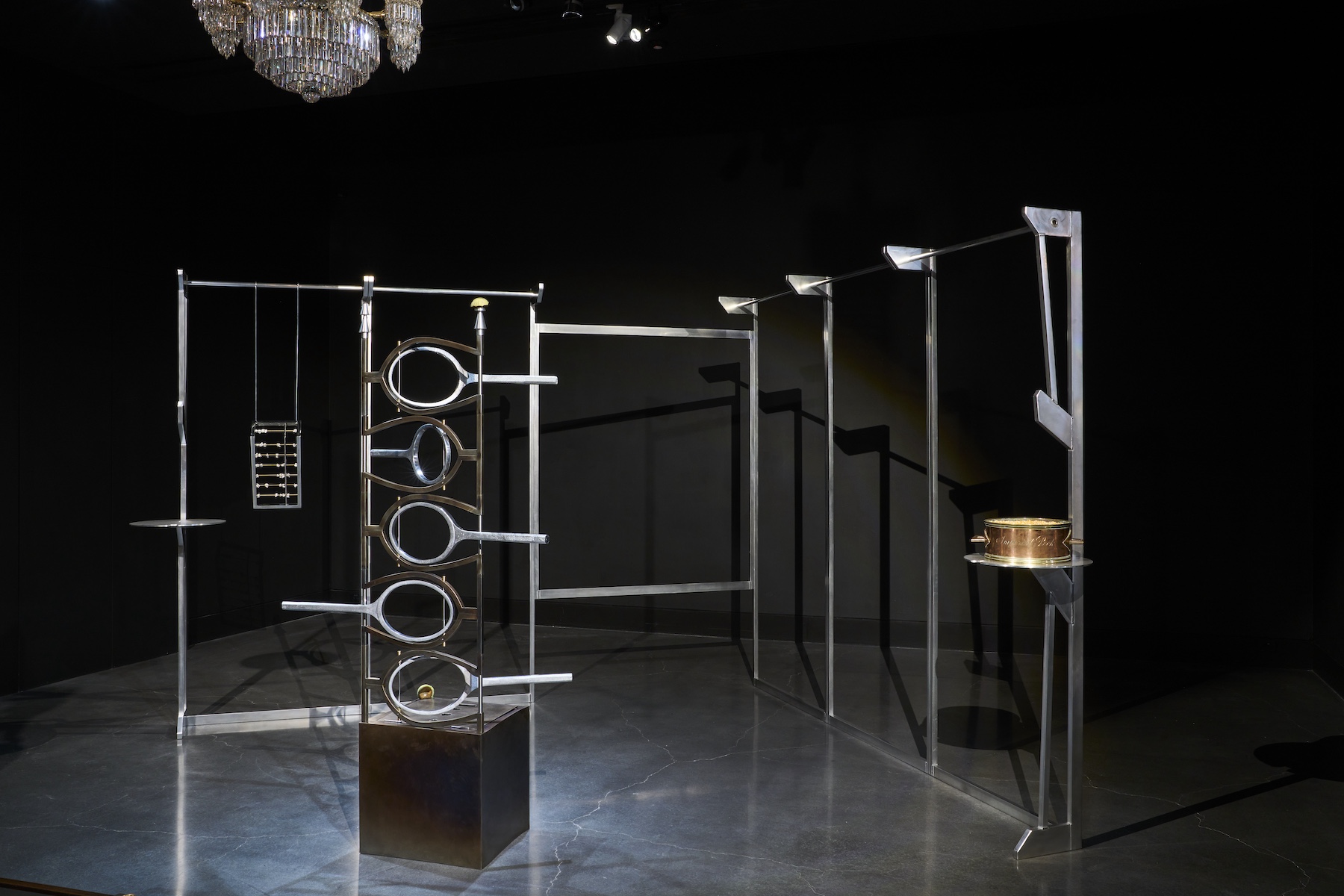
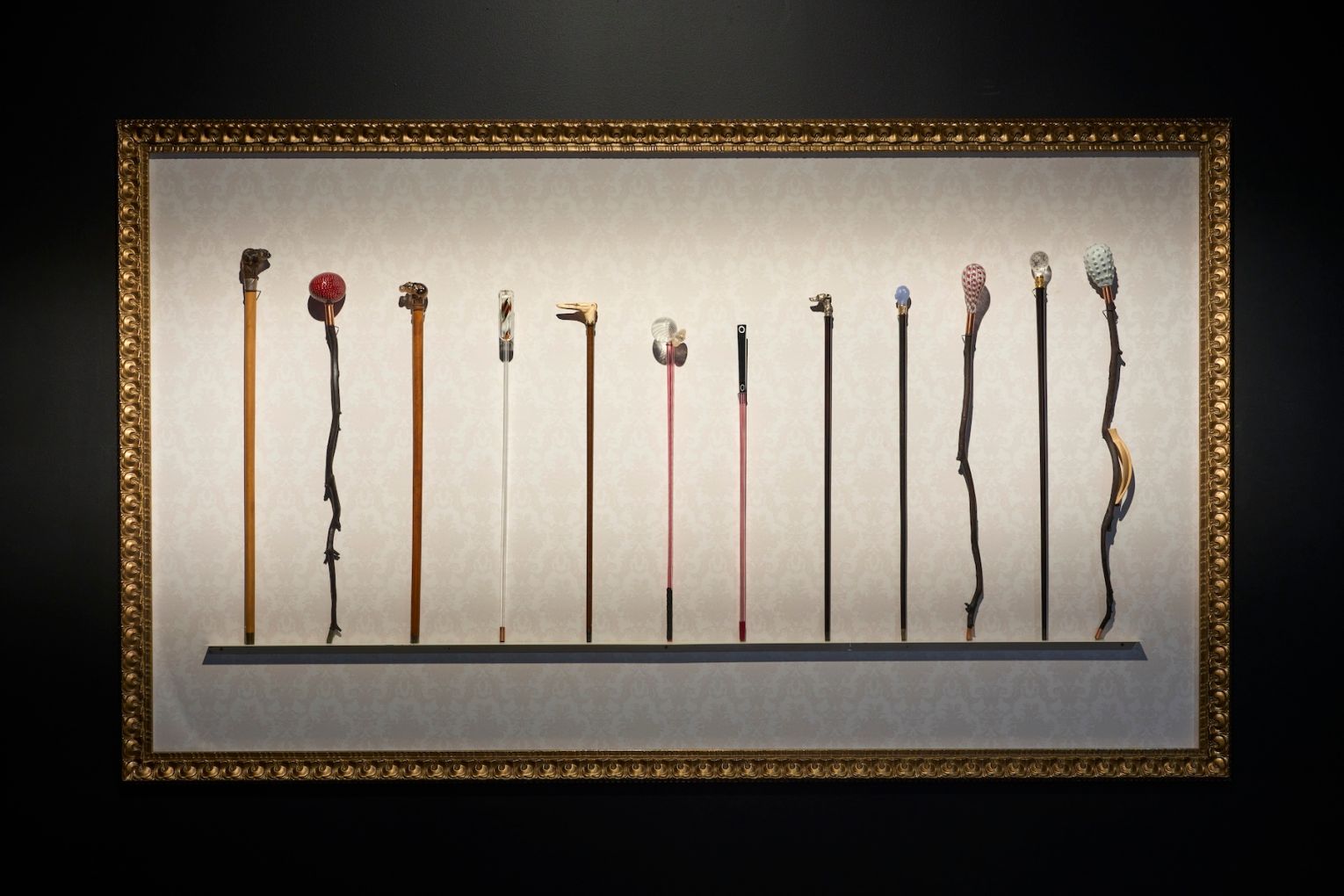
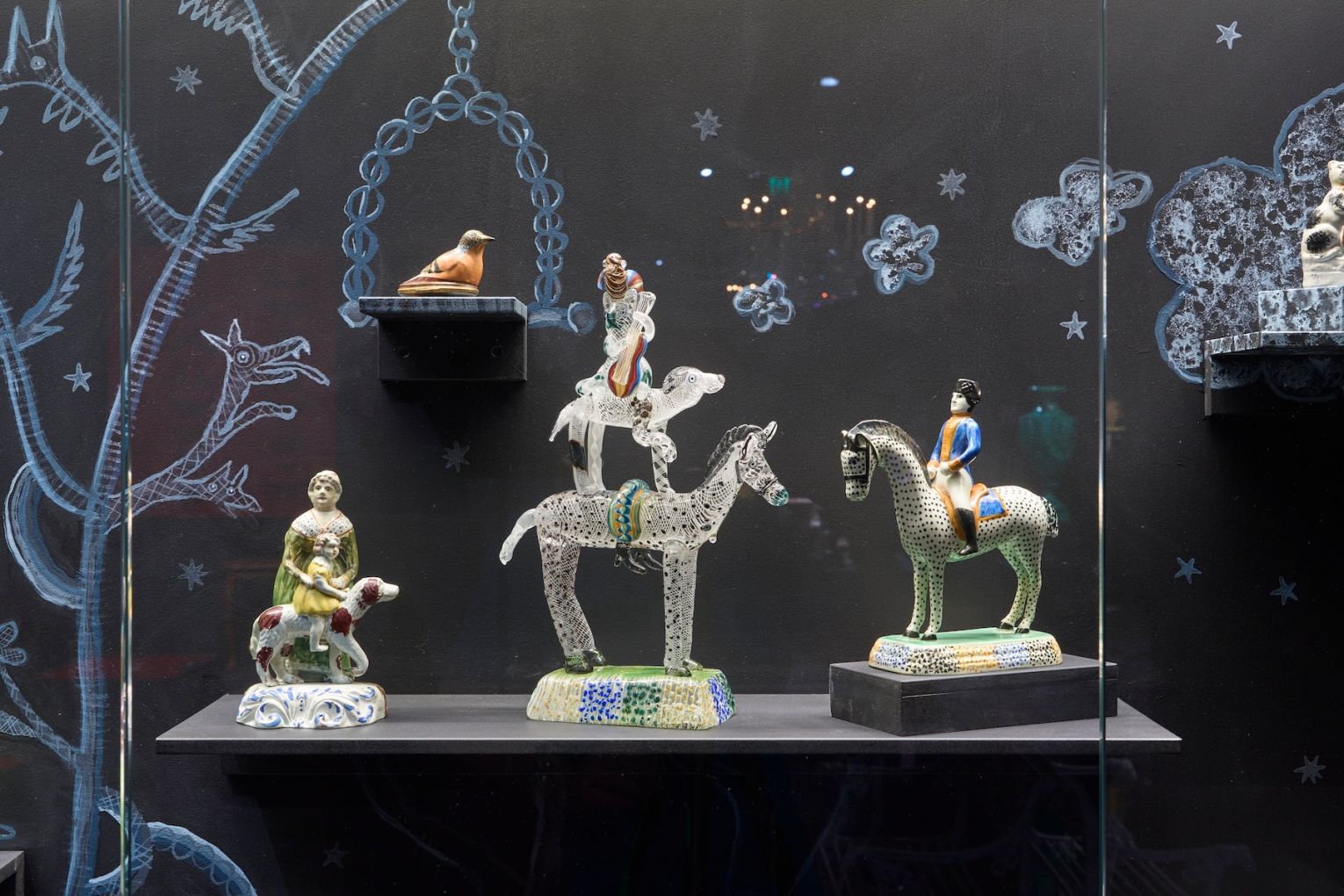
Eminent glass artist Clare Belfrage has selected a pair of richly patterned straw boxes, made c.1810 by American or French prisoners-of-war interned in Britain during the Napoleonic wars. In a departure from her usual body of work, she has created a grouping of four clear glass forms adorned with dazzling patterns of multi-coloured glass threads (‘stringers’). There are inspired inventions from two other acclaimed glass artists, both with enduring associations with JamFactory. Nick Mount has responded to Roche’s eccentric collection of early 20th century British and European walking canes, variously topped with whippet heads, a glass hippo, a marmot and Lalique glass flowers. For his part he has created a quixotic grouping of canes, several fabricated from found tree branches and topped with intricately patterned blown glass knobs. Tom Moore, acclaimed for his fantastical glass creatures and tableaux, was drawn to Roche’s ‘ceramic menagerie’ of 19th century British earthenware animal ornaments. In a typically over-the-top response, he has created his own menagerie of glass creatures, with the centrepiece a stacked arrangement of a dappled horse, topped by a dog, then a guitar-strumming cat with a bird on its head.
Subscribe for updates
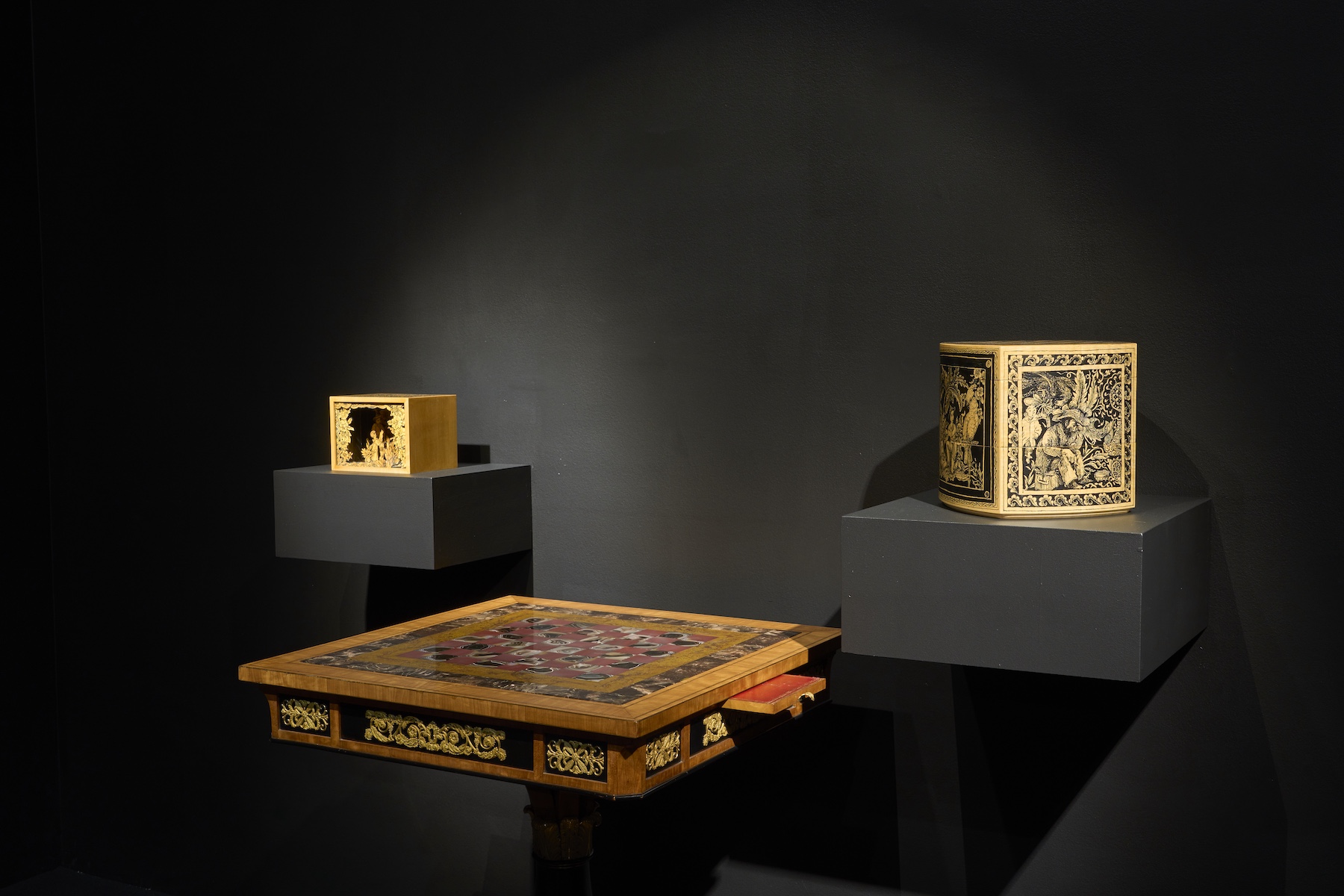
Three esteemed ceramicists, Stephen Bowers, Honor Freeman and Jeff Mincham AM, have each expanded beyond their usual practices in responding to widely varying aspects of the Roche collection. Bowers selected two contrasting objects, a humble little Staffordshire spaniel ornament and a grand games table with an agate chess board and gilt bronze ornamentation. In his response to this latter piece, he has collaborated with designer-maker Takeshi Iue, covering the surface of Inue’s delicately carved sycamore maple diorama and chess casket with exquisitely rendered pen and ink drawings, exemplifying for Bowers “the spirit of Regency decorative arts, bridging refinement and contemporary expression”.
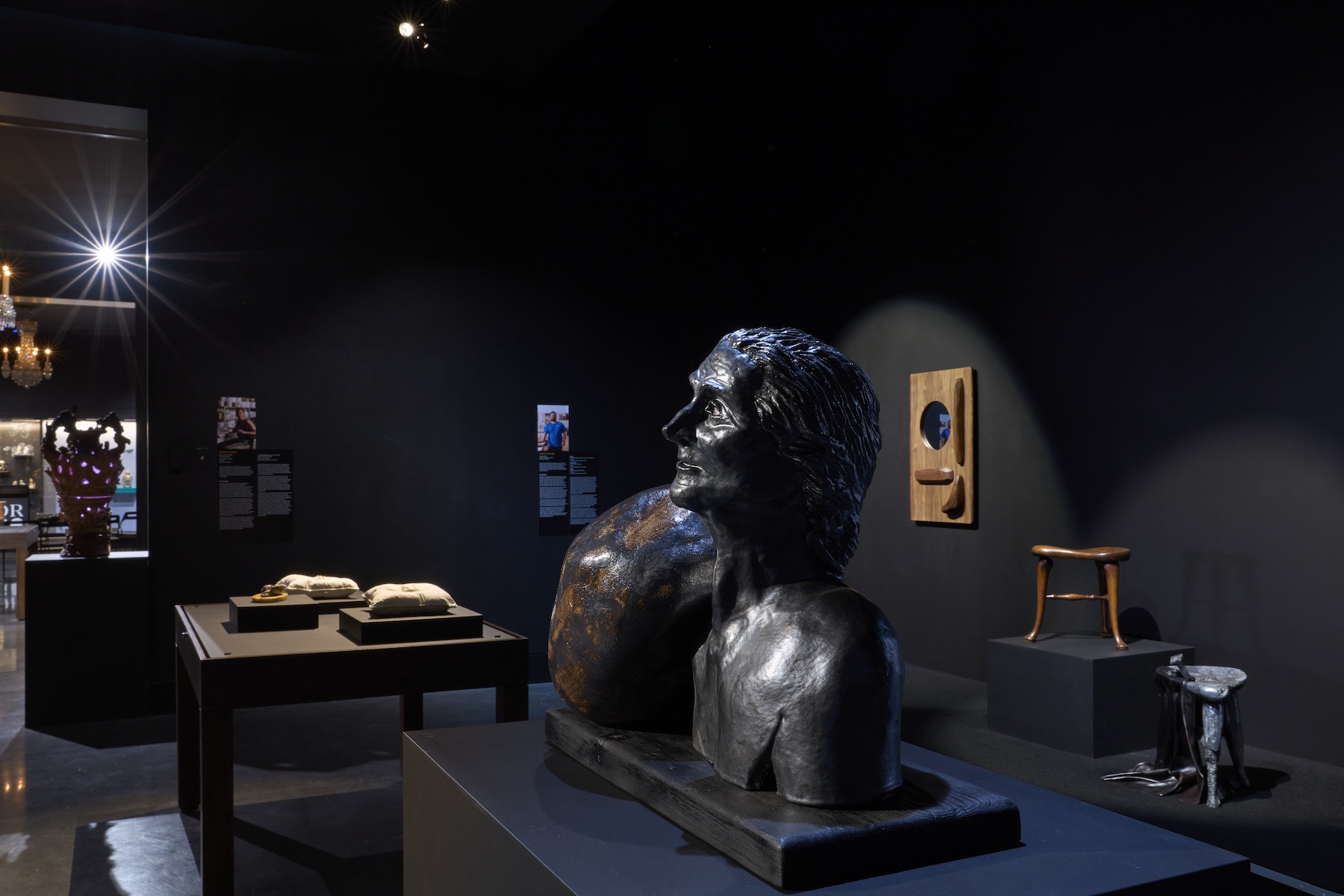
Freeman was drawn to a small bronze paperweight sculpture of a fallen sparrow, which reminded her of the dead marine creatures washed up by the algal bloom. She made a mould from a dead cowfish found on the beach and then cast it in porcelain and placed it on a porcelain cushion, creating a poignant memorial to “magical and mystical once-living things…washed up dead on the beach”. In a departure from his usual practice as a maker of hand-built vessels, Mincham has turned his hand to a figurative ceramic sculpture, The Sisyphus Syndrome, in response to the DRG’s bronze statue of the mythic Sisyphus, condemned for eternity to roll a boulder up a hill. Mincham’s sub-title, Learn to love your rock, points to a probable note of ironic self-portrayal in this depiction.
Amongst the group of JamFactory alumni there are some provocative responses, with the occasional hint of discomfort at such lavish conspicuous consumption. For instance, JamFactory alumnus and current ceramics studio head, Jordan Gower has selected an impressive marble-topped, black and gold lacquer secretaire, dating back to the ancien regime of pre-revolutionary France during the reign of Louis XV. In response he has created an austere grouping of darkly glazed stoneware vessels, devoid of any ornamentation and in stark, minimalist contrast to the profusion of golden floral designs adorning the secretaire.
Michael Carney has adopted an irreverent deconstructive approach in interpreting another treasure of the DRG collection, Prince Ernst August of Hanover’s clock, c.1810, Paris. This clock, in the form of a grand neoclassical urn of patinated bronze, ormolu and enamel, was commissioned by the Duke of Cumberland, later King of Hanover at the time of the Napoleonic wars. Carney strips away the gilt and the neoclassical references to sculpt a contemporary simulacrum of the form with loose, semi-abstract gestural swirls of clay. His contemporary sculpture, Endurance, exudes a rude energy that is an eloquent counterpoint to the formal neo-classicism of the DRG urn.
On the other hand, newly-minted ceramicist Sam Gold has fully embraced the golden aura of the DRG collection, creating a flamboyant gilt-glazed ceramic wall adornment, which at over two metres in length dwarfs the more modest scale of her chosen object, Pheasant startled by finches, a somewhat pedestrian bronze ornament made by Frenchman Ferdinand Pautrot c. 1865. Early career glass artist Alexandra Hirst rises to the occasion, too, taking her inspiration from an antique English child’s rattle in silver gilt and ivory. She has crafted a series of exquisite blown and etched glass rattles, with beaded kangaroo leather handle grips. It is a rare feat in this context that her rattles have a more refined beauty than the original source.
There is so much more to this exhibition, with virtually every object inviting prolonged scrutiny, admiration and curiosity. Making Old New is a successful collaboration which highlights Adelaide’s ever-growing reputation as a centre of excellence in historical and contemporary decorative arts and design – due in no small measure to the activities of these two unique Adelaide institutions.
Making Old New: DRG 10th Anniversary continues at David Roche Gallery until August 1
Want to see more stories from InDaily SA in your Google search results?
- Click here to set InDaily SA as a preferred source.
- Tick the box next to "InDaily SA". That's it.
Free to share
This article may be shared online or in print under a Creative Commons licence