‘Gut-feeling’ summons the wildly experimental spirit of late 20th-century performance art
An axe-swinging, cabbage-fermenting, toilet graffiti-ing new exhibition at Adelaide Contemporary Experimental offers more than a nostalgic trawl through the ghosts of Adelaide’s performance art past.
“I saw an art performance once.”
“What happened?”
“Someone walked into a room, naked and wearing a gorilla mask. Some people blew whistles and banged spoons on saucepans. A candle was lit and the performer blew it out. “
“What happened then?”
“Everyone filed out of the room and went to a nearby pub to complain about government arts policy and budget cuts.”
You might like
“Was that it?”
“I have some old photos somewhere. It’s a bit hard to make out details because of the low light. Someone took a video, but no one knows where it is now. No idea what it really meant. But we had fun.”
Like recounting a dream, the sense and the vividness of performance art experiences drain away in the retelling. Old grainy photos and glitchy videos don’t help. What made absolute sense in the moment just doesn’t add up. So why is it that the 20th century art world fell in love with performance art?
The simple answer may be that its time had come. There were plenty of precursors like Dada cabaret, Bauhaus events, Italian Futurist’s noise performances, Joseph Beuys’ social sculptures, Allan Kaprow’s happenings and the like. In the second half of the century, this counter-culture movement became enveloped in the idea that artists shouldn’t be sleepwalking into the future but push back against the dark forces of art marketing and institutional power structures (as perpetrated by major art galleries) by making art which defied capture and spoke greater truths about the modern condition. The idea of the dematerialised artwork took hold and many forms – among them, performance. It was live, emphasised improvisation, often relied on audience interaction, and political agitation. Most importantly much of it was enacted outside of gallery spaces.
Subscribe for updates
Performance art as it currently stands is not a fixed object or solely an aesthetic experience. It is usually time-based (hang around and see what happens), ephemeral (you have to be there) and involves some kind of audience. Having said that, some performers/artists perform or prefer to document events in private before sharing with others. Its proponents claim that it closes the gap between art and life. It may even blur the distinction between artist and viewer/audience. Robert Rauschenberg described it as “art that refuses to settle.”
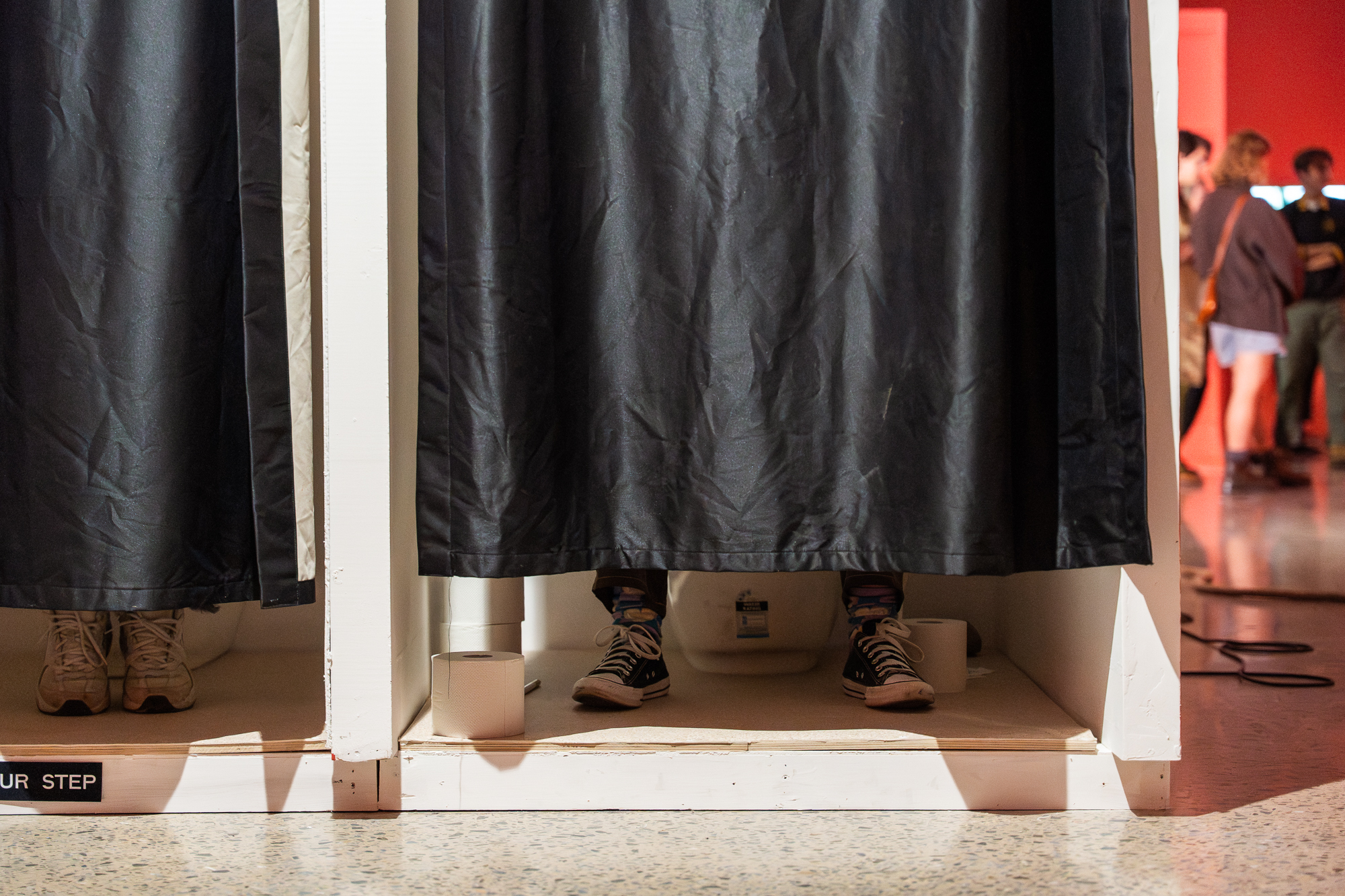
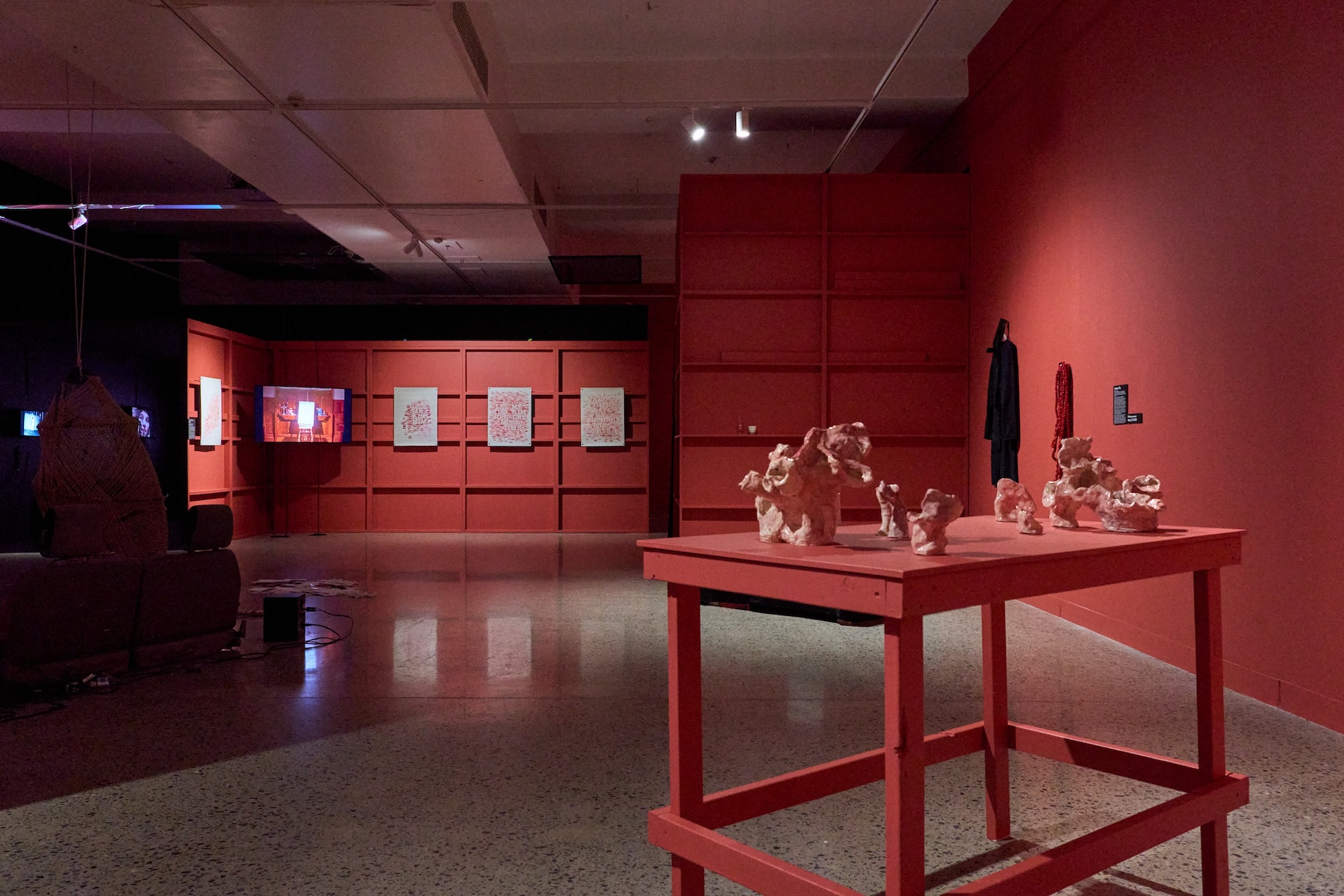
So, it may be best understood as a tool or strategy for making sense of life. That’s a big call. But as I engaged with some performances/situations the other evening at the launch of ACE’s Anarchive: Gut feeling, I wasn’t so sure. I found myself in a twin booth confessional, (Tikari Rigney, Cubicle Confessional, 2026) sitting on a toilet seat. A hand thrust a square of toilet paper through a hole in the partition. I understood that I was to write something – and pass it back. This exchange continued for a few minutes. I lurched out, almost falling over a vat of fermenting cabbage leaves (Shenshen Zheng, The Air Will Change, 2026). Soiled paper, fermenting cabbage – things were starting to get visceral. Flashback to dirty nappies being washed by Jude Adams (Washing Performance,1979).

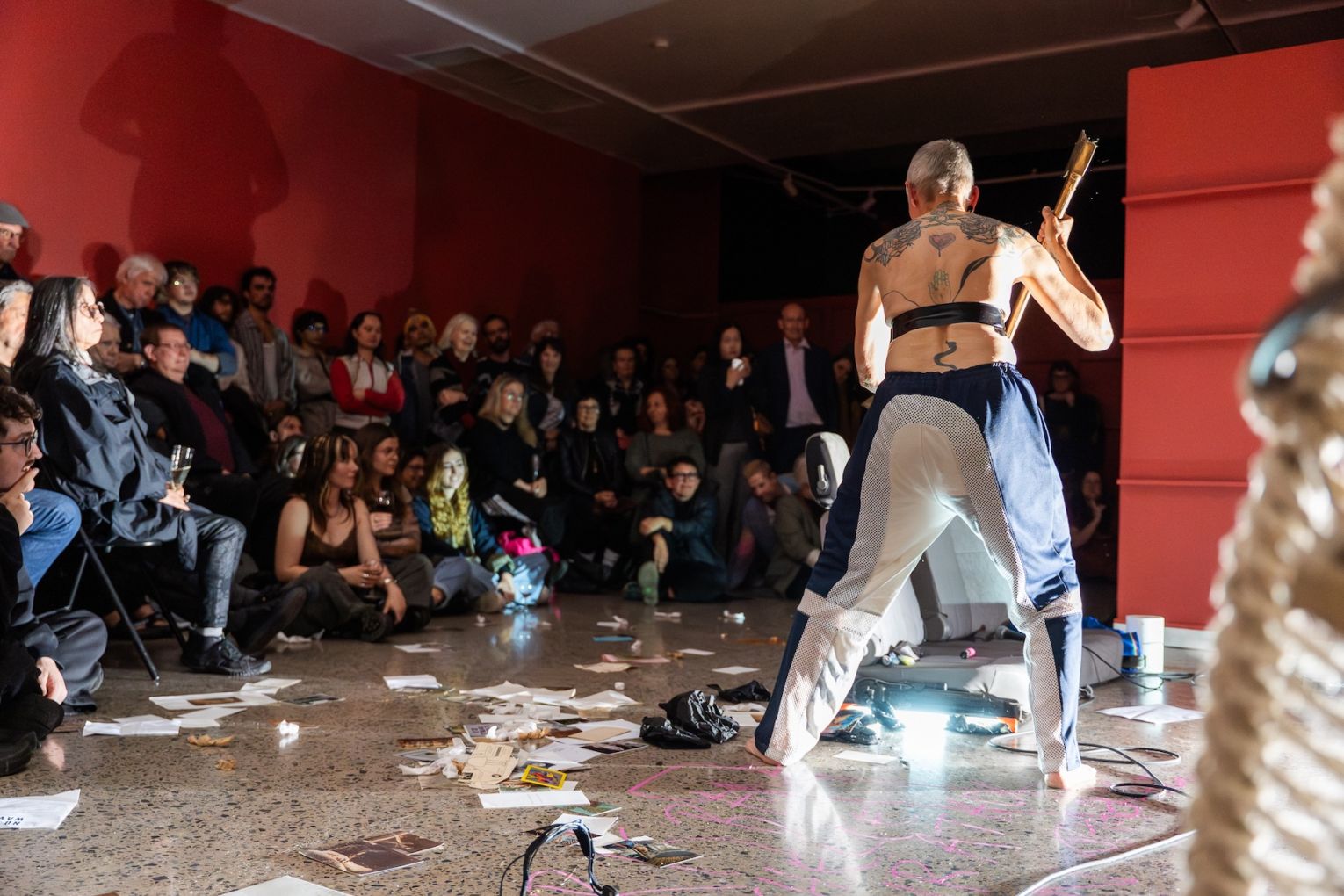
An audience gathered, the lights dimmed and to sounds of amplified groaning someone crawled into the performance space. What happened next was the real takeaway. The audience, of all ages, was transfixed, maybe puzzled but caught up in the moment. Conversation stilled. This was it – the ability of performance to create a collective experience. Spin the time machine back to the 60s and 70s when body-based, edgy, politically inflected performance became mainstream in Adelaide. The mood was different then. There was a hectoring, confrontational tone, particularly in events associated with Women’s Art Movement (WAM). Onlookers interjected and shouted encouragement. As performances spilled onto the streets performances shook off their Dadaist craziness and prioritised political messaging be it Vietnam War protest, Aboriginal land rights, homosexual law reform or status of women in society. Photo and video documentation amplified this messaging. Publications transformed from hand outs and broad sheets to substantial well-illustrated art journals. And so, the archive was born.
Anarchive – which includes an exhibition by Bridget Currie at Flinders University Museum of Art (FUMA) – is a result of Sasha Grbich’s research into essentially Adelaide-based feminist art practice of the closing decades of the 20th century with a focus on experimental art including installation, performance (live and recorded), sound and participatory events. FUMA’s Post-Object and Documentation (POD) Collection plus the ephemera holdings of the Adelaide Women’s Art Movement (WAM) offered a rich trove of artefacts and documentation. Grbich’s research revealed that while university collections around Australia had actively collected such materials, institutional (read collecting art galleries) collections were meagre.
Anarchive can be read as Grbich and fellow curator Danni Zuvela’s response to this situation. It uses a now well-established curatorial practice of reinterpreting collections by enlisting a new generation of artists to go down the time tunnel and respond to work made in another lifetime. The aspect that makes this project different is that the archive sits in uncertain territory – part artefact and part documentation. Add to this the sketchy condition of some of these works such as Jill Orr’s video She had Long Golden Hair (1980) with its embedded video glitches. The artist has decided not to clean it up but leave these imperfections as a metaphor for the slippage of time and memory.
Despite a patina of age, the videos and photographs deliver a sense of being there, as seen in Sandra Greentree Nicolaides’ discomforting video metaphor of over-consumption Up to our necks (1981). The artist performs in a glass vitrine, eating and drinking while fluid rises leaving her mouth barely above the surface. Bronwyn Platten’s video Meeting Nude Woman Walking on Balls (after Hans Baldung Grien), (2003), benefits if anything from the slightly tremulous character of the print, intensifying the precarious predicament the artist has chosen to put herself in. Polished editing has ensured that the central message of Margaret Dodd’s 16mm film This woman is not a car, 1982, keeps landing punches.
This is a layered, engaging and impressively researched exhibition project with the capacity to surprise those of an earlier generation who had witnessed many of the performances represented. Far from being a nostalgic trawl through remnants of a wildly experimental era it reminded that ideas whose time has come refuse to die. But times have changed. Public performance can now be experienced through social media ad nauseum. Whether there is a contemporary audience willing to join a new generation of performance artists, here in Adelaide, in being discomforted, challenged or unsettled remains to be seen.
Anarchive: Gut-feeling continues at Adelaide Contemporary Experimental until June 27
Want to see more stories from InDaily SA in your Google search results?
- Click here to set InDaily SA as a preferred source.
- Tick the box next to "InDaily SA". That's it.
Free to share
This article may be shared online or in print under a Creative Commons licence