Yield Strength is a risk-taking Adelaide Biennial with its share of weak points
While Biennial curator Ellie Buttrose delivers some thought-provoking highlights – like the impressive work of Kirtika Kain – many others let their wall text do the heavy lifting. Critic Margot Osborne reviews the 2026 Adelaide Biennial of Australian Art.
Expectations were high when the Art Gallery of South Australia appointed Ellie Buttrose as curator of the 2026 Adelaide Biennial of Australian Art, hot on the heels of her international acclaim as curator of Golden Lion award winning exhibition by Archie Moore in the Australian Pavilion at the 2024 Venice Biennale. Despite the promise of its high-profile curator, AGSA’s latest Adelaide Biennial, Yield Strength, has quickly deflated over-eager anticipations of a landmark event.
This 19th iteration lacks both the frisson of dangerous new work, and the buzz of a collective zeitgeist moment. Nor is the Biennial helped by its abstruse title, which the curator has stated derives from engineering, “referring to the point at which a material subjected to force begins to distort irreversibly”. In choosing this theme AGSA and Buttrose may have sidestepped the political controversies that have marked the recently opened Biennale of Sydney, but as a title aimed at corralling the latest contemporary tendencies with a catchy phrase, Yield Strength is just too opaque and lacking in poetic resonance.
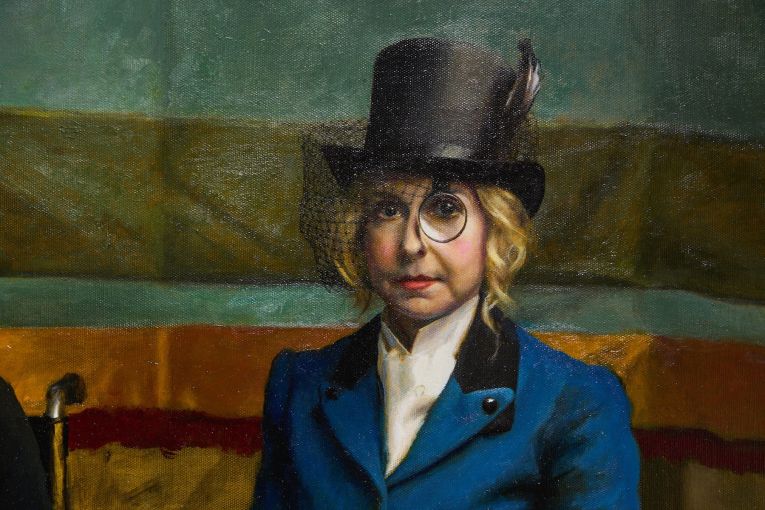
Across the 24 selected artists there is a spectrum of professional experience, media and cultural backgrounds. Amongst the necessarily small sample discussed below, there is thought-provoking contemporary art that variously uplifts, satisfies, stimulates and challenges, but in the end there are just too many cases of ‘walk on by’ art, which fails at the most basic level of inviting the viewer to stop, engage and enter the world of the artist’s creative imagination. While there is assured work in conventional media by mature artists, most notably paintings at both AGSA and Samstag by Prudence Flint (born Melbourne 1962) and John Spiteri (born Sydney 1967), Buttrose has taken a risk in commissioning some relatively early career artists, giving them the opportunity and the space to think big, but unfortunately this investment has not always paid off.
"In the sensuous chaotic textures of her work, and the imaginative transmutation of the lowly into precious, she is negating and transcending her birth in the subjugated Dalit caste, a stigma that would have defined her life if she had stayed in India."
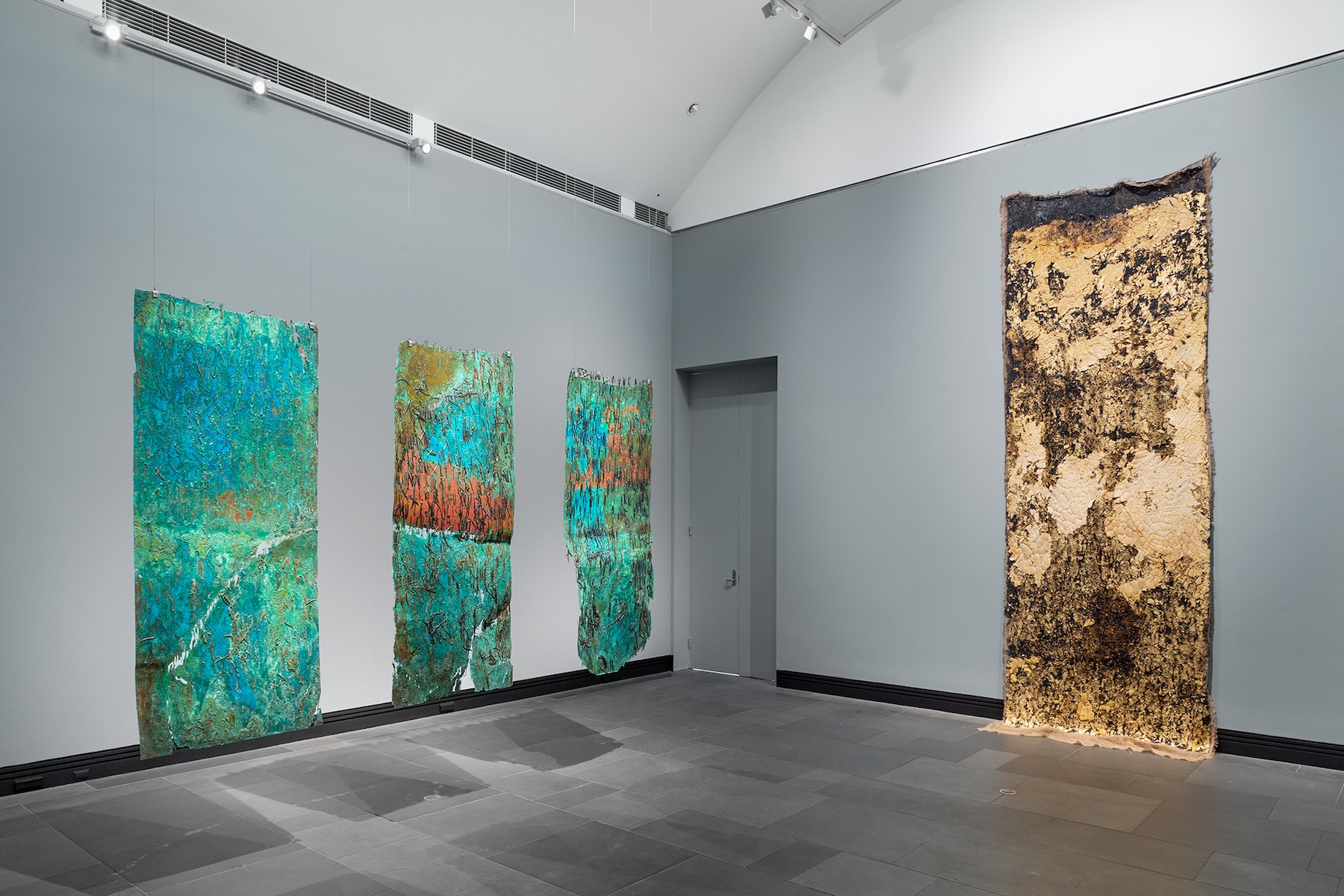
Sydney-based artist Kirtika Kain (born New Delhi, India 1990) is one of the most impressive artists of this Adelaide Biennial. Kain creates richly encrusted alchemical works using base materials of tar, hessian and copper augmented with gold leaf, turmeric and pigment. In the sensuous chaotic textures of her work, and the imaginative transmutation of the lowly into precious, she is negating and transcending her birth in the subjugated Dalit caste, a stigma that would have defined her life if she had stayed in India. Kain’s wondrous work has been split between two venues, AGSA and Samstag, with the largest 10 metre piece, Midnight, hanging at the latter venue. This is a shame as it lessens the immersive impact which would have been created if all the works were hung together.
You might like
Splitting of works between AGSA and Samstag applies to several other artists and seems motivated by the curator’s desire to set up ‘conversations’ between pairs of apparently dissimilar artists, with corresponding couplings in the catalogue essays. In the AGSA gallery where five pieces by Kain are displayed there is a long wall, which might have been used to display Midnight but which is instead occupied in part by a small vitrine display case holding a piece of pyrite (fool’s gold) on loan from the South Australian Museum. This vitrine is an outlier of the main installation Remnants of my Father by Archie Moore (Kamilaroi/Bigambul people, born Toowoomba 1970), at the Museum of Economic Botany in the Adelaide Botanic Garden.
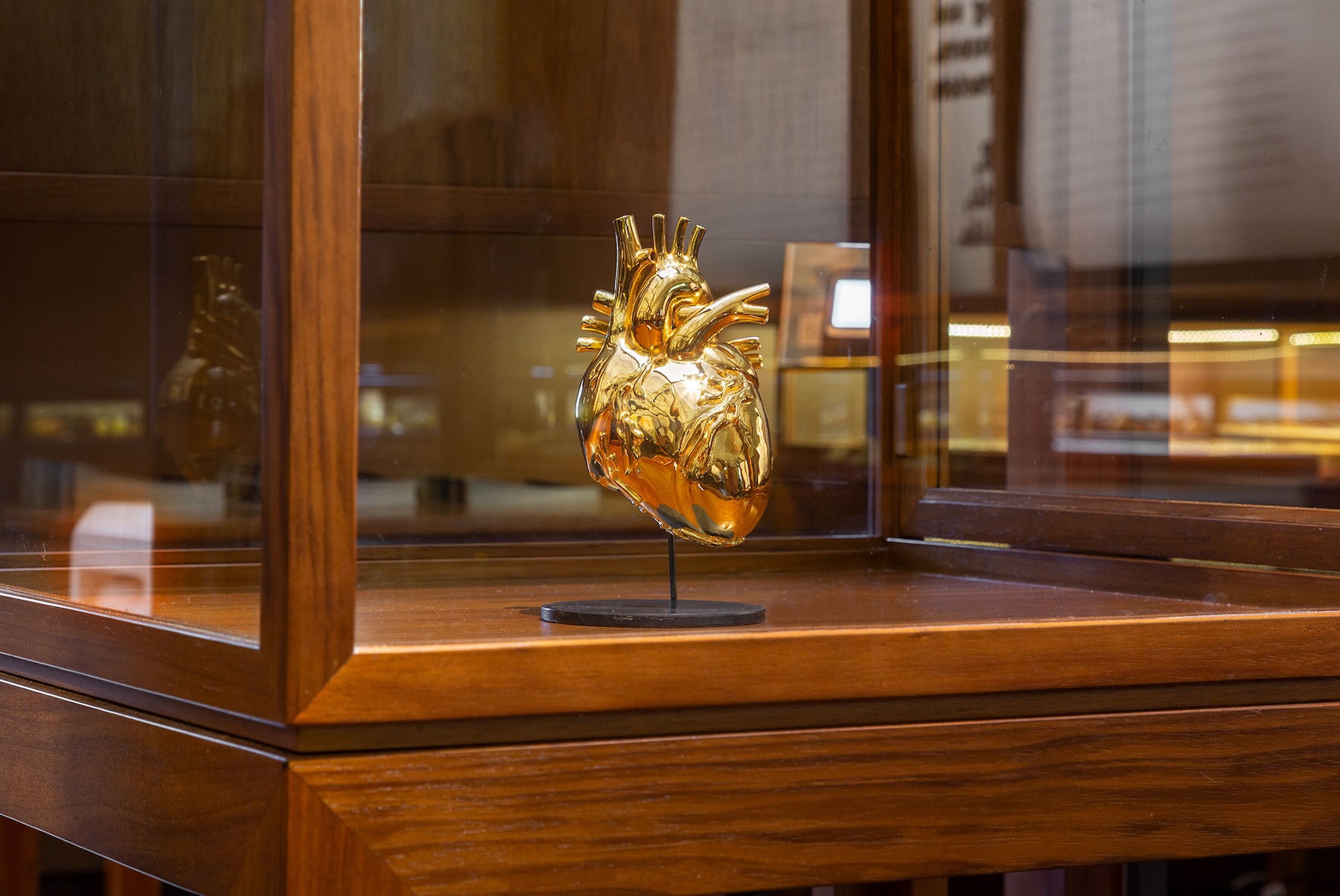
After his Golden Lion award, Moore was naturally the most hotly anticipated artist of Yield Strength. Remnants of my Father does not play to expectations as Moore has turned his attention from his Indigenous heritage on his mother’s side to the convict/settler lineage of his father. In a spare installation, delving into his father’s vain quest for a gold-prospecting fortune, the centrepieces are vitrines containing a gold-plated heart, a plastic bucket filled with simulated urine, dentures with one gold filling, eucalyptus leaves with gold filigree and a large nugget of pyrite. The gold heart is especially eloquent in encapsulating the artist’s complex response to his father, where love and failure are entwined. Enlargements of archival documents from his father’s estate fill in the narrative of Stan Moore’s life and the artist’s lengthy statement augments our reading of the actual objects. This installation of objects and text succeeds at a modest level in conveying a sense of the artist’s mixed emotions in respect to his Anglo Celtic heritage on his father’s side, while relying on the more extensive treatment by Moore of his Indigenous origins to add essential resonance to this aspect of the artist’s broader body of work.
Other First Nations artists drawn from around the country include Josina Pumani (Pitjantjatjara people, born Mimili, APY lands 1984), Milminyina Dhamarrandji (Djambarrpuynyu, Dhalpiyalpi people, born Yolngu country 1960) and Mark Maurangi Carrol (Maori, Cook Islands, born Sydney 1995). Displayed at both AGSA and Samstag, Pumani’s dramatic groupings of large hand-built ceramics, with intense red and black underglaze decoration, emanate a stark solemnity as reminders of the lingering impact on her people of the British Government’s atomic testing at Maralinga and Emu Fields from 1956 to 1963. Similarly, Dhamarrandji has work at both galleries. Her ambitious installation Dhanbadiny (death adder) at Samstag is one of the Biennial’s outstanding artworks. The shimmer of her rarrk markings in ochre and white on a grouping of poles is adapted to a mesmerising moving image work, made in collaboration with The Mulka Project. Projected on a wall behind the poles, in this work the hypnotic camouflage effect of the rarrk markings gradually reveals slithering forms of Dhambadiny/the death adder.
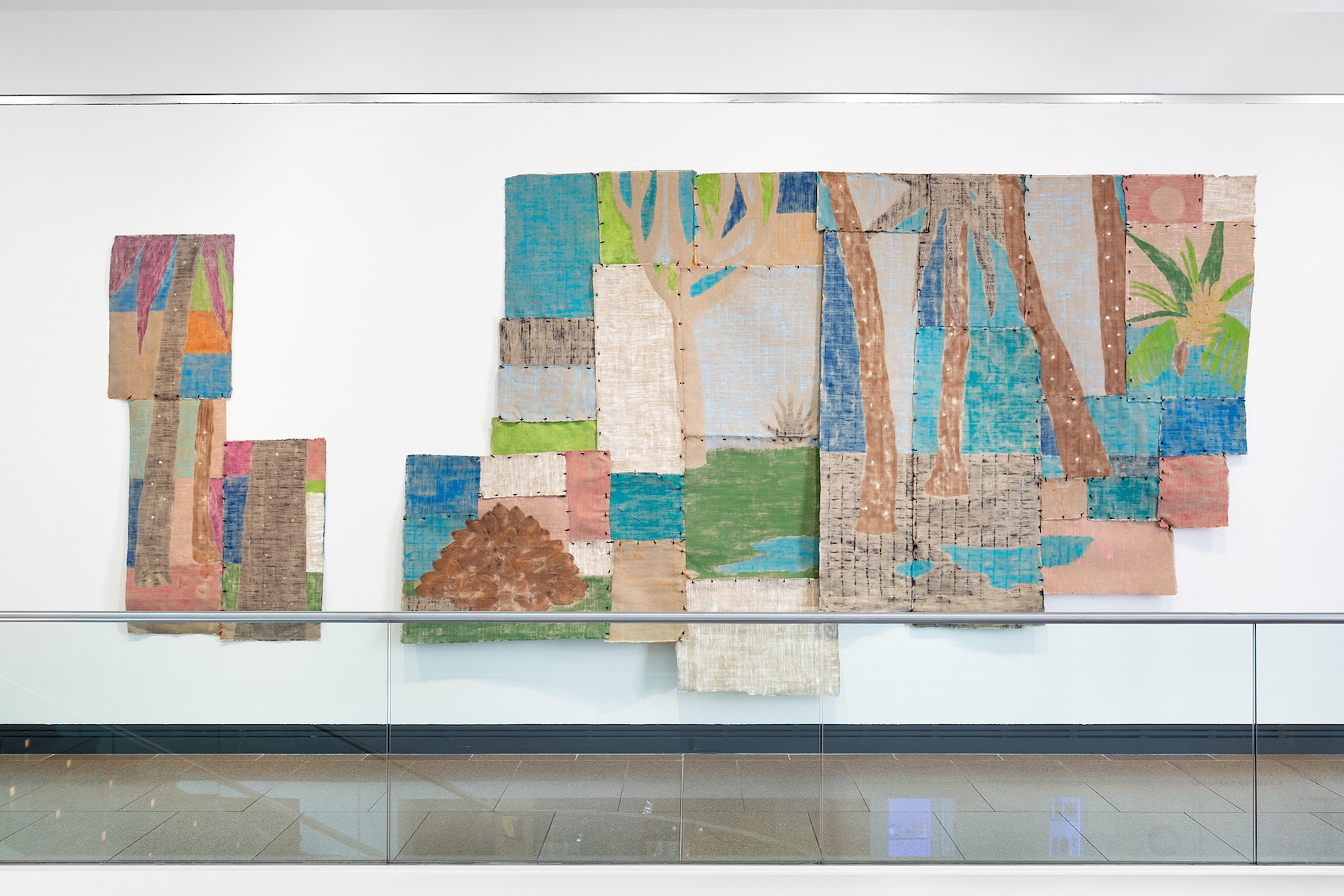
Carrol, whose paintings are hung lining the AGSA atrium, employs an unusual technique of allowing pigment applied to the reverse side to seep through to the surface, thus creating misty, ghostly effects that underpin the sense of insubstantial images hovering in his memory. His course linen surfaces steeped in muted tones of pigment and acrylic paint and ‘stitched’ by cable ties in large patchworks, generate a palpable aura. Carrol is emulating the processes used to create mulberry barkcloth in the Cook Islands, with the patchwork effect recalling applique tivaevae quilts. His richly evocative suite of works stands out amongst the younger artists in Yield Strength.
Subscribe for updates
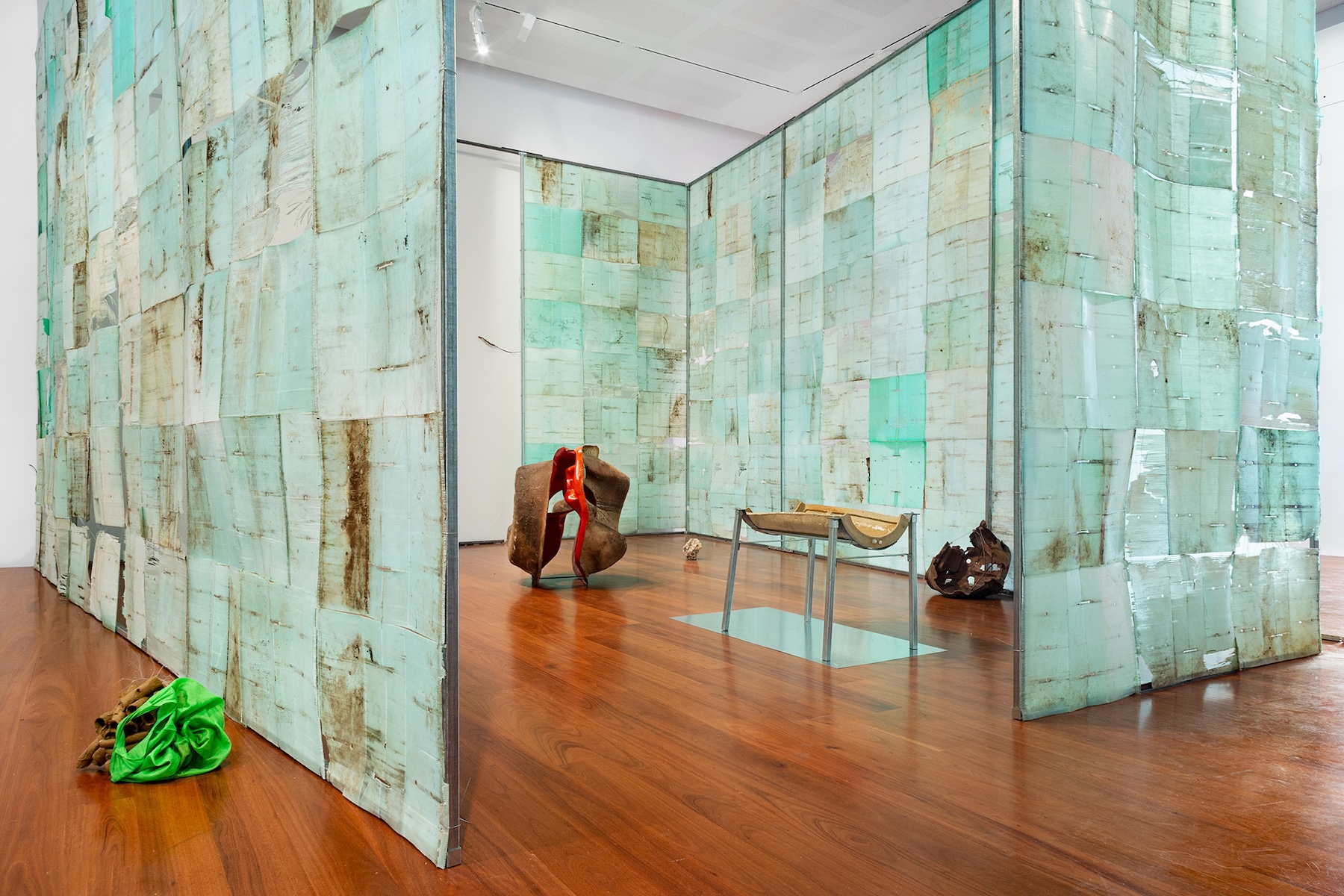
Among the cohort of up-and-coming installation artists, there is frequently a discrepancy, or credibility gap, between wordy statements of intent, and the resulting art. Isadora Vaughan (born Melbourne, 1987) has been allocated approximately one third of the main gallery floorspace at the Samstag Museum for her self-consciously shambolic mixed media installation, Feral ecologies. According to the lengthy wall text at Samstag, her carefully staged anarchy is concerned with “the layering and contingency found in novel ecosystems such as urban rewilding projects” and “dispels a purist idea of nature”. This is a case of text-dependent art where the actual work still fails to communicate, even with this textual explication.
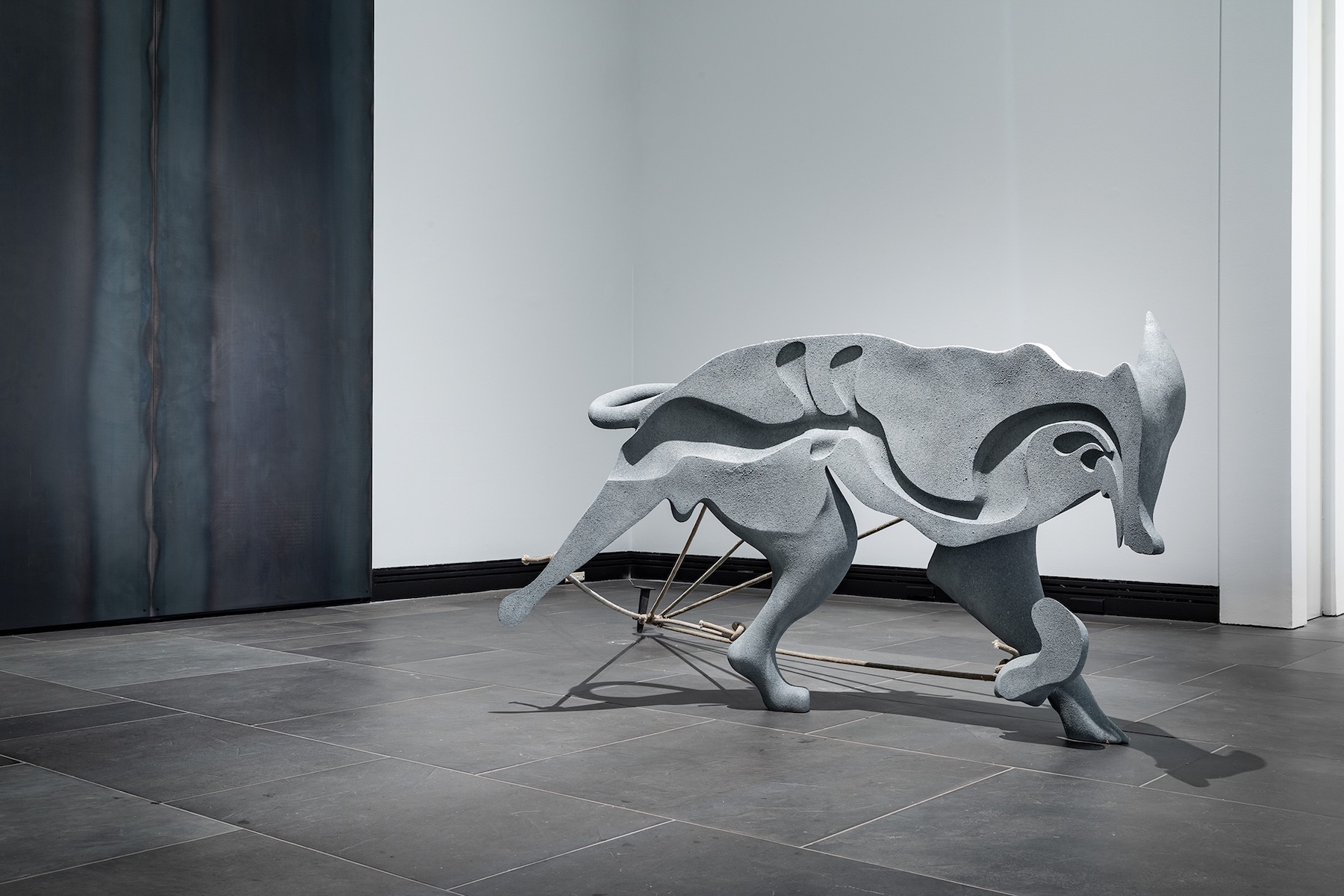
The youngest artist in the exhibition, Francis Carmody (born Sydney, 1998) has also been allocated generous floorspace, this time at AGSA, for his mixed media installation, Wise-to-the-bait, the centrepiece being a 3-D fabricated ‘dog’, dissected in half to reveal its stylised innards, and tethered by several thick ropes. This work was the outcome of a residency partly supported by the University of Melbourne. According to the wall text, “Carmody uses the wolf-cum-dog as a metaphor for the vast human appetite to tame, restrain and contaminate other beings”. This sculpture is an interesting use of advanced technology, but as with Vaughan’s installation, its portentous claims are overblown.
Adelaide early career artists Jennifer Mathews (born Adelaide 1994) and Emmaline Zanelli (born Adelaide 1994) each contribute large scale ambitious works. Mathews’ towering stainless steel and galvanised steel Yard funnels people through two alternative passages, to end in the same place. Despite its undoubted visual spectacle, this piece fails to induce more than a tokenistic viewer response at being ‘herded’ like animals to a deterministic end point. What might have sounded good at a conceptual or proposal level, however, lacks sufficient psychological chill factor in its realisation.
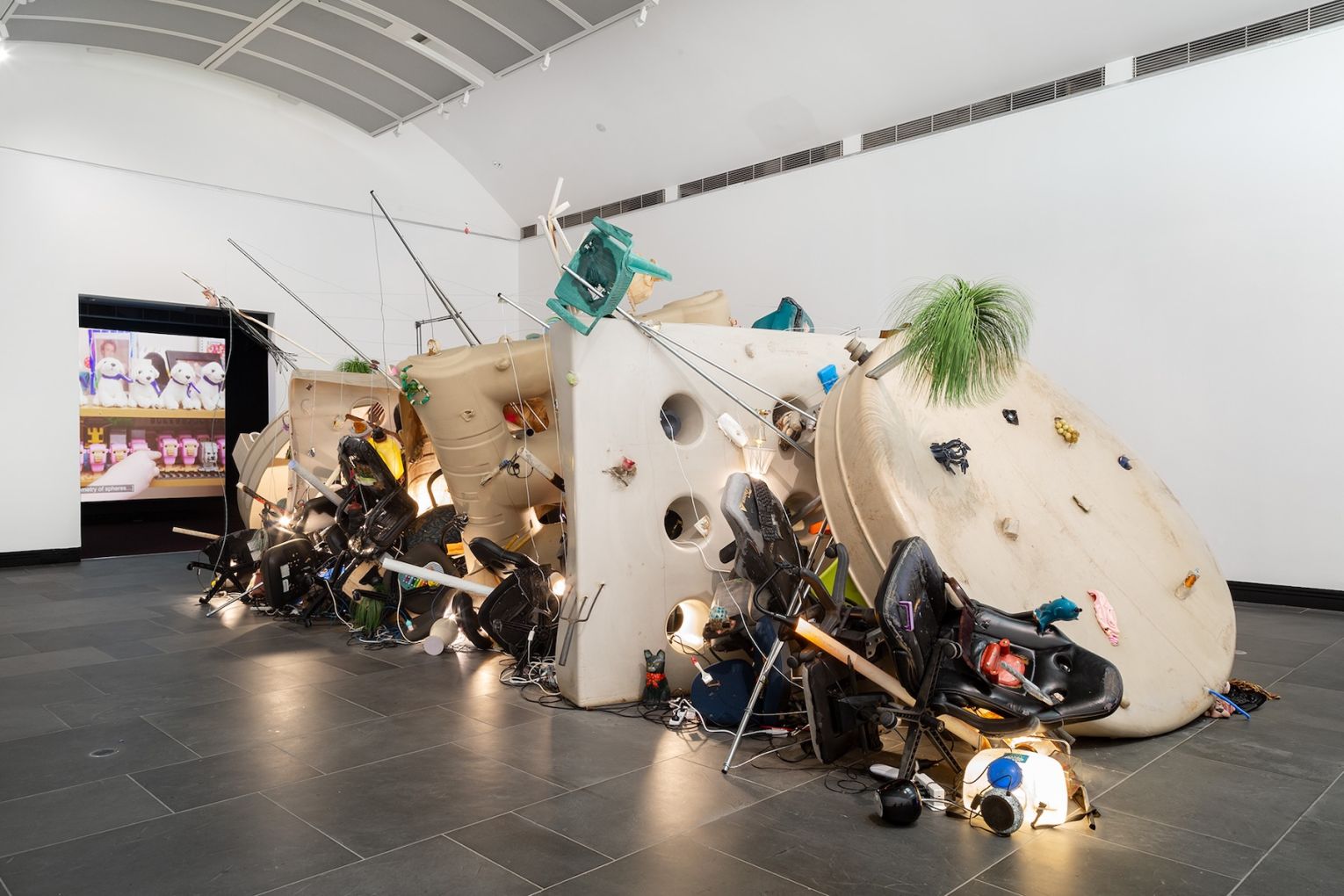
Zanelli’s ten-minute video, Pocket Money, bombards the viewer with constantly changing imagery tenuously linked by a fractured, incoherent narrative around young people and their casual jobs. It is perhaps targeted at the younger generation who are the video’s subject, but the absence of a clear narrative or metaphorical structure may deter even this generation. In her nearby floor installation, Necrorealist Sunscreen, Erika Scott (born Biloela, Queensland 1987) is more successful in her creative interventions and juxtapositions of random objects that make up a huge pile of consumer junk scavenged mainly from roadside detritus. It is inventive, amusing but also tinged with deja vu from the long line of junk collage and assemblage artists who have preceded her.
A greater disappointment lies not in the exhibition but in its accompanying publication: a large-format 220 page ‘catalogue’ with a deeply confusing layout and graphic design, that lacks information one would expect on artworks, artists and the venue where they are displayed.
In conclusion, regardless of these quite substantial reservations about Yield Strength, each viewer will experience a slightly different Adelaide Biennial – reviews elsewhere have already revealed differing responses. With free admission and a long season stretching into June across three venues, there is really no excuse not to go along, have a look and judge for yourself.
The 2026 Adelaide Biennial of Australian Art: Yield Strength runs until June 8 across the Art Gallery of South Australia, Samstag Museum of Art and the Adelaide Botanic Garden

Want to see more stories from InDaily SA in your Google search results?
- Click here to set InDaily SA as a preferred source.
- Tick the box next to "InDaily SA". That's it.
Free to share
This article may be shared online or in print under a Creative Commons licence