Sera Waters takes family history by the collar
Sera Waters’ latest collection of textile sculptures continues to trace the material histories of her ancestors, this time picking up the thread through the Great Depression and World War II.
Family histories and the stories passed down from generation to generation are what help shape our identity and values. South Australian artist Sera Waters is fascinated by the everyday details often left out of history and looks to her own family narratives to fill the gaps. While much of her work has focused on our colonial past, her exhibition Collared & Cuffed at Hugo Michell Gallery takes a broader, more global perspective.
Given the current state of world politics, Waters thought it was timely to examine intergenerational ways of addressing challenges. She explains, “Our forebears have all lived through difficult times. What knowledge did they gain from those experiences? How did they negotiate those challenges?”
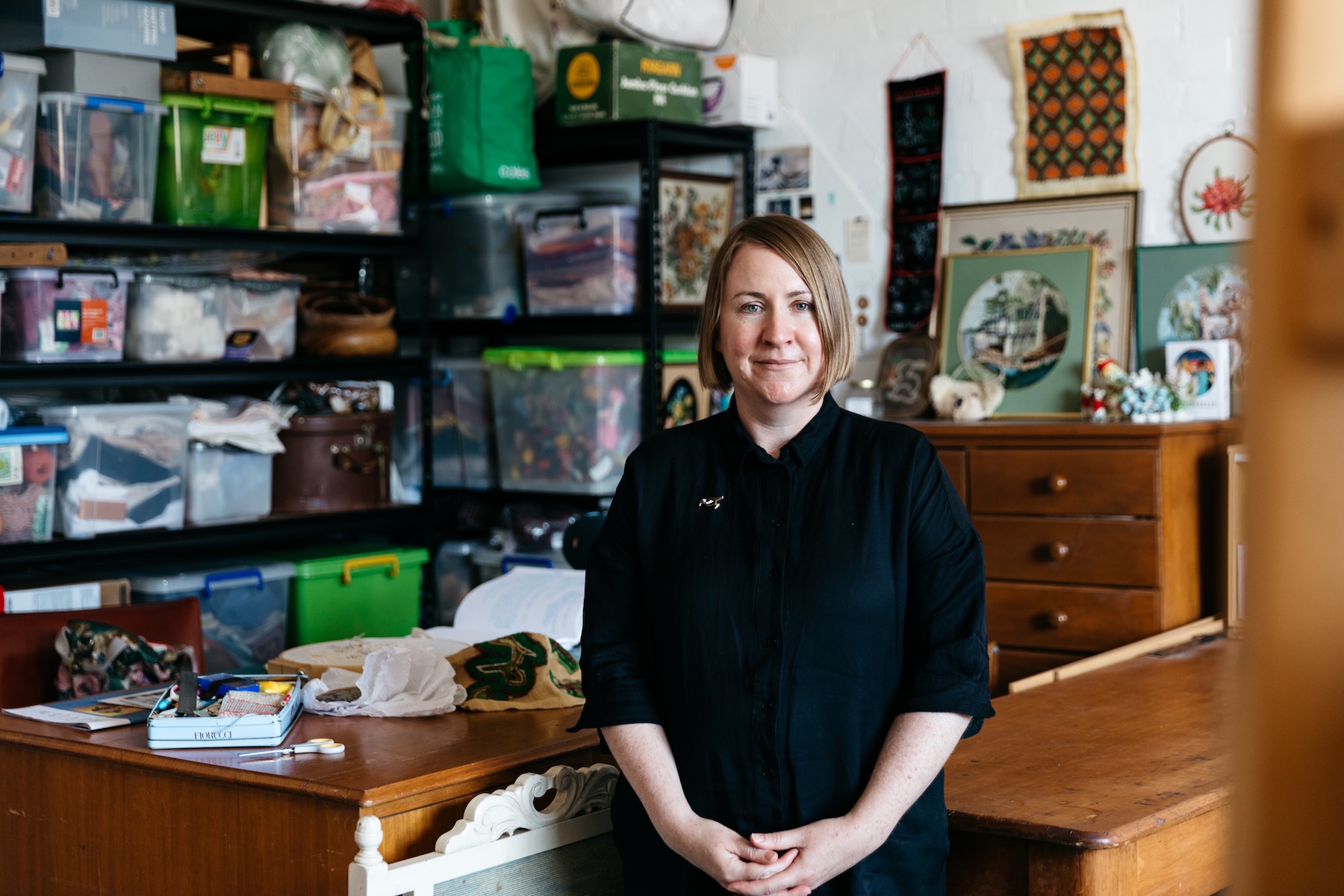
Waters uses her family history as a means to discuss bigger issues, stating, “I look at the past to understand the present.” She emphasises that it’s about having access to these histories, adding, “I have the authority to delve into the details of my own family, whereas I wouldn’t ethically do that with other people’s family stories, which are not mine to tell.”
Collared & Cuffed explores 1930s history through letters translated from German, written in the lead-up to and aftermath of World War II. These letters were exchanged between Waters’ great-grandparents and their children – two of whom lived in Australia, while the other was in an English prisoner of war camp. The artworks reflect the enduring shadows of this era and explore the behaviours and patterns passed down through generations and across continents.
The letters reveal the sentiments of the time where, due to the Great Depression and war rationing, people made do and mended clothes and garments. Waters family members sent each other clothing patterns and discussed the challenges of scarce resources during this period, all of which inform Waters’ latest series of handcrafted sculptures. “These works reflect the challenges people face across generations, not just my family but everyone,” Waters adds.
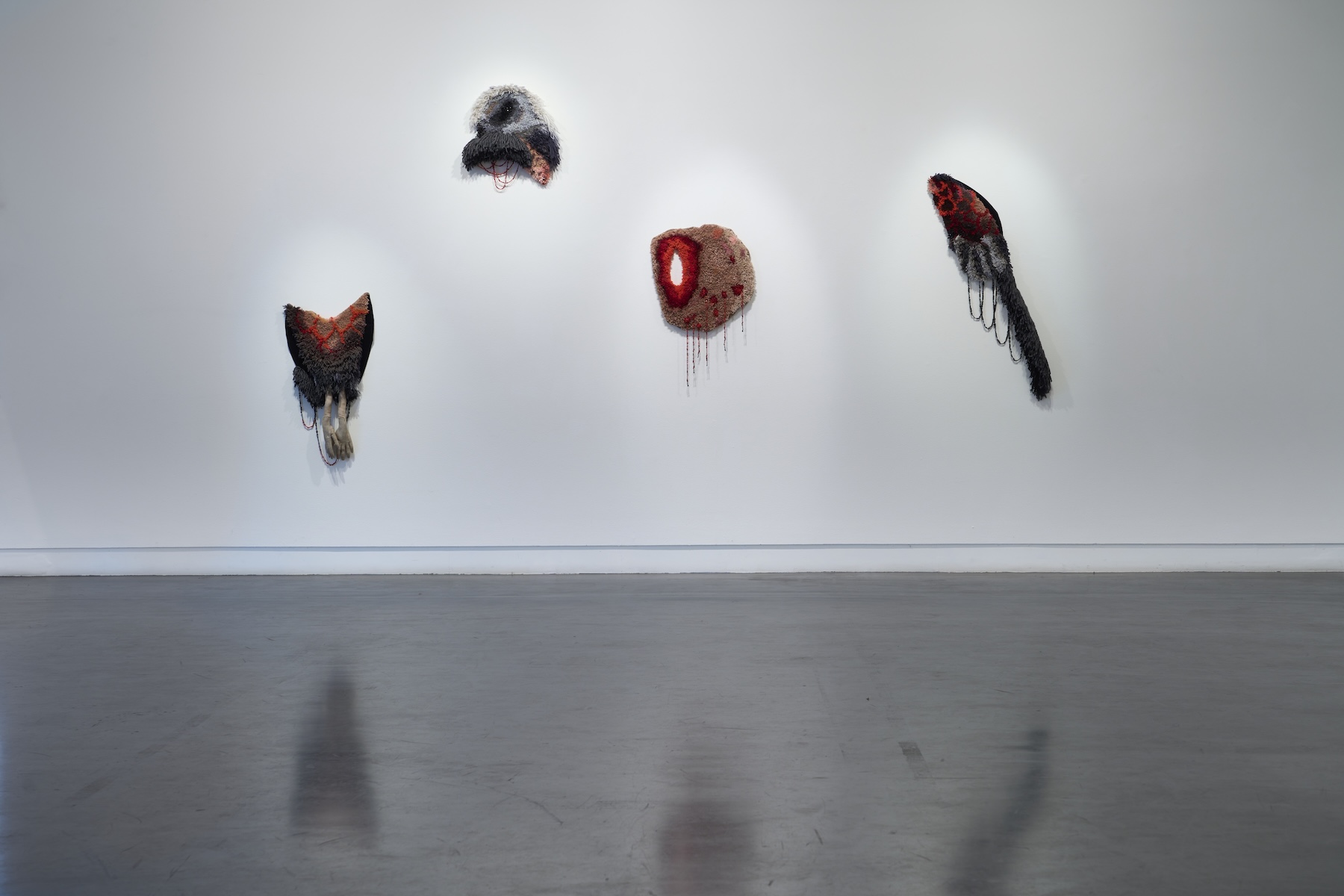
The title Collared & Cuffed comes from Waters noticing that family members in photos from this era were buttoned up to the top. It can be a reference to being well-dressed but also restricted by conventions. This was common at the time and it is also relevant in the current political sphere, where people wear suits to distract from what is happening beneath the surface. The cuffs and collars of clothes often bear stains, grime, and dirt, indicating the history of the garment and the marks that history has left behind.
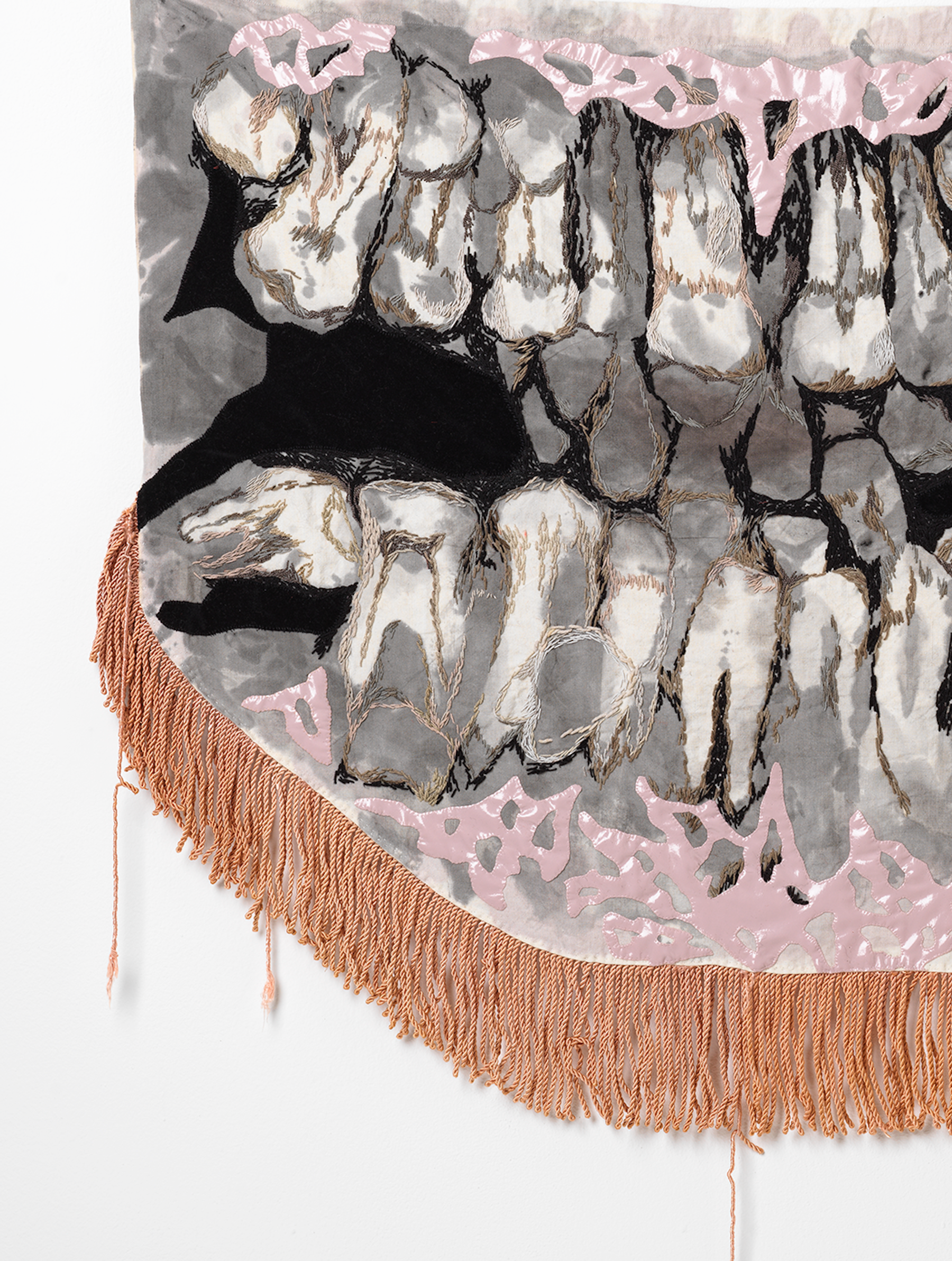
The exhibition features embroidery pieces created using found materials and various textile techniques including, blackwork embroidery, sampling, latch-hook rugmaking, appliqué and fabric staining. One of the works that stands out is, Ancestral Crowding, which features X-rays of crowded teeth. This piece references the genetics passed down through generations, as well as the impact of war and refugees. The letters revealed that several people from Northwest Germany, where Waters’ family was from, housed displaced peoples from all over Europe. She says, “They were gathered together in these small, dark environments and there was overcrowding and everyone had to make do with very little room and very little resources.”
Subscribe for updates
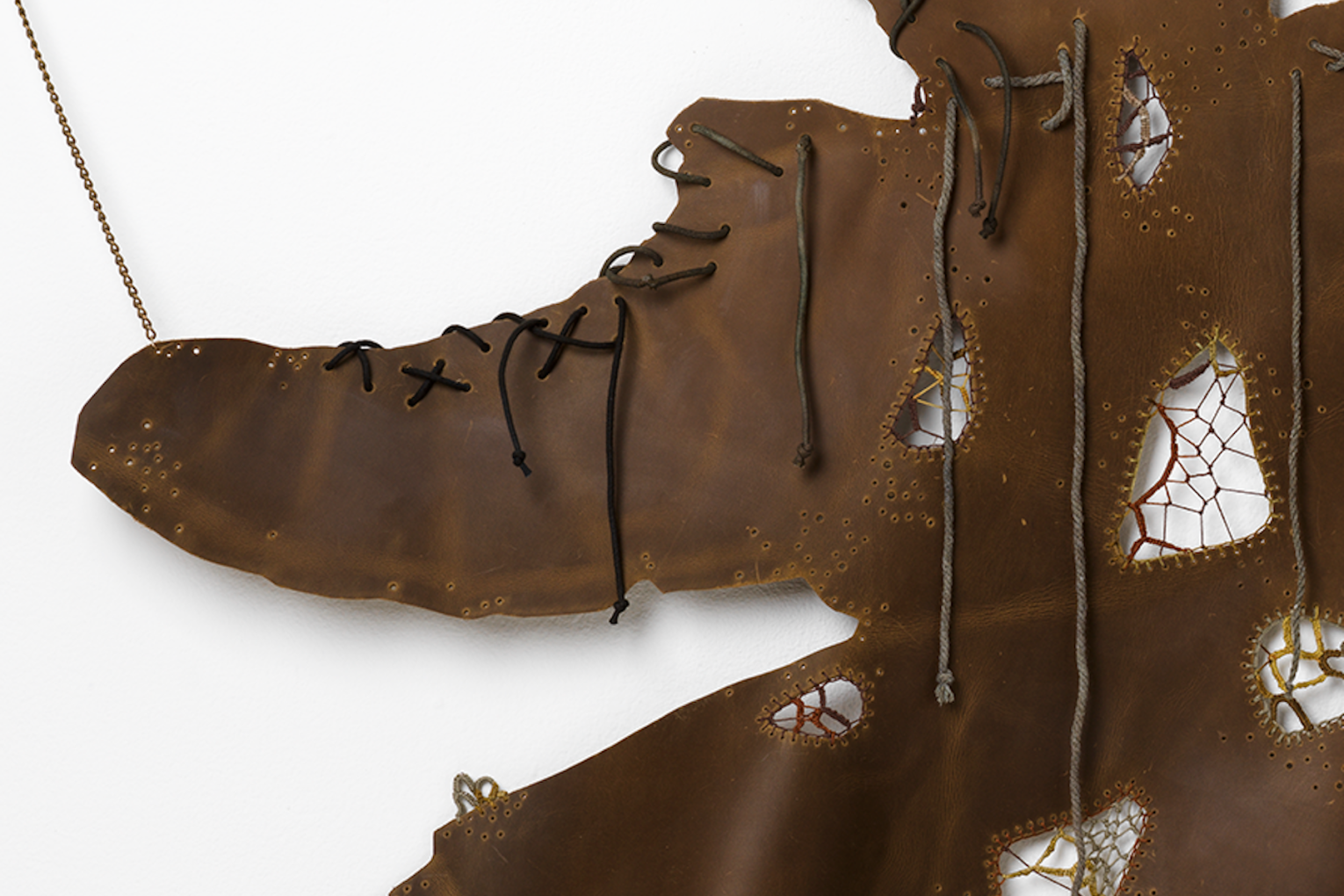
Another notable series is Stash and Haul, inspired by a literal line from one of the letters. Waters’ great-grandmother, Hermione, was worried because one of her sons in the German army became a prisoner of war in England. At the time, there was a shortage of footwear and boots, so while he was away, she buried his boots to protect them. When she eventually dug them up, they were destroyed, the soil had consumed them. The works made from leather, cotton, hand-dyed shoelaces, chains, rope and various threads are presented in shapes inspired by family photographs and boots from that era.
The Parts of Past Portents series is also a highlight and demonstrates how important the materials and the process of creating the work is to Water’s practice. Instead of using a latch hook gun, Waters insists on working strand by strand which gives a rich and textured appearance. She adds, “There is something for me about the intimacy of fleshing out every single part and making decisions as I go.”
The exhibition continues Waters’ exploration of the ghosts of our past. She seeks to gain insights into a broader historical context and how the experiences of past generations can guide us in understanding and addressing current challenges, ultimately helping us build a better future.
Sera Waters: Collared & Cuffed continues at Hugo Michell Gallery until May 16 2026
Want to see more stories from InDaily SA in your Google search results?
- Click here to set InDaily SA as a preferred source.
- Tick the box next to "InDaily SA". That's it.
Free to share
This article may be shared online or in print under a Creative Commons licence