‘Gutsy, determined, hilarious and sharp’: Elizabeth Yanyi Close leaves behind a towering legacy
Aboriginal and Torres Strait Islander readers are advised this article includes the names and images of people who have passed away.
Family and friends of Elizabeth Yanyi Close reflect on the Pitjantjatjara and Yankunytjatjara artist’s life and art.
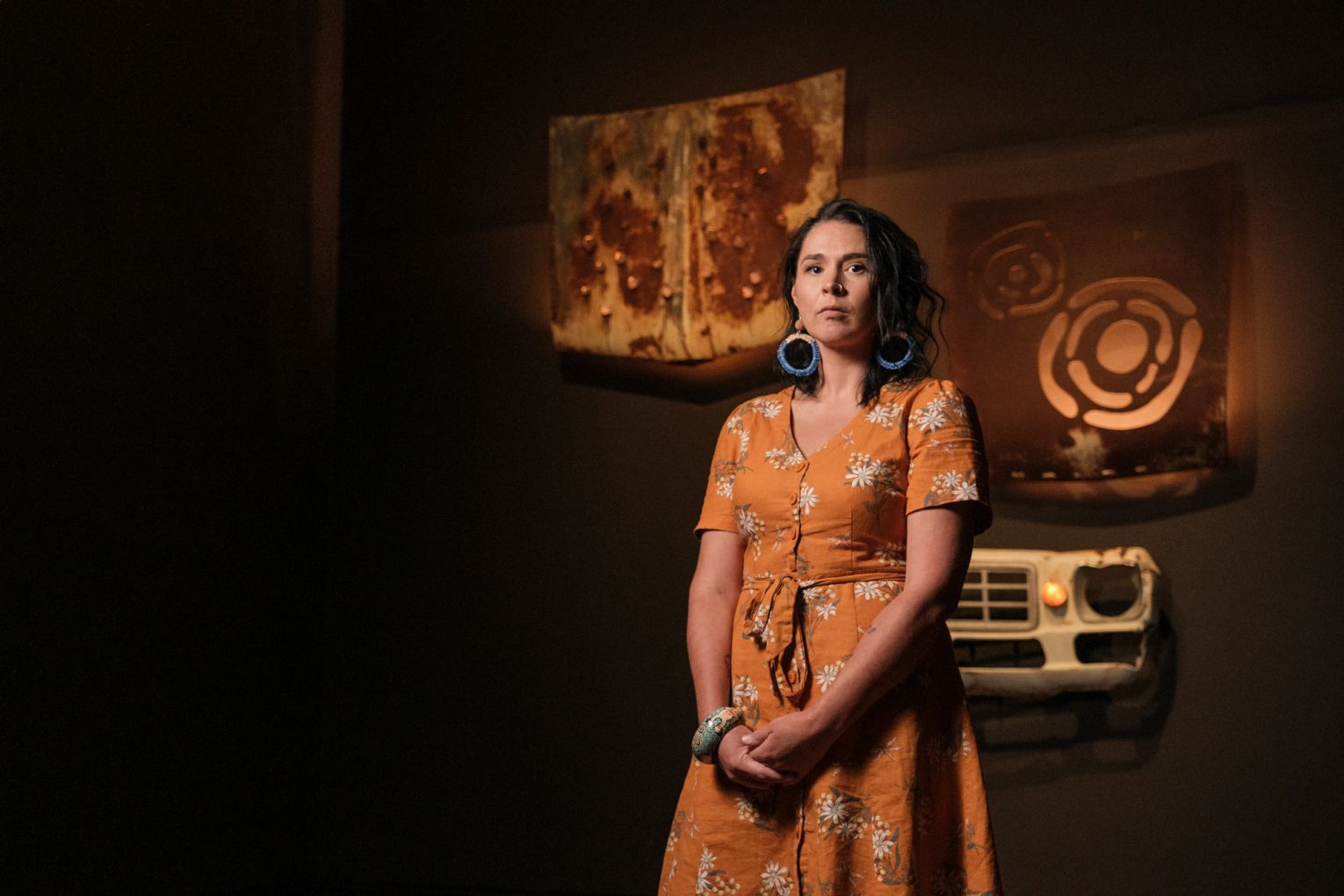
You don’t need to step into an art gallery to see the work of Elizabeth Yanyi Close. Look outside and there’s a good chance you’ll see the Pitjantjatjara and Yankunytjatjara artist’s legacy writ large across schools, train stations, hospitals, community centres and universities all around Kaurna Yarta and beyond.
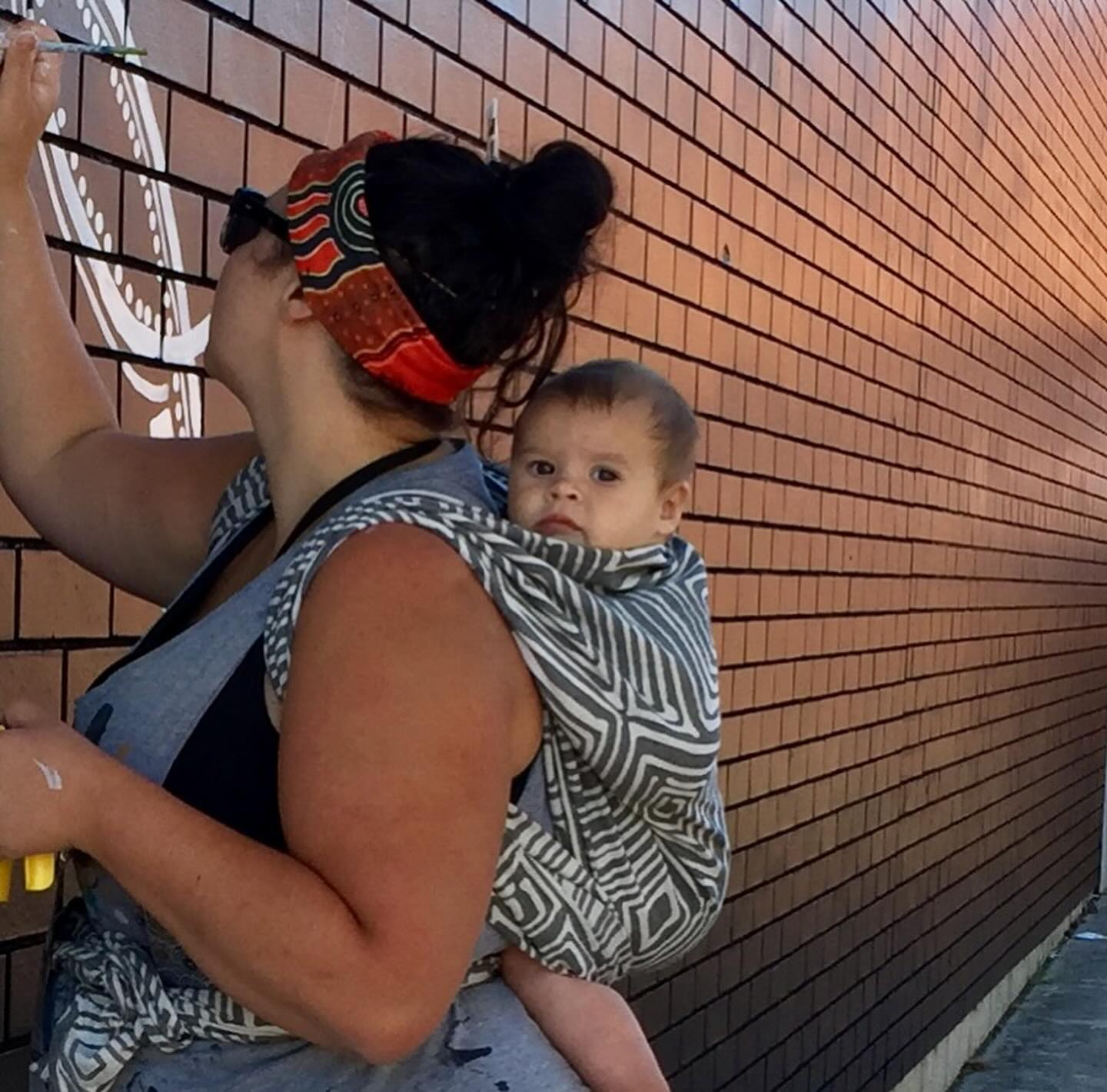
“Anything that stood still for long enough got coated in paint,” Close’s husband Matt Jamieson tells InReview. “And that included the kids – I’ve got photos of her where she’s painting a wall, wearing our youngest.”
Close was born in 1986, growing up in metropolitan Adelaide and in the Anangu Pitjantjatjara Yankunytjatjara Lands, where she later returned as an adult with Jamieson and their young family.
In an interview for the SALA festival podcast last year, she spoke about failing art class in high school, before turning to painting following the death of her grandmother. Having worked as a nurse for several years, art offered both catharsis and a way to reconnect with culture.
“Elizabeth was a vivacious, highly intelligent and talented artist,” says James ‘Jimmy C’ Cochrane, one of her closest collaborators. “She really blossomed over the years to paint a vast number of canvases and walls as well as contributing to the community and the professional arts industry.”
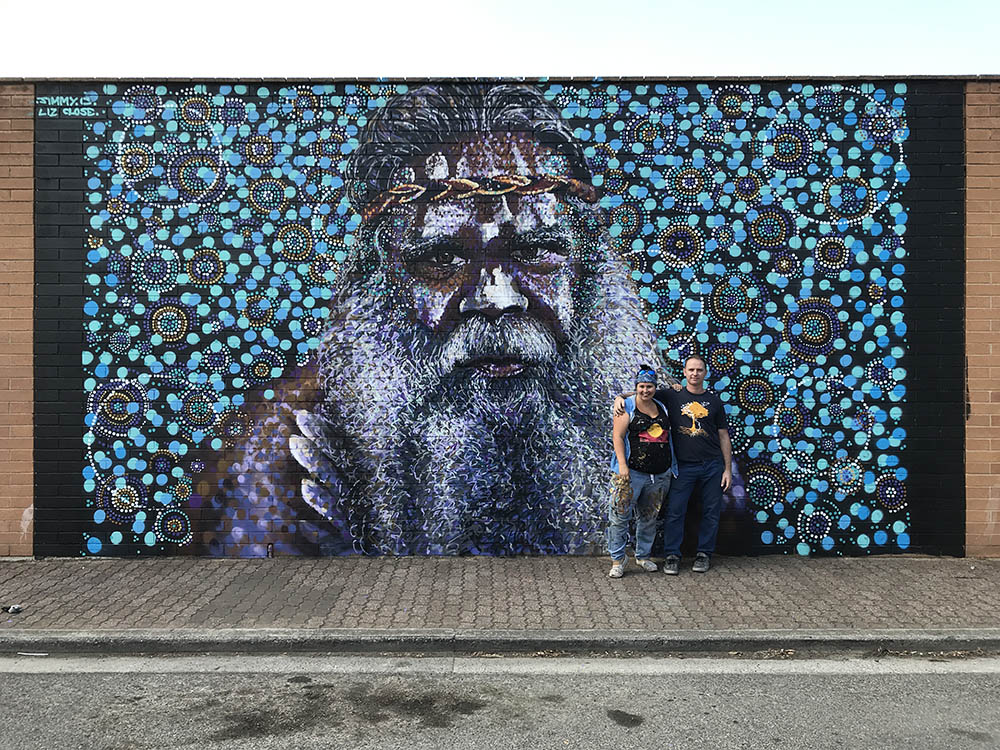
One of the pair’s most notable collaborations was a portrait of the late Kaurna elder Uncle Stevie Gadlabarti Goldsmith, painted on a brick wall off Wright Street. Paying tribute to Goldsmith held a special significance for Close, who recalled meeting him around the age of 19 or 20, when she was still finding her feet as an artist and First Nations woman.
You might like
“I remember saying to him, ‘I don’t even know if I look Aboriginal’,” Close said in the same podcast interview. “He looked at me and he said, ‘You are an Aboriginal woman. You’ve got desert eyes. You are an Aboriginal woman and no one can take that away from you.”
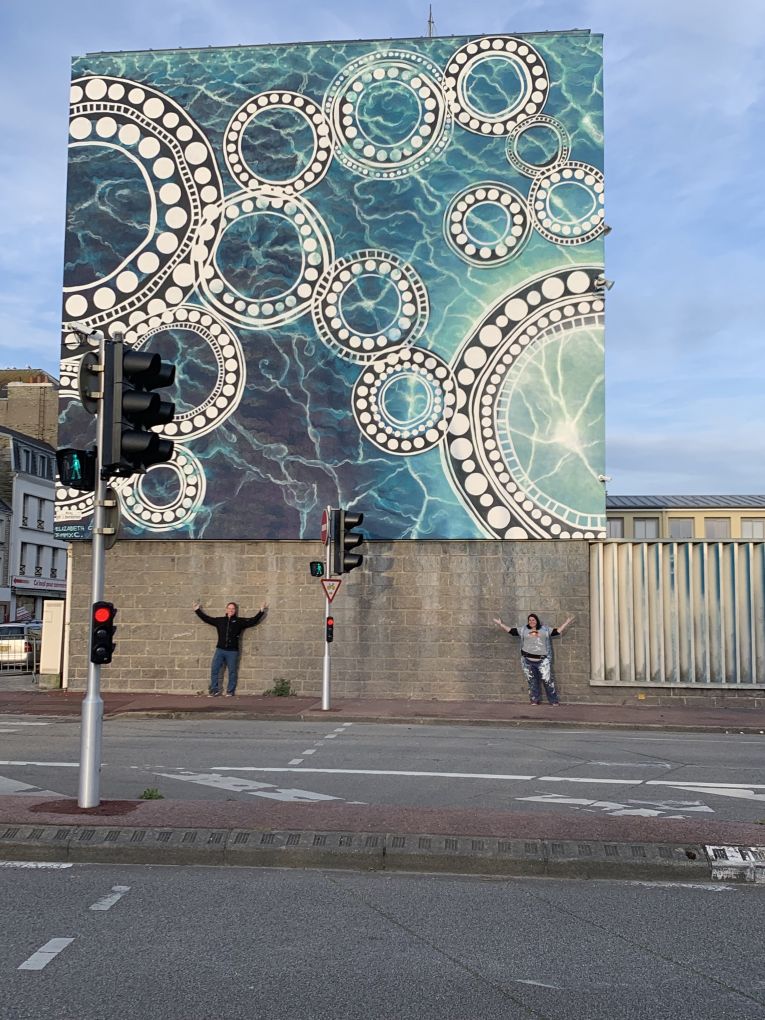
When one of her pieces was accepted into Adelaide Festival Centre’s Our Mob exhibition, Close was encouraged to pursue a practice that over the next two decades would take her as far as Cherborg, France, where she and Cochrane completed a large-scale mural in 2019 (“This was Elizabeth’s first trip overseas so it was lovely to see her excitement of travelling through France,” Cochrane says).
"When I close my eyes and think of Liz the artist, I see her way up high on a scaffold – a daredevil, with a raucous sense of humour."
Close also made regular contributions to Tarnanthi Festival of Contemporary Aboriginal and Torres Strait Islander Art.
“When I close my eyes and think of Liz the artist, I see her way up high on a scaffold – a daredevil, with a raucous sense of humour,” Tarnanthi’s founding artistic director Nici Cumpston tells InReview.
“She loved a challenge and was constantly pushing her ideas, like her work SandWoman for the 2023 Tarnanthi Festival exhibition at the Art Gallery of South Australia. When she spoke about this work in 2023, she said it was her most ambitious work to date. Buoyed by the mentorship with Wiradjuri artist Karla Dickens she laser cut her signature circular form into found car bonnets and installed them alongside a SandWoman grill in an impressive wall installation.
“Gutsy, determined, hilarious and sharp,” Cumpston reflects. “Ride high dear Liz.”
Another Tarnanthi exhibition, held at Hahndorf Academy in 2021, saw her work with Ngarrindjeri, Kaurna and Arrernte artist Thomas Readett and Wulli Wulli and Guwa artist Shane Mankitya Kooka. The trio also collaborated on a tribute to First Nations reggae outfit No Fixed Address the same year, and Readett says Close was generous in supporting other First Nations artists.
“Liz was a staunch mother, wife and woman of Culture and because of her artistic practice a new generation of people interact with First Nations art in a meaningful way,” Readett tells InReview.
Close passed away unexpectedly on March 13, and as the news spread across the arts community the outpouring of grief and shock was immediate.
“Elizabeth was a brilliant artist, mother, wife, friend, and mentor,” SALA CEO Bridget Alfred told InReview. “She was a passionate advocate of First Nations culture and a longtime friend of SALA, having recently returned to SALA as a Board member, where she was enormously valued. For the past 5 years, Elizabeth had been instrumental in guiding and mentoring SALA’s support of First Nations artists and culture and was unfailingly generous and patient with her advice and support.”
Close had returned to her art practice in 2025 after undergoing a double craniotomy in 2024, when a tumour was detected in her frontal lobe – and was still planning new projects.
“I was only talking to Elizabeth a week before her passing, and she was really enthusiastic about an idea for our next collaboration,” Cochrane says.
Close was so prolific that even her family are still finding her work in unexpected places.
“I look on social media and suddenly there’s a piece of artwork that someone’s taken a photo of that I didn’t even know existed,” Jamieson says. “I love those moments, and that’s the future my kids have got – for at least the next couple of decades, they’re going to be able to go to dozens of places around the city and be reminded of their mum.”
Shortly after Close passed, Jamieson says he visited one of her first street walls on Little Rundle Street.
“When I touched that wall, I burst into tears because I realised that she touched that wall. I can always touch what she’s touched.”
A public memorial for Elizabeth Yanyi Close will be announced by Ochre Dawn Creative Industries in coming weeks
Want to see more stories from InDaily SA in your Google search results?
- Click here to set InDaily SA as a preferred source.
- Tick the box next to "InDaily SA". That's it.
Free to share
This article may be shared online or in print under a Creative Commons licence