Waterhouse Art Prize explores the toxic and the tragic of our natural world
The South Australian Museum’s biennial survey of nature-inspired contemporary art spans algal blooms, icebergs, and a giant feline from Abdul-Rahman Abdullah. But does it really capture the depth of Australian art’s response to the environment?
This year’s Waterhouse Natural Science Art Prize runs true to form, giving visitors what we have come to expect across the years: an enjoyable if largely undemanding viewing experience as we graze on a smorgasbord of skilfully crafted art inspired by the natural world.
Since its inception in 2003 the South Australian Museum-run competition has attempted, with varying degrees of success, to celebrate common ground between art and natural science or natural history. This aspiration is reflected in the composition of the four-person judging panel for 2026, comprising Dr Samantha Hamilton (South Australian Museum director), Jason Smith (AGSA director), Professor Craig Simmons (chief scientist South Australia) and Coby Edgar (First Nations curator, writer, presenter). It is noteworthy, however, that science takes a back seat in the judging itself, with the entry form clearly stating that the prize is awarded for “artistic merit”, although the judges will also consider “the artwork’s success in linking art and natural science”. This is just as well, as not many artists would claim expertise in natural science. Instead, many of the exhibits lean towards what might be described as informed appreciation of our relationship with nature.
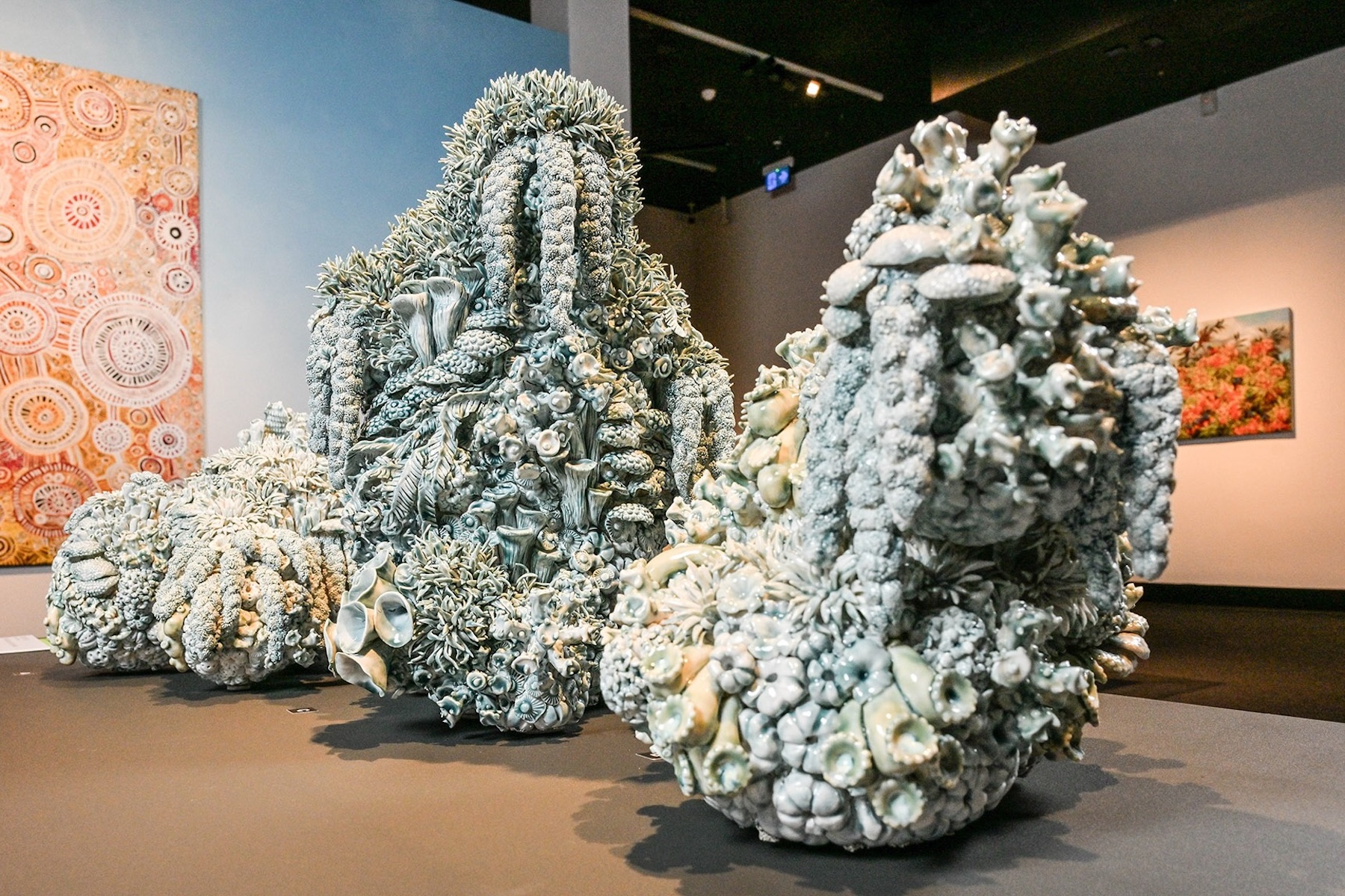
The judges’ award of the major Open Prize of $30,000 to Adelaide ceramicist Deb McKay is likely to be a popular choice – and a familiar one. McKay has exhibited in the Waterhouse twice before, as a mature-age winner of the Emerging category in 2022, and a finalist in the Open section in 2024. Her winning entry, The Ghosts of our Coastal Water, is intricately crafted in porcelain and raku clay, to suggest mounds of coral and marine life blighted by the toxic algal bloom. It ticks boxes for a local environmental theme and has the perennial appeal of labour-intensive, detailed surface decoration. The toxic beauty of blighted marine life is a slight shift in emphasis for the artist, who more often emulates the fragile, untainted beauty of natural forms in her wider body of decorative ceramics.
Artists’ concerns with a spectrum of environment issues are a recurrent theme throughout the exhibition. Renowned Adelaide potter Gerry Wedd is represented by a bowl, Deadpool, hand painted in cobalt blue underglaze with a poignant still life of dead marine creatures killed by the algal bloom and washed up on his local beach. Holly Grace’s virtuosic blown glass form adorned with ghost gums is a memorial to bushfires in the Kosciusko National Park.
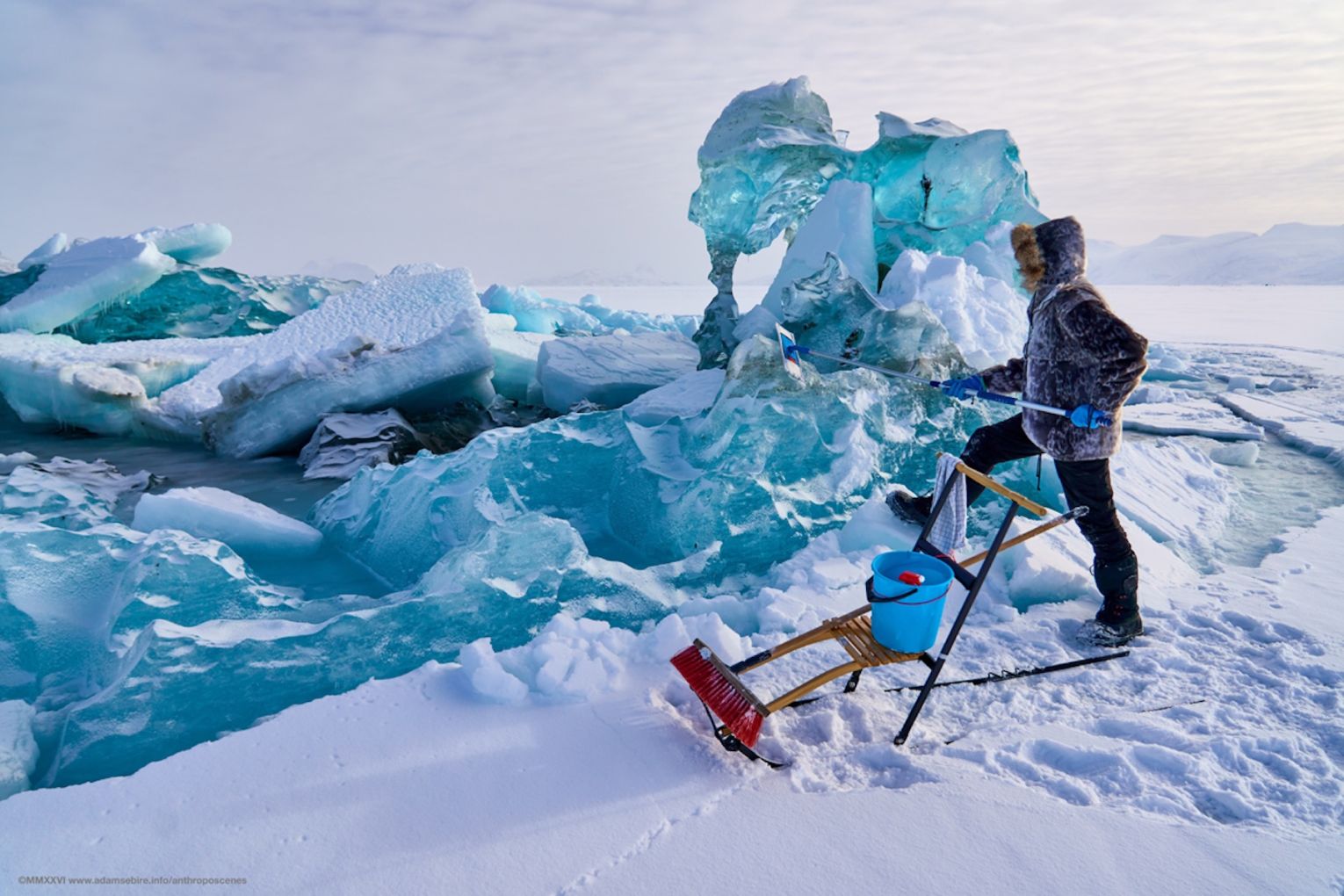
The exceptional work in this vein is Adam Sébire’s video, anthropoScene XII: iceberg care, which records a performance of a man sweeping snow from the surface of an iceberg. The sheer green beauty of the iceberg and the man’s careful actions are an unexpectedly moving testament to the immense challenge of humanity’s responsibility to care for the natural environment. Sébire, who is currently based in Norway, is an Australian artist-filmmaker whose works explore climate change and the Anthropocene. In 2025 a multi-screen version of Iceberg Care was projected as the centrepiece of UNESCO’s World Day for Glaciers.
Winner of the $10,000 prize in this year’s Emerging category is a tiny paper mobile of an extinct bat Discarded (Christmas Island Pipistrelle) by Shepparton artist Kat Parker, who has devoted her printmaking practice to memorialising extinct species through life-size lithographic representations. Her finely crafted linocut and watercolour, on repurposed fairy book pages, is a life-sized representation of the miniscule bat, last seen in 2009 – a nice idea but underwhelming as a viewing experience.
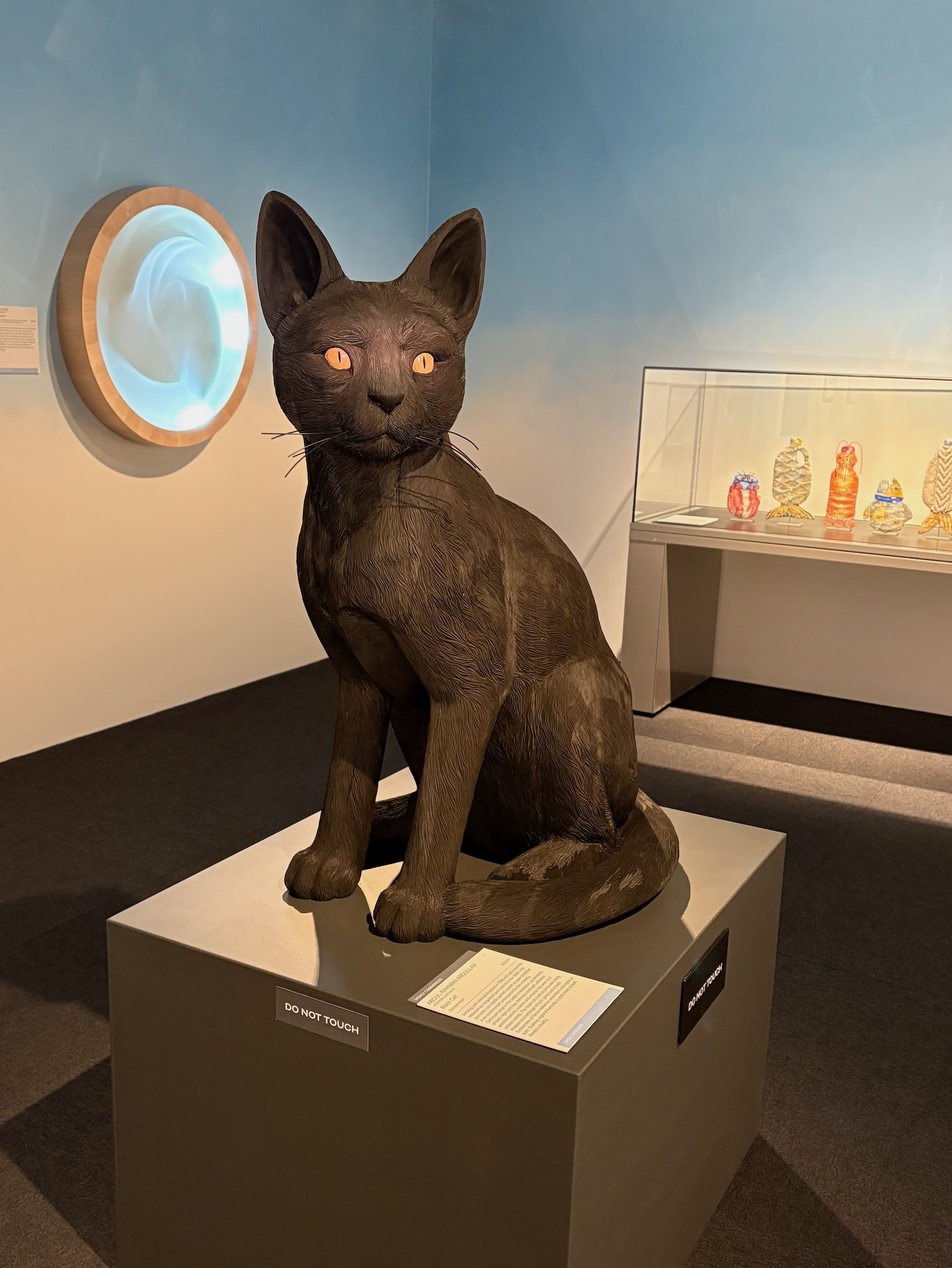
From the smallest exhibit to one of the largest works on display, Western Australian artist Abdul-Rahman Abdullah has created a super-sized demonic Black Cat, carved in stained black wood with hypnotic orange eyes. This muscular feline with exaggerated pointed ears, thick tail coiled in a latent threat and haunches poised to pounce, is more apex predator than domestic darling. Yet there is a playful, humorous dimension to the artist’s characterisation that hints at the charm which endears these creatures to gullible humans. Abdullah’s Highly Commended sculpture has a commanding, ambiguous presence – and must have been in close contention for the Open Prize.
Two artists who received Highly Commended mentions in the Open section both focus on the microscopic world of tiny insects. Dan Power’s pen and ink-wash drawing records with mind-boggling detail the patterns of movement of an ant colony. Katherine Boland’s, Insecta, is a series of six unique edition pigment prints on glass which reveal through microscopy and digital rendering the exquisite design of organic life in the world beyond human vision. In the Emerging category LeShaye Swan’s Highly Commended entry, Bush Bananas, is a raku pot decorated with her glorious hand-painted organic designs, although her less proficient handling of the pot’s lip lets her down.
Moving image and light works seem to have been outside the judging panel’s purview as in addition to Sebire’s video, there are two other outstanding works they overlooked for mention. Cairns-based printmaker and multi-media artist Brian Robinson’s screen animation, Kingdom of Animalia: Curious creatures, is a brilliant graphic visualisation of stories from his Torres Strait Islander heritage, blending myth, science and pop culture. Adelaide artist, Jason Sims, has created a quietly mesmerising meditative lightwork, Circadian III. Although the artist’s instructions stipulated that this work requires a dim ambience to be viewed effectively, at the opening it was brightly lit by a spotlight which entirely obliterated its subtle movement of light and shade. Sims was able to get this corrected by the time the exhibition opened to the public, but only after the judging and official opening.
Subscribe for updates
Some exhibits stand out from the crowd simply because they are beautiful – not that there is anything simple about making beauty. These include Regine Schwarzer’s silver Botanical Spoons; Carol Bann’s Living Fossil, an exquisite pencil drawing of a Cycad; Jack Buckley’s ingenious blend of embroidery and ink drawing, Blue-faced Honeyeaters, Silvertop Ash, Percival Lane; and the fragile delicacy of Akie Haga’s flannel flower crown in luminous borosilicate glass.
Despite these highlights from across 74 finalists, this year’s exhibition is a tame representation of how contemporary Australian artists are responding to the natural world. Perhaps one reason is the cost and obligations imposed on artists, from a non-refundable entry fee to freight costs and the Museum’s 40% commission on all works sold – unfortunate revenue harvesting from a publicly funded state institution. As for the works that don’t sell, entrants should be wary of the fine print and make sure they’re collected by the nominated date… lest the museum dispose of their art under the Unclaimed Goods Act.
Perhaps if these conditions were a little less onerous for artists, the Waterhouse might attract a higher calibre of work. As it stands, the Waterhouse presents the best of a shallow pool.
The 2026 Waterhouse Natural Science Art Prize is on display at the South Australian Museum until Sunday July 19
Want to see more stories from InDaily SA in your Google search results?
- Click here to set InDaily SA as a preferred source.
- Tick the box next to "InDaily SA". That's it.
Free to share
This article may be shared online or in print under a Creative Commons licence