The unmade beds and squalid beauty of Nan Goldin’s chosen family
Heroin chic meets photography royalty in Nan Goldin’s seminal work The Ballad of Sexual Dependency, exhibited in Adelaide for the first time.
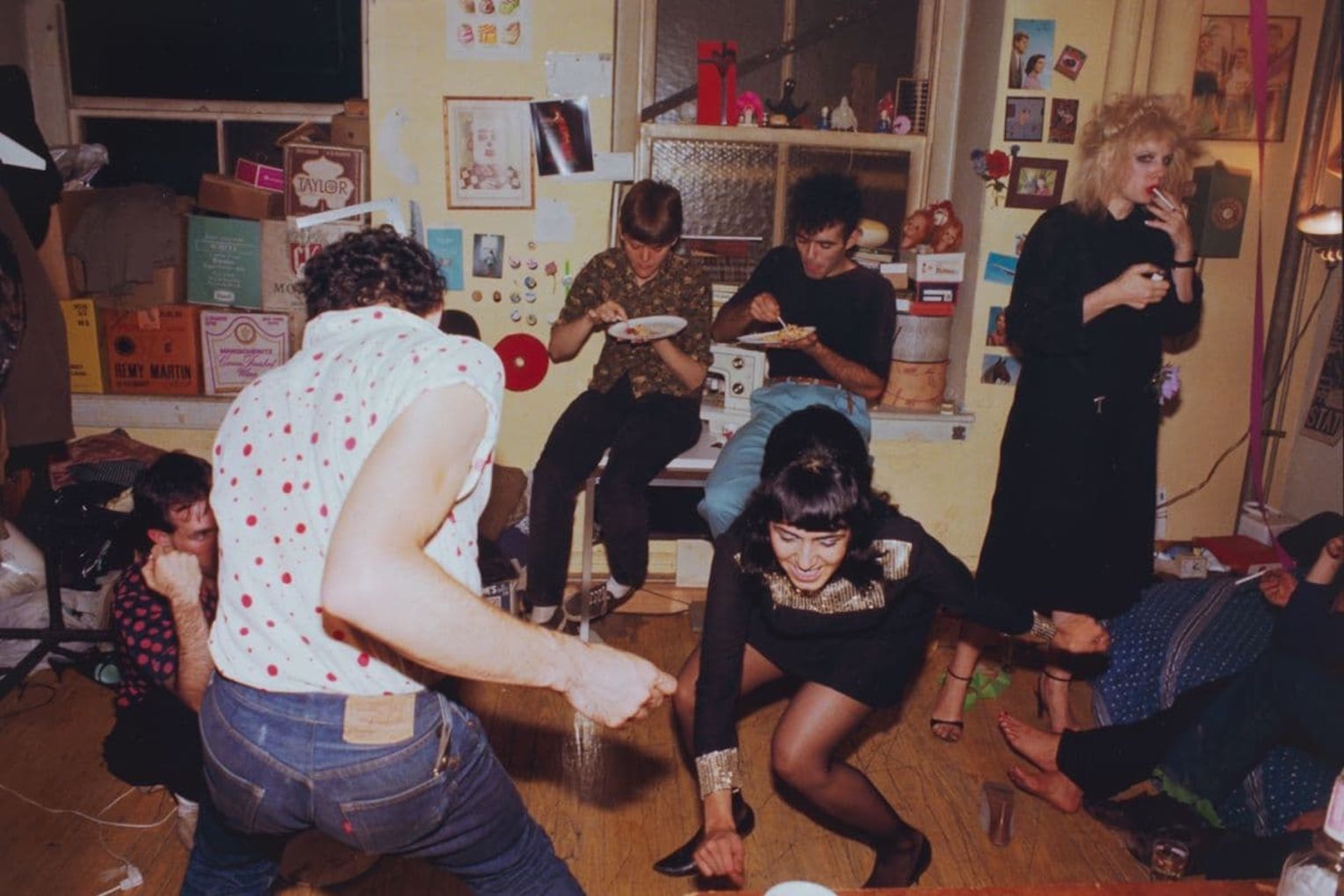
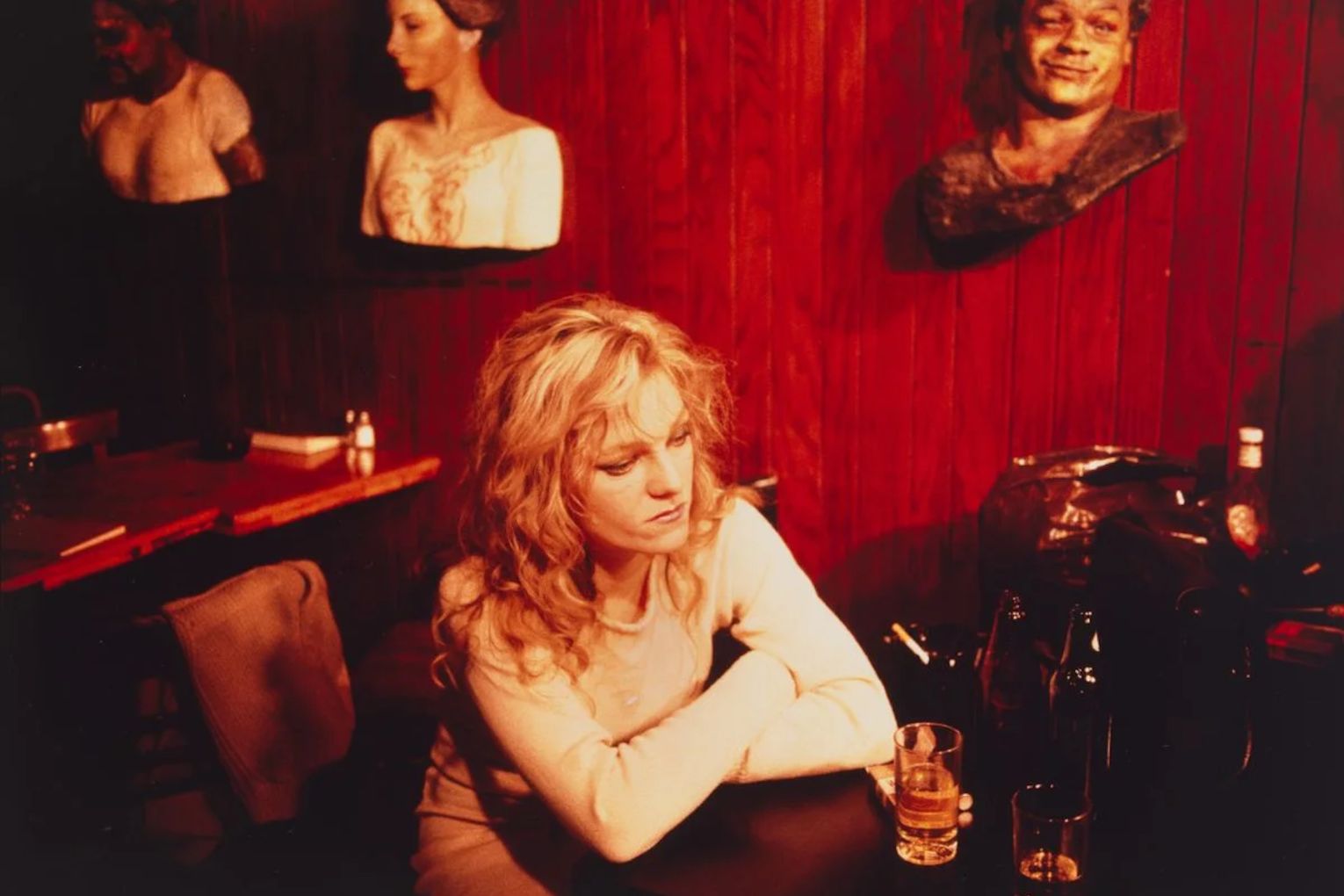
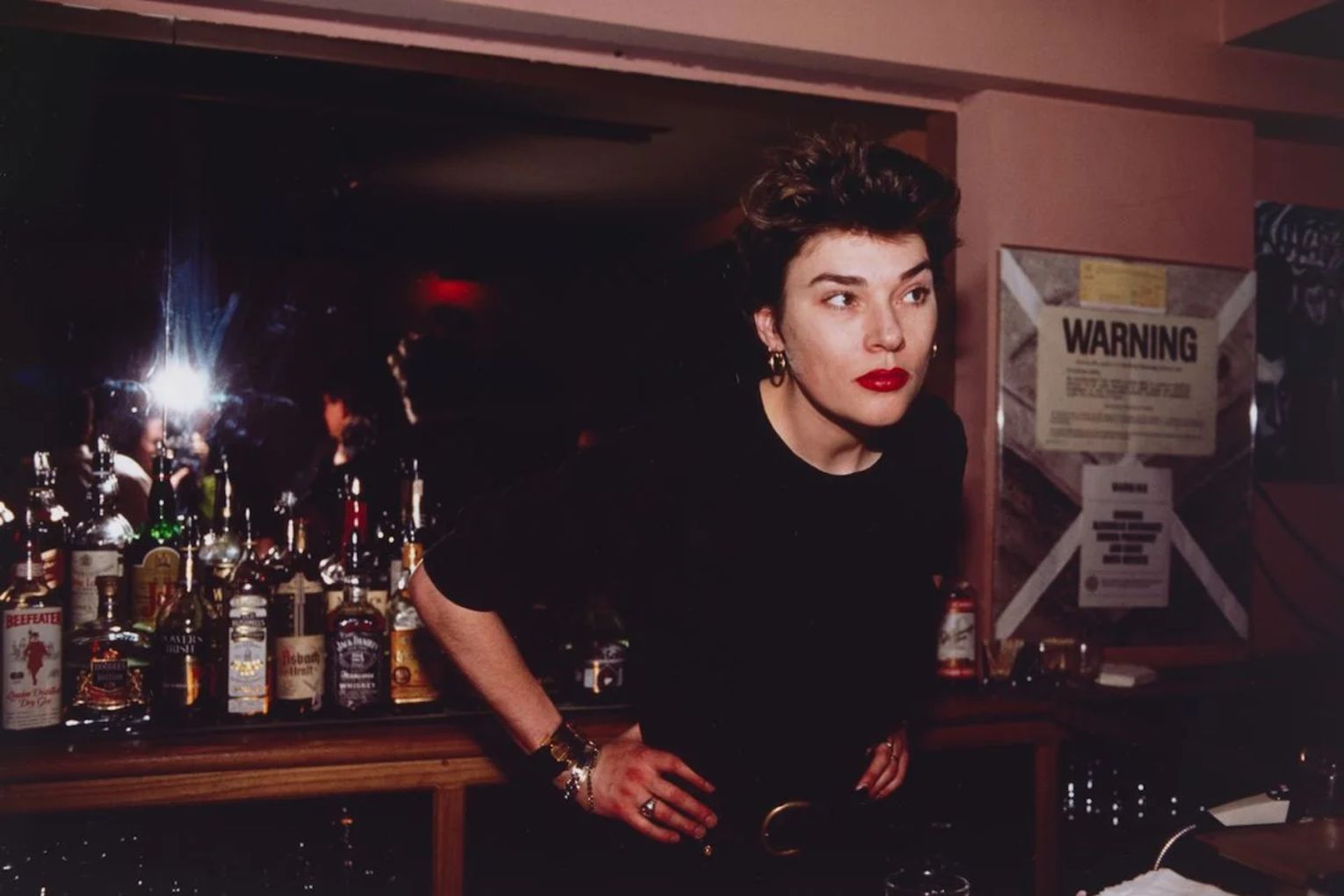
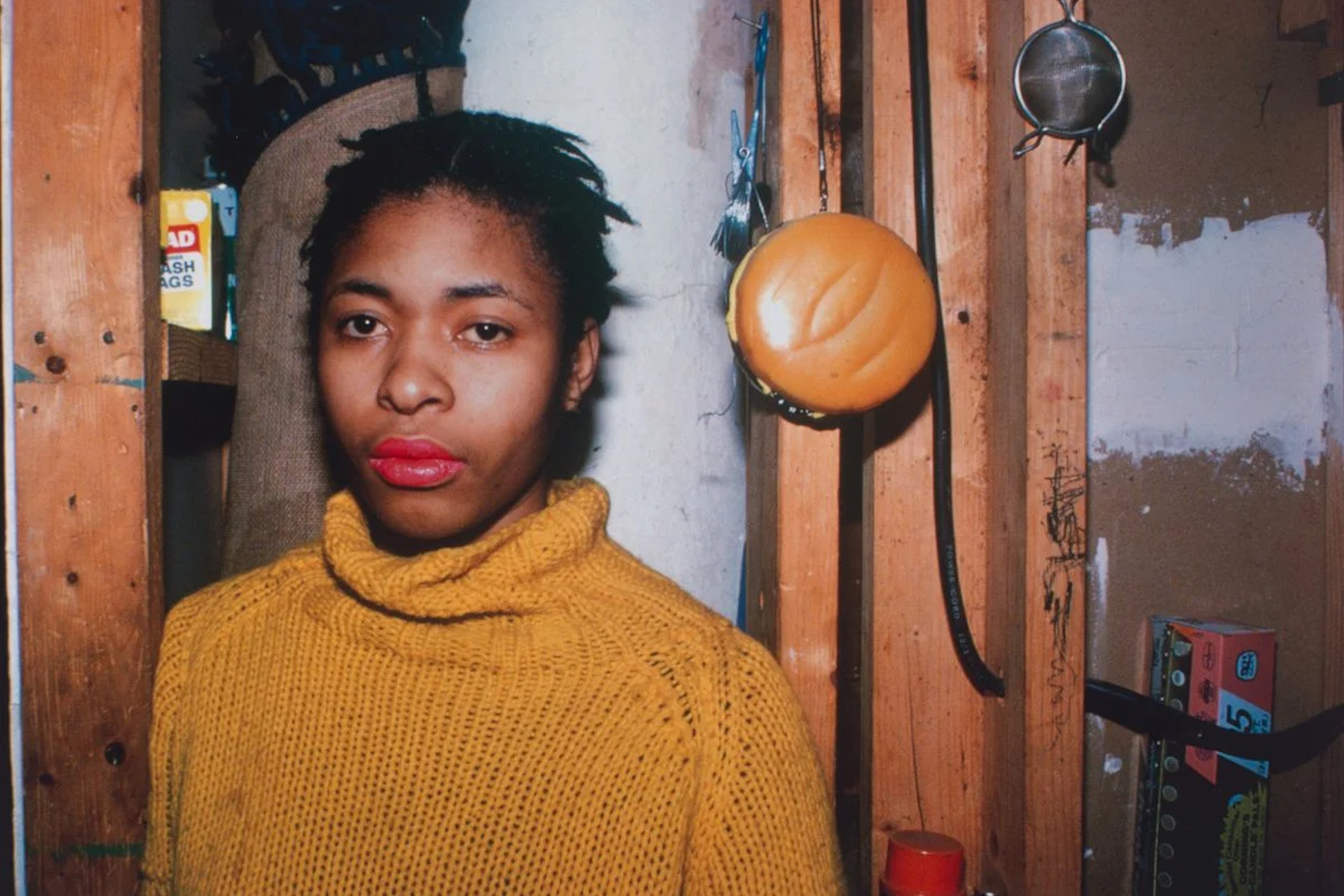
Shot between 1979 and 1986, The Ballad of Sexual Dependency is Nan Goldin’s signature photographic work. Originally presented as a slideshow of more than 700 images shown in three-second bursts, Goldin’s aim was to capture her chosen family – the gay and transgender community and the heavy drug users of the Bowery neighbourhood in New York City, those she called her ‘tribe’. In doing so, she captured both personal and public memory. Those she loved were of a moment – New York’s post-punk and New Wave era – and their images contribute to a significant body of art in the ‘heroin chic’ mode.
The snapshot aesthetic is a form of photography in which the subjects are caught in the moment, and Goldin is one of the principal artists embracing its form. There’s an absence of premeditation on the photographer’s part, no special lighting or props or direction of how to stand or how to tilt a chin. Nothing is staged, and there’s an inherent sense of narrative that comes through. Essentially, she’s diarising her life through self-portrait and portraits of her friends in what would seem to be their most private moments. Her friend Suzanne is in the shower. Her eyes are closed and maybe she’s mid-sentence. A stream of water cascades off her nipple. Nan’s roommates are caught in serious foreplay. Bobby is masturbating. Butch is crying. In one of the most confronting pieces, Goldin’s face is bruised and one eye is bloodshot red; she’s been bashed. It’s impossible to approach Goldin’s work as anything but a voyeur.
The first photograph in the exhibition is Greer and Robert on the bed, New York City 1982. Scratched rails of a bedhead front a brick wall where animal masks hang – one above the droopy, resting Greer and the other above the unassuming Robert. A third mask is between and above the other two, only half in view, likely perfectly in line with where Goldin stood when she took the photo. Greer’s pink shirt is sheer and sleeveless, her skirt grey and diaphanous, while Robert is dressed in a black shirt only buttoned halfway to the top, and he runs a hand though his dark hair. They appear intimately disinterested with each other, ultimately weary of their living. In the context of the series, we can’t help but assume they’re high on something. But what makes it chic? Is it the saturation of colour? The way Greer’s hair is the same shade of gold as the bedrails?
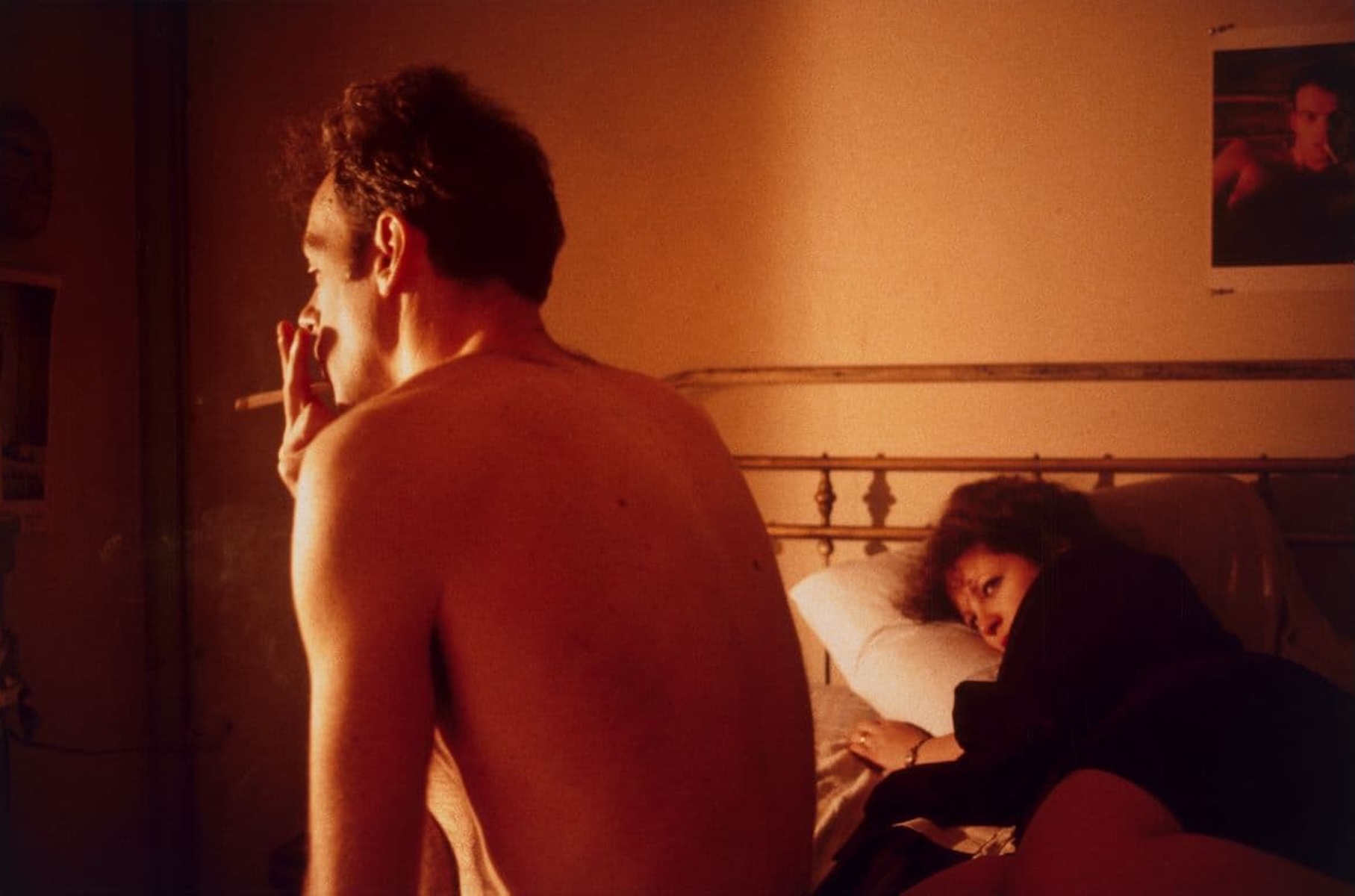
In the novel The Unbearable Lightness of Being, author Milan Kundera philosophises about “beauty by mistake”. “If we want to find it,” he writes, “we must demolish the scenery.” In Goldin’s work, the scenery is already demolished – cigarettes and bottles litter the tables, counters and floors. That her subjects are beautiful among their vices is poetic. Take Trixie on the cot, New York City 1979 in which Trixie is in a full white dress with red trim and large red flowers. She’s wearing black shoes and the hair covering her eyes is black, too. The light behind her casts a red glow. The beers lying on their sides lined in rows beneath the glass of a coffee table are gold, white, red and black, as is the upright Colt 44 can, presumably Trixie’s. On the floor in front of Trixie is a green, plastic cup, drawing our eyes to the green stems of the flowers on her dress. She’s slouched and smoking. Uninterested in the camera. The strap of her dress has fallen. It’s as if this is the dying hour of Trixie’s big night, though it could only be three in the afternoon. And the way it all comes together with the colours and the formal dress amid the squalor is undeniably beautiful – perhaps that’s what makes it chic, if chic means, for the most part, stylish and classy. But it is. Goldin’s provoking eye and the clarity of her vision make it so.
The work in Ballad is unflinching, unfiltered and unadorned, and it’s this honesty that ensures Goldin’s place in photography royalty, despite the fact that everything she does seems to negate royalty or what it stands for. The fact that the series is autobiographical works to establish a kind of iconism in which the artist becomes a symbol of the times alongside the criminals, the prostitutes and the beggars. Here I’m riffing off the fact that the title of the series takes its name from a song in Bertolt Brecht’s The Threepenny Opera, because I must. The work is a musical that critiques Western capitalist society in the 1930s through the experiences of London’s poor – the criminals, the prostitutes and the beggars. Only in Goldin’s case, it’s the sexual deviants, the skinheads and the junkies (But let it be known, children are in these photos, too – I’m not entirely sure I feel positive about it, but it’s part of a life and it’s documented with authenticity).
Beds are almost always unmade in Goldin’s photos, with people sitting on them, lying on them, having sex on them or passed out on them. In Empty beds, Boston 1979 the sheets and pillows of two single beds pushed together are rumpled and creased, suggesting beds have only just been vacated. The question begs: What’s the story of the people now that they’ve left the beds? And what were they doing when their bodies were crumpling the sheets and pillows? Below the photo is another photo, called Twin graves, Isla Mujeres, Mexico 1982, and in it the angels are pointing upwards, not to Heaven but to the empty beds above them. Death feels as imminent for Goldin’s subjects in the same way that friendship and love feel crucial.
Hence the final photograph on display of a black door, dripping with white paint from a stencil-like image of two skeletons in a passionate embrace: Skeletons coupling, New York City 1983. It could well be Greer and Robert’s final act.
Subscribe for updates
Originally exhibited at friends’ parties and nightclubs, with the likes of Frank Zappa and Jim Jarmusch not only in attendance but contributing to the spectacle, The Ballad of Sexual Dependency exhibited formally for the first time at the Whitney Biennial in New York in 1985. Not bad for a start. And a monograph was published the following year, emphasising the significance of the work. In 2023, The National Gallery of Australia acquired 126 photographs from the series, which make up the last, complete edition of the foundational work. This is what’s currently on display at the Flinders University Museum of Art, presented as part of the Bowness Family Foundation Photography Touring Program. It’s part of Know My Name, the National Gallery’s ongoing gender equity initiative to ensure important women artists are represented and made visible. I urge art-lovers to make the trek up the hill to follow through and see the exhibition.
There’s a sign before the threshold warning attendees to be advised that the works of art “depict explicit nudity, sexual acts, drug use, and the impacts of violence against women”. When you break it down like that, it doesn’t really sound chic. But it is.
The Ballad of Sexual Dependency is on display at Flinders University Museum of Art until April 10
Flinders University Museum of Art will present a screening of the Nan Goldin documentary All the Beauty and the Bloodshed at The Mercury Cinema on Thursday March 26

Want to see more stories from InDaily SA in your Google search results?
- Click here to set InDaily SA as a preferred source.
- Tick the box next to "InDaily SA". That's it.
Free to share
This article may be shared online or in print under a Creative Commons licence