Theatre review: The Heartbreak Choir
The Heartbreak Choir revels in that quintessentially Australian trait of facing hardship with humour, as Aidan Fennessy’s final play blends dry wit with tenderness to show how coming together to sing can be joyful, healing and a powerful refusal to keep quiet.
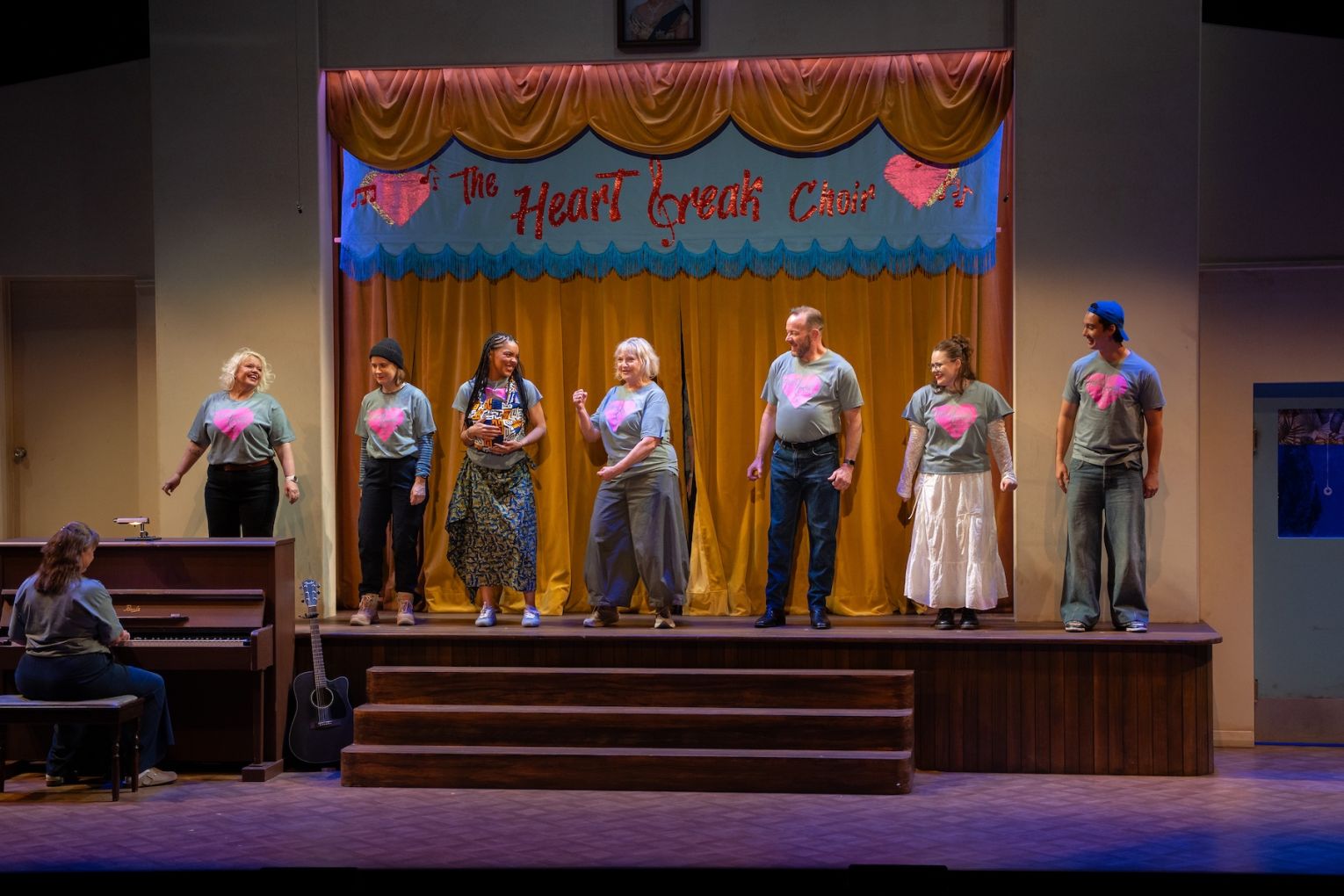
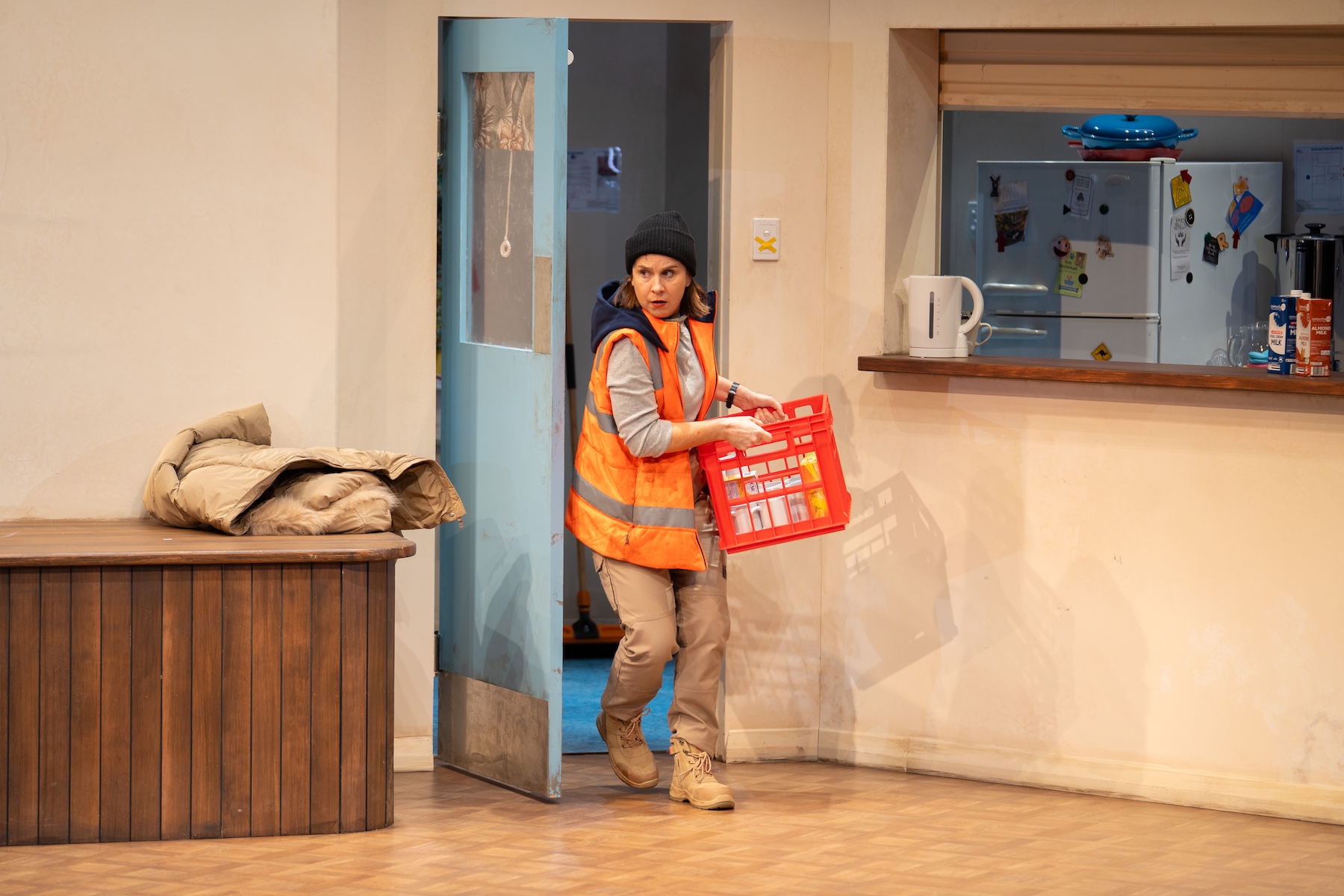
From the moment the fluorescent overheads flick on, we’re in deeply familiar territory. There’s an upright piano and a kitchenette behind a roller-window flanking a velvet-curtained stage, all of it presided over by a portrait of Queen Liz. It’s the archetypal Country Fire Service Hall of a regional South Australian town, complete with dodgy bar radiators.
On a cold Thursday night, five locals are gathering to sing. They’ve walked away from their local church choir on a matter of principle and tonight they are forming their own splinter group (another deeply familiar aspect of small community life).
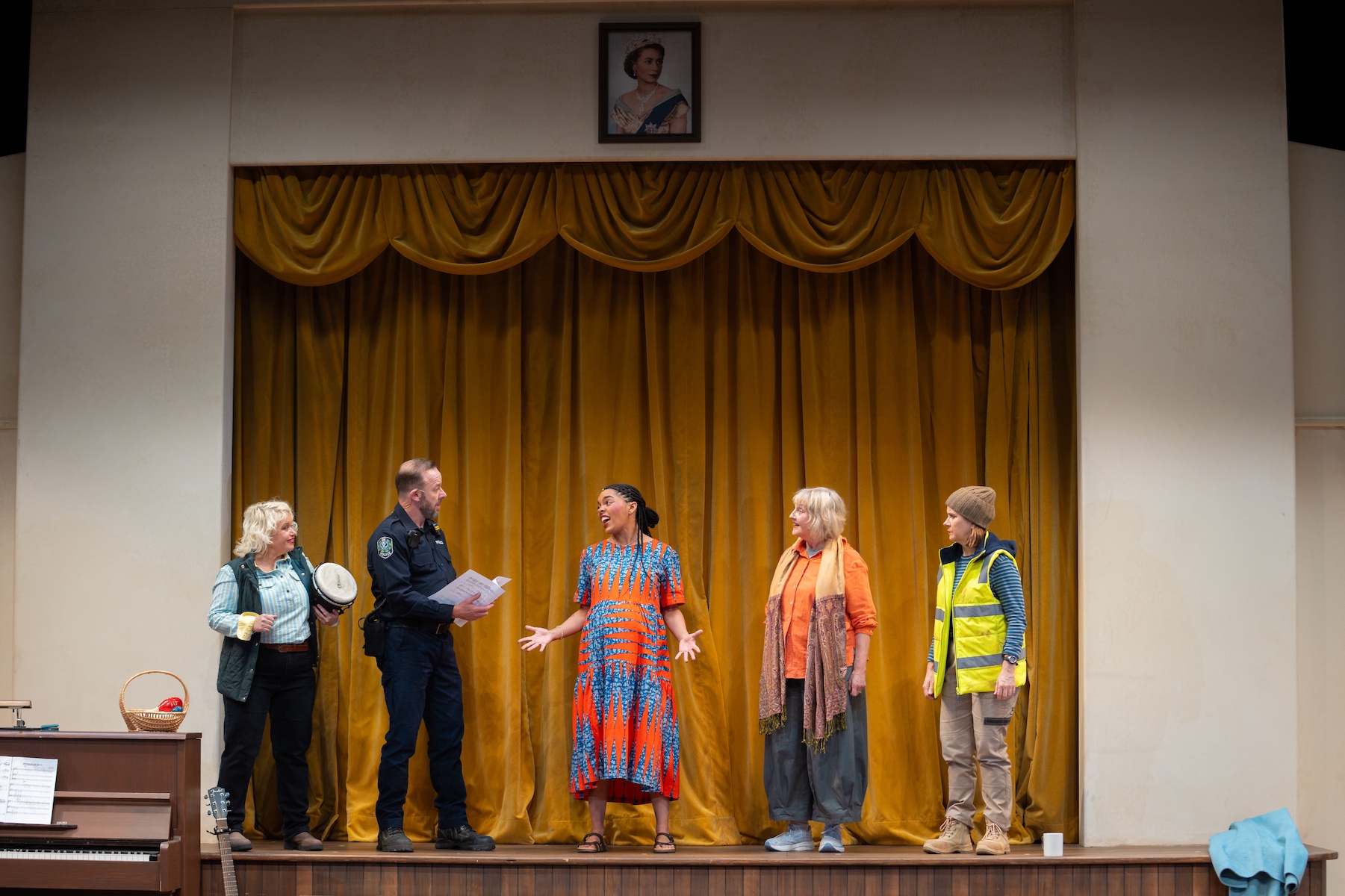
One by one the women arrive, and before a word is spoken, the audience is already laughing. First to enter is Barbara (Genevieve Mooy). Choir leader and psychologist, she has the task of shepherding this as yet unnamed group through their inaugural rehearsal. Then there’s brisk and brusque Totty (Emily Taheny) whose family has been in the town for generations and who holds the names and dates of the entire community’s history in her head. Heavily pregnant Aseni (Lucia Rose Franks) is a recent newcomer to the town from Congo, a doctor working in the deli while she waits for her licence to practice. Then there’s Mack (Libby O’Donovan), larger than life with a laugh to match and her daughter Savannah (Billie-Rose Russell) who in her quiet, Goth way seems to be her mother’s polar opposite.
These singers may have marched away from their colleagues to make a point, but with the surprising news that they already have a gig on the calendar, they soon discover that five people wanting to sing doesn’t automatically make a choir.

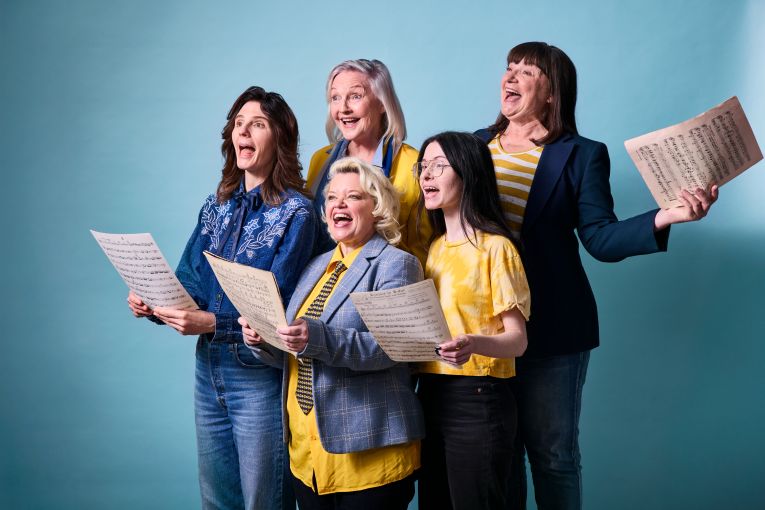
The writing is brilliant. Aidan Fennessy, who died before he saw his final play reach the stage, injected his deep understanding of character and the dynamics of small community groups into every line with enormous compassion and martini-dry wit. Each hilarious and warm-hearted in their own way, we know these people. And we recognise the community and interpersonal politics – how every situation plays out in a boisterous mix of gossip and banter. Under Shannon Rush’s generous and deft direction, each of these delightful individuals is given room to shine – both as characters and singers.
By the time local cop Peter (Mark Saturno) and his son Beau (Darcy Wain) enter the picture, we’ve come to know and love every choir-member, even if we don’t quite know the exact reason behind their split from their previous group. When we finally learn the truth, we understand what the humour and harmonies were masking.
In that classic Australian way, all that dry wit and brash banter was working to hold everything together in the face of profound grief. Fennessy’s gift with this final play was more than understanding the power of humour and community in facing hardship. He deeply appreciated the incredible healing that can happen when people come together to sing.
Subscribe for updates
The cast are superb – both as actors and singers – their acapella harmonies seamlessly threaded through the performance to create moments of musical delight. This is the place I would normally single out one or two for special accolades, but to do so when their combined voices create something so exquisite seems unfair. And it also feels like it would go against the whole idea of a choir. It’s not about any individual’s vocals (and believe me, this group has members with serious vocal chops), it’s about the beauty of what they create together. And in a wonderfully generous touch, each night a different local choir will support the cast on stage.
When the fluorescent lights first flick on, we recognise the echoing space of this hall. By the time a local choir joins the cast for the final song, we’ve come to understand how much this hall can hold. For the five women who walked away from their choir because they refused to keep silent, there’s something deeply satisfying about how much joyful sound they can make.
The Heartbreak Choir continues at Dunstan Playhouse until December 5
Want to see more stories from InDaily SA in your Google search results?
- Click here to set InDaily SA as a preferred source.
- Tick the box next to "InDaily SA". That's it.
Free to share
This article may be shared online or in print under a Creative Commons licence