‘I was very hungry’: Isabelle Huppert courts blood and betrayal on stage and screen
Ahead of the Adelaide Festival premiere of Mary Said What She Said, the French cinema great reflects on playing a condemned queen, a murderous countess, and a billionaire – and her collaboration with the late Robert Wilson.
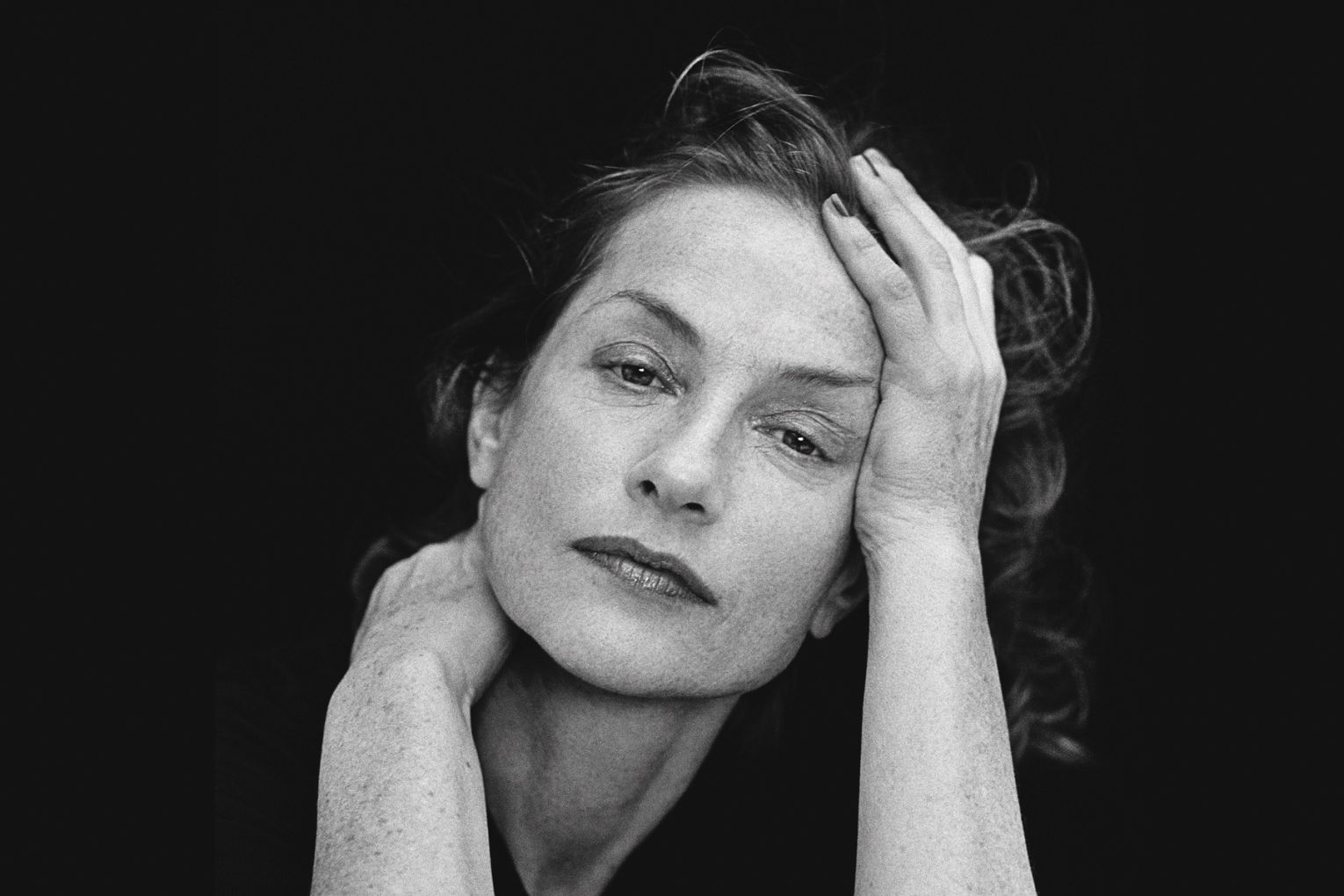
In one of the best and funniest episodes of the hit French series Call My Agent! Isabelle Huppert is seen running between projects over the course of a single day. It was a play on the fact that the petite French powerhouse never stops. Indeed, two weeks after presenting her new movie The Blood Countess at the Berlin Film Festival, the 72-year-old actress will travel to Australia to reprise her landmark one woman show, Robert Wilson’s Mary Said What She Said at Adelaide Festival, while her well-reviewed Cannes film, The Richest Woman in the World, will have pride of place as the centrepiece of the French Film Festival around Australia.
After speaking to Huppert in Cannes for the umpteenth time, where she intimated an Australian trip, I managed to catch up with her in Berlin where she elaborated further on her work with Wilson, who passed away since we last spoke. Does it make a difference after performing Mary Said What She Said for so many years, since it premiered in 2019 at Theatre de la Ville in Paris?
“The first time I did it after Bob passed away was in Japan in October, and that was really touching for me,” Huppert admits. “No, I don’t think it changed, but it doesn’t change more than theatre changes as you do it, whether Bob would be still alive or not. It travels from one place to another and the more you do it, it changes a little bit. But I don’t want it to change. It’s still very much connected to him.”
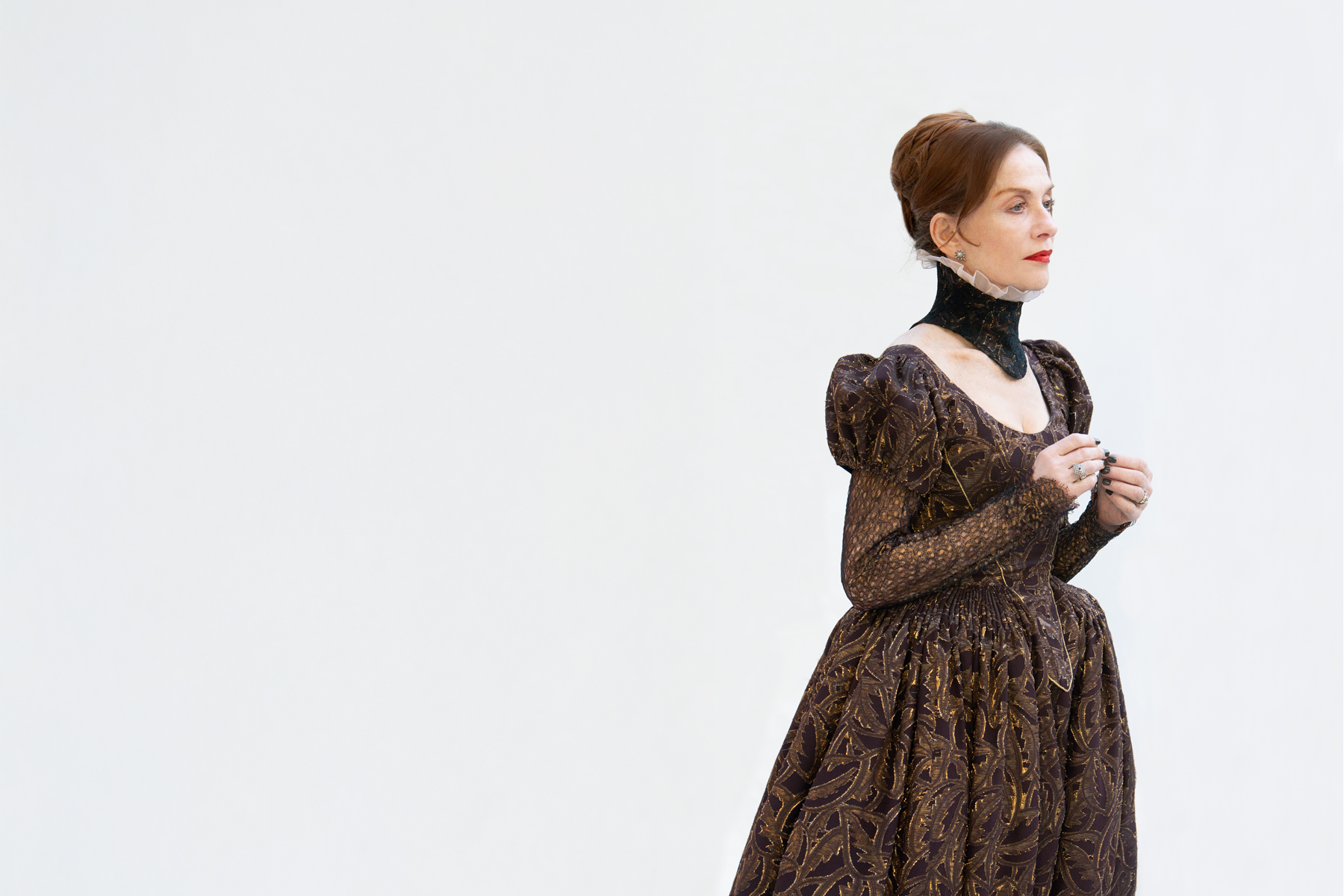
Currently promoting her latest film The Blood Countess, Huppert says she does not make a distinction between theatre and film and likes them equally. “Cinema can be very theatrical and theatre can be very concrete and matter of fact,” she says.
To see the actress displaying her skills on stage, however, is astounding and formidable. In a 2025 interview with Wilson for Gagosian.com she expounded the virtues of theatre. “You don’t focus on something narrow, on a story, you go much broader. And the stage gives you this possibility, this immensity, for exploring feelings.”
Mary Said What She Said marked her fourth collaboration with the American director, a creative genius in avant-garde theatre who died last July at the age of 83.
You might like
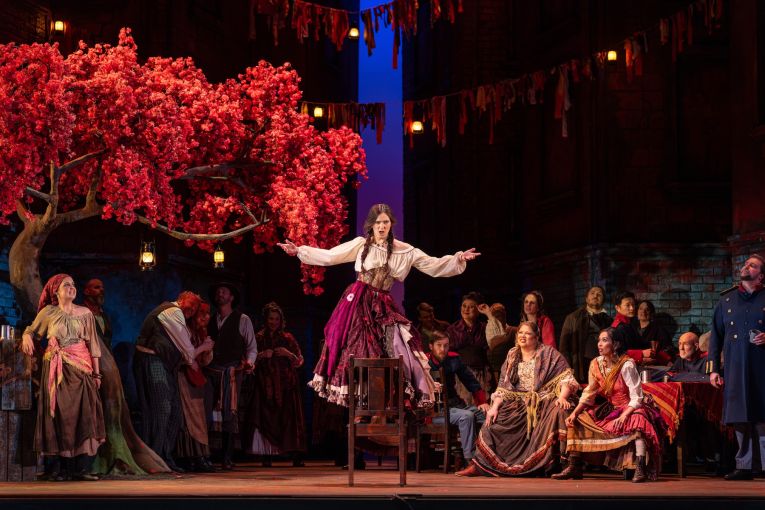

“I started with Orlando, and then we did Heiner Mueller’s Quartet and then we did something for the German radio in Dusseldorf which was wonderful,” Huppert recalls.
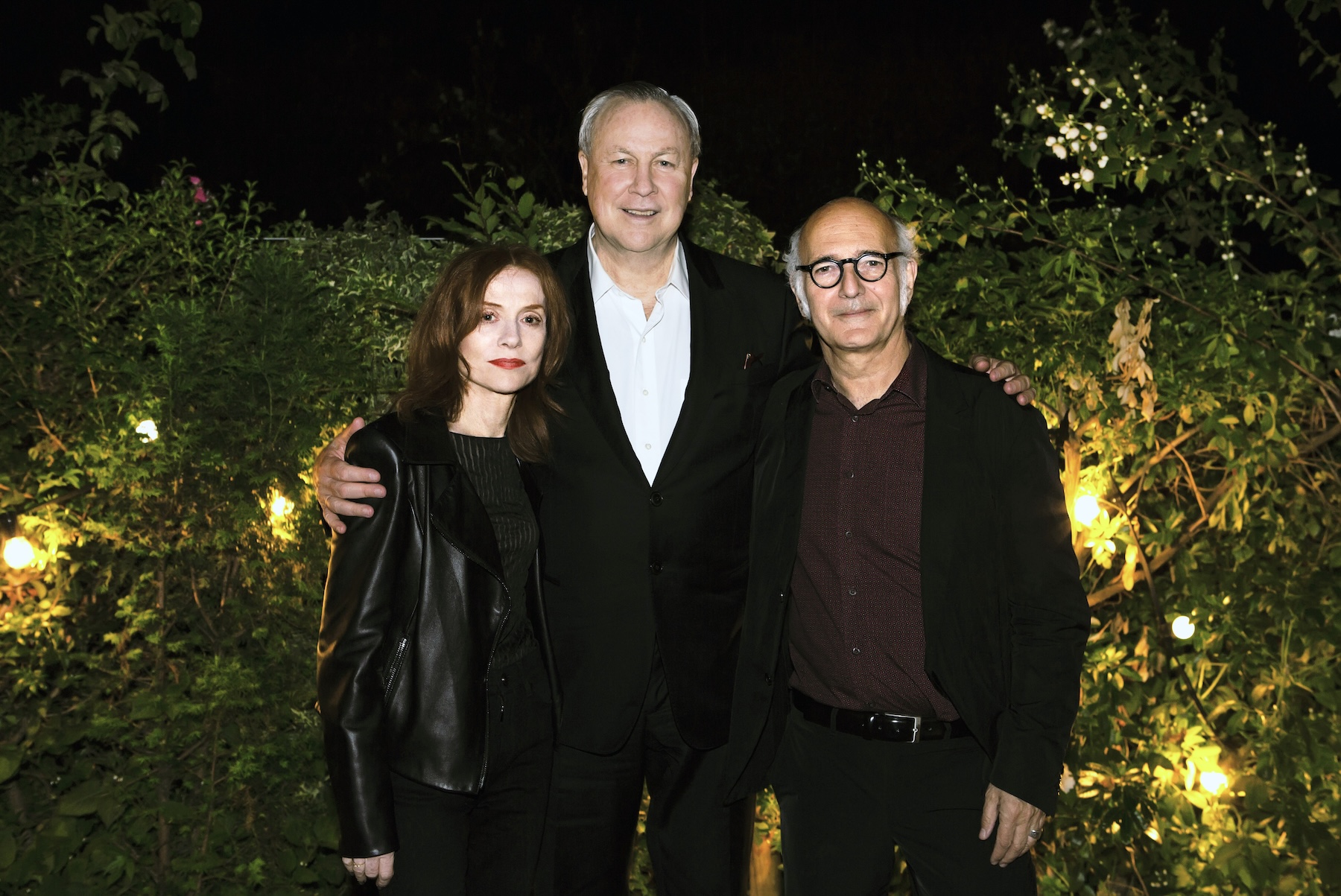
“We rehearsed for this radio program and after two days of rehearsal, it turned out that it could be a good show. So finally, we did it for an audience. That was a good memory I had with Bob, and certainly we would have worked together again.”
Wilson, Huppert reflects, was highly original. “He really was a major director. He had his own language, which made him so powerful. It’s a Robert Wilson language.”
Written by novelist Darryl Pinckney, with a score by celebrated composer Ludovico Einaudi, Mary Said What She Said is a monologue in three parts, with Huppert playing Mary, Queen of Scots on the eve of her execution. Condemned for treason but convinced of her innocence, Mary is still fighting as she contemplates her life and spirals into a state of delusion.
"He had his own language, which made him so powerful. It’s a Robert Wilson language."
Mary is dressed in red on her final morning and it’s the colour that so suits the imperious redheaded Huppert. It was natural that she should play a vampire in The Blood Countess, where she is a vision of red, and of course she sucks a lot of blood. Though not enough apparently, as the film’s director, Ulrike Ottinger, told me she wanted more time with the fangs.
“I was very hungry, yes, very thirsty,” Huppert concedes of her campy, humorous portrayal of Countess Elizabeth Bathory, the 16th-century Hungarian noblewoman and serial killer, who comes back to life in modern-day Vienna to suck more blood. In reality, between 1590 and 1610 Bathory and four of her servants were accused of killing hundreds of girls and women and were convicted on 80 counts of murder.
Subscribe for updates
“Elizabeth killed all those girls and women and then she went to jail. She was, of course, a horrible woman.”
Still, Huppert relished playing her.
The actress speaks a little German though mostly French in the Austrian film. It was her first time working with a German director, though she recalls working with Austria’s Michael Haneke many times – most prominently on 2001’s The Piano Teacher, for which she won the best actress prize in Cannes.
Huppert first heard of Ottinger a decade ago when there was a retrospective of her films at the Pompidou Centre. She became keen to work with the 83-year-old director on The Blood Countess.
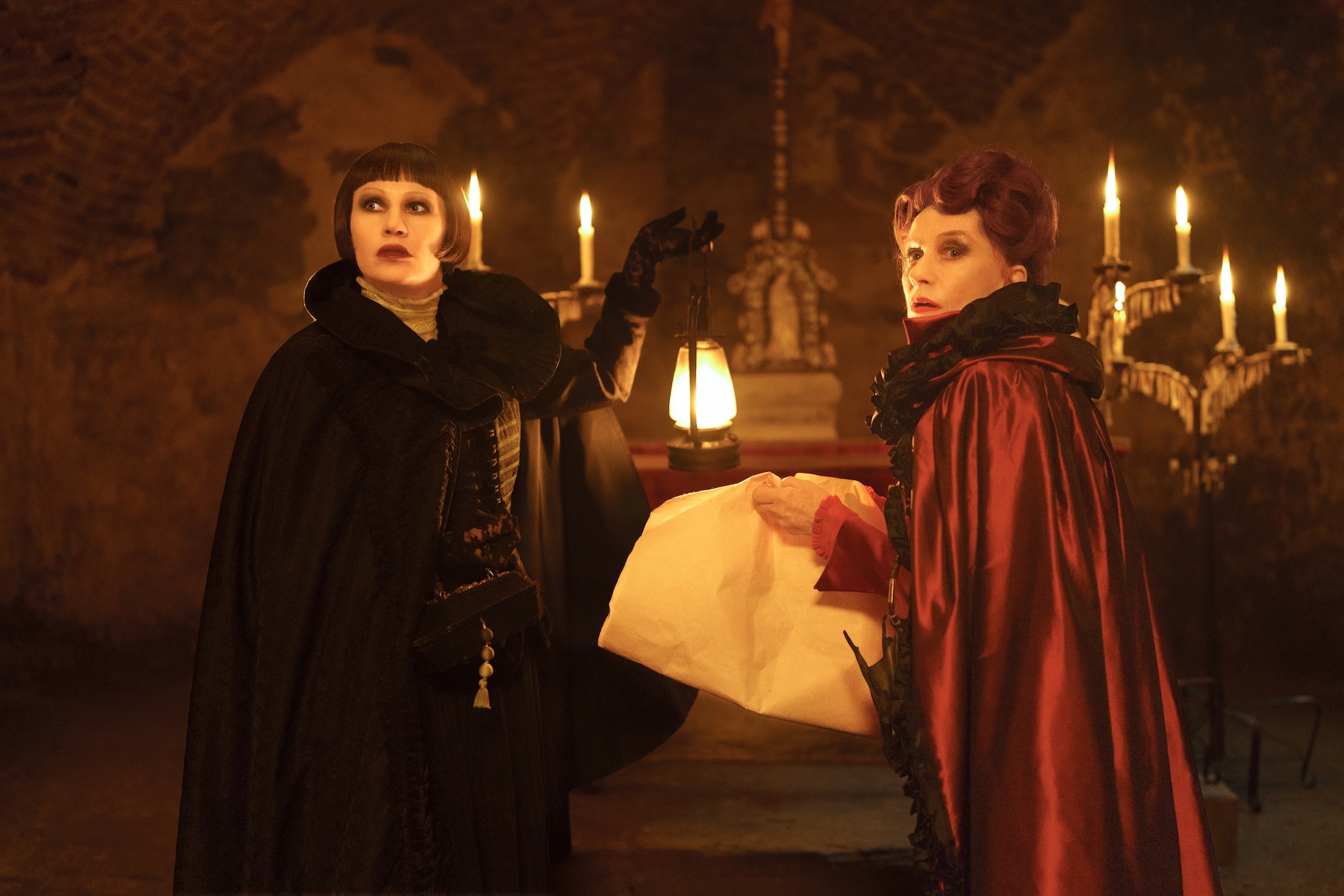
“Ulrike is this camp, queer director and you don’t expect someone of her generation to be so inventive, so unconventional, because it’s exactly what she is,” Huppert says. “It was really exciting to make the film. Ulrike also brings a certain amount of poetry, which is maybe the most difficult challenge in movie making. So you just want to follow her in her vision.”
There’s a bit of blood-sucking going on too in The Richest Woman in the World, though as Huppert notes it’s more the man doing it. As the lonely title character Huppert’s billionaire Marianne Farrere (loosely inspired by L’Oreal heiress Liliane Bettencourt) is a target for young gay artist Pierre-Alain (Laurent Lafitte, Huppert’s co-star in Elle), who is keen to take advantage of her lavish generosity.
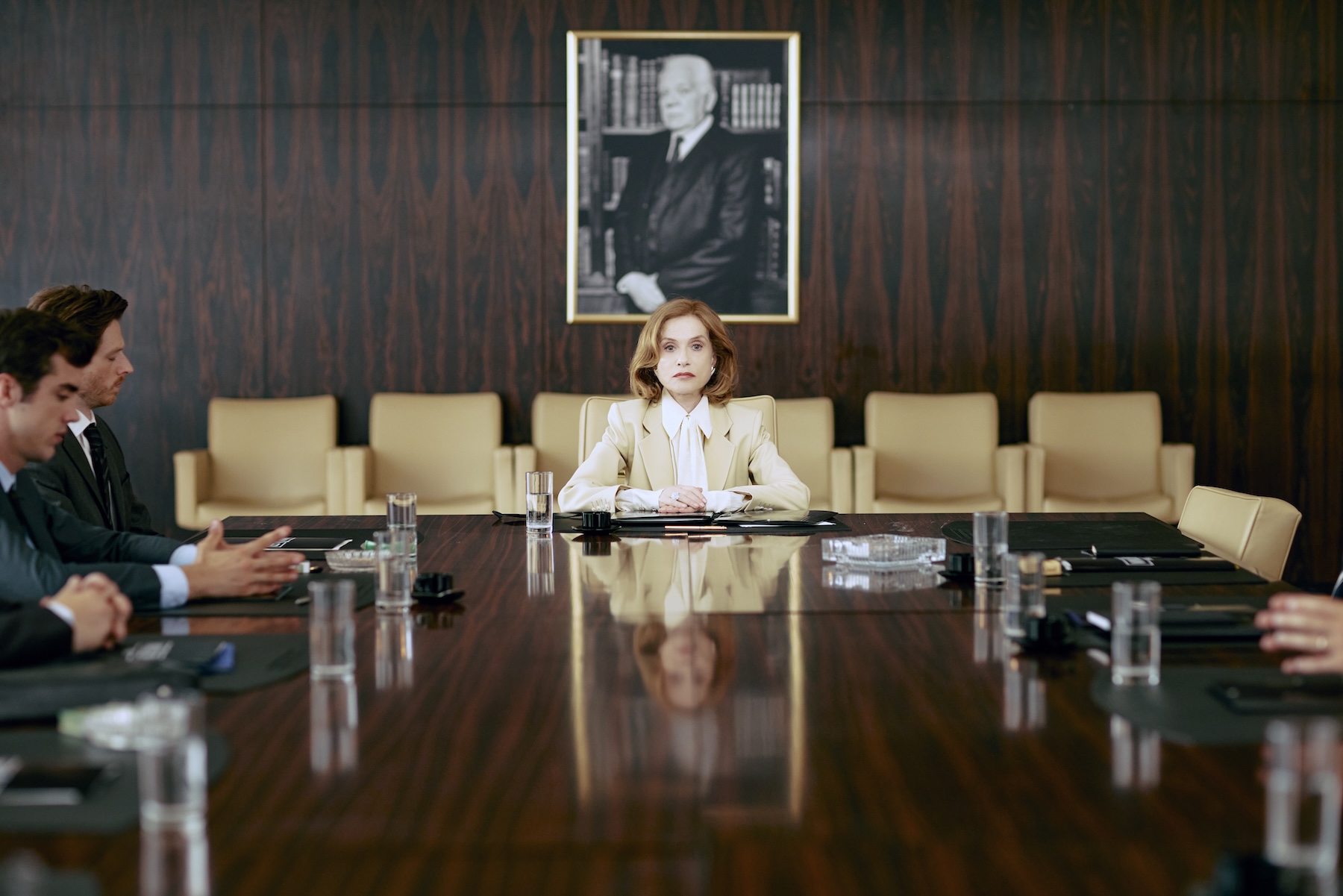
Can Huppert draw a comparison between Marianne Farrere and Elizabeth Bathory? “The characters are not really related, except maybe both are seeking a different dimension in their lives. Of course, you can always draw a thread between whatever you do. And in fact, yes, maybe the richest woman in the world when she meets that man, she goes from happiness to joy, and she finds a different dimension to her life. Elizabeth Bathory is also seeking something. Otherwise, why would she suck the blood of all these girls?”
Of course, Huppert has been in Australia before, in 1985 when in Melbourne she filmed Cactus with Paul Cox, another director she mourns the loss of; and in 2013 when she performed alongside Elizabeth Debicki and Cate Blanchett in Benedict Andrews’ Sydney Theatre Company production of Jean Genet’s The Maids. What will she now do in Adelaide for fun?
“Perform,” she replies simply and cryptically.
Isabelle Huppert performs Mary Said What She Said at the Festival Theatre from March 6 – 8 as part of Adelaide Festival
The Richest Woman in the World screens as part of the Alliance Francaise French Film Festival (Brisbane March 5 – April 8, Adelaide, March 18 – April 22), before an Australian cinema release in May

Want to see more stories from InDaily SA in your Google search results?
- Click here to set InDaily SA as a preferred source.
- Tick the box next to "InDaily SA". That's it.
Free to share
This article may be shared online or in print under a Creative Commons licence