Music review: Sibelius – The Symphonies, Concert Three
Whether Sibelius fell into a backwater or beat his own path to modernism is one of the intriguing questions about this composer. The third of the Adelaide Symphony Orchestra’s performance of his symphonies offered further insight.
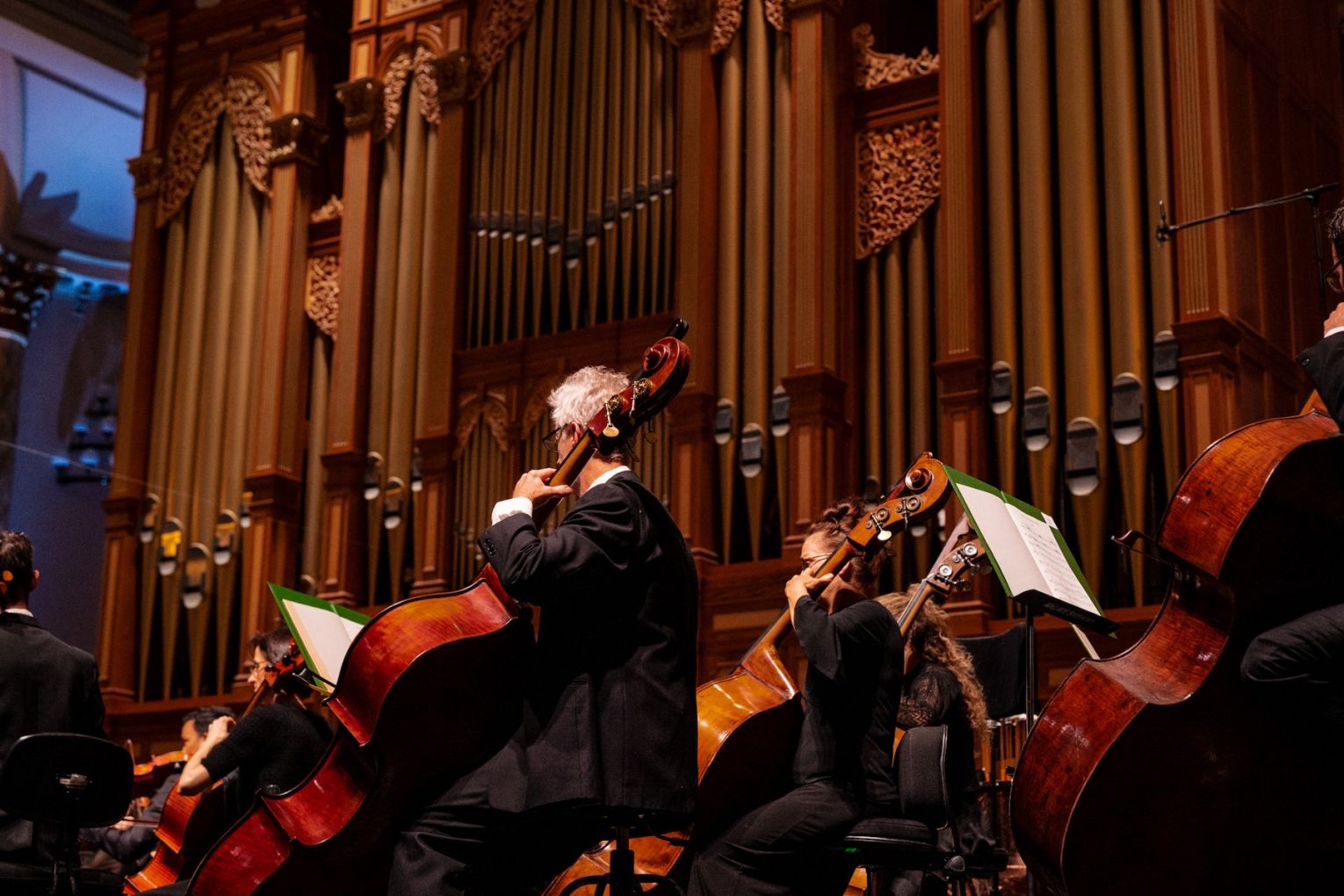
By the third instalment of the ASO’s odyssey into the symphonies of Sibelius, one felt well accustomed to Mark Wigglesworth’s approach to this composer. By now it was clear: his interpretation is saturated in expression yet highly disciplined. One was warming to everything he was doing, discovering especially how this UK conductor shows a strong affinity towards the Finnish composer’s resolute spirit and unique musical architecture – where detail has its place but overall shape matters more.
But now it was time to draw a deep breath, because here were Sibelius’s last three symphonies. Three in one night might seem a tall order, but of course this composer was a master at shrinking the symphony: the last two, Nos 6 and 7, are in fact his shortest and positively Mozartean in size. Nevertheless, each feels epic in its trajectory, at times venturing into the strangest territory.
Indeed, this was where chief interest lay. Majestic and sounding deeply connected to nature, Symphony No. 5 in E-flat major, Op. 82, was heroic in tone. The ASO played it triumphantly. Tempos felt right, and Wigglesworth maintained energy with resolute, characteristic control. In this symphony the violins have endless amounts of fill-in tremolo texture, but instead of choking the music, these were executed with clean delicacy. As each section of the orchestra piled up toward the climaxes, things reached an incendiary level.
Simultaneously, this Fifth was romantically ripe in its sweep. Each new expressive arch began with a steady, easy flow and opened out with escalating passion. With Wigglesworth, there is never a moment when energy dips. He keeps things moving with enveloping power. Happily, his players were absolutely in harness, feeling every inch of the journey in the very same way.

So well judged was this performance that some in the audience were completely tricked by its ending – wildly clapping before it had concluded. Famously, Sibelius’s Fifth ends with six widely spaced-out chords, that – if done well – keep the listener in total suspense. Some got it completely wrong, marring the performance – at least it was not going live to air on ABC Classic like the preceding concert.
Amazingly, Sibelius’s final two symphonies appeared a full decade after Stravinsky’s Rite of Spring, and when Schoenberg had completely transitioned to his twelve-tone technique. Stubborn by nature, that left him marooned in a shrinking world of his own. Externals of his music continued to along the lines of Bruckner, namely his block-like orchestration and slow pace, but Sibelius did go out on a limb in Symphonies Nos. 6 and 7. Form became tighter, and some parts do sound remarkably progressive.
Symphony No. 6 in D minor, Op. 104, is elusive and hard to get to know. However, its soulful serenity is mesmerising, as is also the way it fades away into nothing at the end. The ASO captured its essence so well. Finessed in its playing, themes rose proudly against the work’s astringent harmonies. The briefest pauses between movements made it feel like a seamless conception.
The third movement of this symphony sounded amazing. One place in Sibelius where he submits to pure rhythm, its incessantly jerky beat propelled this movement and made it bristle with newness. But subtlety was the order of the day. Overall, the Sixth is a work of soft, interior reflection that demands refined playing, and that’s exactly what it received. A gorgeously golden string tone in the last movement was one of the special moments in this concert.
Symphony No. 7 in C major, Op. 105, is where Sibelius makes his boldest decisions. Here, formal internal divisions are jettisoned in favour of one continuous movement. In fact, the Seventh is widely recognised as the first symphony in history to be written this way. More significantly, its world is one of yet deeper introspection, and its string-dominated orchestration gives this work a radiantly nostalgic quality. It is as if Sibelius is intent on forging his own modernist path while retreating further into isolation.
Subscribe for updates
One might say he succeeded in doing both, and we can thank him for it. The Seventh Symphony is a work of great beauty. It feels organic, inevitable and perfect, especially when played as well as this. Distilled and visionary, it was intensely wonderful. Even in its smaller stature (being the shortest of his seven symphonies), it was towering.
Wigglesworth totally understands this music. For those who can remember Arvo Volmer’s Sibelius Festival from 2007, we might observe that while the latter conductor was satisfyingly terse and cool in temperament, the new chief conductor is ripe and pungent with the north European composer. To hear the ASO deliver these symphonies once again with fullest commitment made this series special to witness.
But now it is time to move to another composer.
The third concert in the Adelaide Symphony Orchestra’s Sibelius: The Symphonies series was performed at Adelaide Town Hall on September 19. Read reviews of concerts one and two.
Want to see more stories from InDaily SA in your Google search results?
- Click here to set InDaily SA as a preferred source.
- Tick the box next to "InDaily SA". That's it.
Free to share
This article may be shared online or in print under a Creative Commons licence