Music review: Sibelius – The Symphonies, Concert Two
With exceptionally insightful and thrilling performances in its second instalment, the Adelaide Symphony Orchestra’s Sibelius series is emerging as the orchestral event of the year.
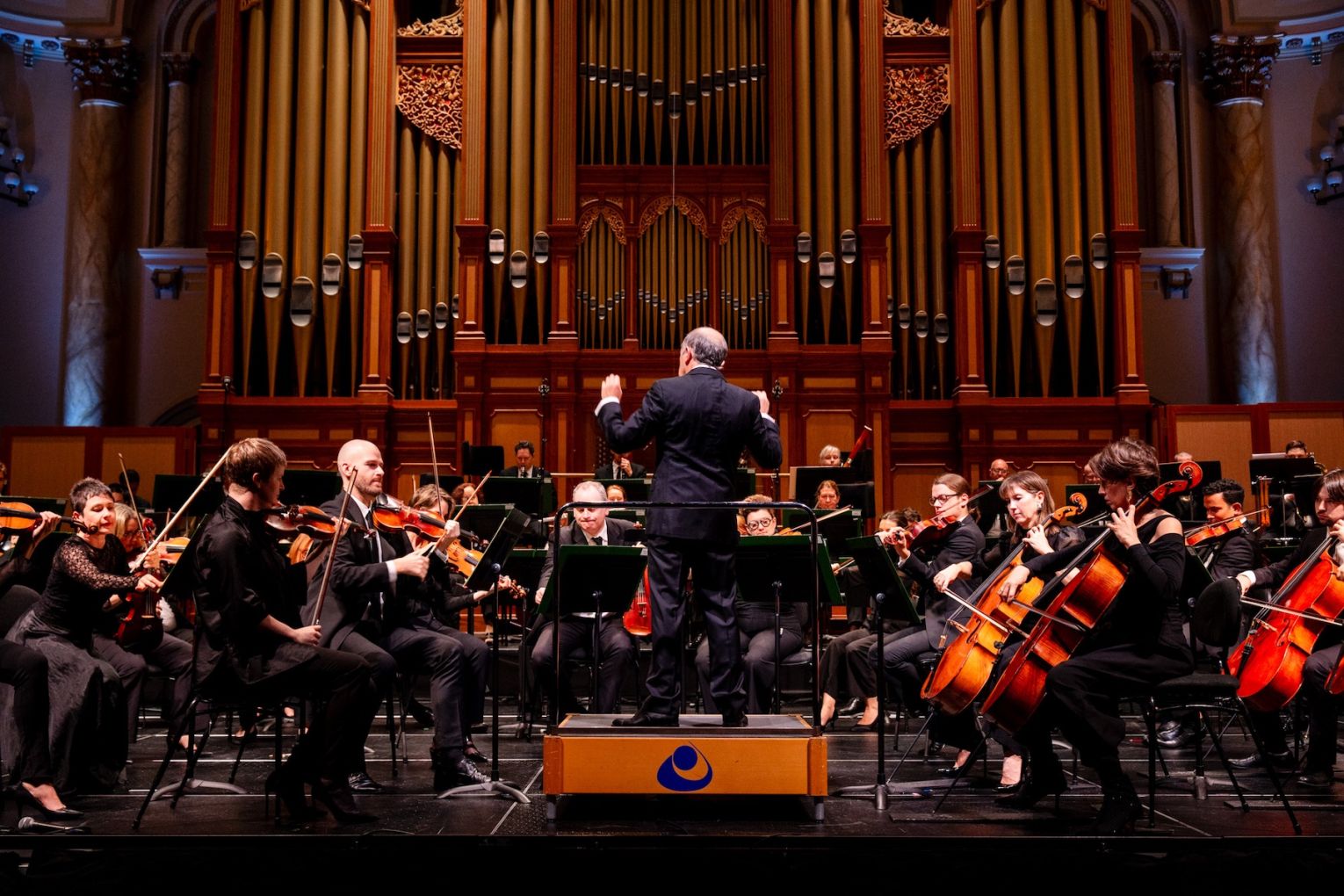
What has become abundantly apparent in this series is just how distinct and individual his symphonies really are. One might expect they might all hold a lot in common, most notably a cooly romantic temperament by which Sibelius is generally known. However, the ASO’s journey through all seven symphonies is questioning that view. Differences are stark between these works, and how they share features is not immediately obvious.
The second concert threw this into focus. To start, the Fourth Symphony seemed to come from some far distant universe.
In truth, it’s not a much-heard work, nor one that even ardent Sibelius fans evidently hold close to their hearts. Enigmatically, they will explain to you that Symphony No. 4 in A minor, Op. 63, holds many ‘mysteries’. And that could be the truth. Sparse rather than lush, and lacking the driving rhythm that is so characteristic of Sibelius’s popular works, it is quite difficult to appreciate. Even in Finland, it quickly earned the nickname Barkbröd (‘bark bread’) on account of its certain unflavoursome toughness.
What Wigglesworth did with it was highly interesting. Without seeking to smooth or blend its hard edges, he just seemed to let the music gain its own unique shapes. Deep growling strings and raspy-toned bassoons announced its strangeness, and then a solo cello groped its way toward some primordial eloquence without enunciating a theme as such. Wide cavernous sounds spread out in all directions, but with a stubborn refusal to move beyond the nebulous.
Wigglesworth had the most insightful set of answers. Letting the pulse develop naturally, he revealed all the music’s bare spaces without trying to gloss them over or knit them together. This Fourth was beginning to sound starkly different.
You might like
One must be careful choosing what to read into this work. A generally held view that might be useful to know is that Sibelius wrote the Fourth at a time when he had divorced himself from Romanticism but had simultaneously rejected the radical methods of Schoenberg that looked to be quickly turning his music into an anachronism.
In his most insightful and carefully sculpted performance, one to see some answers. While he still anchored to tonality, Sibelius was freeing sound in a different way, allowing ideas to mercurially appear and disappear without a cementing rhetoric.
Whatever Wigglesworth had told his musicians, they were completely in the know. This was a forward-looking Fourth that traced a new sound world. Sound quality and dynamics were exceptionally finely controlled, and movements were seamlessly merged into each other to create a new symphonic picture and maintain the music’s tension.
A craze for Sibelius’s music in the 1930s that owed to several conductors at that time (notably Beecham, Stokowski and Koussevitzky), primarily rested on Symphonies Nos. 2 and 5, and it was good to hear the first of these. To this day, Symphony No. 2 in D major, Op. 43, is a work that just about everybody seems to fall in love with, and it proved the ideal companion in this concert. All that tensile strangeness was behind us, and at last Sibelius was sounding reassuringly closer to Tchaikovsky.
Subscribe for updates
Except no, none of that proved properly true. Again, Wigglesworth had different things to say. Surprisingly – or perhaps not so at all – this unutterably contrasting earlier work seemed to be cut from the same cloth. Those warm pulsing strings and woodwinds at the start had room to breathe. The tempo was not being squeezed around as other conductors habitually do. No rubato is in fact marked, but the practice has become so ingrained that nobody questions it.
Maintaining a steady, even flow made for an especially beautiful, floating start to the first movement. Paired flutes, oboe solos and choirs of French horns had ample time to develop as well, and together, the whole orchestra steadily increased in density to give this performance towering strength.
What also helped was a careful conjoining of movements that kept a momentum of energy – just as in the Fourth Symphony. It felt like a giant tone poem.
Several other things marked out Wigglesworth as a wonderful Sibelian interpreter. Being careful to keep the dynamics low and not over-invest at the start of each new build-up, his pacing was outstanding. Platforms of silence held their full length, and climaxes grew to a seething intensity.
Bruckner was one composer Sibelius particularly admired, and these two composers’ ostinato patterns and massive architectonic shapes can be rather similar. Their symphonies are amongst the most thrilling to hear live. One was reminded of that.
But this was something else. With superior balance in this second concert, playing hit a supreme high, and when the wick was lit, amazing things started to happen. The energy and scale of sound in the last two movements were stupendous. The ASO were fully in harness all through and playing their guts out. These musicians and their chief conductor really are a great team in music like this. Above all, it is their steadfast discipline that led this performance to phenomenal heights.
The pungent psychological power of Sibelius is making itself felt loud and clear in this wonderful series. Various myths are being overturned. Concluding on Saturday with Symphonies 5, 6 and 7, it is already the orchestral event of the year and should not be missed.
The second concert in the Adelaide Symphony Orchestra’s Sibelius: The Symphonies series was performed at Adelaide Town Hall on September 16. Read reviews of concerts one and three.
Want to see more stories from InDaily SA in your Google search results?
- Click here to set InDaily SA as a preferred source.
- Tick the box next to "InDaily SA". That's it.
Free to share
This article may be shared online or in print under a Creative Commons licence