Adelaide Symphony Orchestra – Sibelius The Symphonies
The ASO’s powerful performances of Sibelius under Mark Wigglesworth are enough to get one seriously rethinking this composer.
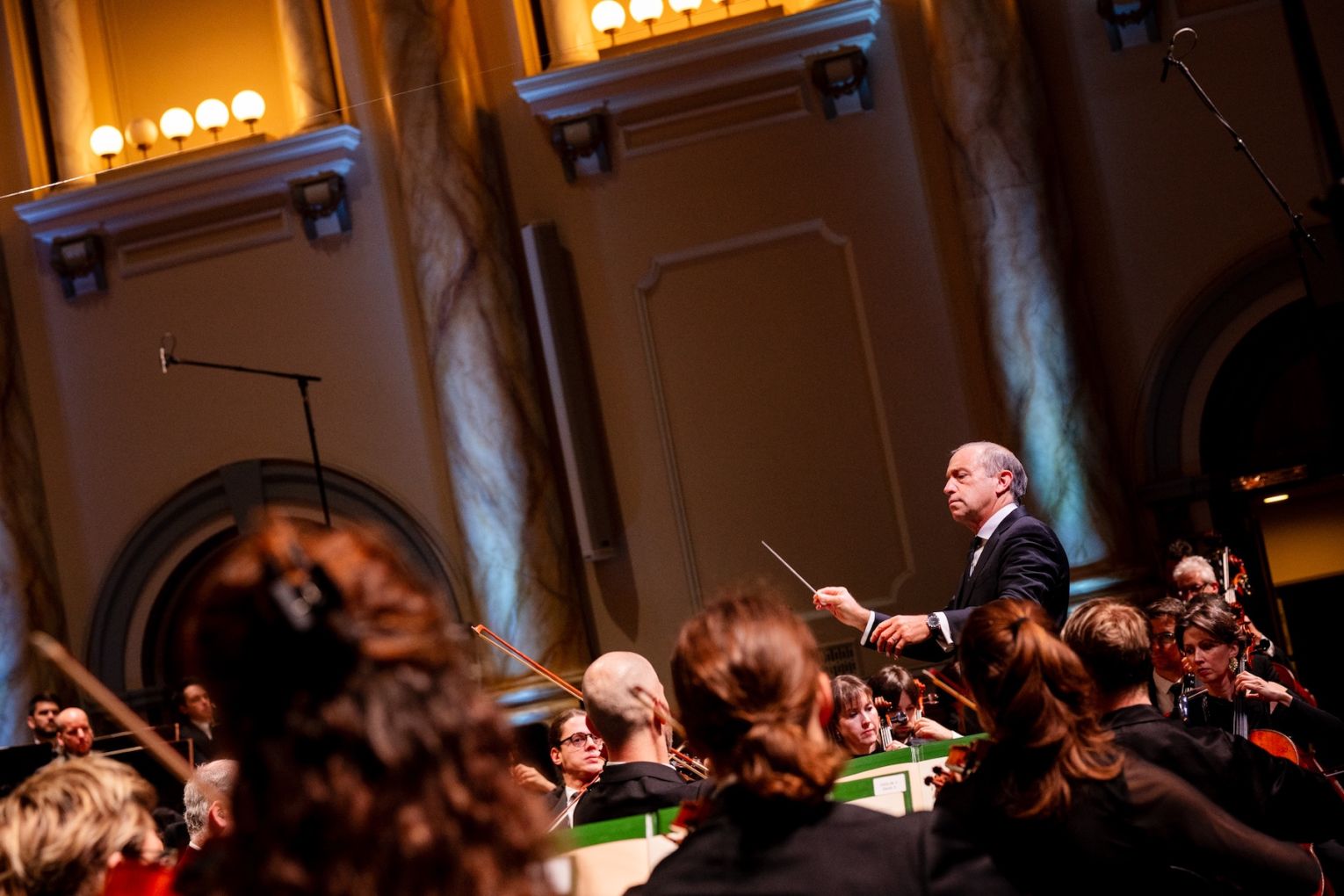
It might have been opportune for the ASO to venture into the symphonies of a different composer by now, but fans of Sibelius are in luck. In 2007, its then chief conductor Arvo Volmer conducted all seven symphonies (plus the violin concerto) by the Finnish composer, and it was finest thing he did. Sharing a north European aesthetic (as a Latvian), he laid bare this music’s austere power.
We can let the ASO off the hook for tackling the same composer a second time these 19 years later. Ideally suited to mid-sized orchestras like the ASO, they are of course much loved works (Nos 2 and 5 more so than others), and Mark Wigglesworth, the present chief conductor, has already shown how vigorous and compelling he is with Sibelius. In 2023, he conducted Symphony No. 1 in E minor, Op. 39 with real grit and power.
Beginning with a rerun of that symphony is the only reservation one might have so far in the ASO’s present Sibelius series. Yet hearing Wigglesworth’s conception again of Symphony No. 1 was fully worth it: his picture is gripping to say the least, and the playing to be witnessed this second time around was on an extremely high level.
Wigglesworth seems to be bent on a mission to change a general view that possibly lingers over Sibelius. Was he backward in style, stuck by himself on the fringes of European art and confined to mere landscape painting?
Yet here was a First Symphony of deep psychological power and forward relevance. Contrasts and rhythmic energy were massively magnified. The solo clarinet melody that begins in Symphony No. 1 was more ominous than ever, Dean Newcomb lending it dark mystery and exaggeratedly lengthening its silences over a soft timpani roll.
You might like

But this gentle was immediately torn apart by searing violin tremolandos and violent eruptions of drama. It is said that Jean Sibelius as a person was full of contradictions, and that he was prone to white-hot outbursts of temper. This performance suggested as much. Resolute to the end, Wigglesworth seemed to be uncovering the real Sibelius. There was no sign of backing off or going easy. Climaxes were loaded to the hilt.
A particular difficulty in his symphonies can be their density of texture. Balance is tricky to manage and sometimes his symphonies can sound like a tangle of harmony and melody. Not so here. Wigglesworth sliced the score apart with precision, bringing every detail into focus. It was a performance of clearest vision and execution.
There was warmth too. The second movement’s weighty string writing sounded as lush as Tchaikovsky’s Pathétique Symphony (with which it is often compared), and quieter moments through the symphony, where Sibelius thins down the scoring to solo or paired woodwind instruments and harp, possessed lovely delicacy.
But it was the emotional heat that stood out. The third movement Scherzo barrelled along like a steam train, and its brutal timpani strikes were right on the audible limit of what that instrument can produce – think rock concert volume.
Subscribe for updates
All through, the orchestra was playing with such commitment and rhythmic unity that one just had to hold on until this symphony hurtled to the finish line. Balance was the only question. Sibelius really needs more violins to counterbalance his fully loaded brass; and those timpani bursts were a tiny bit excessive (the notation says plain forte – just wait until the first movement in the Fifth where it is marked triple forte).
Indeed, so frequently were Wigglesworth and his players redlining this performance that Sibelius sounded almost unrecognisably different.
The Finnish composer steps in various directions throughout his seven symphonies, meaning that it is often difficult to guess where he will step next. Symphony No. 3 in C major, Op. 52, certainly takes a different turn in its robust simplicity. It feels miniature and somewhat radical by comparison.
Under Wigglesworth, the tempos were brisk and shaping took place in waves of energy. There is a rustic quality about the Third, as though Sibelius is consciously recalling folk dances of his homeland. Their humble simplicity even evokes that rarest thing from him, a smile.
The Third contains masses of scales that keep players on their toes, and these were briskly and cleanly delivered. Rhythmic definition was so tight that strange thoughts even entered one’s mind: that by concentrating almost purely on rhythm, Sibelius was arriving at a similar destination to Stravinsky, in Symphony in C for example. Not until this performance might one have imagined there was any such parallel.
So this series is throwing up some intriguing questions. To think that Sibelius might have anticipated Stravinsky’s stripped-back aesthetic by three decades does put things in a rather different light.
The uncompromising stance Wigglesworth is taking is sure making this series interesting, added to which is a wonderfully high level of playing to be witnessed from the ASO.
Next come Symphonies Nos. 2 and 4 on Wednesday, and then the orchestra somehow manages to squeeze Nos 5, 6 and 7 into the last concert on Saturday – but that’s thanks to the last two actually being the shortest.
The first concert in the Adelaide Symphony Orchestra’s Sibelius: The Symphonies series was performed at Adelaide Town Hall on September 12
Want to see more stories from InDaily SA in your Google search results?
- Click here to set InDaily SA as a preferred source.
- Tick the box next to "InDaily SA". That's it.
Free to share
This article may be shared online or in print under a Creative Commons licence