Music review: Adelaide Symphony Orchestra’s Seasons
Concluding its first year with Mark Wigglesworth as chief conductor, the Adelaide Symphony Orchestra played an unusual all-British program with power and conviction.
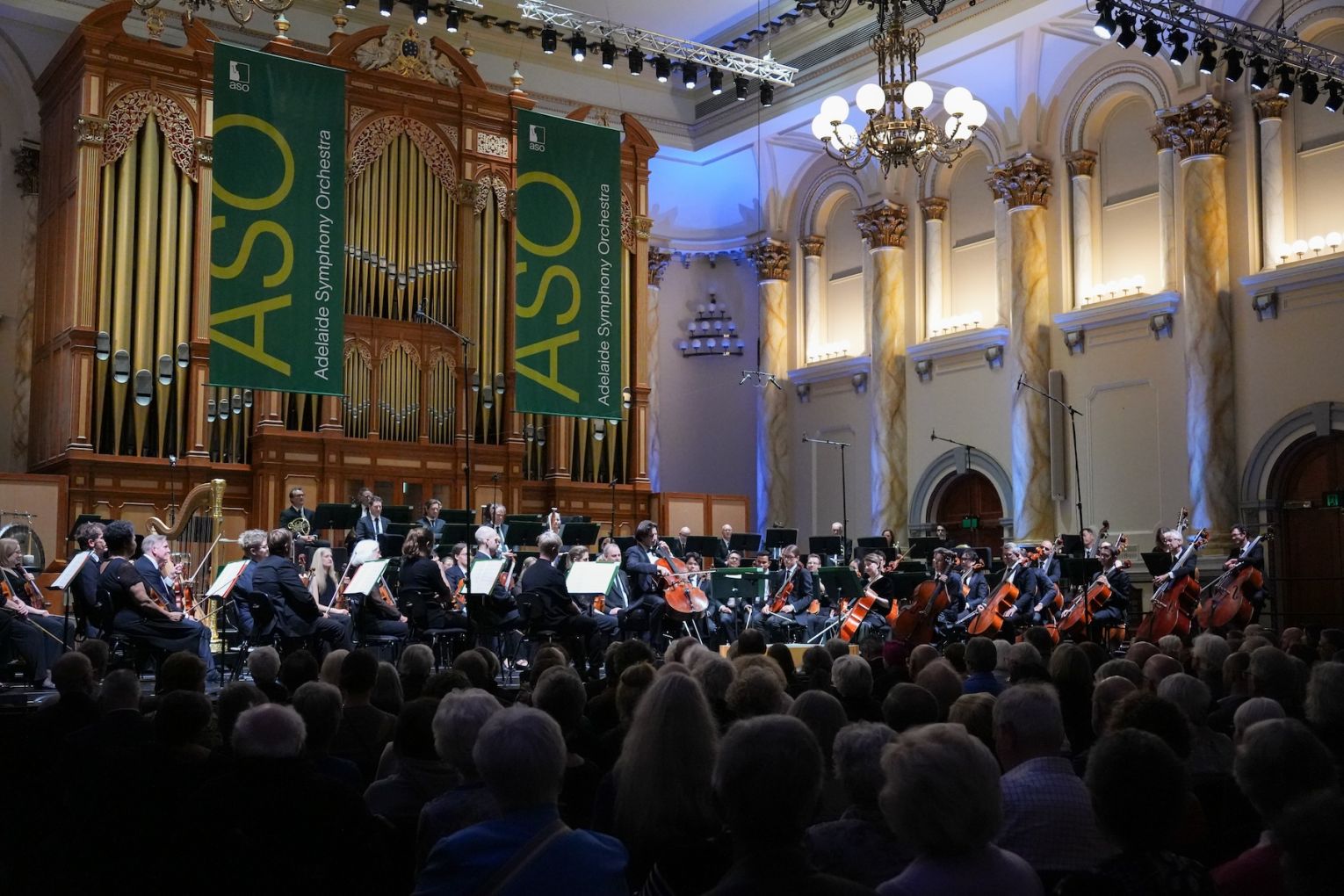
One was able to learn more about Mark Wigglesworth from this final concert of 2025 and form a picture of what he is like as the orchestra’s new chief conductor.
This was all-British program encompassing Edward Elgar, Frank Bridge and William Walton, and clearly, he understands this music intimately well and can convey its spirit with uncanny truth. It is as if it aligns with his own psyche. For a work of the mighty scale and complexity of Walton’s First Symphony, it is something of a revelation to hear the conviction that Wigglesworth brings.
At the start of this ‘Seasons’ program, though, was Bridge’s short impressionistic tone poem, Summer. Stylistically close to Delius or even Debussy’s Prélude à l’aprés-midi d’un faune, its delicate violin trills do sound like the rustling of leaves, and when an oboe melody drifts languorously above, the pictorial landscape seems complete. Bridge wrote this piece after the outbreak of the First World War, and when dark sounds repeatedly perturb the stillness, it is hard not to imagine that he did not write this piece as a response to the outbreak of hostilities.
But ultimately it is a sensual experience: as the harp serenely floats upward with sweeping chords, this piece utterly charms the ear. Understanding its shape and delicacy, Wigglesworth was its consummate painter in sound.
The other point of interest in this final Symphony Series concert of the year was the soloist. Known as one of the world’s leading cellists, Daniel Müller-Schott was always going to be a highlight of the ASO’s 2025 calendar. Admired for his expressive power in the Romantic repertoire but versatile enough to play anything from Bach to twentieth century works, there was little doubt that Elgar’s Cello Concerto would be right up his alley.
You might like

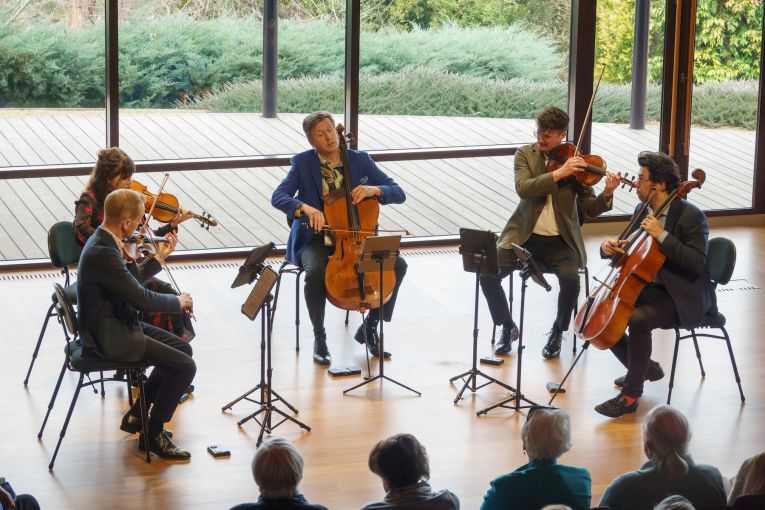
This German cellist immediately comes across as emotionally passionate but intellectually controlled at the same time, and that’s a good combination for Elgar. Contrasts were lit up in full in his most famous concerto. Müller-Schott landed on its main theme with full intensity, but as the first movement’s moved into more distant realms, he was sublime in its long, roaming phrases.
One felt that Müller-Schott gave this wonderful concerto a full panoramic view. He was intelligently responsive to it all. Virtuosity was one of his ace cards as well. While this is one of the most intimately personal of works for cello, the furious speed of its Allegro Molto does present technical demands. But few cellists can make it look as easy as Müller-Schott: he applied the tightest rhythmic grip to this second movement.
Some have given this concerto a greater sense of personal disclosure – one thinks particularly of Jacqueline du Pré, who made this work her own and got it so miraculously right. However, Müller-Schott’s musical logic and execution felt absolutely right.
His encore, the Gigue from Bach’s Cello Suite No. 3 in C major, was magnificent.
Subscribe for updates
Walton’s First Symphony of 1932-35 is a work of prodigiously rugged power. It really helped to hear Wigglesworth’s remarks in the pre-concert talk, because in it he revealed how Walton in effect chronicles his turbulent relationship with Baroness Imma von Doernberg in the first three movements. So destructive were his experiences that he marks the second movement “with malice”.
The whole symphony has enormous bite. Externally, it sounds rather like Sibelius but is founded on yet more massive textures. Punctuating through at various times are forlornly lonely solos from oboe, bassoon and clarinet, but the overwhelming impression is one of unrelenting force.
Seen as modernist in its day, it breaks no actual new ground and suffers a bit from undistinctive themes and overworked fugues. However, the clarity Wigglesworth brought was laser bright, and this symphony’s clout was thrilling.
Never letting the energy dissipate for a second, Wigglesworth was masterly in steering it to its end, and the ASO was with him every inch of the way.
The ASO shortly goes into recess, but amongst the big stuff to look forward to next year will be Sibelius’s seven symphonies and excerpts from The Ring.
Adelaide Symphony Orchestra performed Seasons on November 28 at Adelaide Town Hall
Want to see more stories from InDaily SA in your Google search results?
- Click here to set InDaily SA as a preferred source.
- Tick the box next to "InDaily SA". That's it.
Free to share
This article may be shared online or in print under a Creative Commons licence