Adelaide Festival review: Theatre of Dreams
Hofesh Schechter Company’s latest masterpiece breaches boundaries between waking and dreaming worlds, between audience and performer to reveal exhilarating and at times unsettling glimpses into the surreal dream landscapes of the subconscious mind.
There appears to be a delay to the start of the performance, but it seems to be a clever ploy to ensure the expectant audience focuses on a man in a patchwork suit in shades of blue wandering about the front rows. There is a low rumble of brown noise, like distant thunder, and the audience falls silent as he approaches the stage. The rumbling grows louder, now punctuated by muffled electronic beats as if heard from a vantage point outside a nightclub. By the time the man climbs onto the stage he has the full attention of the audience. He turns towards us for a moment as if to say “follow me”. before crawling through a small gap at the bottom of a black curtain. He disappears into the darkness, the rumbling abruptly stops, and in that brief, breathless moment before the potent energy of the performance is unleashed, the audience is invited to cross a threshold into the wild, unpredictable and surreal landscapes of the dreaming mind.
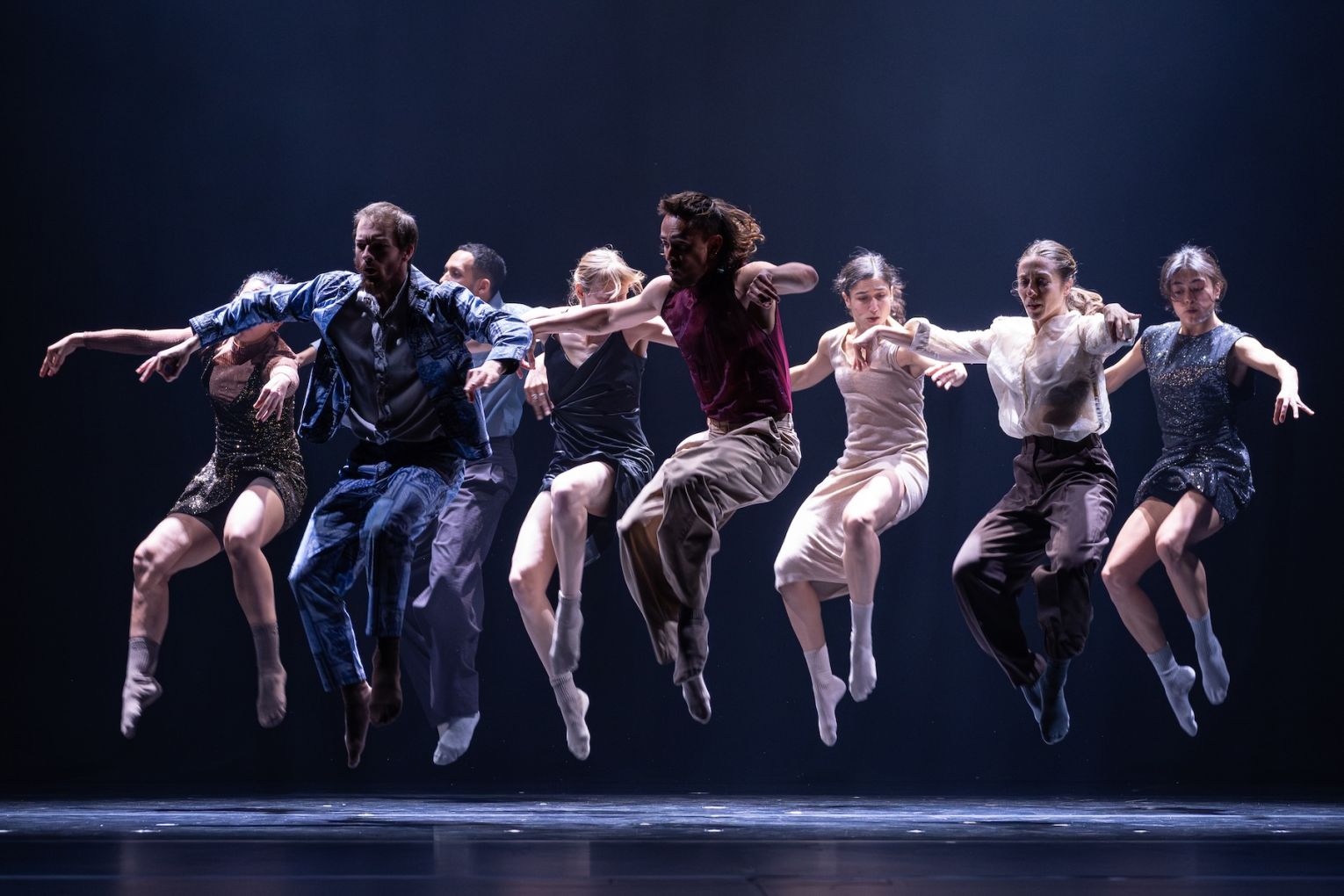
The choreography by internationally acclaimed Artistic Director Hofesh Schechter, OBE, demands full commitment from the London-based company’s twelve excellent dancers, who meet the demand with fluid athleticism, skilled emotional expression and awe-inspiring stamina. The urgent, pounding beats of the powerfully immersive soundscape – also composed by Schechter – seems to feed their relentless energy, reverberating out into the stalls and vibrating through the bodies of those watching, overwhelming the senses.
Theatre of Dreams is Schechter’s second work to be presented at the Adelaide Festival. The first, Grand Finale, which was rapturously received here in 2019, shares elements with this performance, though to different effect. There is Schechter’s immersively loud and dynamic soundscape which in turn drives the dancers into a primal, ecstatic frenzy with the 120bpm of a techno club, slows them into dreamy interludes of nostalgic old songs or transports them into joyful, synchronised folk-style dances. There is Tom Visser’s magnificent lighting design which, together with Schechter’s soundtrack, intensifies the atmosphere of whatever is happening on stage. Then there is the framing device, which in Grand Finale is accomplished by boxes that contain or separate the dancers, inviting feelings of division, isolation, or communal ecstasy.
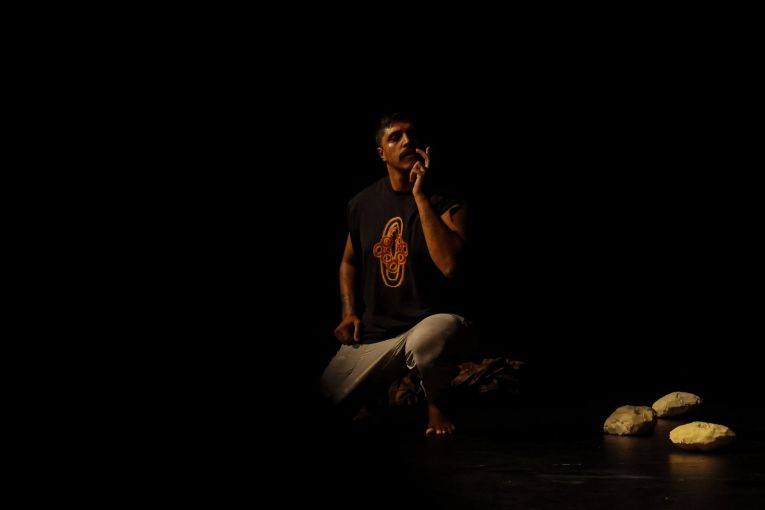

In Theatre of Dreams, the framing is provided by curtains of differing opacities which open or close with great frequency, sometimes fully, sometimes partially. They open onto rapidly changing vignettes, often at great speed, revealing tantalising glimpses of whatever is unfolding behind it. It successfully induces the strange, disjointed feeling of a dream, where repressed urges, desires and fears cloaked during waking life are brought, layer by layer and in fragments, to the surface. There is a sense that we are witnessing something illicit, something normally hidden from public view. In the first half of the performance, the opening and closing of curtain after curtain suggests a gradual descent into the deepest valley of a dream, inviting us into the secret recesses of the subconscious mind.
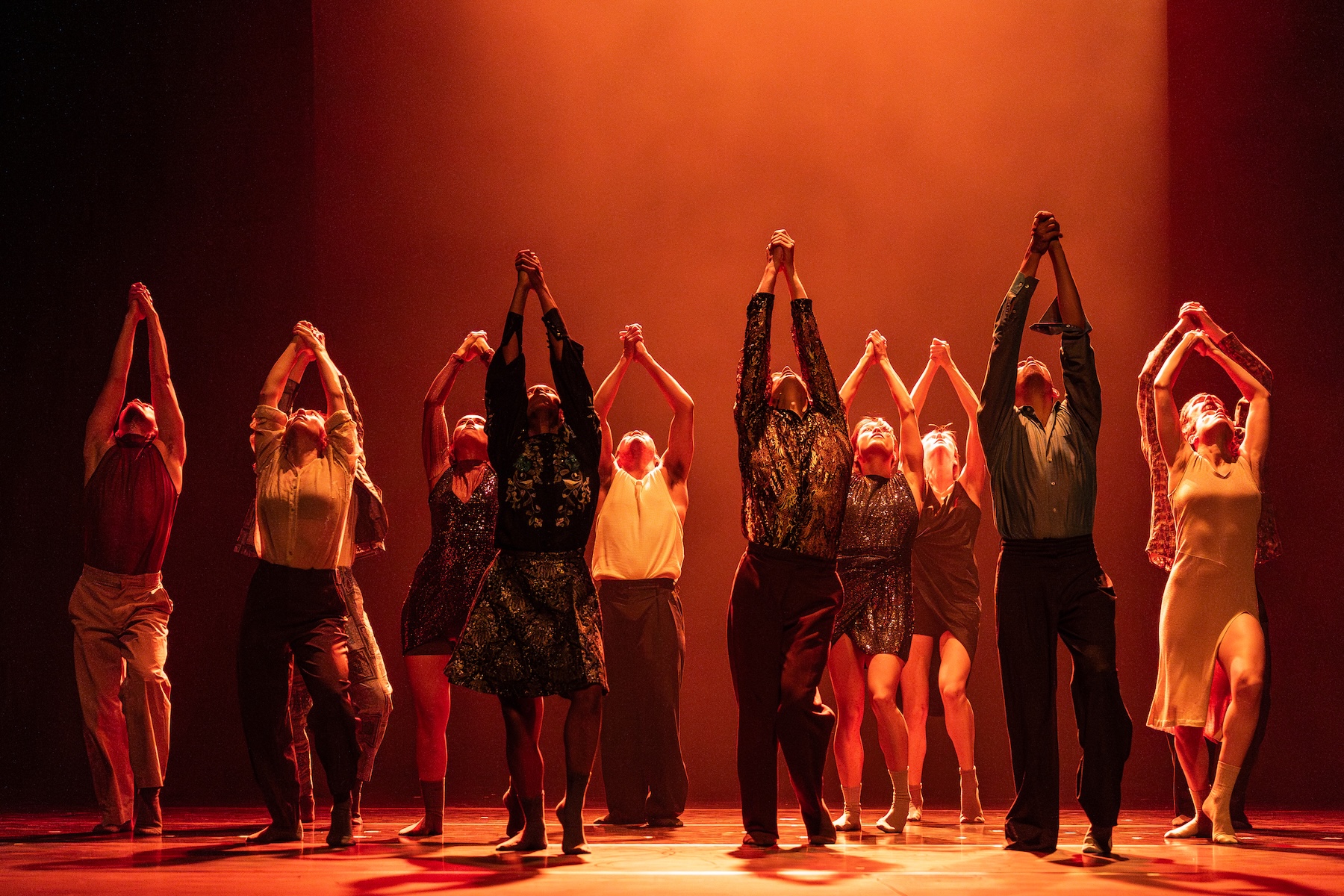
At times the dancers seem tortured, as if compelled by some external force to keep moving against their will; at other times their fluid sensuality suggests desire and pleasure. Sometimes they link arms in a collective joy of folk dancing, or break apart, though still clustered together, like a group of clubbers trancing out in individual styles to the beat of the music. There are glimpses of dancers static-sprinting while ripping off their clothing, piece by piece. The man dressed in the blue patchwork suit at the start of the performance suddenly reappears to face the audience, stark naked, ejected from the curtain he had crawled through earlier. Later, the gradual emergence out of a dream is suggested by dancers, still static-sprinting, but this time putting items of clothing back on, or by the same dancer reappearing, still naked, but this time covering his genitals with his hands as if newly conscious and ashamed of his nudity.
Musical interludes that break up the relentlessness of the driving electronic beats are introduced by a crackly 1950s recording of Molly Drake singing her melancholic song ‘I Remember’, and later by a red-suited three-piece band. When the dancers finally stop to sit and listen to the band playing, their backs turned to the audience, it feels as though the deepest point of the dream state has been reached. They seem hypnotised by the strange, sleepy music, by the lyrics of a song that seem unrelated to any immediately identifiable language. The scene evokes the surreal and unsettling mood of Agent Cooper’s red room dreams in David Lynch’s 1990s television series, Twin Peaks.
Subscribe for updates
At one point during an upbeat and euphoric segment, the lights in the auditorium go up. The dancers call out, inviting the audience to join in and most are willing, rising from their seats to dance with enthusiasm. Whether or not by design, the interruption feels like an unwanted awakening from a deep sleep. The bright lights feel exposing, pulling us away from the dark, dream-like atmosphere of what has gone before. The effectiveness of opening the boundary between audience and performance, between dream and reality in this way, might be open to debate.
Despite this small question mark, Theatre of Dreams sears into the memory alongside other great contemporary dance performances. Breathtakingly beautiful and hypnotic, strange and electrifying, it takes over the senses. “In all our work,” writes Schechter, “we strive to move ourselves, and our audiences, beyond reason.” Through witnessing the performers do just that, the audience is invited to follow suit. Judging by the standing ovation at the performance’s end, Theatre of Dreams more than lives up to Schechter’s manifesto.
Theatre of Dreams played at the Festival Theatre from March 13 – 15 as part of Adelaide Festival

Want to see more stories from InDaily SA in your Google search results?
- Click here to set InDaily SA as a preferred source.
- Tick the box next to "InDaily SA". That's it.
Free to share
This article may be shared online or in print under a Creative Commons licence