Adelaide Festival review: The Chronicles
Stephanie Lake Company elicits all the superlatives once again with an unforgettably compelling, beautifully human work, consummately performed.
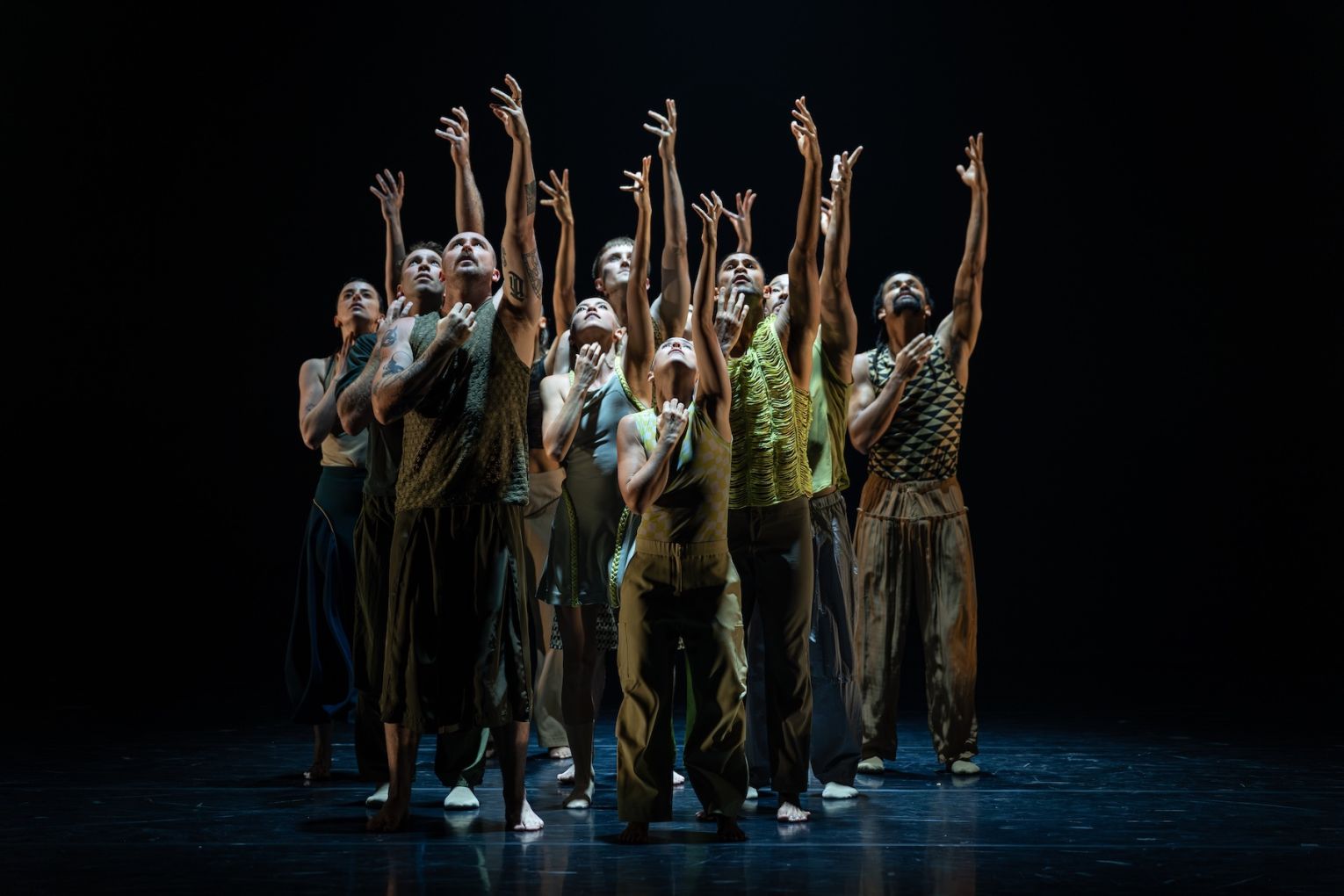
Think of Stephanie Lake and you think monumental. There was the aptly named Colossus with its fifty dancers; Manifesto with its nine drummers and nine dancers exploding in a euphoric celebration of life, and Mass Movement with its thousand dancers. The Chronicles is an equally epic performance, though more in an overarching existential sense, elevating the audience to a big picture view that lies beyond the day-to-day, with its grim newsfeeds and daily grind.
The company’s twelve virtuosic dancers tackle a complex and precise choreography that grabs the audience and carries it along the arc of life from its first embryonic stirrings to its quietening end. The performance begins softly, a sole dancer lying on a darkened stage in a foetal curl, cocooned in amniotic sounds of water. A single strip of light – a gleam of life – glows out from a low-hanging darkened box and draws them out of the shadows as the dancer gradually unfolds, writhing, testing limbs like a newborn colt. Then, like the shock of birth itself, the soft spotlight suddenly jolts into stark brightness as a single, huge pulse of a bass beat reverberates through the bodies in the audience. The other dancers flow onto the stage wearing costumes in earthy shades of green and brown as the soundscape erupts in an urgent, rhythmic beat. And so it begins, a rolling tableau of life packed into 70 minutes, relentless at first with playful, youthful energy.
As always, the excellent dancers make the ambitious choreography seem effortless, at times flowing together, interconnected, at others breaking away to reveal duets between dancers that flow between and around one another, inextricably intertwined. The mesmerising movements of the dancers, the relentless, visceral soundscape by composer Robin Fox and the superb and effective lighting design by Bosco Shaw leaves one breathless until the tableau flows into another, quieter one.
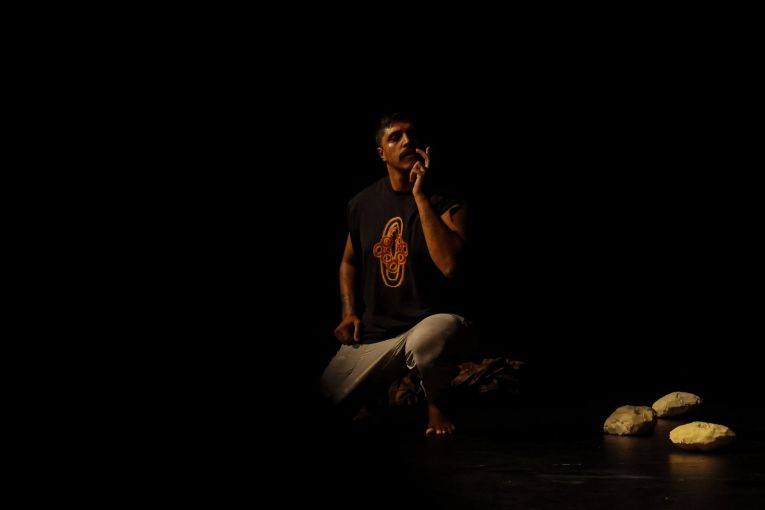

The lighting dims to cast all but the first of the newly formed line of dancers in shadow. Emerging into the light above and behind them are the white-smocked children of Young Adelaide Voices, conducted by Christie Anderson, each child standing amongst an elevated bank of green grass, carrying a soft-glowing lantern. Below them, the line of dancers flows in rotation: the dancer behind the first comes forward to intertwine with them in a brief encounter before the first dancer runs to the back of the line, dissolving into the darkness like a memory. The next dancer comes forward to embrace the one now standing at the front of the line, then the next, and the next, as if in reflection of day-to-day human interactions as months and years flow by.
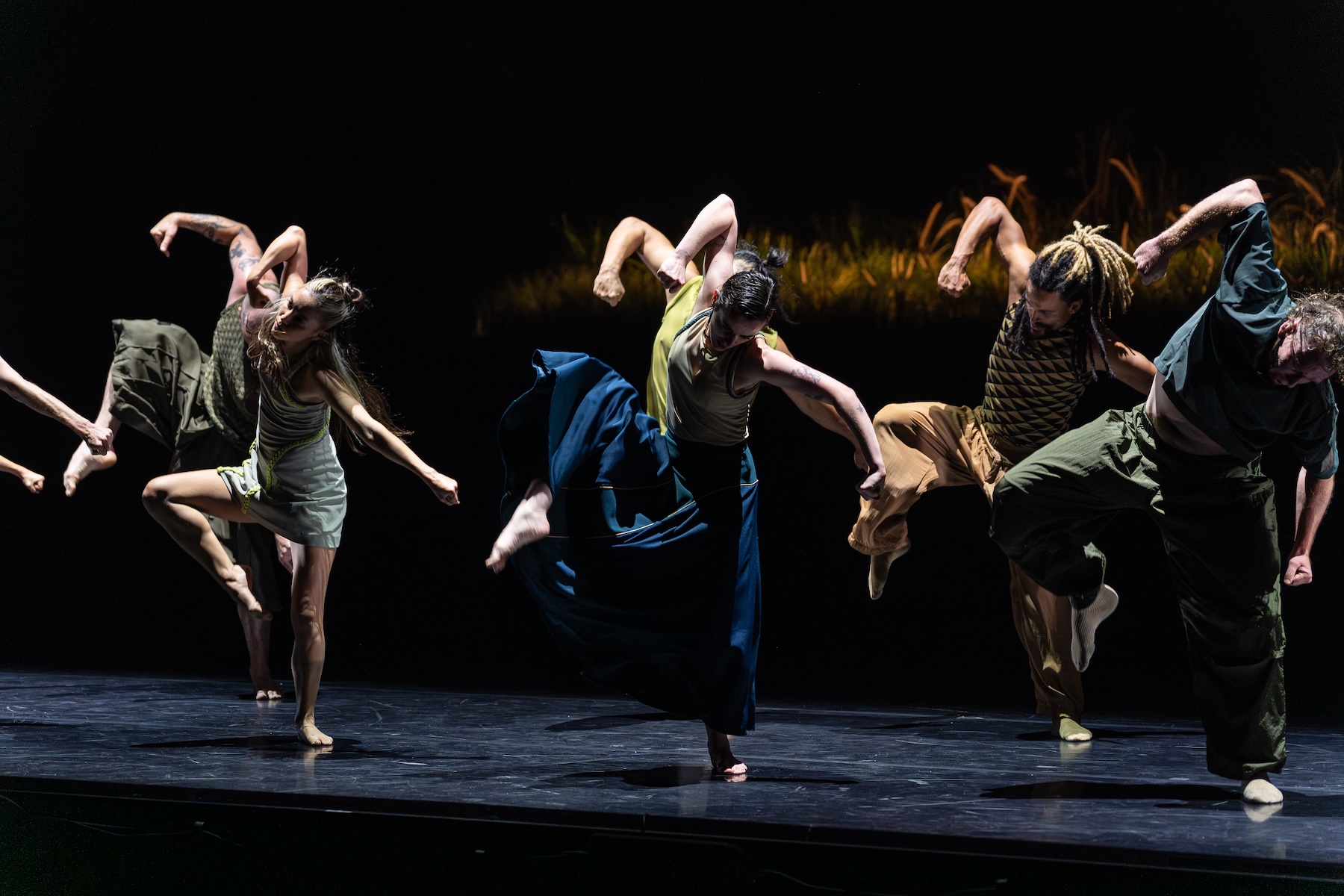
The dancers break away from the line and the children’s choir descends to the stage after which the audience witnesses a sweet moment. There is a pause as if the performance within the performance has ended, dancers and children mingling together, animated, smiling, chatting. It is a deeply humanising moment, removing the feeling of division between performer and observer. As with other works by Stephanie Lake, there is a spirit of interconnectedness that prevails. After this soft interlude there is another later in the piece, after an electrifying surge of frenzied choreography, when the bare-topped dancers wearing pleated, billowing skirts of ashy grey come forward to the front of the stage, lean towards the audience and yell, mouths open in anguish. There is a scattering of nervous laughter from the audience, as if in recognition of those life moments when everything seems too much, and the moment evokes the famous lines of the Dylan Thomas poem Do not go gentle into that good night: ‘Rage, rage against the dying of the light.’
This sense of an ending begins in the final tableau, the dancers re-emerging in minimalistic black, carrying bales of hay. They dance under the golden light of day’s end, unpacking their bales and scattering gleaming whorls of hay into the air and across the stage. There are stilted, slowing movements, one dancer buried under a pile of hay. Behind and above them in the pale light of what seems like a memory, soloist Oliver Mann sings in haunting, wordless tones as he stands behind the forgotten green banks of grass, the golden hay below a reflection of the transformation from spring to autumn. Unaccompanied by backing he transitions into a soulful and slow rendition of Alphaville’s Forever Young as he stands in the diminishing light of winter. The dancers gradually leave the stage until just two remain, one now slowing to a standstill, then folding into the arms of the other who carries them to the front of stage and lays them with tenderness on the floor. In a deeply moving moment of bathos the darkened box with its strip of light from the start of the performance lowers back down onto the motionless dancer, the strip of light slowly fading out to the end, or perhaps, it heralds the start of a new cycle of life.
The Chronicles is an electrifying, extraordinary work from one of Australia’s best choreographers that deserved every moment of the long and enthusiastic standing ovation at the performance’s end.
The Chronicles is playing at the Dunstan Playhouse until 15 March as part of Adelaide Festival

Want to see more stories from InDaily SA in your Google search results?
- Click here to set InDaily SA as a preferred source.
- Tick the box next to "InDaily SA". That's it.
Free to share
This article may be shared online or in print under a Creative Commons licence