Bridging worlds: Jelena Dinić’s poetry of a life lived ‘in-between’
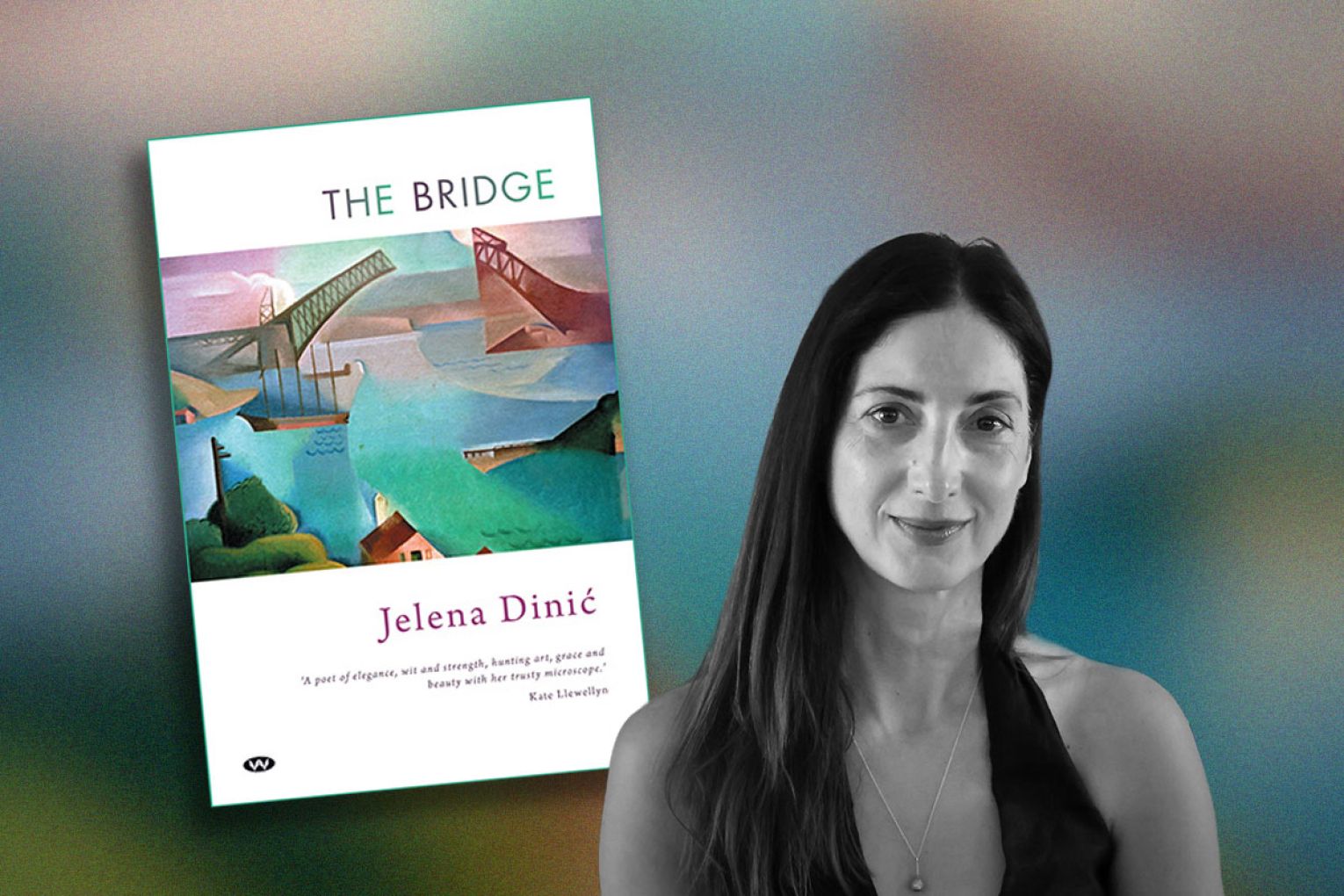
In The Bridge, the new collection of poems from Jelena Dinić, the award-winning Serbian-Australian poet explores how connections are forged between languages and communities.
For poet Jelena Dinić, a poem often arrives as a fleeting moment, a line glimpsed while driving, a thought that must be captured before it disappears.
“Most of the time I’m not completely aware that a poem is coming,” Dinić tells InReview. “I might have a line or an image, or an image attached to a line. I’m not really concerned whether it arrives in Serbian or English – as long as it comes!”
If she manages to catch it, the line goes into her notebook. Sometimes she works on it immediately, curious to see where it might lead. Other times she waits until it reveals the poem it was leading her towards.
This patience – the willingness to allow the poem to emerge at its own pace – lies at the heart of Dinić’s new poetry collection, The Bridge, published by Wakefield Press. Written over several years, these carefully crafted poems move between Serbia and Australia, exploring migration, memory and the slipperiness of finding a sense of belonging.
“The writing process wasn’t easy,” she says. “It took me to some tender places and to some quiet spaces. I’m not used to the quiet – I’m usually on the move. But when I slowed down, interesting things happened.”
Dinić arrived in Australia during the upheaval of the Balkan wars. “I came to Australia with my parents and my sister. I was seventeen and a half when I arrived. I left behind the life I knew and the life I loved – my extended family, close friends and grandparents.”
This experience of migration – leaving one life behind and building another – has shaped her poetry ever since. “I live a life in-between,” she says with a small laugh. “Between cultures, languages, countries, traditions and perspectives.”
You might like

For Dinić, poetry is her way of translating that experience. “Life experiences are our collective treasure,” she says. “We translate them into stories. I draw from my experiences, frame them in new language and trap them in a poem. In the process, I lose something and find something new.”
Over time, she has come to see the two worlds she inhabits not as separate but as intertwined. “These days I see that my two worlds can interlace rather than being apart and I embrace those occasions with delight.”
This sense of interlace is reflected in the title of the collection, The Bridge. “It’s an endless metaphor,” she says. “But one that feels right for these poems since they came from my deep desire to understand connection during uncertain times.”
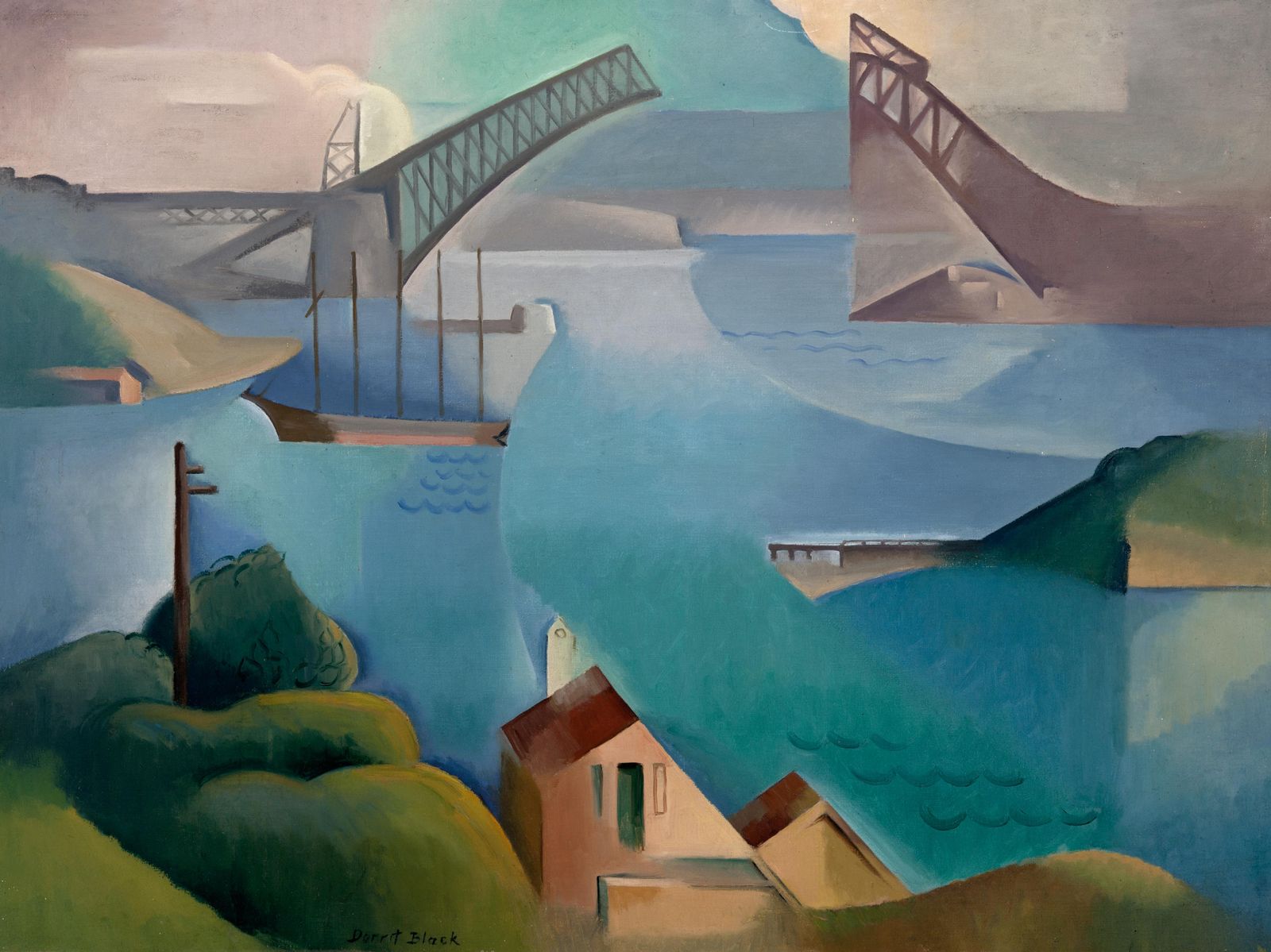
The title was suggested by Australian poet Kate Llewellyn after reading an early version of the manuscript, while poet and novelist Peter Goldsworthy recommended the striking cover image: “The Bridge” 1930 by Dorrit Black, a modernist painting showing the Sydney Harbor Bridge still under construction.
“What I loved about the image was that the two sides don’t yet meet,” Dinić says. “It’s a moment of possible connection – but we don’t know whether they will meet or not.”
One of the distinctive features of Dinić’s poetry is her use of small domestic objects – dresses, buttons, rings – to carry significant emotional weight. “Objects are small and necessary parts of our lives,” she says. “Eastern European poets often write about objects as microcosms that keep us grounded in everyday life.”
For migrants, especially, these objects become powerful symbols of memory. “They are the things we pack in our suitcases as we move,” she explains. “I cannot pack a landscape in a suitcase. I cannot pack my walnut tree and bring it along. But I can pack small treasures. When they are close to me, I feel at home.”
Dinić grew up surrounded by poetry in the former Yugoslavia. “I memorised poetry and recited it,” she recalls. “Not just me – everyone around me. My grandfather recited lines to us as life lessons.”
"I cannot pack a landscape in a suitcase. I cannot pack my walnut tree and bring it along. But I can pack small treasures. When they are close to me, I feel at home."
Subscribe for updates
Among the poets who shaped her sense of what poetry can do were European writers such as Vasko Popa, Anna Akhmatova and Charles Simic. “Growing up in communist Yugoslavia, poets were very careful with language,” she says. “They used linguistic tools to challenge the political landscape.”
These early influences remain visible in her work today – particularly in the distilled clarity of her poems.
“English is not my mother tongue, but that adds to the compression of my lines,” she says. “That has advantages when you aim for the heart of a poem.”
Since arriving in Australia, Dinić has found support within the local literary community. She credits writers including Goldsworthy, Llewellyn and poet Mike Ladd as important influences, along with many contemporary Australian poets whose work continues to shape and inspire her thinking.
Some of the most moving poems in The Bridge arise from visits back to Serbia. One poem ‘Garden of Stone’ grew out of the experience of returning to a village and family home that had changed over time. “As the years went by, people who were waiting for us at the door were no longer there to greet us,” she says. “The loss of loved ones is more than we can grasp.”
Visits to the graveyard became part of the ritual of returning. “[Garden of Stone] was a response to an empty house and the changes around and within me,” she remembers. “I realised I was suddenly an observer rather than a participant.”
Yet even in these moments of grievous loss, connection remains. “Last December my sister and I landed in Belgrade and the person waiting for us was a taxi driver,” she says. “But I quickly find my feet back on the cobblestones. My friends always make sure of it.”
Dinić says her first book, In the Room with the She Wolf, was about “displacement and searching for identity”, while the new collection took her to “a more tender space”.
Ultimately, she believes each reader will bring their own meaning to the poems. “The collection is an offering,” she explains. “It’s open to interpretation.”
Like the unfinished bridge on the cover, these poems extend outward, stretching toward the point of connection – and Dinić hopes readers will meet the poems halfway.
“I would love the book to be a point of connection with the audience,” she says.
“Each reader will choose what to make of it and it will bring something different to each person.”
The Bridge (Wakefield Press) is out now. The book will be launched by Peter Goldsworthy on Tuesday March 17 at Ern Malley Bar, Stepney
Want to see more stories from InDaily SA in your Google search results?
- Click here to set InDaily SA as a preferred source.
- Tick the box next to "InDaily SA". That's it.
Free to share
This article may be shared online or in print under a Creative Commons licence