Book review: This Is What it Feels Like
A collection of short ‘flash fiction’ pieces created by a group of writers over the course of a year defies easy categorisation. The results map the emotional – and occasionally wouldn’t seem out of place rolled up in a fortune cookie.
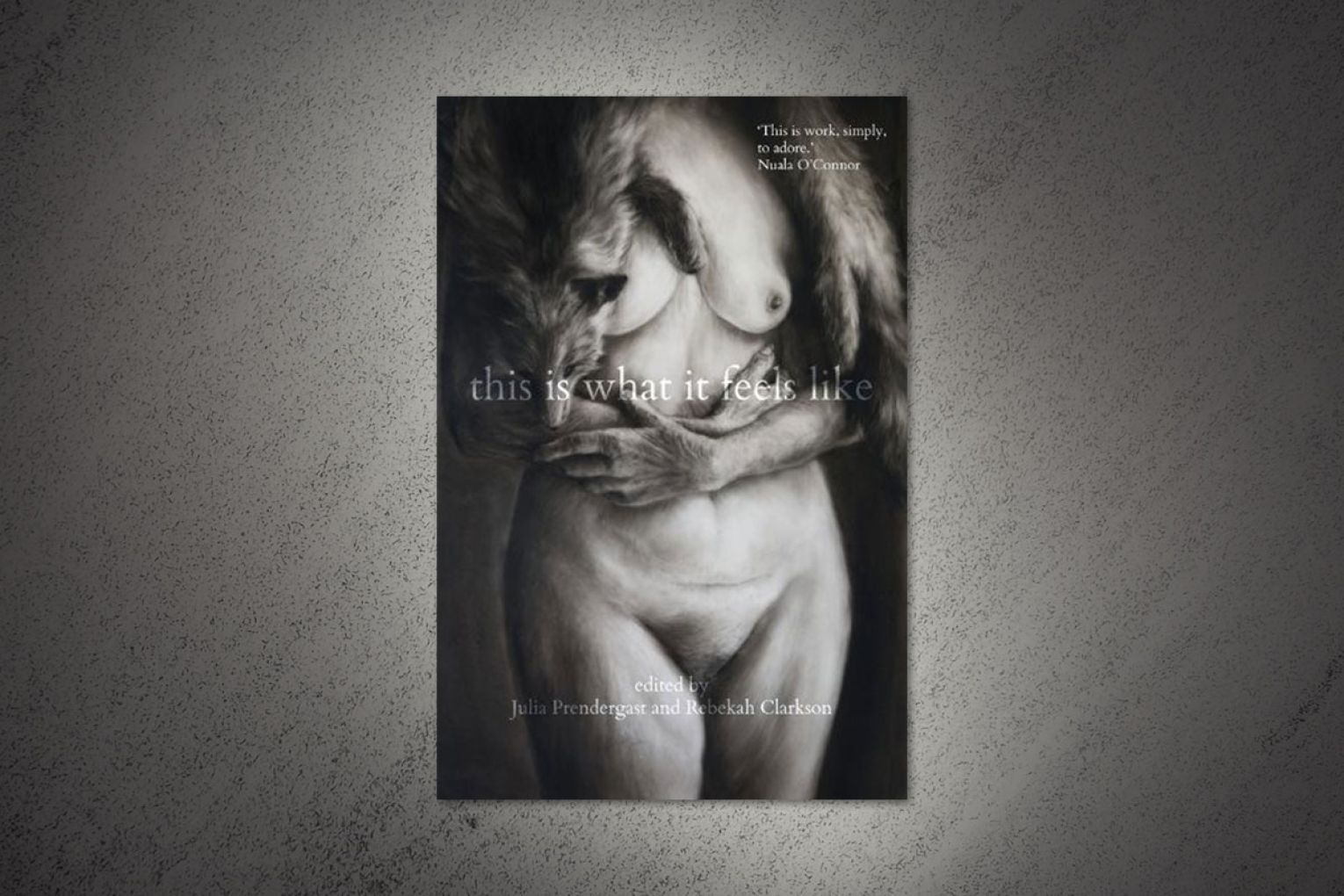
A woman isn’t surprised to see, for the very first time, the son she put up for adoption standing outside her house, and she doesn’t open the door. A daughter visits the aqueduct in Segovia, Spain, where her father was last seen throwing himself in. Meanwhile, Sinead O’Connor saves the day by holding the bus door open for your tattooed mother, and Margaret Atwood is a therapist whose office is the beach. Aphids are contemplated, as is the colour red, as are kind uncles and wind turbines, and while jellyfish and GPs make a splash, foxes and mothers make a bigger one.
This is What it Feels Like is a collection of very short pieces that investigate the human condition. Readers may not feel as though they’re putting in much effort, as reading times very between less than a minute to maybe three for each tiny offering, but the work demands the reader meet the writer halfway by seeing the whole of the picture when only a glimpse is presented. It is work, however – remarkably enjoyable work.
The book is made up of alternating snippets from five writers who came together in Singapore for a conference session titled ‘The Importance of Flash Fiction’. Rebekah Clarkson, Shady Cosgrove, Gay Lynch, Julia Prendergast and Billie Travalini are all successful and edgy writers who think deeply about form and who established a year-long flash fiction writing group, using 300 words as a maximum limit for each piece, and shared visual prompts to use as creative fodder. There was no critiquing in this writing group. In fact, they chose not to distribute their stories to one another. Likewise, there were no deadlines or pressure to even create. ‘Why does this feel revolutionary?’ co-editor Clarkson asks in the Introduction.
One reason might be that the writers are respecting each other’s life obligations and personal commitments, despite living in a world where work and home too often meld together. More remarkably, perhaps, is that they’re respecting each other’s writing practices.
In this varied collection of short-short stories, the pieces speak to each other, themes overlap, characters are familiar – but the movement from one to the other carries with it a sniff of freedom. I think it’s being armed with the group’s operative background that somehow works to inform this, allowing readers to make sense of the flow between each piece. This flow and freedom are made larger by the accompanying white space that connects the diverse blocks of text. Flip through the thin book and it feels, as well as looks, light.
You might like
This is not to imply in any way this is light reading – how can it be when much of the book is grounded in longing? Sometimes the longing is released in an image, such as Lynch’s shockingly breathtaking image of an elderly woman, likely with dementia, pleasuring herself as her daughter secretly watches, drawing her a bath. Other times the longing culminates in a decision to leave a relationship, or stay in a relationship, or be completely indecisive about where to go, as depicted in Travalini’s concise, paragraph-length prose. Longing in this book is imagining other selves and possibilities, and being haunted by those selves and possibilities. ‘I wanted to hurt a ghost,’ Cosgrove writes, and indeed, she’s landed herself in the right place.
‘How is it we can leave behind some of the lives we might have lived, but not others?’ Prendergast similarly asks. Aside from being a major motif for the entire collection, it’s actually half of a two-sentence piece that raises the question of ambiguity in definition of form. I can’t be sure if Prendergast’s work titled ‘Why’ is fiction or not, which skews one of the two core foundations of flash fiction (‘flash’ clearly being the other in the form’s brevity). Does it matter that the book hosts many of these acute musings that lack what we typically know to be plot, but would make excellent proverbs in a fortune cookie?
Much of flash fiction is interchangeable with prose poetry, both forms of writing embracing prose with impressive succinctness while delivering poetic language. But what about when the pieces are lineated like traditional verse, where there are line breaks? Both Lynch and Travalini contribute a few poems as such, suggesting the book doesn’t quite know what to be. But then the freedom I spoke of earlier comes back into play, and nothing says freedom like heeding a call to experimentation of artistic expression.
Clarkson’s contributions, though, are of the purist sort, formally. They are more or less a single-page snapshot complete with plot, and what makes them so successful is their open-ended denouement, where readers are left with an emotion rather than a wrapped-up conclusion. This doesn’t surprise, as she’s the writer who proposed the concept of a flash fiction group to the others in the first place. Having not seen any of the pieces until the year had come to an end, then giving herself and Prendergast the task of compiling them into a book, I wonder if she was amazed. My guess is yes, intensely and pleasingly.
This is What it Feels Like (Recent Work Press) edited by Julia Prendergast and Rebekah Clarkson, is out now
Want to see more stories from InDaily SA in your Google search results?
- Click here to set InDaily SA as a preferred source.
- Tick the box next to "InDaily SA". That's it.
Free to share
This article may be shared online or in print under a Creative Commons licence