‘Democratic and mercurial’: Poets celebrate 50 years on Friendly Street
As Adelaide-based poetry collective Friendly Street Poets marks half a century since its first meeting, committee member and anthology co-editor Ben Adams highlights the group’s history and anniversary celebrations.
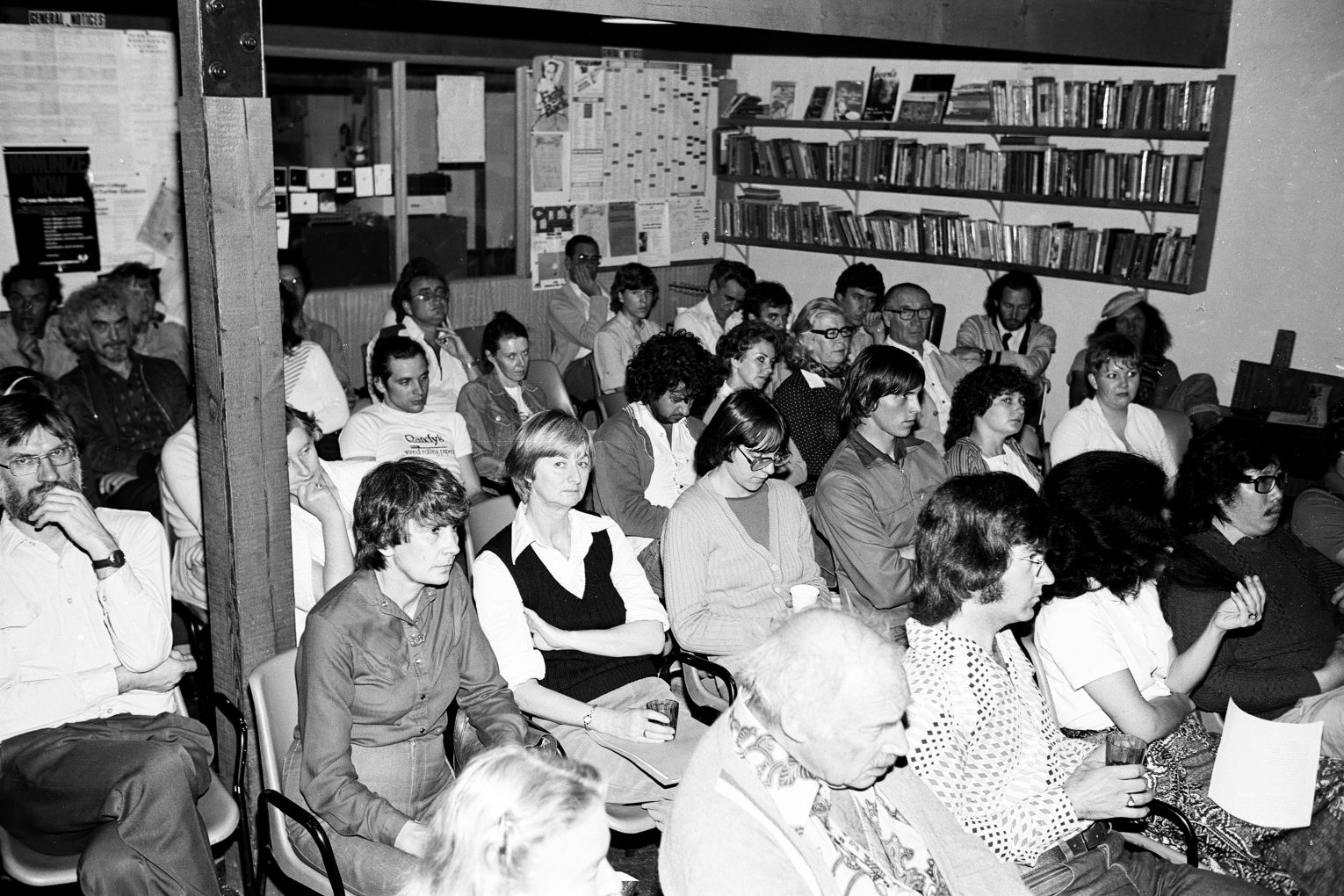
Friendly Street Poets is often noted as the oldest continuing open-reading poetry collective in the southern hemisphere. It has certainly been an important part of Adelaide’s poetry scene since its founding in 1975. For half a century now, Friendly Street has offered poets a place to read and converse, opportunities for publication and, perhaps most importantly, exposure to other voices and forms of poetic expression, so vital for the development of one’s own creative practice.
The first meeting occurred on November 1 1975 – the day of Gough Whitlam’s infamous dismissal as Prime Minister. That coincidentally synchronous beginning proved significant: a ready-made symbolic reflection of what Rory Harris called Friendly Street’s ‘democratic and mercurial’ spirit. Friendly Street’s membership and readers have been far from politically homogeneous over its long history. However, they remain unified – at least in the ideal – through an institutional openness toward art and the democratic ethos, which the socially reformist Whitlam government’s short time in office (and subsequent demise) are often seen to represent in by-turns inspiring and tragic ways for the Australian cultural imaginary.
Early on, Friendly Street became a regular publisher with its first Reader appearing in 1977. Since then, these annual anthologies have compiled the best poems read at monthly meetings each previous year. I have felt privileged to be one of two co-editors (alongside Val Braendler) for the forthcoming 50th anthology, with the process providing an opportunity to revisit resonant and recurring themes from the varied work presented in 2025.
In its 50th year, Friendly Street celebrated with an array of new publications, projects, and milestone events. The latest in Friendly Street’s long running series of New and Single Poet publications were launched in October. New Poets 26 features three chapbook suites from John Atkinson, Kylie Dinning and Matt Gaughwin (as selected by Avalanche) while Cary Hamlyn’s The Heart is a Sinkhole was chosen as the 2025 Single Poet collection by judge Kathryn Pentacost. My own first poetry collection was selected for the same opportunity by David Adès in 2019.
You might like

November’s anniversary week featured one-off gatherings and regular gigs bookending that big day, marking not only Friendly Street’s beginning but also – to paraphrase The Whitlams – Armistice Day, a bushranger’s slaughter, and Gough’s betrayal.
A ‘Poetry Love In’, recorded for posterity, was held on Friday November 7 with David Cookson curating an all-star line-up of Friendly Street alumni, reading favourite poems from the first 30 anthologies and spotlighting their author’s biographical significance. Encouraging attendees to wear their best – retro or original – ‘60s and ‘70s counter-cultural fashion, the ‘Love In’ helped showcase what substantive poetic contributions have appeared on Friendly Street’s pages over many decades.
A range of regional gigs were also run under the Friendly Street umbrella, organised by convenor Nigel Ford. On Saturday November 8 the Goolwa Poetry Cup was revived after a six-year hiatus, held in nearby Port Elliot with local and Adelaide-based poets competing. This complemented Sunday’s Poetry On The Fleurieu open-mic, a monthly occasion in Victor Harbor, which provides a coastal opportunity for resident Friendly Street members (or city folk out for a country drive) to have their poems considered for commendation or inclusion in the annual anthology.
On November 11 itself – a Tuesday, fortuitously, the same day on which that first and subsequent meetings were held for many years – a celebration dinner saw original members reunited and mixing with the current crowd. Life memberships were awarded or reaffirmed for various vital Friendly Street contributors, including Ian Reid, Mike Ladd, Peter Goldsworthy, Andrew Taylor, Jeri Kroll, Ian Gibbins, Khail Jureidini, Steve Evans, Nigel Dey, and others mentioned elsewhere here in various capacities. The following night, Adelaide expatriate and Friendly Street co-founder Richard Tipping launched his newest collection Headlines to the Heart at Ern Malley literary bar.
Subscribe for updates
Friendly Street has always had a strong connection to schools and poetry’s educational imperative, not least through an ongoing collaboration with the South Australian English teachers’ Association (SAETA) which, as Susan O’Brien notes, “culminates each November in the Spring Poetry Festival, where winning students perform their poems to a large audience of parents, teachers and other students.” This commitment to fostering craft also continues with The Poetry Laboratory, a series of sessions hosted by Bruce Greenhalgh, which feature guest presentations on the life, work and significance of particular poets, or poetic themes and approaches.
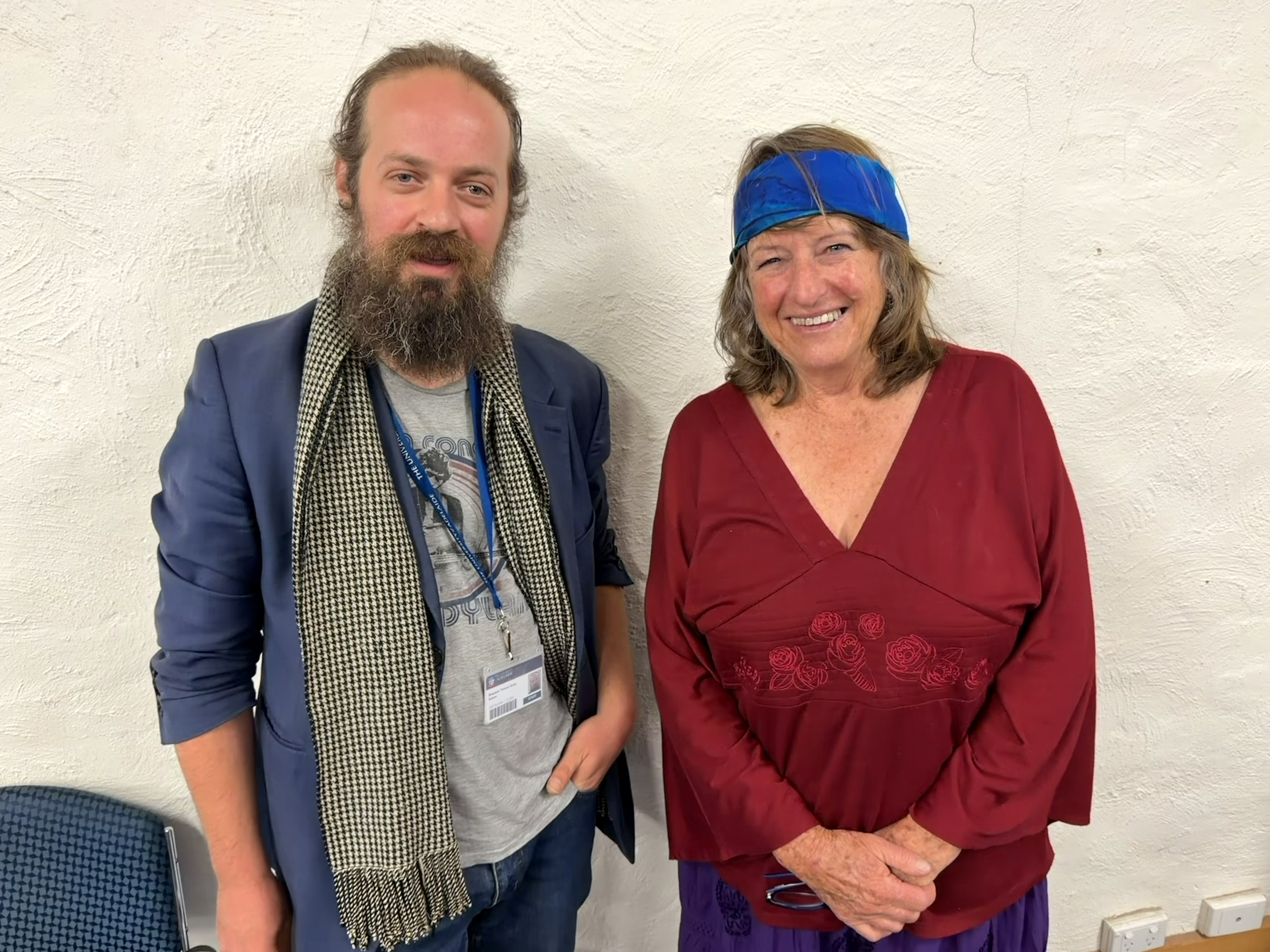
Finally, and perhaps foremost among these anniversary efforts was the conceptualisation and compilation of Chronicle: The First Fifty Years of Friendly Street, edited by Erica Jolly and Jude Aquilina with financial support from CreateSA. Calling for past and present members to recount memories of Friendly Street’s role in their lives, Chronicle brings together dozens of poetic and prose reflections alongside excerpts from anthology introductions, launch speeches and other archival sources, to provide an updated record of what Friendly Street’s communal endeavour has meant in social, artistic, historical and most significantly human terms for those involved.
A second, expanded edition of Chronicle was to have been showcased at Adelaide Writers’ Week 2026, in a scheduled session discussing Fifty Years of Friendly Street. Along with most other participants, however, Friendly Street decided to withdraw in protest, against the then-board’s unjustified disinvitation of Palestinian Australian writer and academic Randa Abdel-Fattah from its program. Even apart from the specific issues of epistemic power and political justice at stake, the group’s guiding principle of defending free expression did not allow us to do otherwise.
Friendly Street continues into its second half century in 2026, with regular open mic meetings held on the first Friday of every month at the Box Factory. All are welcome, whether to read or simply listen. The Poetry Laboratory has also returned, where I’ll be presenting the February session on polarising cult writer Charles Bukowski.
With its long-established presence, material resources and institutional resilience, I’m confident that Friendly Street can and will continue to increase engagement with a diversity of poetic approaches, artistic groups and social demographics, helping to connect and foster a wider Adelaide poetry scene which has, in recent years, experienced a particularly fruitful expansion of interest and activity.
Friendly Street Poets will celebrate Chronicle: The First Fifty Years of Friendly Street with a panel session on Monday March 2 at 10am as part of Constellations: Not Writers’ Week
Want to see more stories from InDaily SA in your Google search results?
- Click here to set InDaily SA as a preferred source.
- Tick the box next to "InDaily SA". That's it.
Free to share
This article may be shared online or in print under a Creative Commons licence