Move over, chocolate – carob is cool
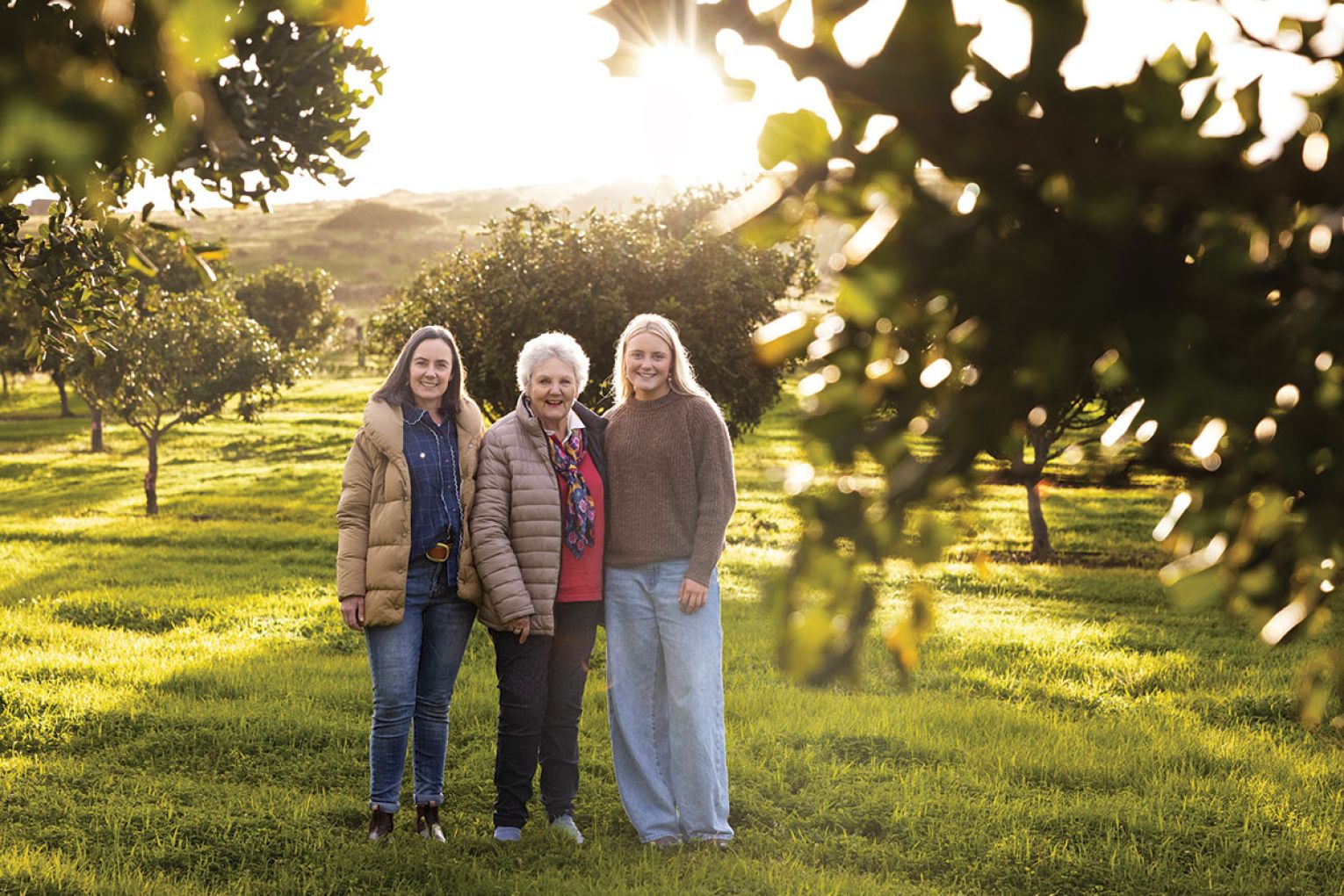
Meet the family behind The Carob Kitchen, delivering popular Banjo Bears and other nutritious treats from a Port Elliot farm.
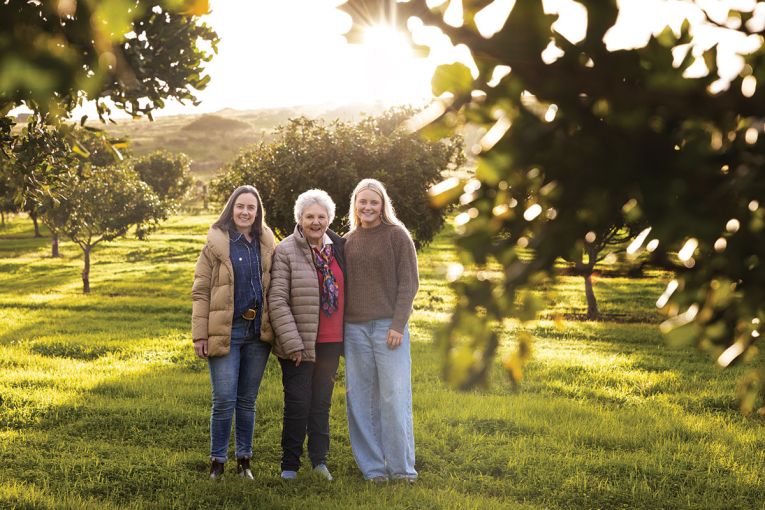
It’s difficult to tell who gets the biggest kick out of racing around the 3500 carob trees on Carol and David Solomon’s Currency Creek property; the couple who planted them or their beloved farm dogs.
The pooches practically levitate in excitement as they dart between the towering evergreens, followed closely by two Kubota RTVs.
One is driven by their 18-year-old granddaughter Claudia ‘Claude’ Richards who laughs as Carol and David (aka ‘Gargy and Crikey’) whoop with delight. Carol holding tightly onto their little house dog, Bear.
Nearly three decades have passed since they planted the first of their seven varieties and they’re as excited about the crop as the day they popped the seeds and their carob dreams in the dirt.
They pull up at the top of a hill and look down at their picturesque patch of land.
Row after row of carob trees stand to attention like leafy green lollipops, framed by hay bale-dotted paddocks that stretch right to the sea.
The azure coastline stretches from Encounter Bay’s bluff to Goolwa. “We’ve been here for 30 years,” Carol says. “We bought it in 1996, back when it was farming land and just wanted to plant a few carob trees. We didn’t ever have any intention of this sort of thing happening.”
By that, Carol means the oldest organic carob operation in Australia, and fully-fledged organic superfood company, The Carob Kitchen.
The hardy, fast-growing species originates in the Middle East and Mediterranean, which means it’s happy on South Australia’s Fleurieu Peninsula, thanks to the Mediterranean climate, natural rainfall, summer sun and sea breezes.
Chances are you’ve tasted The Carob Kitchen’s range of vegan and gluten-free carob bars and cute-as-a-button Banjo Bears. The snacks are distributed across the globe including New Zealand, Japan, United Kingdom and the United States.
You might like
Not bad for a brand started at the local Willunga Farmers Market and Adelaide Farmers’ Market in 2011.
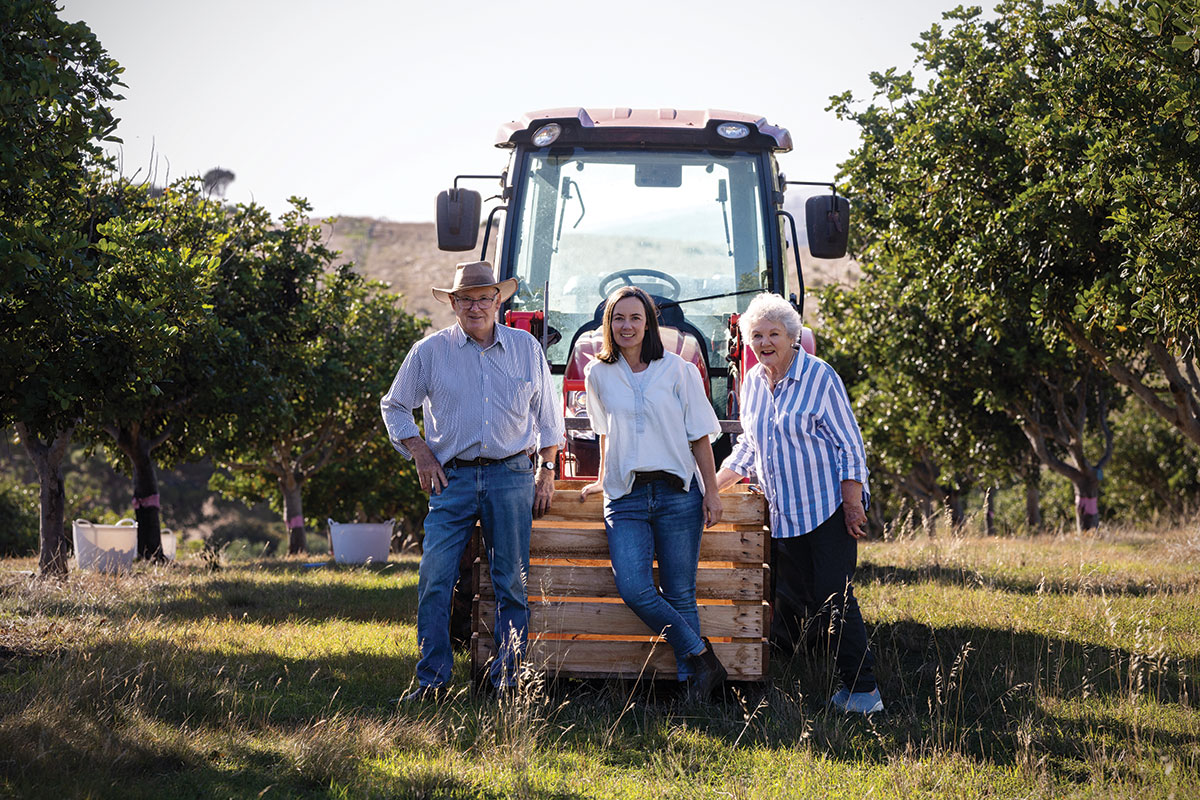
Now in their 80s, Carol and David are proud to hand the carob baton to the next generations.
It’s in safe hands. Their daughter Sophie spent years applying love to the recipes and branding. Now Claudia, after working on stations across Australia, is thrilled by life on the land, the wind in her long blonde hair, and a growing family legacy to uphold.
“For as long as I’ve been alive, the farm has been a part of my life,” she says. “I’ve only ever known Mum to be working with carob, the same with Gargs and Crikes.”
Her childhood memories include shearers converging on the farm to shear sheep, and mountains of carob beans in the shed.
“I remember climbing them with my cousins,” Claudia says. “Crikey opened the door and yelled at us to get off. We never climbed the carob again.
“Mum worked in graphic design and wine and other things but this has always been her passion. It’s special to have seen her and my grandparents work so hard. Now I’m excited to come here every day.”
Claudia’s parents are never far away, their laughter dancing on the crisp country air.
It’s hard work but the trio wouldn’t have it any other way.
“Our annual harvest varies, with an aim to increase to 80 tonnes per annum,” Sophie says. “The crop is mechanically harvested, and hand harvested with the tougher slow ripening varieties. Claude loves hard work and we’ve had all the cousins working here at some point helping with roasting, picking and harvesting.”
Sophie’s husband, Bryn Richards is also involved. Bryn not only brings serious horticultural and mechanical nous to the table (helpful when navigating their roasting equipment), he is also a winemaker. The New Zealand-born, English-raised chap runs Grant Nash Wines and his laser-sharp senses make for great insight into carob’s aromas and flavours.
“The raw carob smells fruity like dates, sultanas and molasses,” he says. “Roasting brings out caramel, mocha, malty, and even slight coffee notes. The syrup is super complex. Molasses, soy, dates even a hint of Vegemite. It’s sweet with a real umami character. I use it heaps in cooking.”
Later, as Bryn serves his slow-cooked Moroccan-style chicken made with carob syrup, it’s easy to see why. Carob syrup and balsamic is a revelation on salad and dinner wraps up with Carol’s flourless carob fudge cake topped with a medley of fresh berries. Her carob torte is also legendary (the recipes can be found on The Carob Kitchen website).
Subscribe for updates
“We also tell people to put carob syrup on their porridge or have warm spiced carob milk before bed,” David says. “There’s no caffeine in it so you can eat the carob bars at night too.”
Bringing carob to a mainstream audience hasn’t been easy.
“I started playing around with carob muesli, syrup, powder and kibble,” Sophie says. “Followed by a roasted powder and sold them at the markets. The ingredients were great but it was a hard sell because back then, carob was seen as ‘daggy chocolate’.
“That’s when I started investigating, making things like carob buttons. I didn’t want to use palm oil or added sugar so I sent the carob to a chocolatier and asked them to use cocoa butter.”
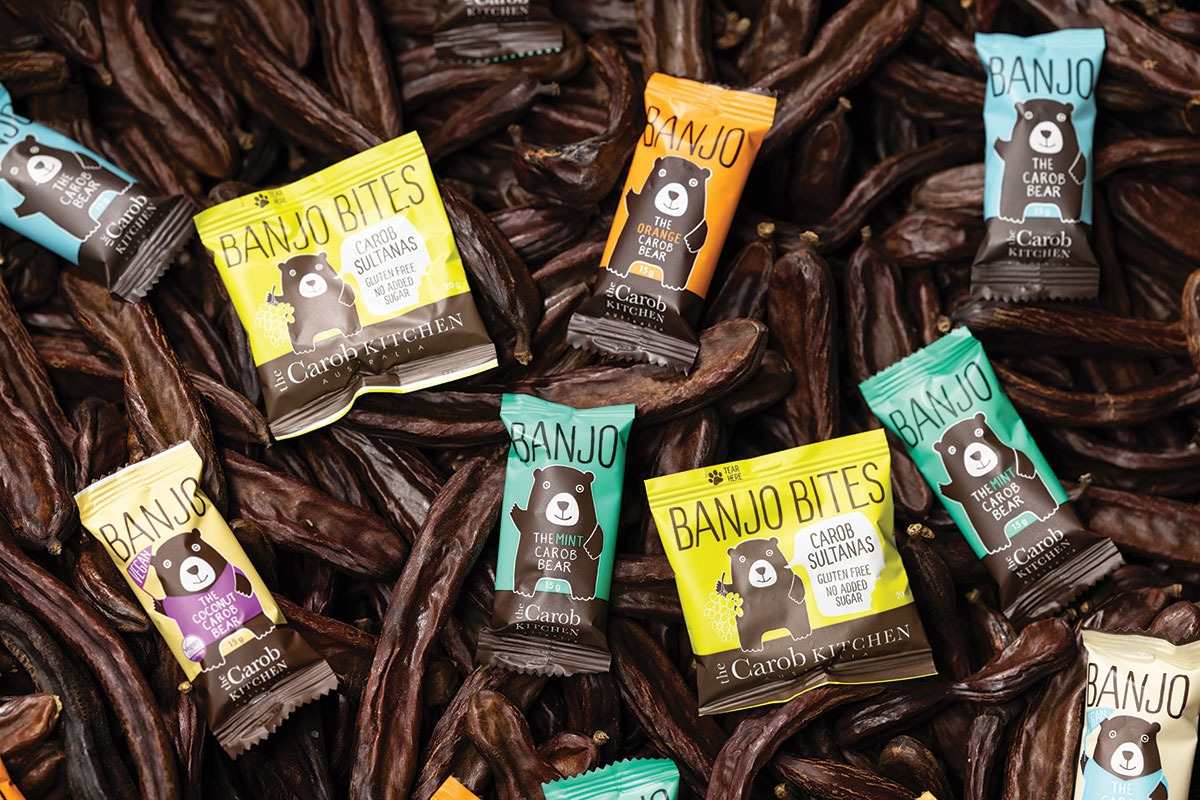
The Banjo Bear was introduced to the range in 2013 and the rest is history.
“The same Melbourne-based chocolatier that developed it still works with us today. We’re very close,” Sophie says.
Why a bear-shaped bar? That was somewhat of a serendipitous accident.
“We basically used what moulds the chocolatier had,” Sophie says. “It was a bear-shaped mould from the 1970s called Billy. We thought, ‘He’ll do, he’s cute’. I worked with a talented designer called Aaron Woods who I still work with today. He drew the bear design and connected him with a new Australian name.”
They also designed the ‘frogmouth’ dispensers seen on retail counters.
Through love and attention, carob is finally cool.
Easter eggs are now part of the range and Banjo Bears come as orange, mint and coconut versions. Carob-coated sultanas and almonds are also a hit.
These days, the health benefits are well documented and undeniable.
“Our carob range has over seven times the amount of fibre than most chocolate bars, not to mention it is naturally sweet with no added sugar and is also a rich source of calcium,” Sophie says.
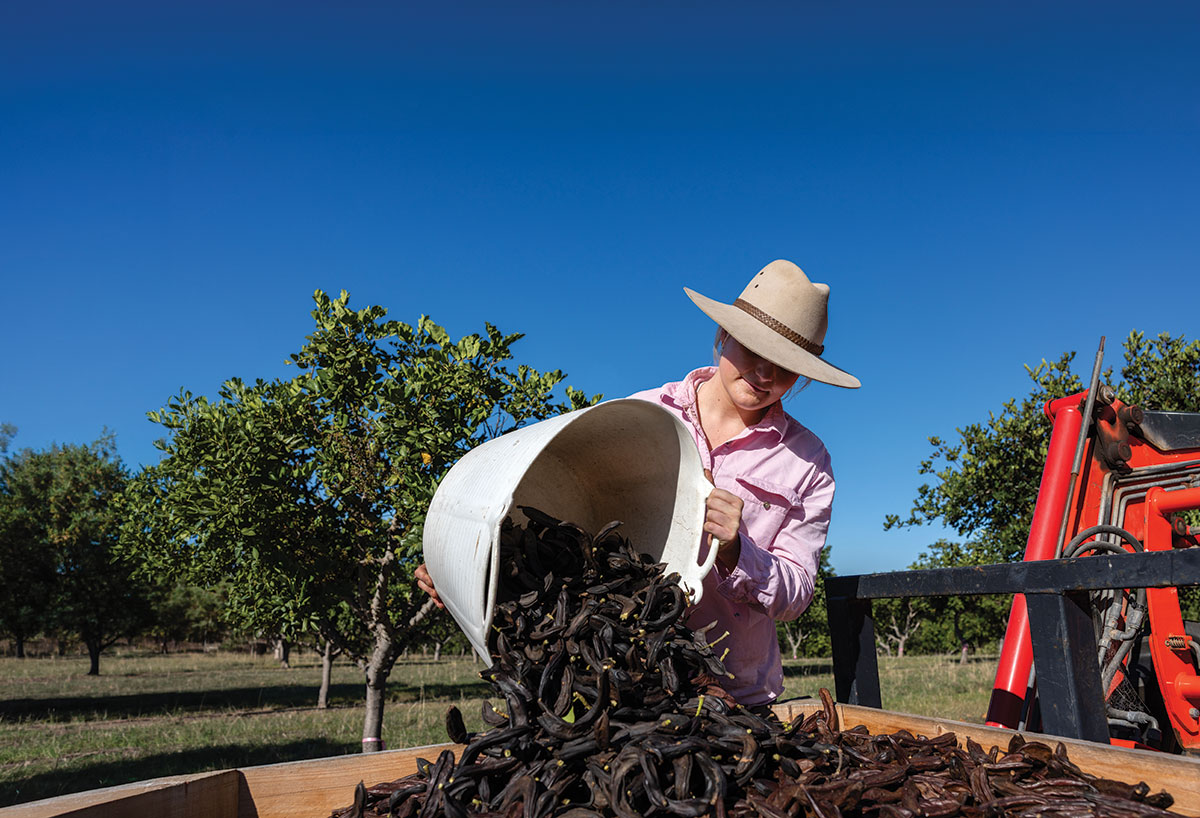
The certified organic carob is 100 per cent natural and preservative free with no artificial colours or flavours. The pure plant nutrition is high in fibre, a good source of natural protein, gluten free, preservative free, rich in calcium, and contains vitamins A, B, B2, B3 and D.
“They are rich in antioxidants; 17 times more than blueberries,” Sophie says.
It’s no wonder Carol and David still have such a spring in
their step.
“There’s enormous job satisfaction in farming like this,” Carol says. “But you have to be a certain sort of person. You can’t mind getting dirty. I love it.”
This article first appeared in the August issue of SALIFE.
Want to see more stories from InDaily SA in your Google search results?
- Click here to set InDaily SA as a preferred source.
- Tick the box next to "InDaily SA". That's it.