This weekend, a living piece of South Australia’s past opens to the public for the first time in its 175-year history.
Surrounded by vineyards and sheep paddocks in the Eden Valley high country, the 1851 Corryton Park homestead is a sight to behold. A marvel of construction for the era, its crenelated tower and imposing stone walls invoke thoughts of bygone times when horse and cart were the only means of transport.
If the homestead’s 175-year-old walls could talk, they would speak of pastoralist owners, farm hands, winemakers, blacksmiths and servants. Yet, while the grand home is a heritage treasure, so too is the garden – a living history.
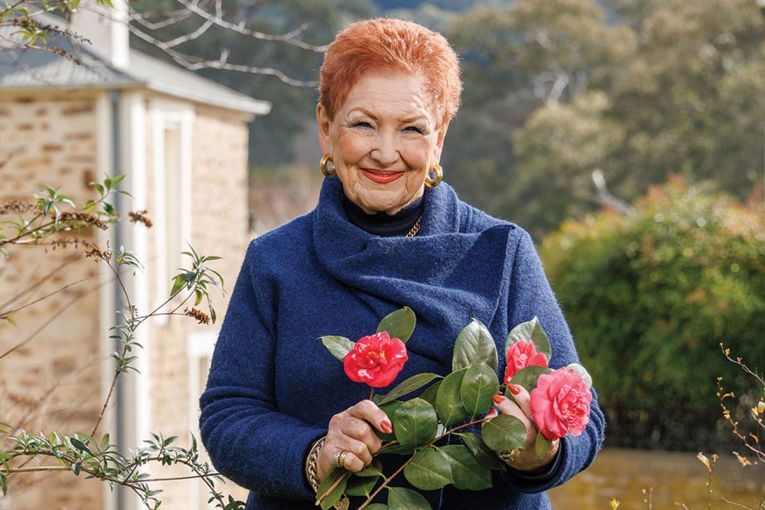
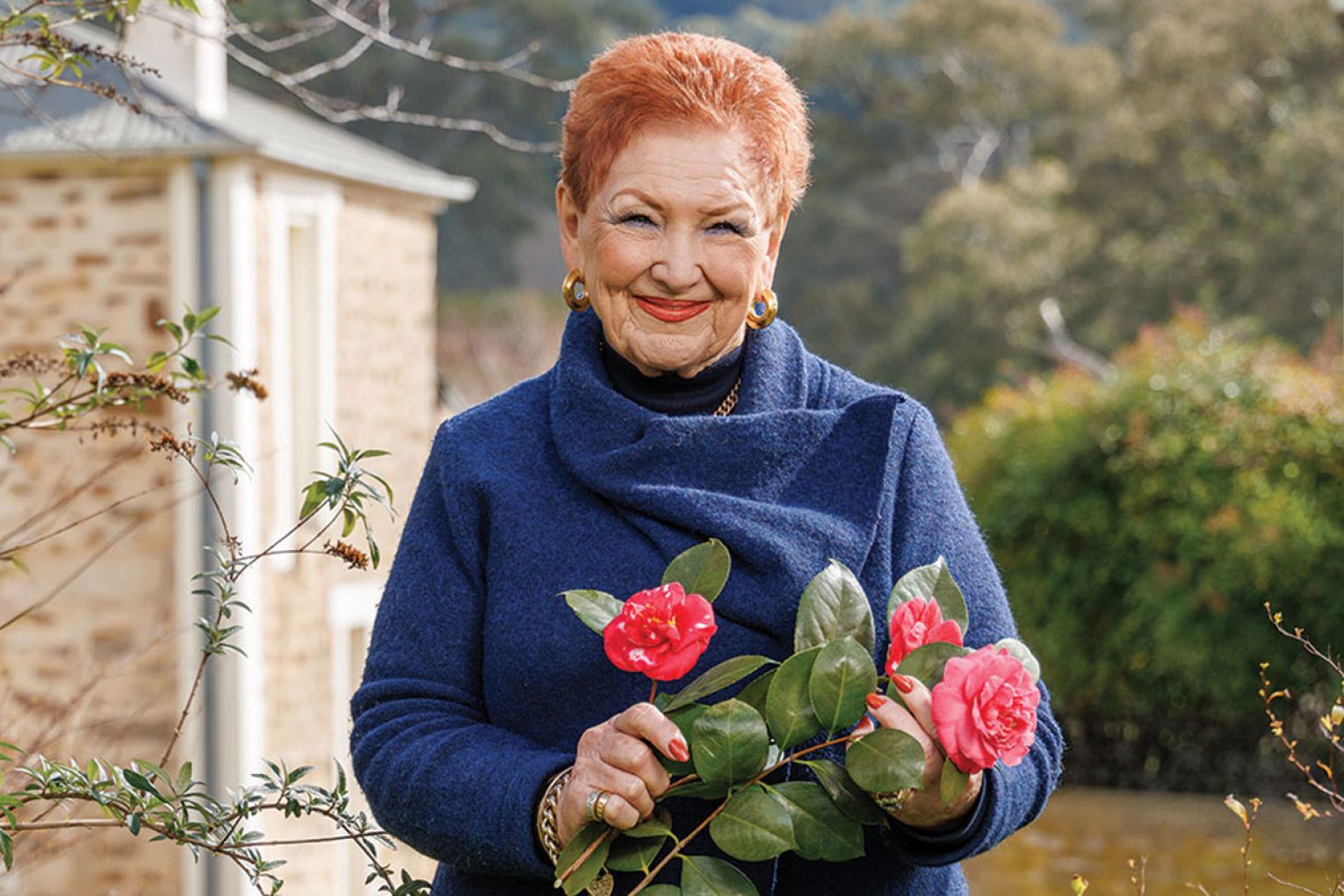
When Helen Burge is among the garden, she often finds herself pausing to imagine what life was like for people who stood in the very same spot more than a century ago.
“It’s a secret garden,” Helen says. “It’s never been open to the public and relatively few people know that it exists. And yet, it’s a jewel of this region.”
The property was established by English colonialists Eliza and David Randall who went to great lengths to build the grand homestead, the hub of their farming enterprise on 1000 acres. Eliza’s journals recount the shock of the remoteness, as well as the challenges and accidents of colonial times.
On one occasion, a carriage driven by two women servants disconnected from the eight bullocks pulling it up the hillside. The women threw themselves from the cart, full of precious cargo destined for the homestead, as it careered down the hill. The cart: “reached the bottom, where it turned completely over, smashing everything it contained, and it remained there a perfectly useless mess,” Eliza writes in her diary.
Today, the homestead and gardens have never looked better, thanks to the custodianship of Helen and Grant Burge who purchased Corryton Park in 1999 and became the property’s fourth owners.
Helen and Grant have invested great resources into refurbishing the homestead which has become the spiritual home for the family’s wine label, Corryton Burge. The brand is spearheaded by their children Amelia, Toby and Trent.
Resurrecting the garden has been Helen’s labour of love. “It looks dead at the moment,” Helen laments of wintertime. “But come spring, this perennial garden will erupt to life.”
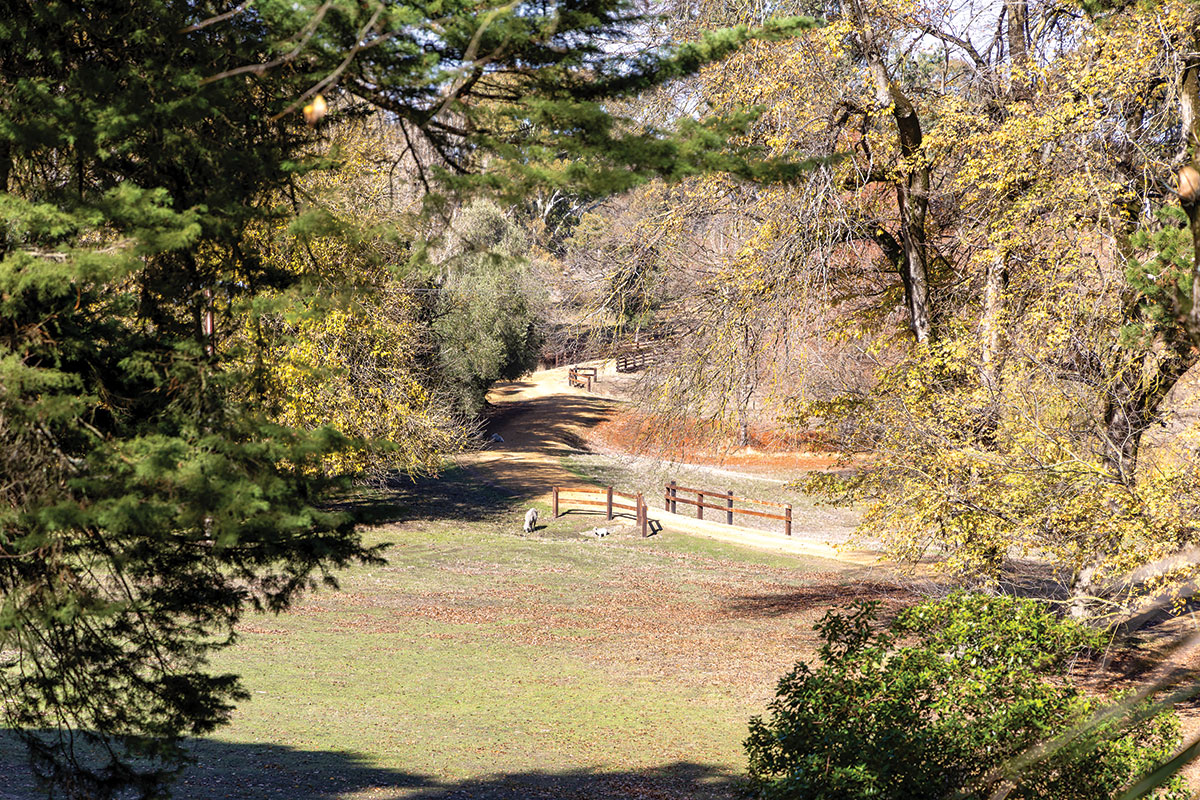
Although Helen describes it as “just a farm garden”, there are majestic qualities from the elevated views of the vineyards, creek and gum trees, to the grand historic buildings. Then there is the history buried within the soil.
“You have to be very deliberate about what you’re planting in a property like this,” Helen says. “Our goal is to maintain the authenticity of the house and garden, while adding a bit of flair to it.”
The sprawling woodland of golden elms is more than a century old, and the large olive grove is believed to have been planted more than 150 years ago. The camellias, with flowers as big as dinner plates, are also ancient.
“The hydrangeas and rhododendrons are very old varieties. The hydrangeas are just magnificent when they’re out; goodness knows how long they’ve been growing here for,” Helen says.
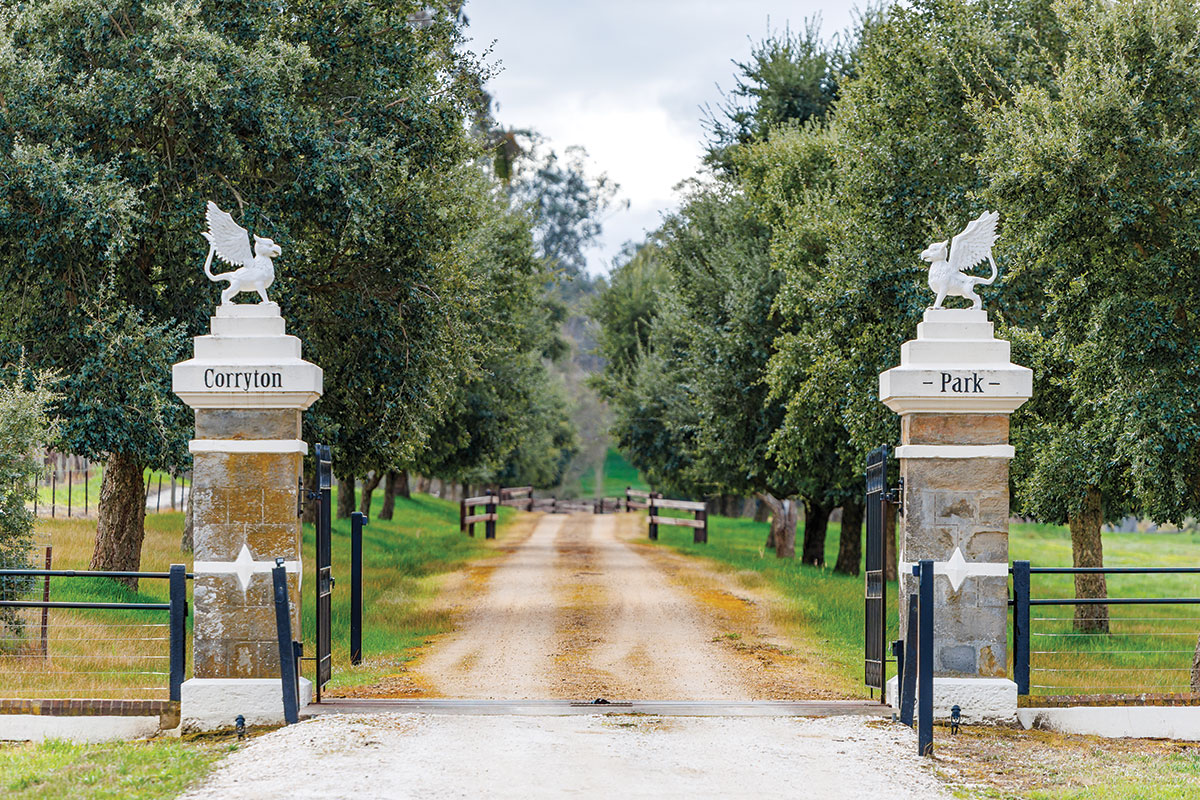
The Burges have completed major upgrades to the property and the garden, beginning with the majestic front gates guarded by two stone griffins. Then, the driveway leads for hundreds of metres between rows of cork oaks, through verdant fields where kangaroos and even deer can be spotted.
At the homestead, visitors are greeted with a formal fountain garden surrounded by standard iceberg roses and English box hedging. This area was created for their daughter Amelia’s wedding. From this landing, there is a glimpse of the lawned front garden through a majestic stone garden arch.
Subscribe for updates
A cottage garden is situated to the rear of the home. Goats and sheep would previously sneak into this patch and eat Helen’s flowers – a problem that has been solved with cattle grids.
Other colonial buildings include a blacksmith’s shop with fireplace and bellows, a former coach house-turned accommodation, and a large horse stable. These outbuildings and driveways were last year transformed into the film set of new Netflix period drama series, My Brilliant Career, as Corryton Park was turned into a convincing turn-of-the-century township.
“I have a black and white photograph showing that they had enormous date palms out the back at some time,” Helen says. “I’ve got no idea who planted them or when, or when they were removed.”
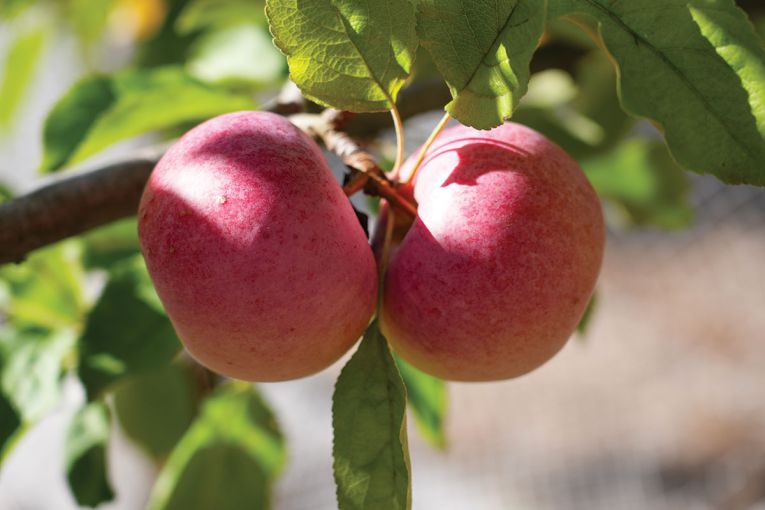
Further to the rear of the homestead is an orchard with fig trees, apples, pears, chestnuts, mulberry and more. “There’s one fruit tree out there which has a yellow fruit, and we don’t know what it is,” Helen says.
Helen is known for her love of roses. At her own home garden, she has amassed one of the region’s largest collections and won numerous trophies in horticultural shows.
“I love roses more than probably anything, to be perfectly honest,” she laughs. “There’s lots of places in the world that don’t have the climate for roses but thankfully, we do.”
At Corryton Park, work is underway to create a formal heritage rose garden, with Helen’s great collection of heritage varieties. “We’ve looked after them over the years but now we are re-planting them into a formal rose garden,” Helen says.
“Some of them are very old varieties. Barossa Dream, for example, is discontinued.”
In November, for the first time, Corryton Park will open to the public as part of Open Gardens South Australia. “We’re excited to share the history of what’s here. That’s what gardens are for aren’t they – sharing,” Helen says.
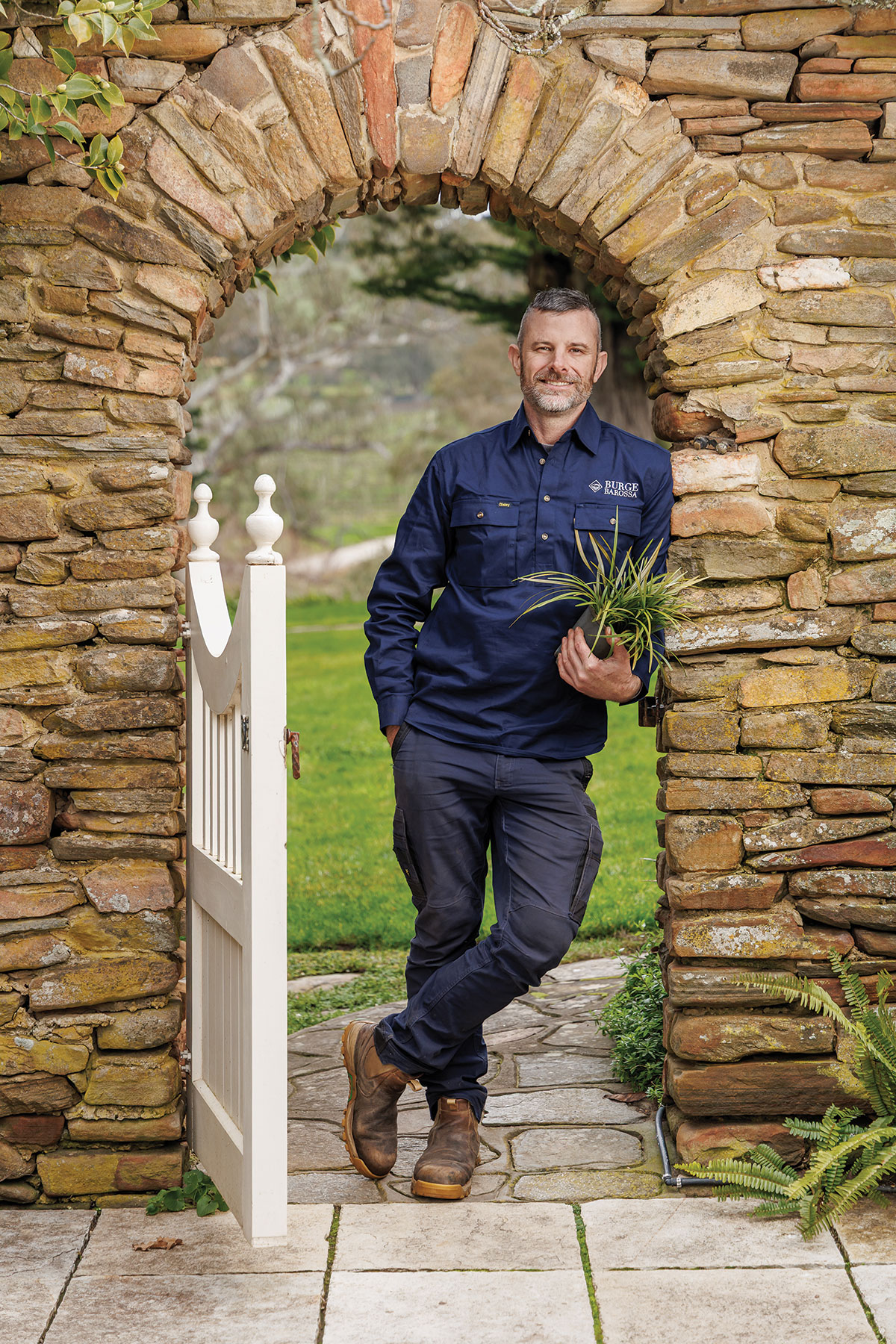
Head gardener Nathan Gulin says he feels privileged to work on this property. “Helen and Grant have made a large contribution to a piece of history that could have been left to go to ruin, which can happen with some of these properties,” Nathan says.
“It’s not just a house; it’s an historic village with the cottage and other outbuildings that reflect yesteryear and how this property was run in bygone times. There’s so much to look at.
“We’ve extended the garden to take it to the next level. It’s breathtaking now, but we’re excited about the future of the garden; the best is yet to come.”
When the garden opens in November, Helen hopes visitors will get a taste of the joy that she gets out of it. “It’s so pleasurable to be in, and when you walk into it, you feel good and I hope people take this with them,” Helen says, adding with a laugh: “But no cuttings of roses!”
As part of Open Gardens South Australia, Corryton Park garden will open to the public on November 14 & 15.
Want to see more stories from InDaily SA in your Google search results?
- Click here to set InDaily SA as a preferred source.
- Tick the box next to "InDaily SA". That's it.