Letters to the Editor on Whyalla Steelworks job losses
This week, InDaily readers have their say on a push to ban ‘covert filming’ glasses and a North Adelaide tram debate.

Responding to More millions as Whyalla Steelworks jobs slashed
This outcome was never in doubt. Any time government steps in to prop up a failed private enterprise, guess who foots the bill? WE do!
KordaMentha will have and no doubt continue to bill millions in fees and the cost of the bail-out per worker will be hundreds of thousands if not millions per head. Whyalla will end up like blacksmiths and the car industry – you cannot subsidise unprofitable industries and hope for any repayment.
Labor knows nothing about business, so get out and let the market take its course. If it had been shut down at the beginning, we would be much better off! – Colin Gaetjens
The blast furnace my late uncle and late father both worked when they arrived from ex-Yugoslavia as immigrants. They were the backbone of BHP. – S. Grdosic
Responding to Bid to ban ‘covert filming’ smart glasses at key Adelaide precincts
The push to ban smart glasses in Adelaide precincts mistakes the problem. The issue is not assistive technology; it is misuse.
You might like
The InDaily article rightly raises concerns about covert filming, but it treats smart glasses too broadly, as if every wearer is a potential threat. For people who are blind or have low vision, these glasses are life-changing assistive technology: reading signs and menus, describing surroundings, supporting safe navigation and connecting the wearer with real-time assistance while leaving their hands free for a cane, guide dog harness or mobility aid.
If we also consider older Australians losing vision, students who struggle with reading, and people with English as a second language, these glasses can be profound assistive technology.
The distinction matters. If people behave in predatory, intimidating or unlawful ways, target that conduct. Enforce privacy and surveillance laws, require clearer recording indicators, strengthen product design standards and restrict use in genuinely sensitive settings. Do not ban the tool itself – that is lazy and potentially takes away someone’s independence.
Nor is a disability exemption a workable answer. It would force people to publicly identify or justify their disability to security staff, council officers, venue operators or strangers simply to enter public spaces. That is not protection for vulnerable people; it is compelled disclosure and another barrier to inclusion.
Our clients already report unease and discomfort when wearing smart glasses. A broad ban would reinforce that prejudice, treating people using accessibility tools as suspicious while doing little to stop those determined to film covertly by other means.
South Australia should protect privacy without stripping people with disability of independence, dignity and anonymity. Punish misuse. Fix the legal gaps. But do not ban independence. – Damian Papps
Responding to Poem: River
I recently read the poem “River” by Nazrethil Jose Varghese published in Poets Corner, and I wanted to take a moment to express my appreciation for this beautiful piece.
Stay informed, daily
The poem deeply touched me with its imagery of a spring becoming a river and ultimately becoming the sea. I found the journey especially meaningful—the way the river grows, discovers the world beyond its banks, longs to become one with the sea, and yet continues to feel connected to the banks from which it came.
The poem beautifully captures themes of growth, identity, belonging, separation, and longing in a simple yet profound way. The closing image of the river continuing to roar toward its banks, while becoming “the wind’s beloved,” stayed with me long after I finished reading.
Thank you for publishing such a thoughtful and moving poem and for giving readers an opportunity to discover voices like Nazrethil Jose Varghese. – Sheeba Jose
Responding to North Adelaide tram rolls into multimillion-dollar plan debate
This is a logical extension of the line, now that the tram has already been extended to the Torrens. The extension will enable more foot traffic into the area and this will further develop business turnover to this part of the city. Do it now whilst the opportunity exists. – Matthew Donoghue
It makes sense to include tramway rails to any O’Connell St upgrade road. Even if the tram is not extended beyond the Torrens Bridge initially. Save a lot of money in duplication. – Sydney Edwards
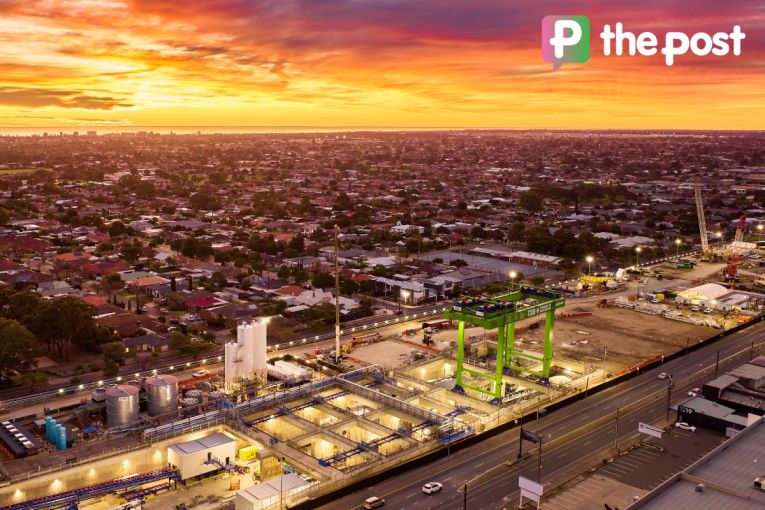
Responding to New images: The monster tunnel changing Adelaide’s west
I regularly have to utilise the facilities of the Tennyson Medical Centre for scans and consultations. It has become extremely hard to find parking of late. Maybe the government and council could monitor parking which now seems to have become a 12-hour parking situation. – Bill Hecker
Responding to Barges reach Adelaide shores as multimillion-dollar dredging begins
Someone should consult the Dutch- they know more about oceans and coastline than anyone! – Colin Gaetjens
Responding to Anthony LaPaglia has ‘no regrets’ ahead of Adelaide homecoming
Loved reading this story on Anthony. I’m also a child of migrant parents in Adelaide and can relate to his story. He is such a great actor. I also enjoyed watching the documentary series he made about the mafia in North Queensland. – Alex Jeffree
Responding to ‘Don’t need more brothel madams’: Bernardi slams Mali’s migration speech
It seems that Cory Bernardi has forgotten his own roots – son of migrants and it is the Greek and Italian migrants arriving here in the 50’s who have shaped our country and developed our culture. – Helen Davis
Want to see more stories from InDaily SA in your Google search results?
- Click here to set InDaily SA as a preferred source.
- Tick the box next to "InDaily SA". That's it.