Bid to ban ‘covert filming’ smart glasses at key Adelaide precincts
A bill is headed to state parliament aiming for widespread smart glasses bans. While the city council is debating bans from major Adelaide precincts following worrying reports.
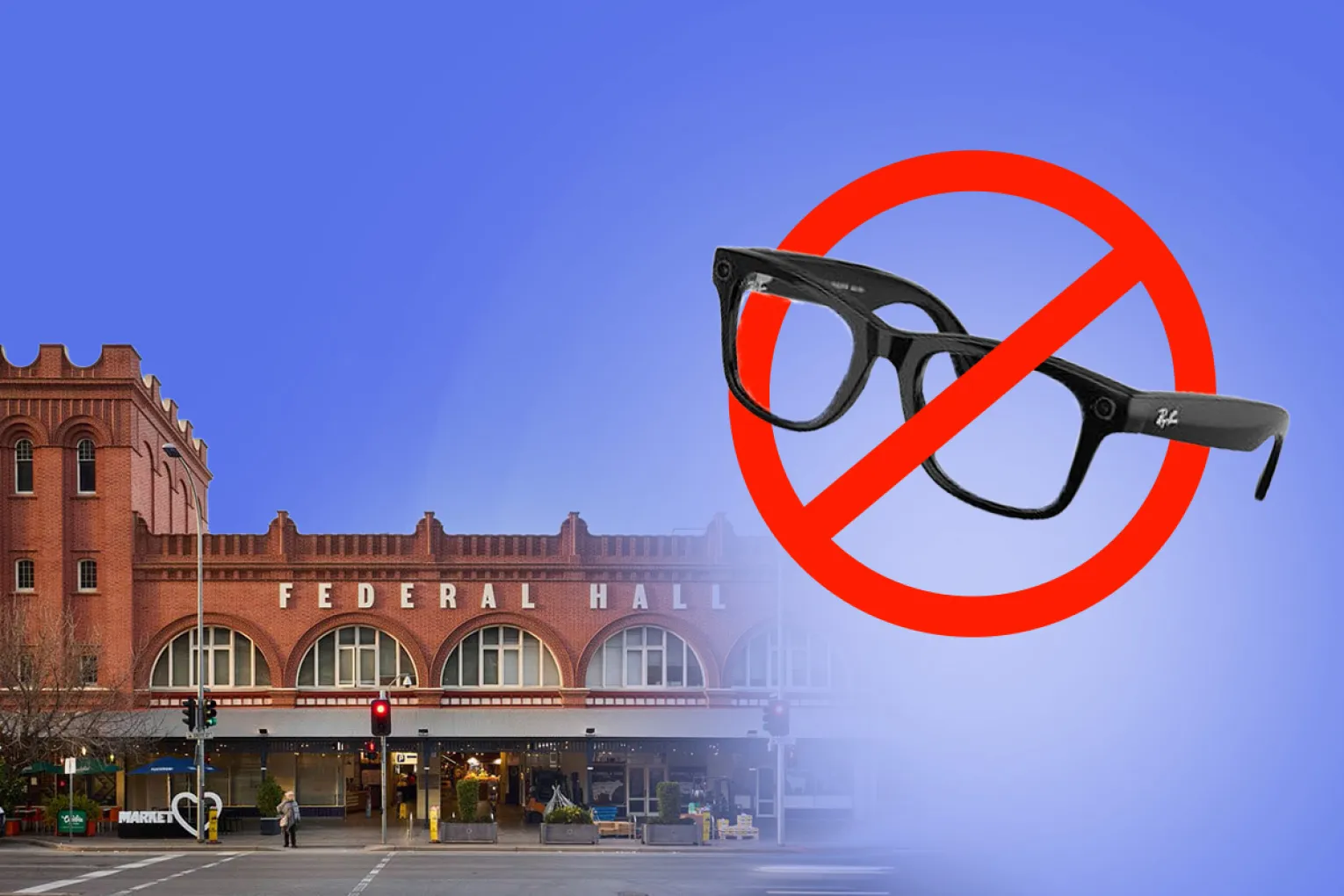
Smart glasses have drawn the ire of the South Australian Greens leader and Adelaide City Council as privacy concerns continue to grow around the state.
Smart glasses are wearable eyewear with built-in artificial intelligence that have the ability to film, record, and share video footage, but the technology has received backlash from experts over “unsafe” covert filming.
Greens leader Robert Simms said the technology was “developing at a speed that is out of step with the parliament and community expectations”.
“I’m really concerned about the privacy implications of this technology. I’m getting a private members’ bill crafted that would ban smart glasses near our playgrounds, inside gyms, swimming pools, and schools,” Simms said.
“I’m not sure that we need to be making it easier for people to film others without their knowledge and without their consent.
“Introducing a whole other level of surveillance, where we don’t know necessarily where this is going to be streamed to or what’s going to happen with the footage, I think is something that’s really concerning.”
Major technology and eyewear companies including Meta and Ray-Ban have produced their own smart glasses products which have seen a rapid rise in popularity over the past 12 months.
You might like
The use of smart glasses in Australia is also on the rise, with Kmart Australia’s budget alternative to Meta’s AI glasses selling out across the country in less than a week.
Currently, there are no restrictions on the taking of photos or filming in public places in SA including roads, streets, public squares, parks, and beaches under the Surveillance Devices Act 2016.
Councils around Australia have taken matters into their own hands, with the City of Yarra in Melbourne banning the glasses across council-owned pools, gyms, playgrounds, and childcare facilities, while Brisbane City Council became the first in Australia to ban the technology at its 21 public swimming pools.
Adelaide City Council may be the next to follow, with councillor Phillip Martin telling InDaily he would introduce a motion to have smart glasses banned from council properties throughout the CBD and North Adelaide.
These properties would include sporting facilities, libraries, car parks and more well-known locations including the Adelaide Central Market and Rundle Mall.
Martin said he had heard several stories from community members surrounding the misuse of the technology, including aggressive behaviour with authority figures for social media likes.
“Unlike circumstances where people are filming in public with a mobile phone or a camera, which is easily discernible, capturing images with smart glasses is almost undetectable,” Martin said.
"I’ve heard of stories of men approaching women and asking them for a date, and then posting that material and the response of the person who’s been filmed covertly on social media as a guide for dating. These are clearly not appropriate uses of the technology, and in my view, amount to predatory behaviour. – Phillip Martin"
Stay informed, daily
He said that local governments around Australia had been forced to introduce smart glasses restrictions because the technology had “outpaced government legislation”.
“Local government in Australia is moving quickly to do what it can to fill the void, pending some more substantial action from either state or federal government,” Martin said.
Simms claimed the state parliament was lagging behind “and as a result, there’s the potential for people’s privacy to be significantly compromised”.
“This just seems to me to be a very straightforward, common sense initiative that protects vulnerable people, and I hope that all political parties get on board and support it.”
Simms said the bill, which is expected to reach parliament before the end of the year, would include exemptions for people living with a disability or vision impairments.
The technology has proven to be beneficial among people with visual impairments by providing real-time audio descriptions, translation and assistance to simplify everyday tasks and accessibility.
Despite the benefits, Australia’s online safety regulator the Office of the eSafety Commissioner published a report that covert recording through smart glasses has the “potential to amplify harmful content and conduct online”, including cyberbullying of children and exposure to violent material.
“Smart glasses offer significant opportunities for many people, particularly people with disability. However, these benefits will not be fully realised unless the potential misuse of the technology is addressed through its design,” the eSafety report said.
“If we do not act now to prevent design elements from being weaponised to cause harm, we risk unsafe features becoming entrenched.”
Attorney-General Kyam Maher said the state government was “aware of growing concerns regarding the use of ‘smart glasses’ and non-consensual recording in the community”, and that advice had been sought to “ensure that our laws are fit for purpose and in line with community expectations”.
“I have also written to the Federal Attorney-General to seek updates on developments following the Commonwealth’s recent release of a draft Privacy Bill targeting new technologies such as ‘smart glasses’, with a plan to introduce a Bill to the Federal Parliament by the end of this year,” Maher said.
Want to see more stories from InDaily SA in your Google search results?
- Click here to set InDaily SA as a preferred source.
- Tick the box next to "InDaily SA". That's it.