‘Equal prize money isn’t a favour from a gas company’: AFWL player on TDU Santos sponsorship
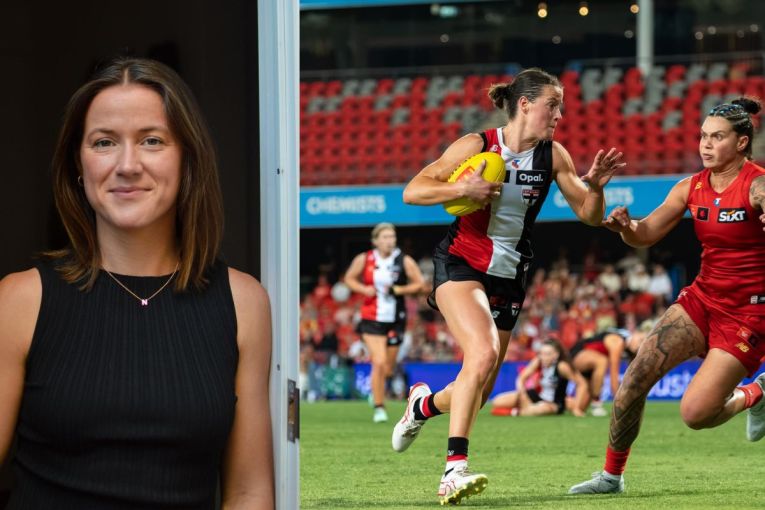
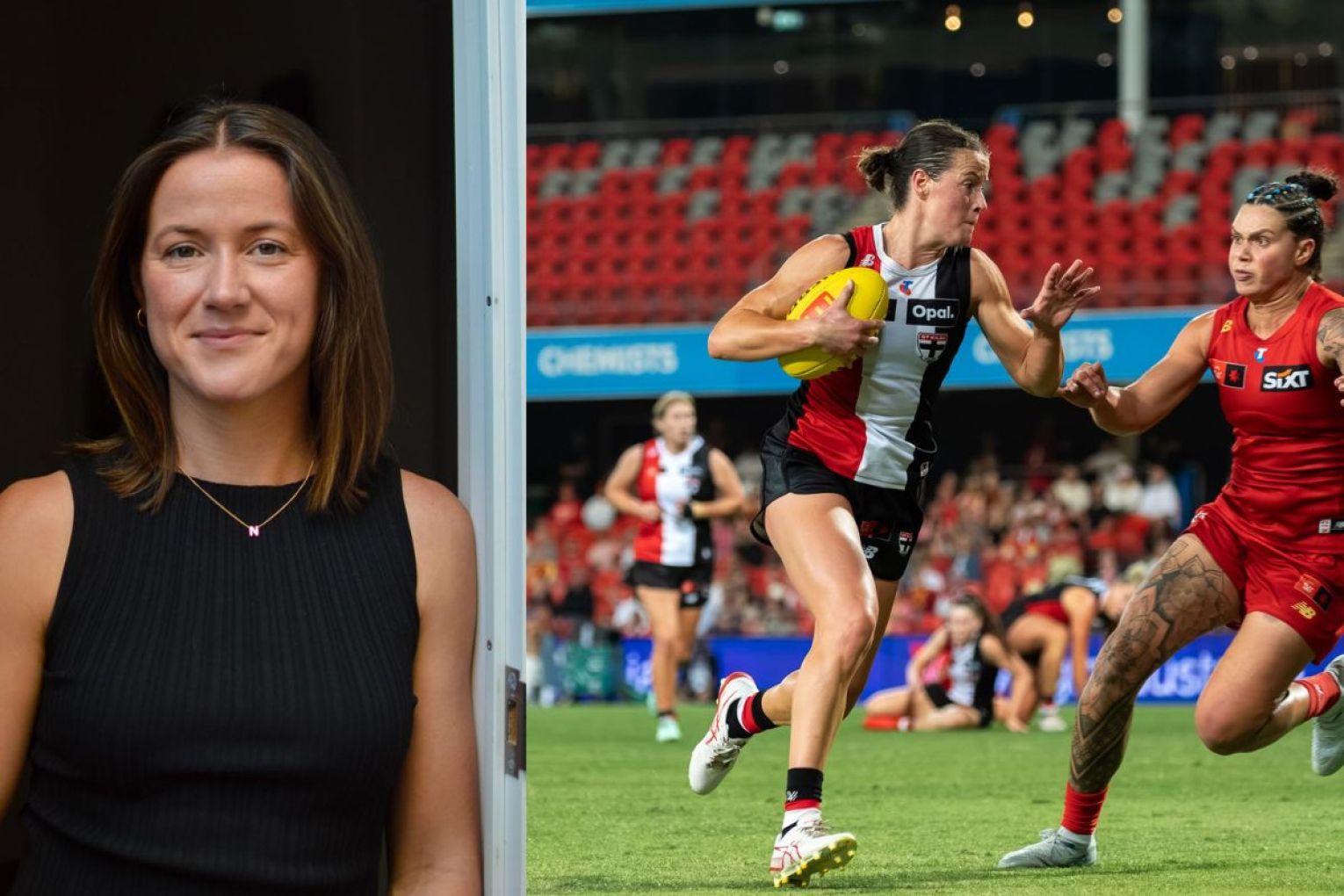
Nicola Barr plays AFLW for the St Kilda Saints. She is a climate change campaigner, was the league’s inaugural number one draft pick and is upset by the SA government’s response to a vote to drop Santos as a TDU sponsor.
I play AFLW. I’m not a professional cyclist, but when South Australia’s Environment Minister, Emily Bourke, defended Santos’ sponsorship of the Tour Down Under, her words felt immediately familiar.
Minister Bourke was prompted to defend the sponsorship as the Adelaide City Council voted to ban oil, coal and gas advertising on council property. The council vote followed Adelaide University’s decision last week to drop the Santos name from its city campus. These decisions are a response to growing concerns about climate change, understandable in a city that has experienced a devastating toxic algal bloom caused in part by a marine heatwave.
But speaking in support of Santos’ sponsorship of Australia’s biggest cycling event, Minister Bourke chose to highlight [in an ABC report] that the oil and gas giant gives “equal pay to men and women to compete in the same race.“
The message to critics, including Adelaide City Council, was clear. Back off our sponsor, because without them, the women won’t be paid the same.
Think about how that sounds to the women who race. They’re being reminded – by a Minister in the government in charge of a major event – that an equal prize pool is a gift from a corporate benefactor, and could be taken away at any moment.
You might like
Presenting fair pay as a favour only serves to diminish the principle it’s meant to honour. It also doesn’t match the history.
Equal prize money at the Tour Down Under was announced in 2018 by the state government, which lifted the women’s pool from $15,000 to more than $100,000. At the time, SA’s then-Tourism Minister said, “This is exciting news for women’s sport and I’m thrilled to announce our government is providing equal prize money for female riders in the Santos Women’s Tour Down Under.”
The Tour Down Under is a government-owned race, and if the state prioritises equal prize money, it’s able to pay for it.
A total prize pool of around $100,000 is small change for an event that, by the government’s own accounting, contributes over $60 million in value to South Australia’s economy each year.
Stay informed, daily
So here’s the obvious question. If Santos didn’t sponsor the race, would women not get equal prize money? Is the government really saying the commitment it promotes so proudly would disappear?
If that’s the position, it’s a remarkable admission. If it isn’t, the minister’s argument falls apart.
It’s also worth pointing out that “equal pay” is the wrong term. Prize money isn’t pay. Riders are paid by their teams, and the prize pool is just one potential income stream that organisers and the government control.
Then there’s the question of transparency. We’re told Santos makes equal prize money possible, but the government actively resists requests to disclose those figures, choosing instead to keep secret how much the multinational gas giant pays to be associated with the race.
South Australian taxpayers own the Tour Down Under. Shouldn’t they see the numbers before being told that criticising a sponsor puts women’s earnings at risk?
If that $100,000 can’t be traced to a sponsorship agreement on the public record, the claim is a talking point, not a fact.
Clearly, this is a conversation that decision-makers are keen to shut down. The Tour Down Under – indeed the whole state – continues to be impacted by extreme weather and natural disasters driven by climate change, raising uncomfortable questions about whether a major fossil fuel polluter is the right partner for an event that sees athletes pushing themselves to their limits in the middle of a South Australian summer.
But in the face of this discomfort, the state government has chosen to defend their decision by saying the women rely on it.
If the sponsorship is worth defending, defend it on its merits, whether that’s jobs, events or visitors. But don’t use women’s prize money as a shield.
Equal prize money was the right call in 2018, and it should be a promise the state keeps no matter whose name is on the race. Young girls, and boys for that matter, whether on a bike or a footy field, should learn that their value doesn’t depend on a sponsor’s approval.
Nicola Barr plays AFLW for the St Kilda Saints, and was the league’s inaugural no.1 draft pick. She also works as Projects and Engagement Director with FrontRunners, a non-profit working at the intersection of climate change and sport.
Want to see more stories from InDaily SA in your Google search results?
- Click here to set InDaily SA as a preferred source.
- Tick the box next to "InDaily SA". That's it.