Budget Exclusive: New money for Treaty amid public servant freeze
Treasurer Koutsantonis delivers his first State Budget in close to a decade tomorrow. InDaily can today reveal new money will progress a Treaty with Aboriginal South Australians.
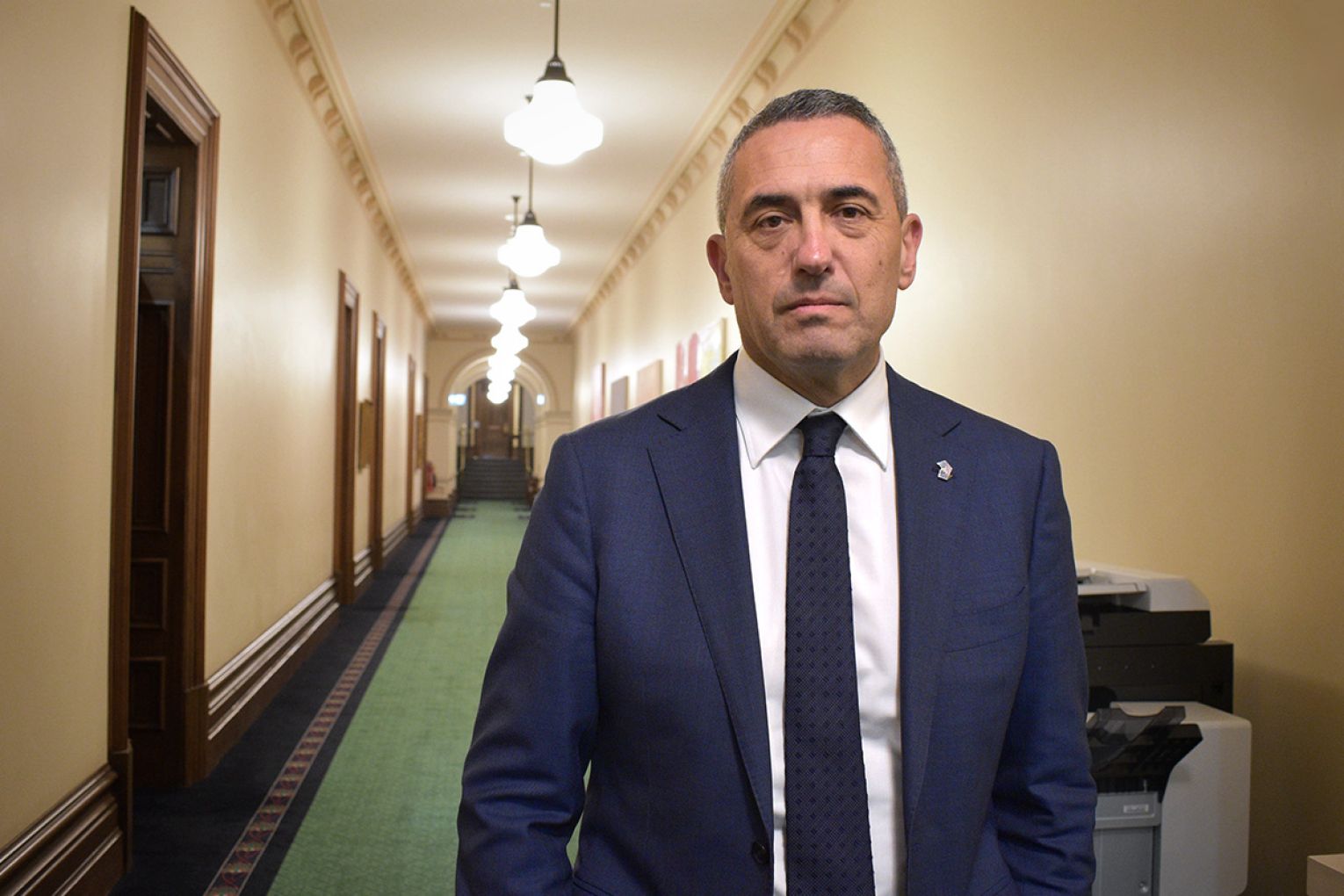
The State Budget will focus on “relief for families and stability for business” tomorrow with newly appointed Treasurer Tom Koutsantonis telling InDaily a potential $50 billion debt bomb was serviceable.
Koutsantonis last delivered a state budget in a different economic environment 10 years ago, the Treasurer saying the state was “in a much stronger position now than it was in 2017”.
“The state is a national outlier, but for good reasons rather than bad reasons,” he said.
“Economic growth is higher here than it is anywhere else in the country, we’re close to full employment, and our participation rate is something that the government is proudest of. It gives us the opportunity for the private sector to invest.”
Tomorrow’s budget will be “stable”, he said, noting the focus would be on “relief for families and stability for business”.
“Without wanting to give anything away, look no further than the most recent state election,” said Koutsantonis, who was appointed Treasurer last year after Stephen Mullighan announced his retirement from politics.
“We made a series of commitments. We’re going to implement all of them.”
InDaily can reveal on the last day of National Reconciliation Week that the spending measures will include $8.5 million to establish a Commission to undertake Truth-Telling and progress Treaty activities.
The Commission will be headed by Aboriginal leaders who will progress work to acknowledge and recognise the history and experience of Aboriginal South Australians. Work on establishing the Commission will commence after June 30 this year.
You might like
The government money would also support further work towards a Treaty – a formal agreement between the state government and Aboriginal South Australians.
But a potentially $50 billion debt looms large for the state, driven by expenditure on megaprojects like the $15 billion Torrens to Darlington project and the $3.2 billion construction of the Women’s and Children’s Hospital.
Koutsantonis said this debt would be serviceable, emphasising the importance of the infrastructure projects.
“Everyone has known these projects are not free,” he said.
“The North South Corridor is grinding to a halt. The main artery of our economy is now at an average speed of 25 kilometres per hour. You name me a modern economy with a road network with an average speed of 25 kilometres per hour for freight. It won’t work.”
Political opponents have jumped on the debt figure in recent days, One Nation calling for a debt ceiling to be implemented and the Liberals asking for a debt recovery plan.
The Treasurer dismissed those calls, saying there was no merit in the asks: “These guys think they can spend their way to lower debt”.
"It always makes me giggle when I hear Liberals or our political opponents demanding more spending, demanding more tax cuts, and then complain about debt."
“I often wonder, where is this nirvana where you can spend more, tax less?” Koutsantonis said.
“Something that I have learned over my life in this business is that it is easier not to spend money than it is to raise revenue.”
He said the current strong jobs environment also made it the right time to make the public sector leaner.
The budget would see a partial freeze on the recruitment of non-frontline positions across all state government agencies for the next year, with a review to take place after 12 months. This would encourage further private investment in the state, Koutsantonis claimed.
Stay informed, daily
“Our participation rate is something that the government is proudest of,” he said.
“[Australian Bureau of Statistics] stats are showing a nearly 15 per cent increase in private sector capital investment in South Australia.
“You would’ve walked on broken glass for that in the Weatherill government.”
But the ongoing closure of the Strait of Hormuz was the one thing keeping Koutsantonis up at night, noting it was having an impact on businesses as demonstrated by a recent Business Chamber of South Australia survey showing profit levels had fallen to a 20-year low in the March 2026 quarter.
Despite that, Koutsantonis was adamant that “the economy is growing”.
“Property values are going up, private sector capital investment is up,” he said.
“We are still a petrochemical country. We rely heavily on diesel for our industries, heavily on diesel for fertiliser. I’m worried about the long-term implications of that, and then the impacts on confidence in the state.”
And the booming revenue take from mining – particularly from copper giant BHP, which delivered record royalties of $25.6 million to SA in April – meant the state was on the “precipice” of a moment such as what Western Australia had been enjoying for some time through iron ore mining.
“You are beginning to see the beginnings of what occurred in Western Australia, but we’re not there yet,” he said.
“It’s too premature to say, but the road map is there. We just need the international conditions to remain stable to allow BHP to invest with certainty.”
‘Wicked problems’ for wine industry
And while it was expected there would be no new money for the struggling wine sector, the Treasurer said the government was “focused” on the industry.
“The budget won’t be the place for that assistance,” he said.
“I don’t want to come out arbitrarily and announce what the assistance will be. They’ve got a lot of problems.
“These are wicked problems that need a lot of solving. And we’re going to have to sit down and conduct a lot of work with them to come up with a solution.”
Want to see more stories from InDaily SA in your Google search results?
- Click here to set InDaily SA as a preferred source.
- Tick the box next to "InDaily SA". That's it.