Commission rejects calls to block electorate name change
South Australia’s largest electorate has a new name after more than 100 years, but another controversial plan has been rejected.
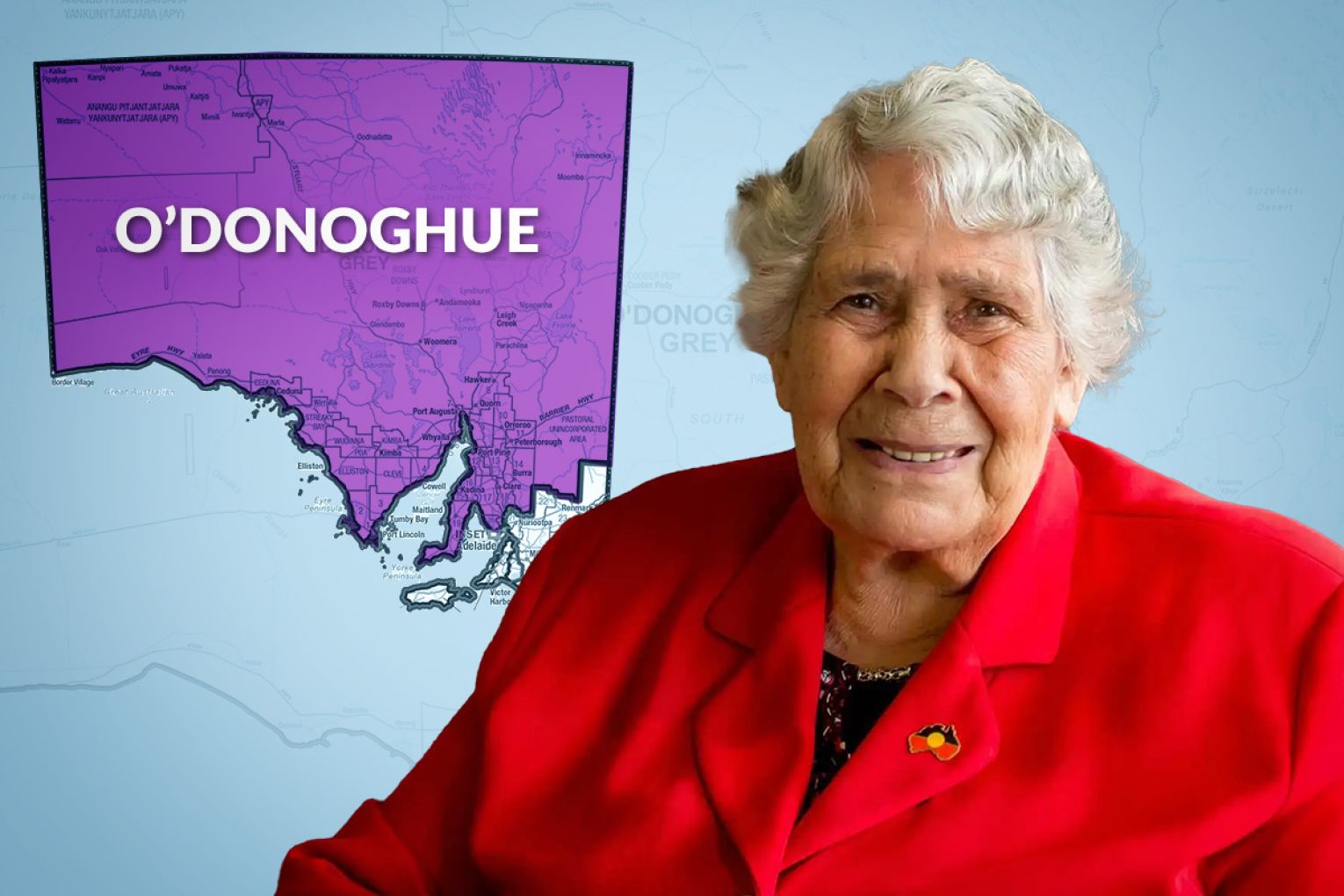
The massive electorate of Grey, which covers 92 per cent or 904,881 square kilometres of South Australia, will be renamed O’Donoghue despite opposition from the seat’s sitting member.
But a controversial move to expand the seat to include Adelaide’s northern suburbs has been knocked back by the Australian Electoral Commission, in a statement announcing boundary changes to three federal South Australian electorates.
The renaming was welcomed by O’Donoghue’s family, who said they “gratefully acknowledge today’s announcement to rename the electorate of Grey to O’Donoghue”.
“Yankunytjatjara woman Dr Lowitja O’Donoghue AC CBE DSG was born, raised, worked, and lived within the electorate for much of her life, and over many decades made substantial contributions to the region across health, education, and social justice rights,” the family said in a statement.
“We recognise and thank the public for their contributions toward honouring her through this change.”
It comes as a life-sized statue of O’Donoghue was unveiled along Elder Park/Tarntanya Wama in June, designed by acclaimed sculptor Robert Hannaford AM.
Federal O’Donoghue MP Tom Venning had previously written to the Australian Electoral Commission opposing the renaming, as well as the expansion of the electorate that already covers 92 per cent of the state.
You might like
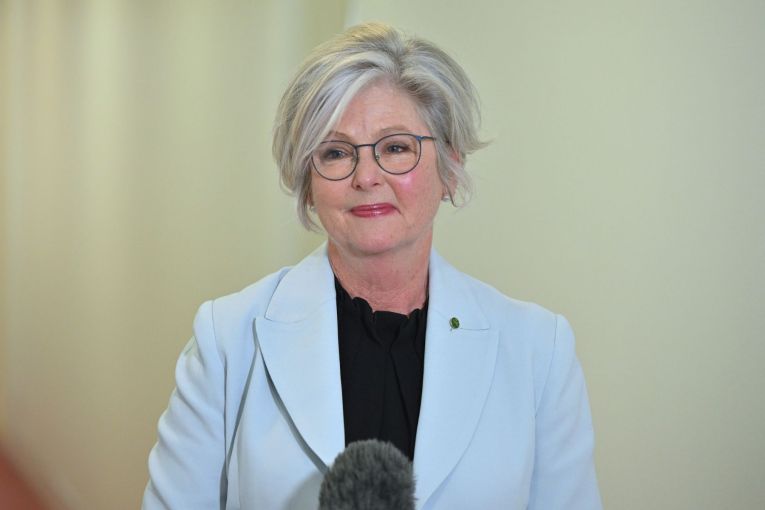

In his submission to the Australian Electoral Commission, Venning said that while O’Donoghue was a “worthy namesake … the name Grey has been in continuous use for over 120 years and is well established”, adding that “the logistical realities of representing Grey cannot be understated”.
“Expanding Grey to include parts of the cities of Salisbury and Playford would exacerbate the already significant logistical task of representing Grey and dilute its focus on regional, rural, and remote communities,” he wrote.
O’Donoghue, who died in 2024, was a renowned Aboriginal leader whose accolades included being the first Indigenous nurse at the Royal Adelaide Hospital and being integral to negotiations that led to Federal Native Title legislation.
The electorate was previously named in 1903 for British colonial administrator Sir George Grey, who was made governor of South Australia in 1840. He amended the Aboriginal Witnesses Act in 1844 to make unsworn testimony by Indigenous Australians inadmissible in court.
According to the AEC, more than 300 submissions were received relating to the proposed name, with “many submissions” opposed to the move.
However, the AEC ultimately determined that Grey “had been honoured appropriately and that it was time to honour an outstanding Australian”.
“Alongside her achievements, Dr O’Donoghue’s strong connection to the APY Lands within the electorate provided strong reasoning to rename the electorate in her honour,” the AEC said in a statement.
Federal Member for Grey Tom Venning released a statement on Monday saying he was “disappointed that the people of Grey have been ignored by the Australian Electoral Commission (AEC) on its decision to rename the electorate to O’Donoghue”.
Stay informed, daily
“Of the 310 submissions received, 239 did not support the change (235 against, four offered different names), yet the AEC still decided to rename the electorate of Grey to O’Donoghue. The AEC has, however, listened to the community on the redistribution of the electorate, and will not be including urban suburbs into Grey,” he claimed.
“The AEC is supposed to be an institution charged with upholding democracy. What is the point of the AEC conducting public consultation if, even with an overwhelming majority opposing the name change, they continue with it anyway?
“This decision will leave many of my constituents feeling like their views were not reflected in the final outcome.”
Federal Electoral Commissioner Jeff Pope said that 24,000 people had changed electorates due to the boundary changes, which were first proposed in March of this year.
“These changes are an important measure for maintaining balance and equal representation across South Australia’s electorates,” Pope said.
“This was particularly the case for Mayo, which has shrunk in size to account for its growing population.”
The Federal seat of Barker, which covers large swathes of the state from Mount Gambier to Renmark, and Murray Bridge to Pinnaroo, will be further expanded to take parts of the Alexandrina Council and the suburbs of Callington and Kanmantoo from Mayo.
Meanwhile, the southern suburbs seat of Boothby would take the remainder of the City of Mitcham from Mayo, while the northern suburbs seat of Makin would gain parts of the City of Salisbury south of the Little Para River from Spence.
However, the boundaries between Grey and Spence, which had previously been flagged for change, will remain unaltered, while there will also be no boundary changes between Kingston and Mayo.
“A significant number of submissions disagreed with the proposal to move several suburbs from Spence into Grey, due to their urban communities not fitting the regional nature of Grey,” Pope said.
“There was general agreement from local communities that the suburbs of Aberfoyle Park, Chandlers Hill and Happy Valley were better suited to remain in Kingston than Mayo.”
“After hearing this feedback, the decision was made to retain those suburbs in their current electorates.”
Want to see more stories from InDaily SA in your Google search results?
- Click here to set InDaily SA as a preferred source.
- Tick the box next to "InDaily SA". That's it.