Lowitja O’Donoghue statue unveiling in Elder Park
An acclaimed sculptor has created the first in a line of new statues honouring South Australia’s First Nations leaders along the River Torrens.
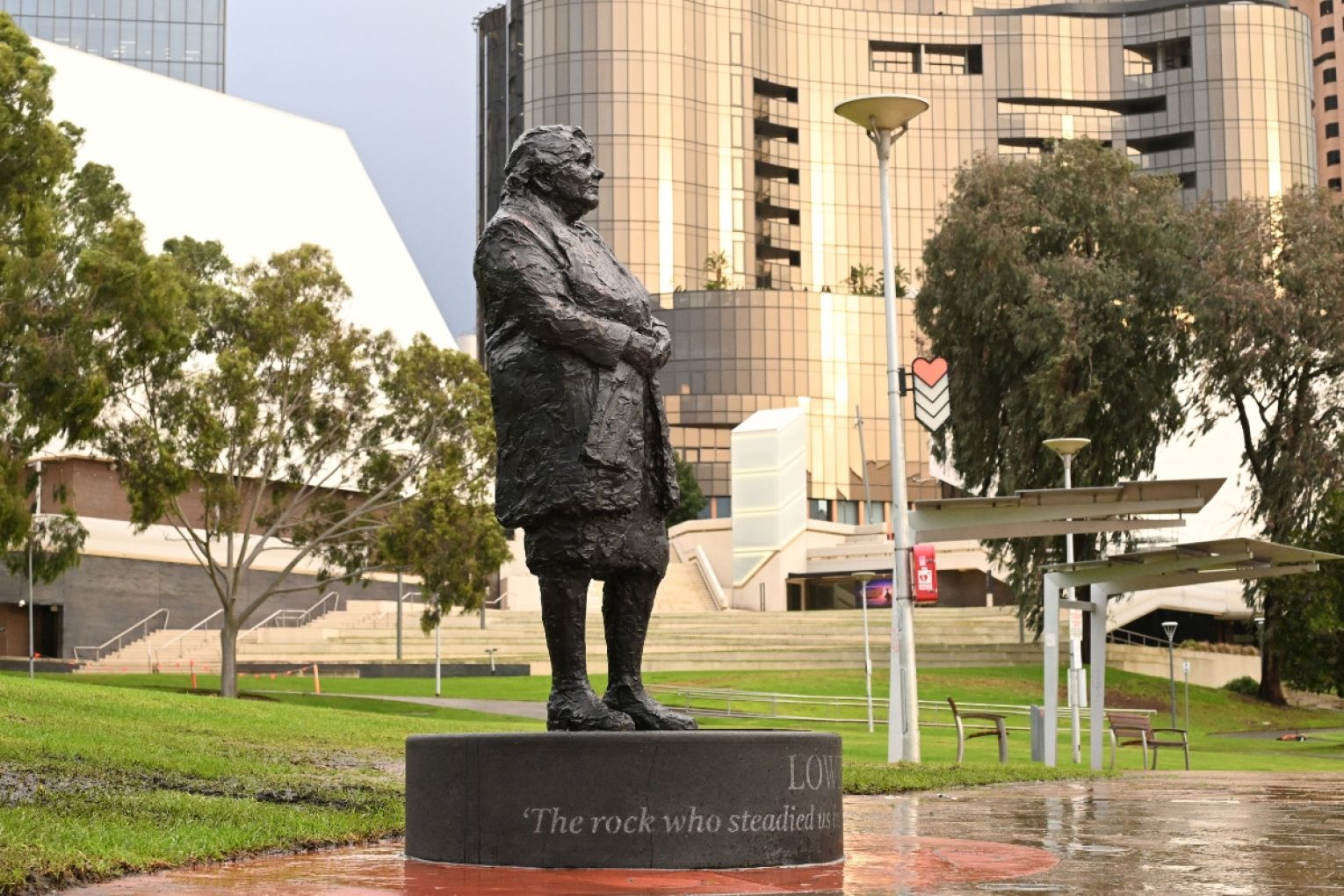
A life-sized statue of leading advocate for SA’s Aboriginal people Dr Lowitja O’Donoghue has been unveiled in the Tarntanya Wama/Elder Park walkway, after the new arts project was first announced by the state government in February.
The statue was designed by acclaimed sculptor Robert Hannaford AM, who also painted a portrait of O’Donoghue in 2006 for the National Portrait Gallery, and is the first of six statues of First Nations leaders to be built in the Elder Park precinct.
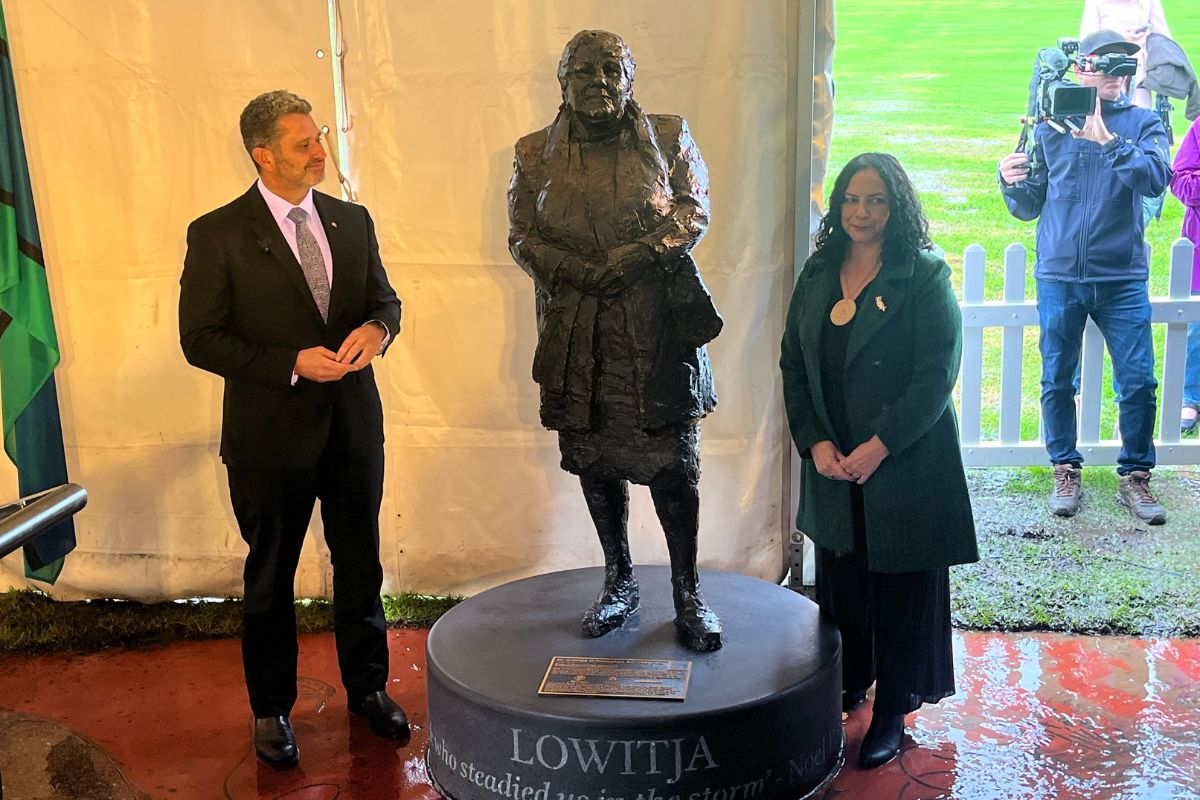
It wasunveiled by Aboriginal Affairs Minister Kyam Maher who was also joined by O’Donoghue’s niece and head of the Lowitja Foundation Deb Edwards, Premier Peter Malinauskas and City of Adelaide Lord Mayor Jane Lomax-Smith, in National Reconciliation Week.
Edwards said the statue precinct will “create opportunity for conversation” about Aboriginal history and leaders in South Australia.
“It’s really important for that recognition to live on and be acknowledged. We’re very proud of her, we’ve always been proud of her and everything that she’s done,” she said.
“I think what it symbolises in terms of the visibility of our people being seen in this way is something that you don’t normally see.
“It doesn’t matter which state you’re in and which metro city you’re in, if you walk around, you don’t see our people visually represented by traditional monuments such as statues.”
O’Donoghue was the first Aboriginal person to train as a nurse at the Royal Adelaide Hospital in 1954 after initially being refused a position because of her Aboriginal heritage.
During her lifetime, O’Donoghue campaigned tirelessly for the recognition of Aboriginal people in the 1967 Referendum and was the inaugural chair of the Aboriginal and Torres Strait Islander Commission.
She also received a several accolades for her work including Australian of the Year in 1984, a NAIDOC lifetime achievement award and received the accolade of Dame of the Order of St Gregory the Great, an honour bestowed by Pope John Paul II.
You might like
The unveiling coincides with the 19th annual Lowitja O’Donoghue Oration at Elder Hall hosted by the Don Dunstan Foundation tomorrow night.
Award-winning author, filmmaker and broadcaster Professor Larissa Behrendt is the guest speaker at this year’s Lowitja O’Donoghue Oration where she will discuss leadership among First Nations Women.
Edwards said her Aunty was a leader who worked tirelessly towards reconciliation during her lifetime.
“She believed that reconciliation was an action of black and white working together, and throughout her lifetime that’s how she worked with allies to create change,” Edwards said.
“Everything she did was for the love of her people, of course, but reconciliation was the ultimate goal.
“The amount of people that will come along to Elder Park and say, who are these people, where are they from, what did they do, how did they achieve what they did, that’s reconciliation in action.”
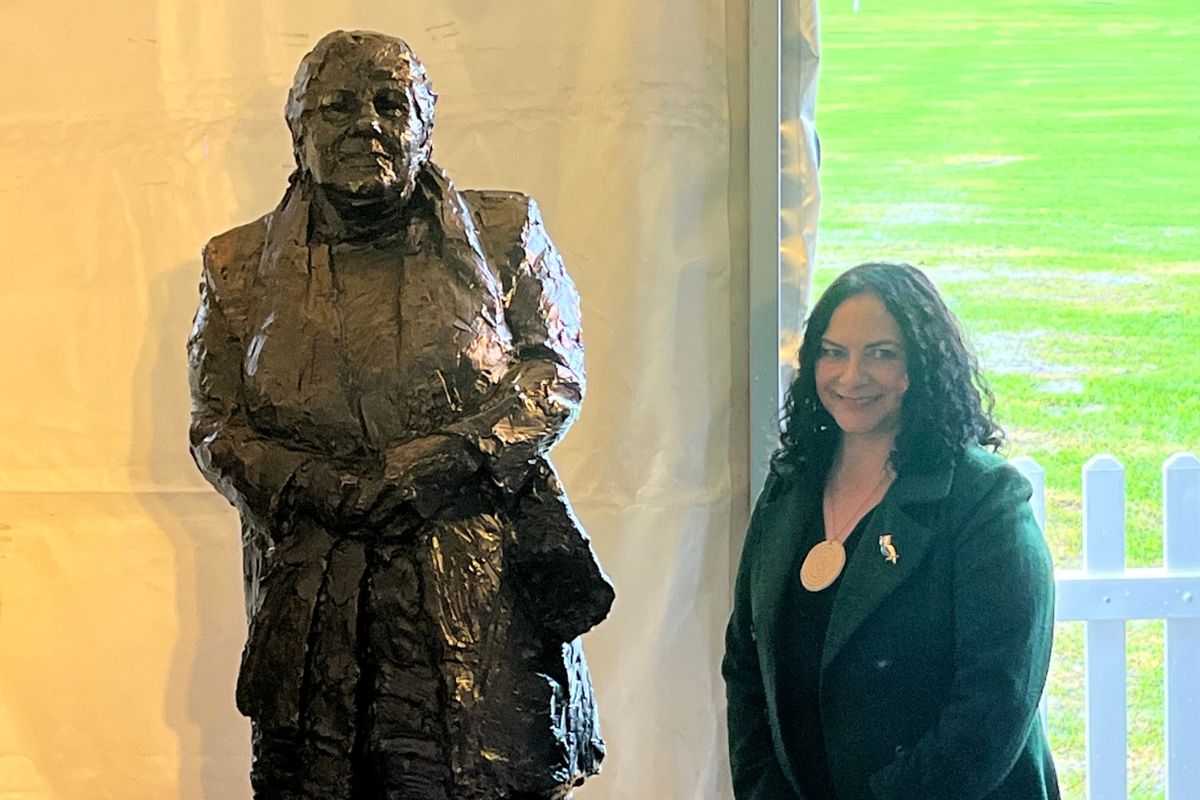
O’Donoghue is the first in a line of six prominent First Nations leaders whose contribution will be celebrated in the statues, with Gladys Elphick MBE, Dr Alice Alitya Rigney AO PSM, David Unaipon, Yami Lester OAM and Garnett Ian Wilson OAM to receive the honour soon.
Aboriginal Affairs Minister Kyam Maher said O’Donoghue was “a remarkable woman who dedicated so much of her life to being a champion for the rights, health and wellbeing of Aboriginal and Torres Strait Islander people”.
“I can foresee the sense of pride for young Aboriginal people who come to the centre of their capital city and see themselves reflected better in public spaces for the first time, to see these sorts of statues of their people, their culture and the immense achievements they represent.”
The leaders were chosen following state-wide engagement with Aboriginal community members and organisations, while the First Nations Voice to Parliament was also given input on the leaders chosen.
Each statue will feature a sandblasted platform inscribed with information about the honouree provided by family members to commemorate their ancestor.
The statues have a total cost of $1 million funded by the state government.
Edwards said her Aunty would be “very honoured and be very proud” to have her statue stand alongside fellow Aboriginal leaders.
“The action of reconciliation comes about through people being able to come to that space and learn, so that’s very important.”
Gladys Elphick MBE
Stay informed, daily
A Kaurna and Ngadjuri woman, Elphick was born in 1904 and died in 1988, growing up at Point Pearce, Yorke Peninsula.
She was founding president of the Council of Aboriginal Women of South Australia, which became the Aboriginal Council of South Australia in 1973.
She was appointed a Member of the Order of the British Empire (MBE) in recognition of service to the Aboriginal community in 1971.
Dr Alice Alitya Rigney AO PSM
A Kaurna and Narungga woman, Rigney was born in 1941 and died in 2017, growing up at Point Pearce, Yorke Peninsula.
Starting as a teacher’s aide in 1967, Rigney retired as principal of Kaurna Plains School for Aboriginal students in 1997, a school she started.
Awarded a lifetime achievement award in the Gladys Elphick Awards in 2017, and in 2018 was posthumously made an Officer of the Order of Australia (AO) in the Queen’s Birthday Honours.
David Unaipon
A Ngarrindjeri man born at Raukkan (Point McLeay Mission), Unaipon was born in 1872 and died in 1967.
He was the first Australian Aboriginal person to publish his writing in English and is known for his inventions focusing on perpetual motion.
At the age of 81, he was awarded a Coronation Medal celebrating the coronation of Queen Elizabeth II in 1953 and is pictured on the $50 note.
Yami Lester OAM
A Yankunytjatjara man, born at Walyatjata in the Anangu Pitjantjatjara Yankunytjatjara (APY) Lands, Lester was born in 1941 and died in 2017.
He was blinded as a young boy by nuclear testing in outback Australia, and is best known as an anti-nuclear and Indigenous rights advocate.
He was awarded the Order of Australia medal for service in the field of Aboriginal Welfare in 1981.
Garnett Ian Wilson OAM
A Ngarrindjeri man born at Raukkan (Point McLeay Mission), Wilson was born in 1928 and died in 2010.
He was the first Aboriginal wool classer in South Australia and an inaugural member and long-standing chair of the Aboriginal Lands Trust, the first Aboriginal land-holding body in Australia.
He was awarded the Medal of the Order of Australia (OAM) for service to Aboriginal Welfare in 1984.
Want to see more stories from InDaily SA in your Google search results?
- Click here to set InDaily SA as a preferred source.
- Tick the box next to "InDaily SA". That's it.