‘Something we don’t talk about’: Ida Sophia’s 280 hours of silence
Award-winning artist Ida Sophia has embarked on a 40-day silent streak at Samstag Museum of Art as part of her latest durational work, Patience and Penitentia.
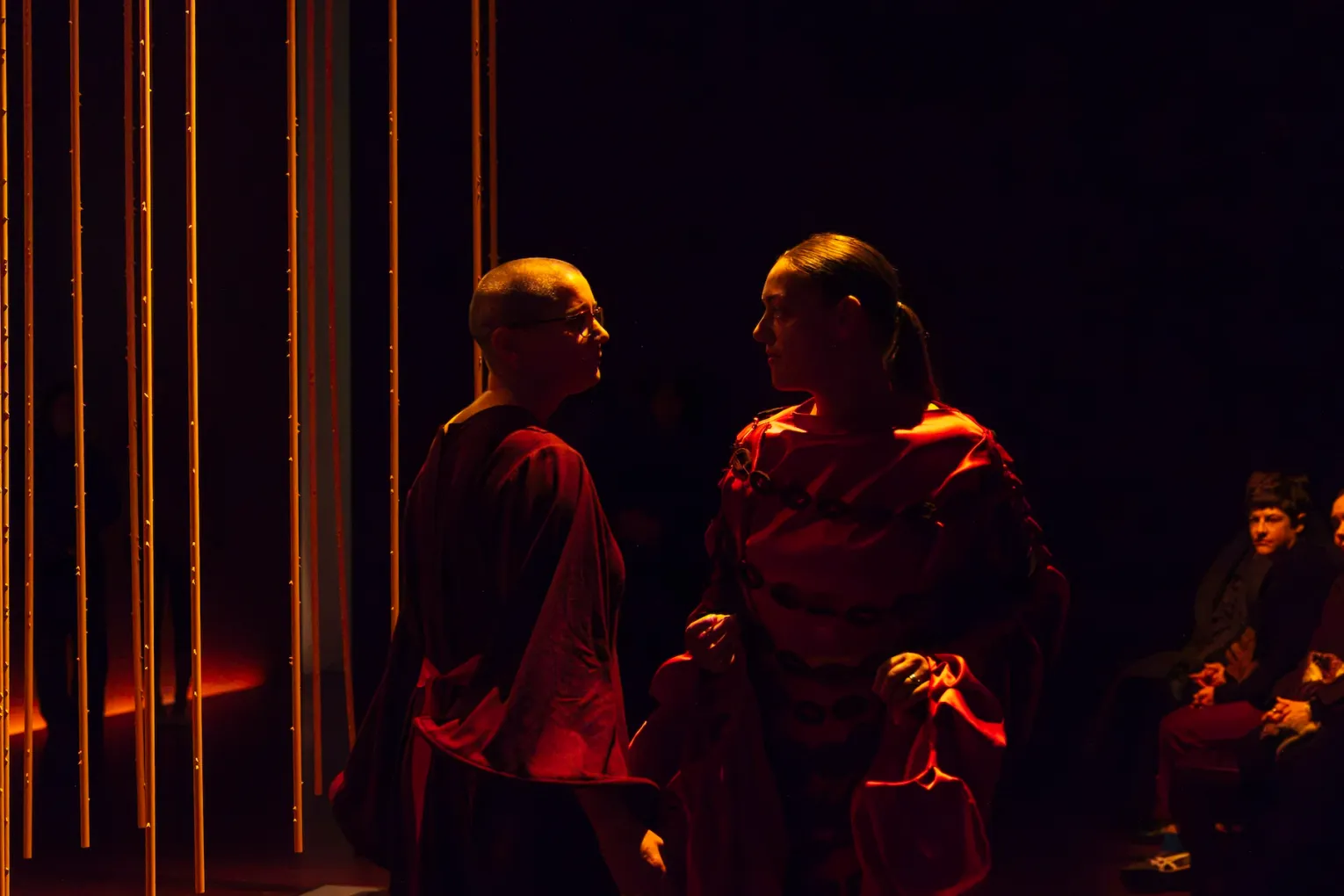
Ida Sophia was in Galatina, Italy, visiting the Basilica of Santa Caterina d’Alessandria, when she looked up and saw a 15th century fresco painting of a figure wearing a dress of chains that symbolised the idea of ‘penance’. It was 2023, and at the time the Adelaide-born artist hadn’t spoken to a once-close family member in five years.
This month, she has begun her most ambitious performance yet, inspired by those twin events. From June 25 Patience and Penitentia has seen the artist on her feet, walking around the Samstag Museum of Art galleries for seven hours a day. She will repeat this ritual for 40 days across the exhibition’s season.
At the heart of the 280-hour-long performance, which also encompasses sound, costuming and installation, is a reflection on the nature of relationship breakdown and ‘the silent treatment’.
“I just thought this is something that we don’t talk about,” Ida Sophia tells InReview. “This is something that we endure, and we just put it under the rug, and we can’t accept in our society. The silent treatment causes hopelessness and normalises harmful patterns of avoidance and stonewalling.”
Sophia, who trained with world-famous performance artist Marina Abramović in 2018, has spent years learning how to push her mind and body to its limits during her durational performances. Throughout Patience and Penitentia Sophia will also be joined by four local artists – Ashton Malcolm, OAKEY, Sarah Neville and Isobel Stolinski – who will exchange looks, gestures, and touch, but never words.
“The silent treatment is not gender specific but my experience of it has been, so to reflect that I’m working with women in the performance, thinking about, ‘Okay, how does this play out?’,
It isn’t the first time the artist has channelled complex relationships with her own family into her work. She won the Ramsay Art Prize in 2023 for her video work Witness, which saw her don a wetsuit to be repeatedly submerged in water – a ritualistic echo of her father’s embrace of religion when she was a child.
You might like
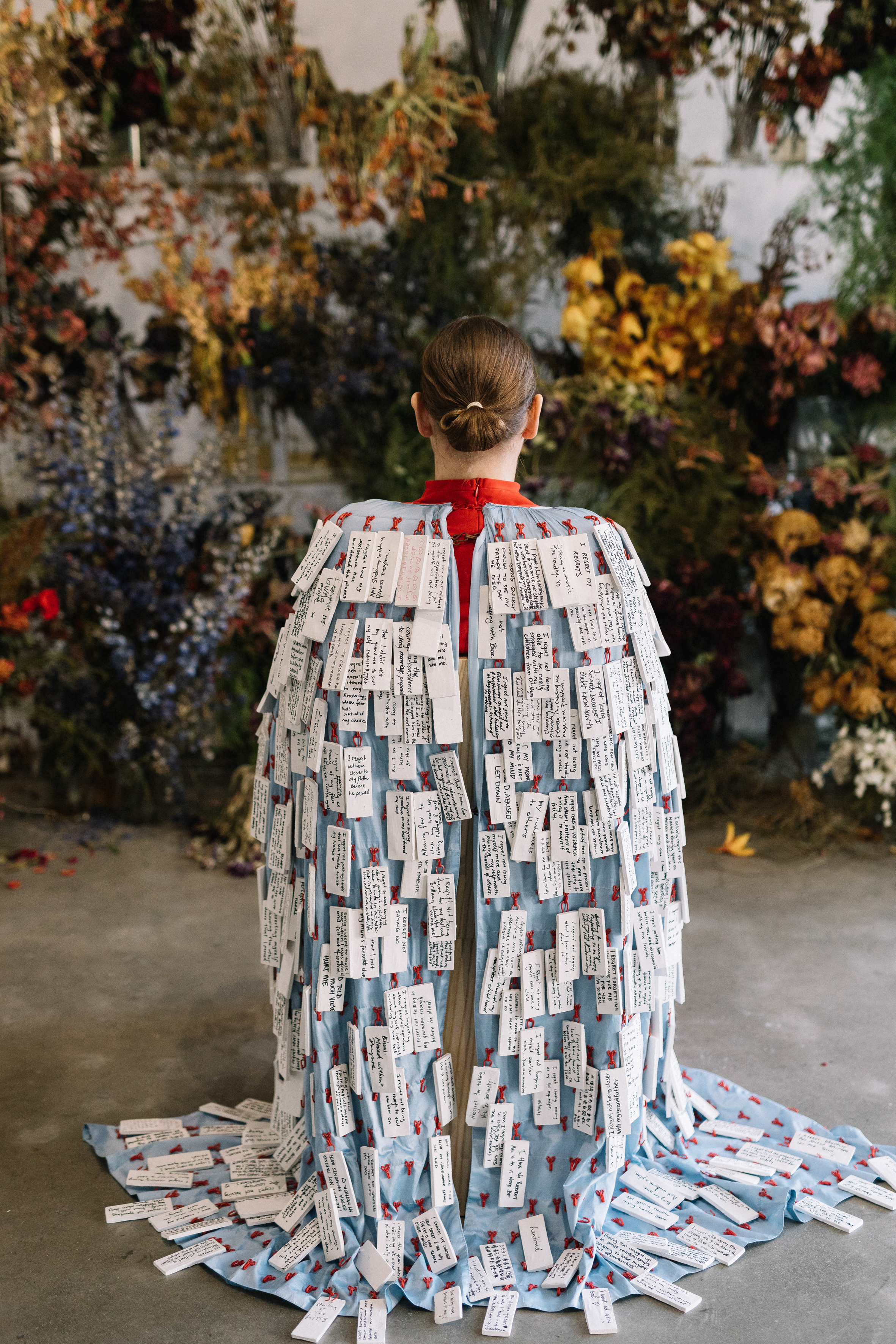
She says Patience and Penitentia is a direct continuation of an earlier breakthrough performance series, Regret, where the artist sat in silence for 28 days at Floating Goose Studios as she contemplated her own grief and misgivings at not spending the last months of her father’s life by his side.
Observers were also invited to write their own regrets on small tablets, which were then hung on a red cape worn by Sophia, who finally shed its physical and symbolic weight at the conclusion of the work.
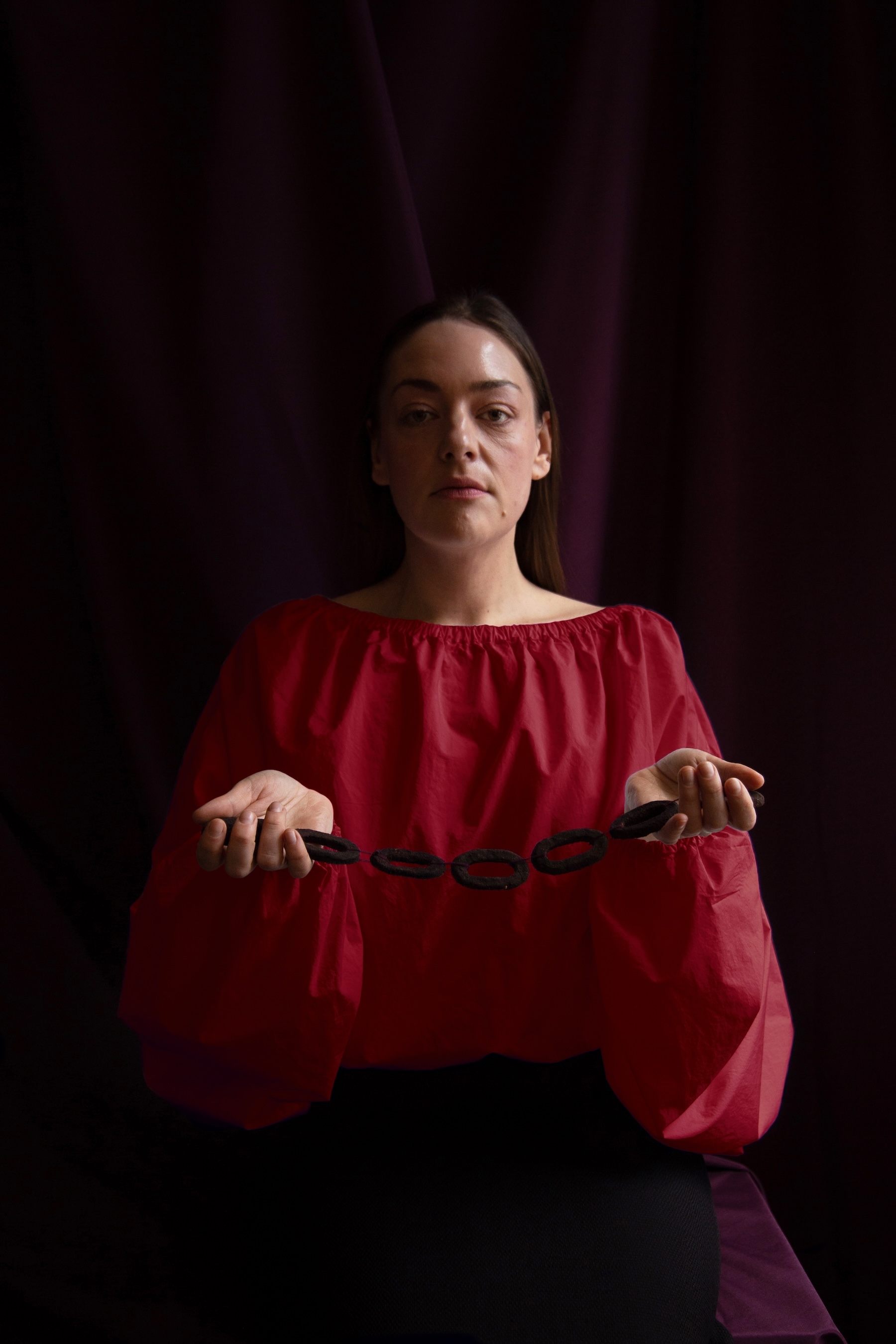
Like Regret, a sense of materiality is integral to Patience and Penitentia. Inspired by the chained figure in the fresco in Galatina, Sophia has created her own penitential gown to wear throughout the performance, featuring chains crafted from rose petals which were donated by friends and family.

Sophia spent eight weeks perfecting a technique to solidify the petals, enabling her to then create her rose petal chain links.
“First I dehydrated the petals, then blitzed them into a powder like cinnamon, and then rehydrated them with water and glued and then bent them into these shapes and dehydrated them again,” she says. “I was doing another residency at the time, and I was like a mad scientist.”
Like everything in her work, the choice of material is laden with meaning.
“Sure, we’re capable of the cruelty of the silent treatment, but we’re also capable of long-term care and maintenance through the seasons,” she says.
“We expect the thorns from our gardens, but we also appreciate the blooms, as the events end and the season changes. I’m using these metaphors.”
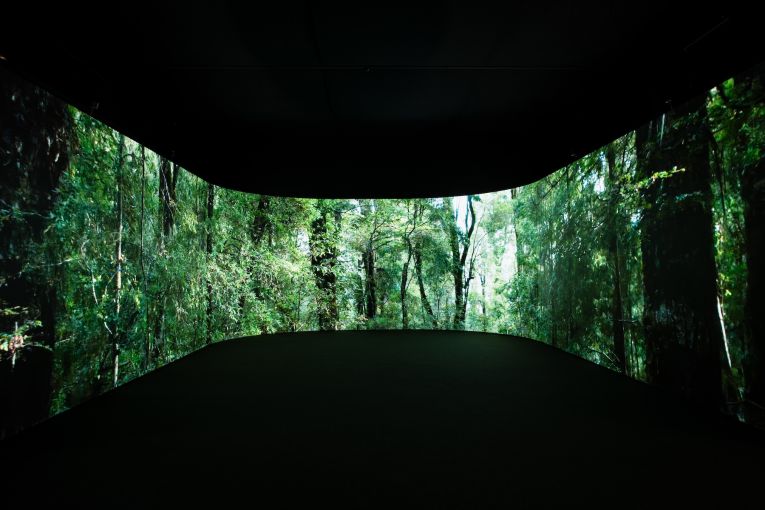
Twice a day throughout the performance, Sophia will gradually remove a section of rose petal chain which will be added to the installation within the Samstag gallery – which includes a “forest” of 2.5-metre-tall rose thorns she has dubbed A Tyranny of Small Decisions.
Subscribe for updates
“We sort of find ourselves entangled in a situation we didn’t desire or anticipate, and we think, ‘how did I get here?’, and it was the result of many, many, many, many, many decisions, and so each thorn represents decision, and they get denser and denser through the installation.”
The scale of the thorns is also intentional, inviting a quasi-religious experience akin to the one she experienced looking up at the fresco in Galatina.
“When you have something that’s quite tall, you know, you go into a forest or you go into a church and your chest opens, your eyes look up and widen,” she says. “You have a physiological experience of opening up, and that directly correlates neurologically to your mind opening up and being able to handle and consider more difficult topics, such as looking at a picture of Christ on a cross, which is actually a violent image.”
Throughout the performance, Sophia will walk around the installation seven times – counting each lap on a “little string of beads” made from the same material (“which also references the rosary … another instrument of penance,” she adds).
“After that, I’ll meet with the second performer to see if they’ll speak to me, and of course they always reject me, and then I will give that little string of beads to someone in the audience.”
This repeating cycle is backed by a score by Joseph James Francis, Sophia’s husband and regular collaborator.
“The sounds were collected through interviews I did with more than 20 Adelaide women about their experiences of the silent treatment,” Sophia says. “I have also partnered with Etikette candles who have made a place-based scent to accompany the performance – the scent is based on Adelaidean rose gardens and the domestic spaces where silence occurs.”
Sophia says she hopes her work simply presents a question to the observer: “What could I do differently?”
“If I can leave that with someone not to shy away from it, not put it under the rug,” she says.
“By turning this usually hidden tactic into a public, ritualised performance, the work invites recognition, conversation, and the possibility of breaking cycles.”
And is the artist talking to her family member again?
“Yes, albeit just,” she says. “The rebuild is slow, but possible. I think I have learned that both through the development and realisation of this work, hope seems omnipresent.”
Ida Sophia: Patience and Penitentia continues at Samstag Museum of Art until August 22 as part of SALA Festival 2026.
Want to see more stories from InDaily SA in your Google search results?
- Click here to set InDaily SA as a preferred source.
- Tick the box next to "InDaily SA". That's it.
Free to share
This article may be shared online or in print under a Creative Commons licence