‘Love governs everything’: Faith and nature shape Merric Boyd’s Fantastic Forms
Ceramics and drawings by pioneering early 20th century Australian potter Merric Boyd are an unexpected revelation in this touring exhibition from the Bundanon Collection.
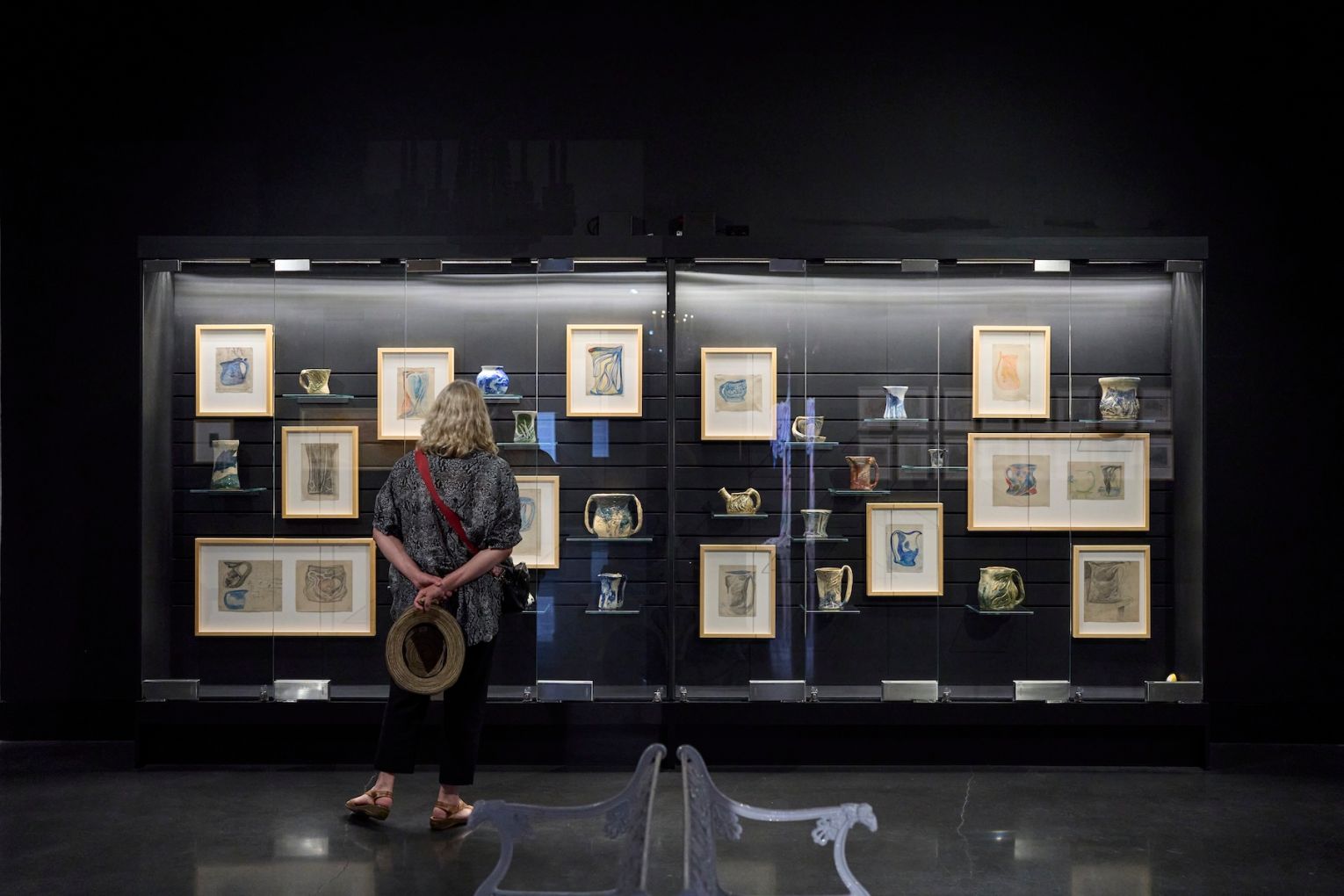
While the contribution of (William) Merric Boyd (1888-1959) to the history of Australian ceramics is widely recognised – with his work being held by State collections around the country – in Fantastic Forms we have an opportunity to view a representative grouping of his distinctive earthenware vessels in the context of the substantial body of drawings that he made late in his life. Together the ceramics and drawings provide an insight into the artist’s fusion of spiritual and artistic philosophies in his holistic vision of the continuity of art and daily life.
As the son of artists Emma Minnie and Arthur Merric Boyd, and father of one of Australia’s most acclaimed artists Arthur Boyd, Merric Boyd was at the centre of a legendary Australian artistic dynasty. He began working with clay around 1907 and in 1913 established his home and studio, Open Country, at Murrumbeena in Victoria. He lived there with his wife and collaborator, fellow artist Doris Boyd, and with an extended family of offspring and friends until his death in 1959. In the exhibition publication, essayist David Hurlston writes that their home became a hub for “vibrant social gatherings where friends and family gathered to dance, listen to music and perform; where philosophy was read along with passages from the Bible, and where humanist ideals were fostered and creative ideas encouraged”.
"[Boyd’s] Art Nouveau-influenced curvilinear designs were inspired by his conception of the divine elemental energy embodied in the natural world"
Boyd’s technique of combining wheel-turned and hand-modelled organic forms in mid-fired earthenware, was unique at the time. His Art Nouveau-influenced curvilinear designs were inspired by his conception of the divine elemental energy embodied in the natural world. In his glazes he used a natural palette of muted greens, deep blues and pale greys that now seem more contemporary than the bright colours of the Art Deco movement that prevailed throughout the 1930s and into 1940s when he was producing most of the pieces in the exhibition. Windswept trees, other natural forms and creatures became the dominant motifs in his vessels across the years until he was eventually forced to abandon ceramics due to worsening epilepsy.
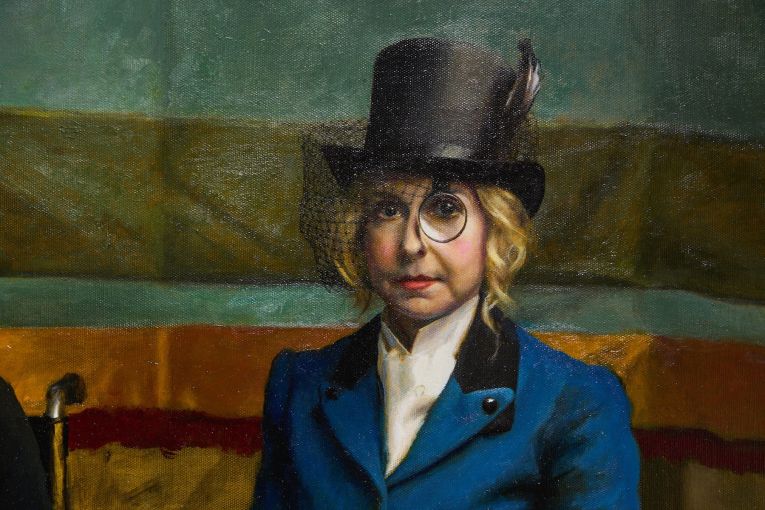
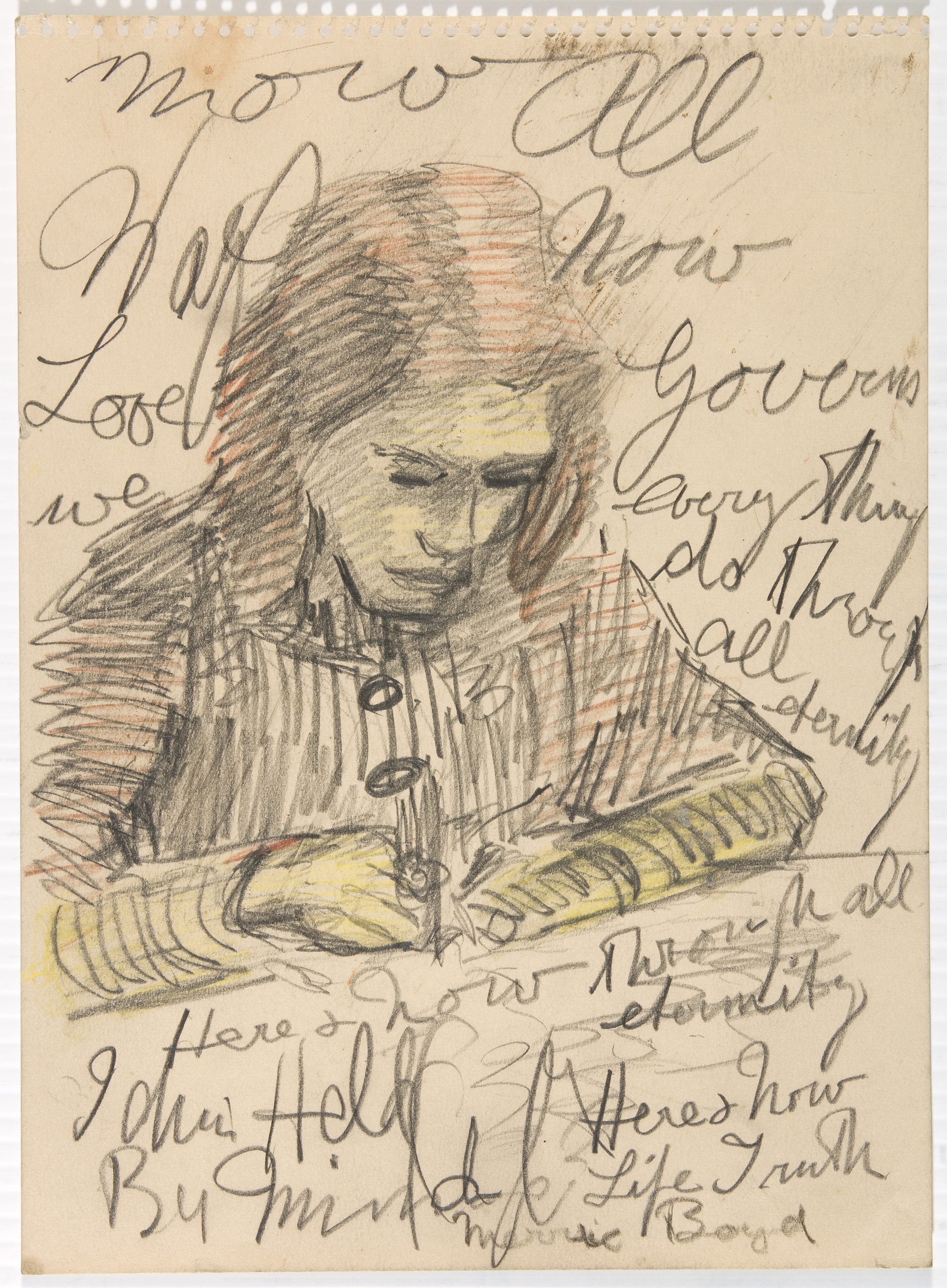
Turning to drawing in the 1940s he produced a substantial body of work inspired by the life-affirming rhythms of daily life on his property. Hurlston regards the late career drawings as an expression of Boyd’s religious faith, “suffused with a reverence for the natural world”. This faith was articulated in the artist’s occasional habit of scrawling texts across his drawings. For instance, the words “now love governs everything we do to eternity” is part of a semi-legible cursive scrawl across his untitled drawing of a seated young woman, her head is bent in concentration absorbed in a task and oblivious to the presence of the sketching artist. Boyd’s gentle humanist vision, his expression of love for an animated universe where trees and creatures are infused with lifeforce, is rare today in the context of contemporary art. It affords a refreshing time-travelling moment of immersion in this lost world of belief in the divine creation of a natural harmonious universe.
The curatorial premise of Fantastic Forms was to present Boyd’s art in ‘conversation’ with works from three disparate contemporary artists – the esteemed senior ceramicist Stephen Benwell (b. 1953, Melbourne, lives Melbourne), mid-career multimedia sculptor Nabilah Nordin (b. 1991 Singapore, lives Los Angeles) and young Bundjalung artist Rubyrose Bancroft (b. 1999 Sydney, lives Northern NSW).
In their air of quiet conviction and serious investigation of a medium, Benwell’s suite of hand formed and glazed earthenware figurines come closest to the curatorial notion of a creative conversation with his predecessor. These intimate late-career sculptures differ from his wider body of exquisitely hand-painted and sculpted vessel forms for which Benwell has been acclaimed. Each piece has evolved gradually over an extended period as Benwell has applied thick accretions of dripped and layered glaze until the underlying form seems to be dissolving and the figure is virtually submerged in a palimpsest of layered glimpses. These are solitary figures, seemingly adrift in a world without the divine presence that so nourished Boyd. Benwell’s figurines are reticent works, not easily accessible to a casual observer. The artist seems to be in conversation with himself, meditating on his relationship with his medium and with those big questions of frailty, impermanence and mortality.
Subscribe for updates
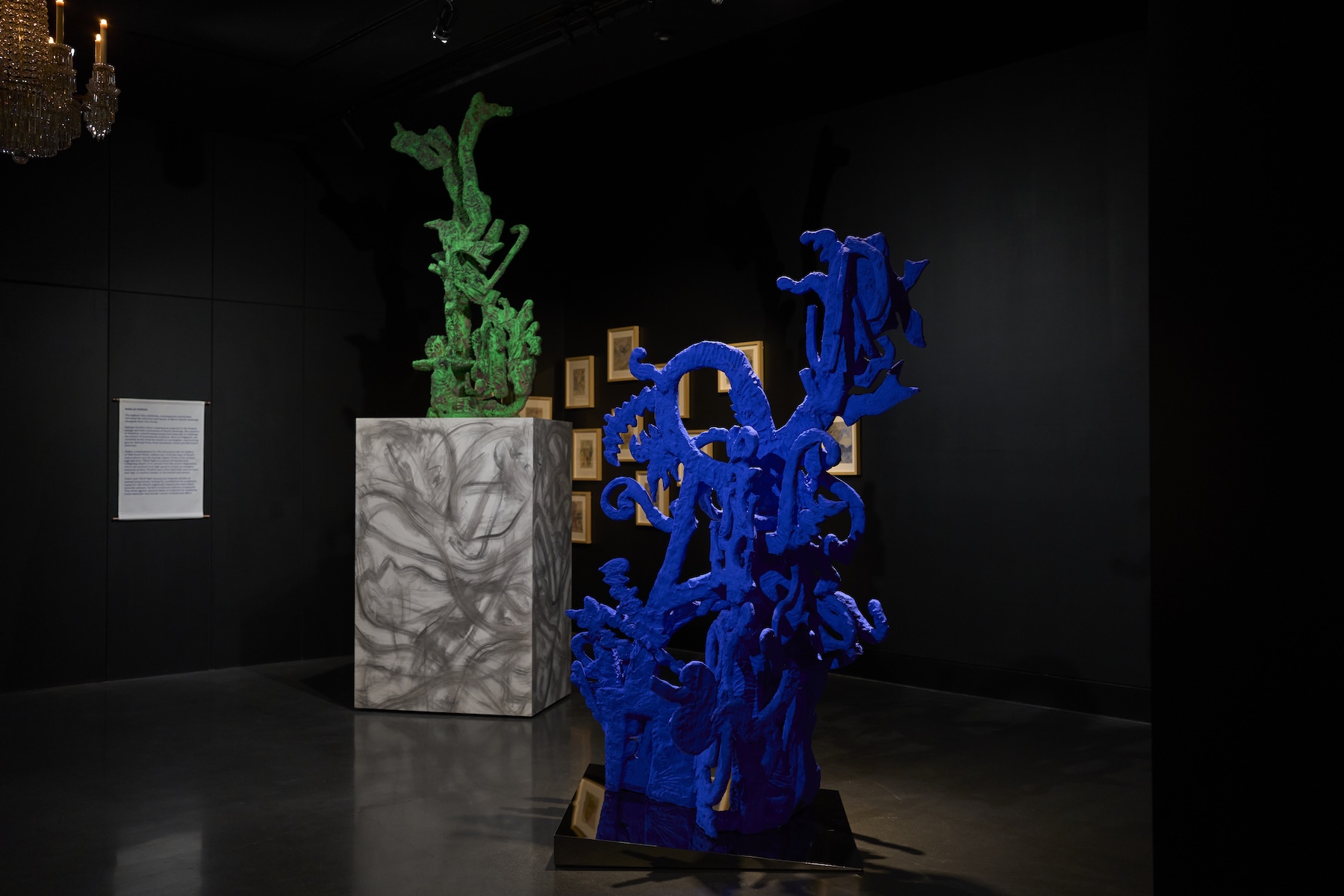
Nabilah Nordin shows no interest in reticence. Her trio of towering mixed media sculptures shout ‘Look at Me’ with a brash nonchalance. The exhibition material states these “gravity defying forms … query the history of monumental sculpture” and that they were created in direct response to Boyd’s drawings. It is a fruitless task to query such claims, other than to point out that there is complete disparity between her gigantic garishly coloured forms and Boyd’s small unpretentious drawings of things observed in his daily life.
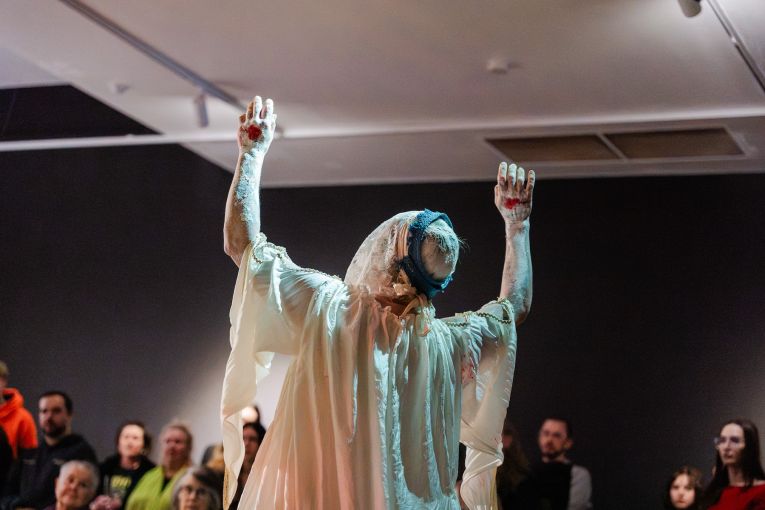
Rubyrose Bancroft’s quirky claymation videos seem equally at odds with Boyd’s body of work but are at least not in direct visual combat as is the case with Nordin. With the unchallenging appeal of Bancroft’s and Nordin’s art, the exhibition organisers appear to be targeting young adult and school age and audiences, who may not be interested in the subtleties of Boyd’s drawings and ceramics. On the other hand, for those who admire his far more artistically significant art, this populist tilt is an annoying distraction.
Fantastic Forms is on display at David Roche Gallery until May 9
Want to see more stories from InDaily SA in your Google search results?
- Click here to set InDaily SA as a preferred source.
- Tick the box next to "InDaily SA". That's it.
Free to share
This article may be shared online or in print under a Creative Commons licence