It’s blooming marvellous: The power and passion of Wyman
Marking 30 years since artist Jemima Wyman began her undergraduate studies at QUT, Deep Surface is the first career survey of this Los Angeles-based Australian artist and Palawa woman.
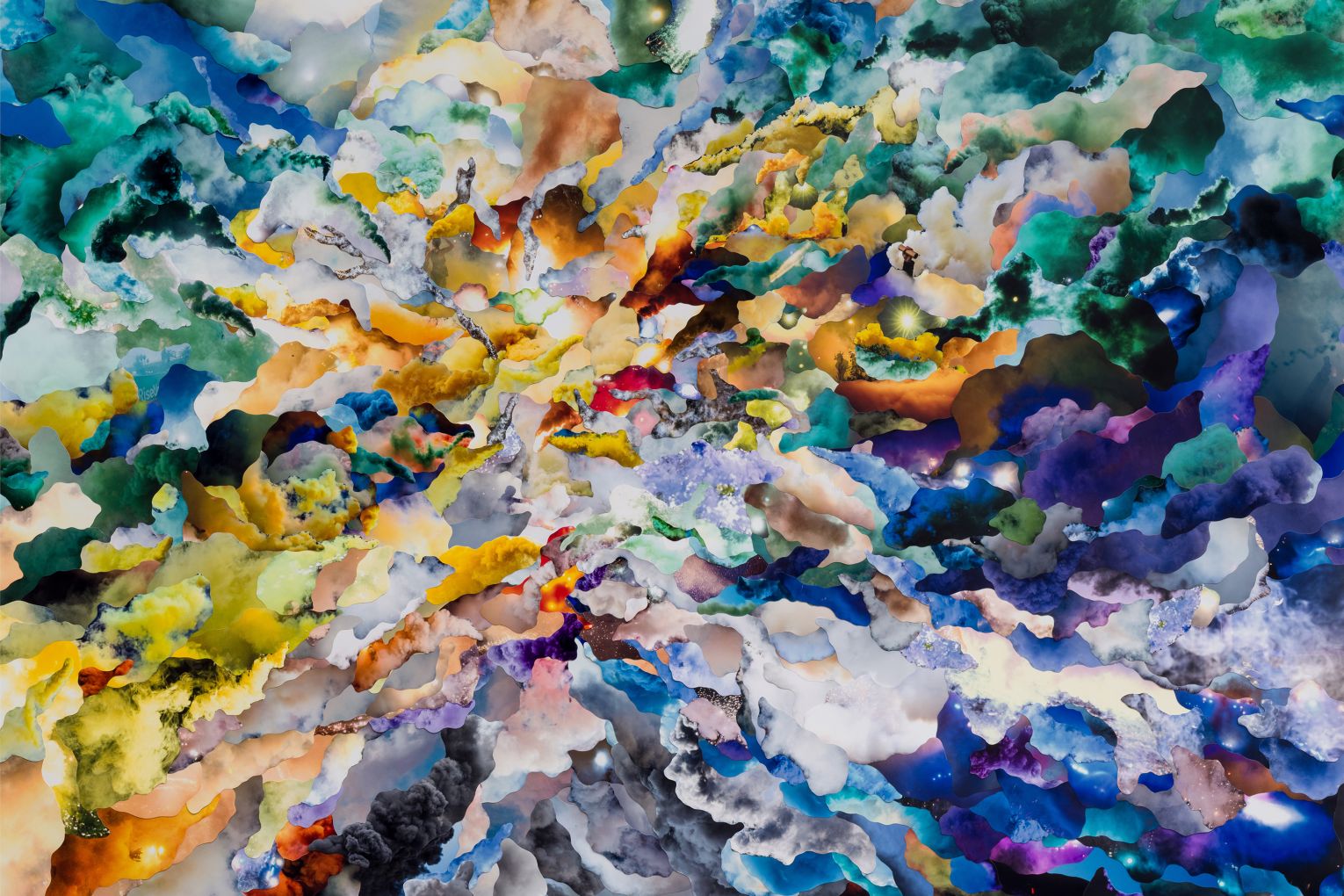
What is striking about Jemima Wyman’s survey exhibition at QUT Art Museum is the intense visual power that emerges in layers, built from detailed and often collaged photographic images that bloom across walls, rooms and even curtains.
Many of these images record protests from all over the world, drawn together in conflagrations that become organic, mandala-like fractals. Perception and the way we understand what we see is key to Wyman’s work.
Her performance and video often involve other artists, and QUT Art Museum director Vanessa van Ooyen suggests (in the accompanying book) that the essence of Wyman’s practice is that: “art exists not in isolation but through connection … in a world saturated with images, Wyman reminds us that we underestimate what we see. Her work trains us to look again, look harder, and to understand that perception is political.”
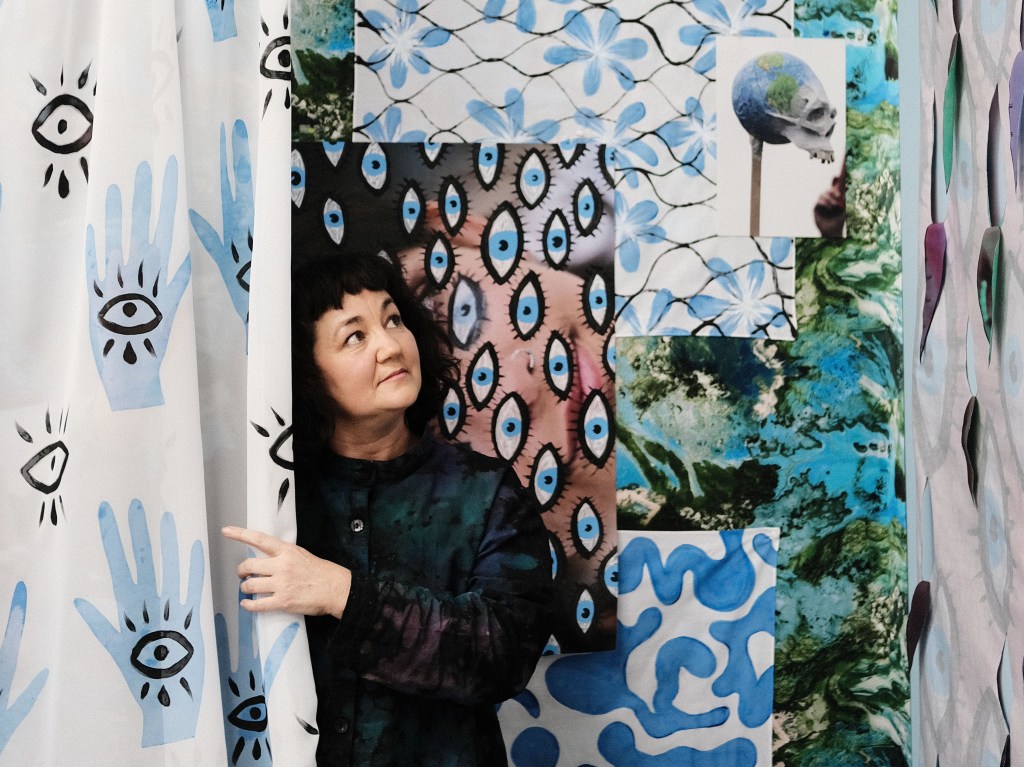
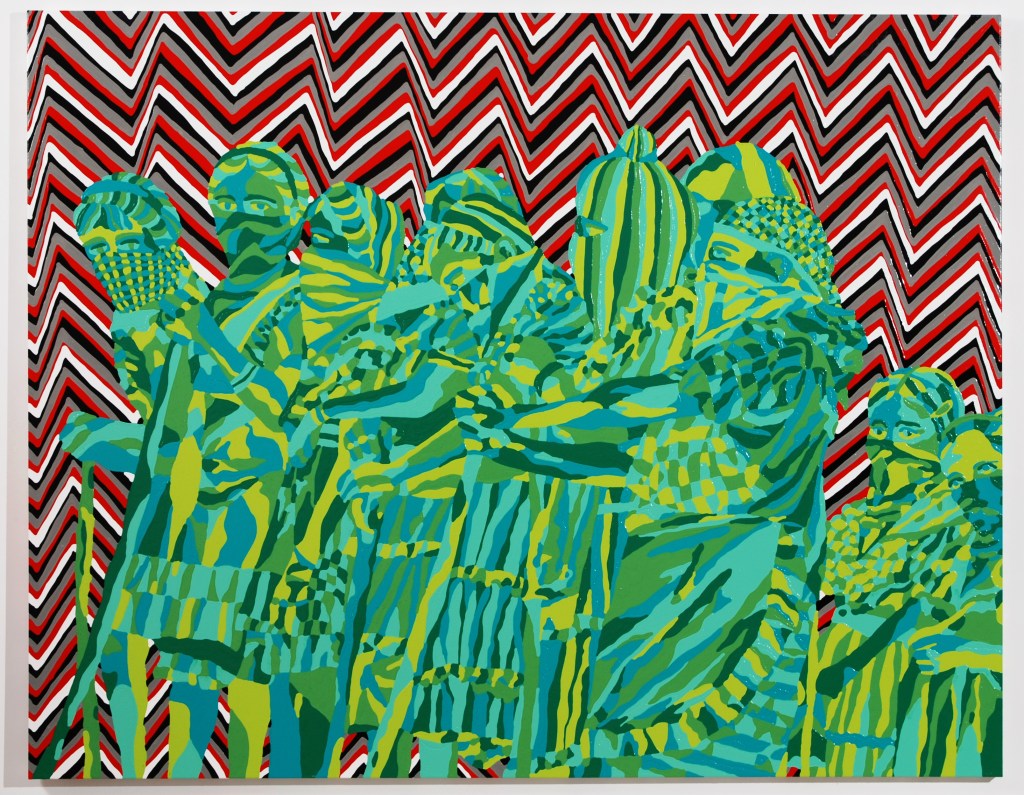
Wyman, a Palawa woman born in 1977, began working with photographs of masked protesters in 2007. In recent years, with increasing division and marginalisation, taking to the streets has become more evident across the globe. This makes her work feel prescient, as though she is finely tuned into global unrest.
“Art not only captures a point in time in terms of the psychology of that moment, but also the important technologies or materials,” Wyman says.
“It is a real time capsule; I feel like the work I’m doing is important in terms of archiving and materially relating to current affairs and what’s going on. It’s my way of sensing and analysing the world. Even though it’s distressing content, it’s content that I’d be encountering anyway, and so I feel like my working with that information helps me process it in a different way.”
You might like
Wyman’s exhibition reopens QUT Art Museum’s program after a two-year intercession (caused by a 2024 funding pause and water incursion in the building in 2025).
This exhibition transforms both wings of the space and, after the Brisbane season (until May 31) will tour venues in Adelaide, Sydney and Perth.
Accompanied by a beautifully considered 208-page monograph, Wyman’s exhibition re-establishes the art museum on the cultural map and presents a sustained and engaging exploration of this internationally successful artist.
For Wyman, the exhibition is a homecoming to the place she began her undergraduate studies 30 years ago, and dives into an art practice that has taken her from a north Queensland childhood to life in Los Angeles.
The survey exhibition re-affirms a vision that has segued, developed and deepened over decades.
Its title, Deep Surface, speaks to Wyman’s interest in pattern that began as a child (her parents are creative, and she remembers her mother decoupaging the kitchen), interrogating meaning in ways both ideological and conceptual.
Curator Katherine Dionysus says Wyman has used Deep Surface to describe her artistic approach, digging beneath the surface, uncovering the layers and tracing the roots to arrive at a greater understanding of the practice.
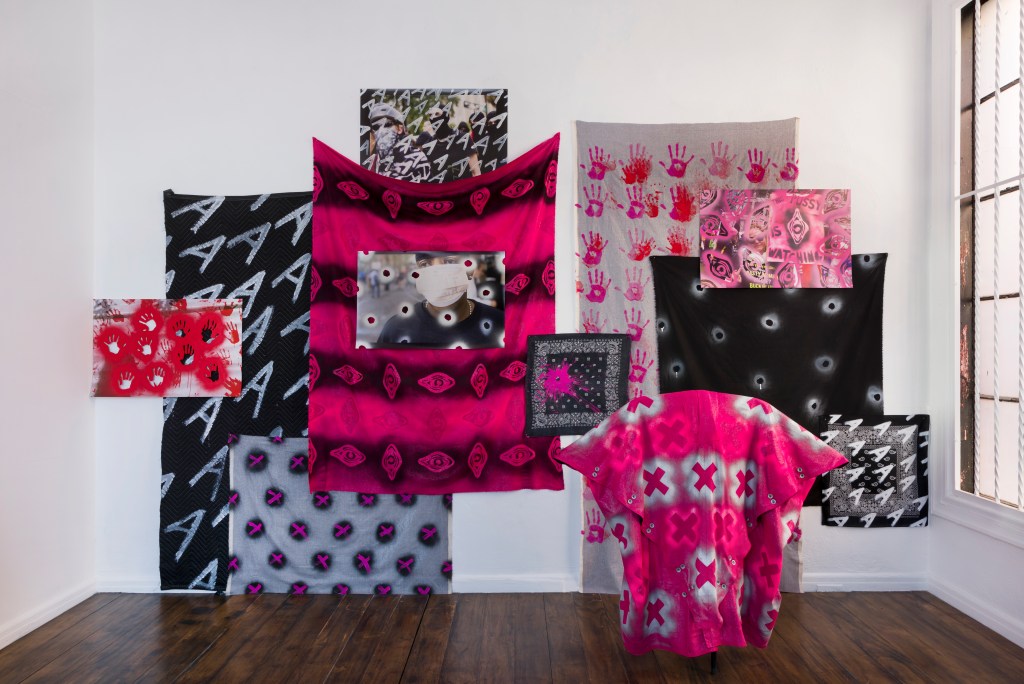
Wyman’s breadth of interests is traced in this survey, from early performances in which she used her physical body to video, textiles, drawing, painting, sculpture and collage. Her use of media reflects her evolving ideas and the shifting tenor of the times.
Close to the exhibition entry are early diagrammatical studies of a double-sided eye and densely written and illustrated artist journals.
Subscribe for updates
At the beginning of her studies, Wyman “made up my own science … to make work that was thoughtful and conceptual, but related to the everyday, and the phenomena and physicality of the everyday. So even though I do now have a grasp on art history and contemporary art, I’m often dealing with the experience of seeing and being in the world in relation to the everyday”.
Wyman went to Los Angeles initially for an Australia Council residency and returned to study in 2005-2007. Her outlook became more global, stimulating further exploration of fabric, masking and the politics inherent in textiles.
At the same time she shifted her focus from performance (in 2007) to working in paint, with fabric and collage, considering “the collective and communal body”. Camouflage is central to the way she has understood and depicted protest – she observed that the masks that protesters may wear to conceal their identities offer parallel protection to the way herd animals also use the group as a shield.
Wyman’s first body of work to explore this was Combat drag (2008) where colour and pattern disrupt the eye and confuse the visible depths. It was a response to the Zapasistas (the social liberation army of Indigenous people in Mexico), who use masks and patterned clothing to create a collective from individuals.
The exhibition traces early feminist videos, works that explore optical perception, colour and the developing use of camouflage. In the second exhibition wing are costumes, video and works featuring the Guy Fawkes masks adopted broadly by protesters, particularly since 2012 but with associations dating to 1605.
“All of those things are really about valuing a surface and valuing looking, but it’s a really complex surface and a dynamic surface that holds a lot of information and relates to all these different political histories too,” explains Wyman.
The final room is dark-painted and moody, and profiles powerfully resolved works comprised of collaged imagery of smoke (grenades, tear gas, flares and fireworks) also captured from images of protests. These works bloom, their form and colour removing context and, for the artist, “dismantling hierarchies”, with curtains both dividing and amplifying the images on either side.
This exhibition covers a lot of conceptual ground, with Wyman’s changing materials signalling the evolution of her interests. She confesses that understanding the world through materials relates directly to her early life, knowing that “you could live a very simple everyday life, but magic could happen in that space”.
Within Deep Surface, that magic emerges for us all, with the exciting prospect of so much more to come from this artist.
Jemima Wyman: Deep Surface, QUT Art Museum, Brisbane, February 16 to May 31.
artmuseum.qut.edu.au/whats-on/2026/exhibitions/jemima-wyman-deep-surface
Jemima Wyman: Deep Surface, Samstag Museum of Art, Adelaide, June 26 to September 18.
Want to see more stories from InDaily SA in your Google search results?
- Click here to set InDaily SA as a preferred source.
- Tick the box next to "InDaily SA". That's it.
Free to share
This article may be shared online or in print under a Creative Commons licence