‘Adelaide f***ed it up badly’: Kosky does Kafka for 2027 Adelaide Festival return
Adelaide Festival’s youngest ever artistic director and self-described ‘Kafka groupie’ is back to present one of the 2027 event’s first major announcements: a Yiddish vaudeville-inspired take on Franz Kafka’s The Trial.
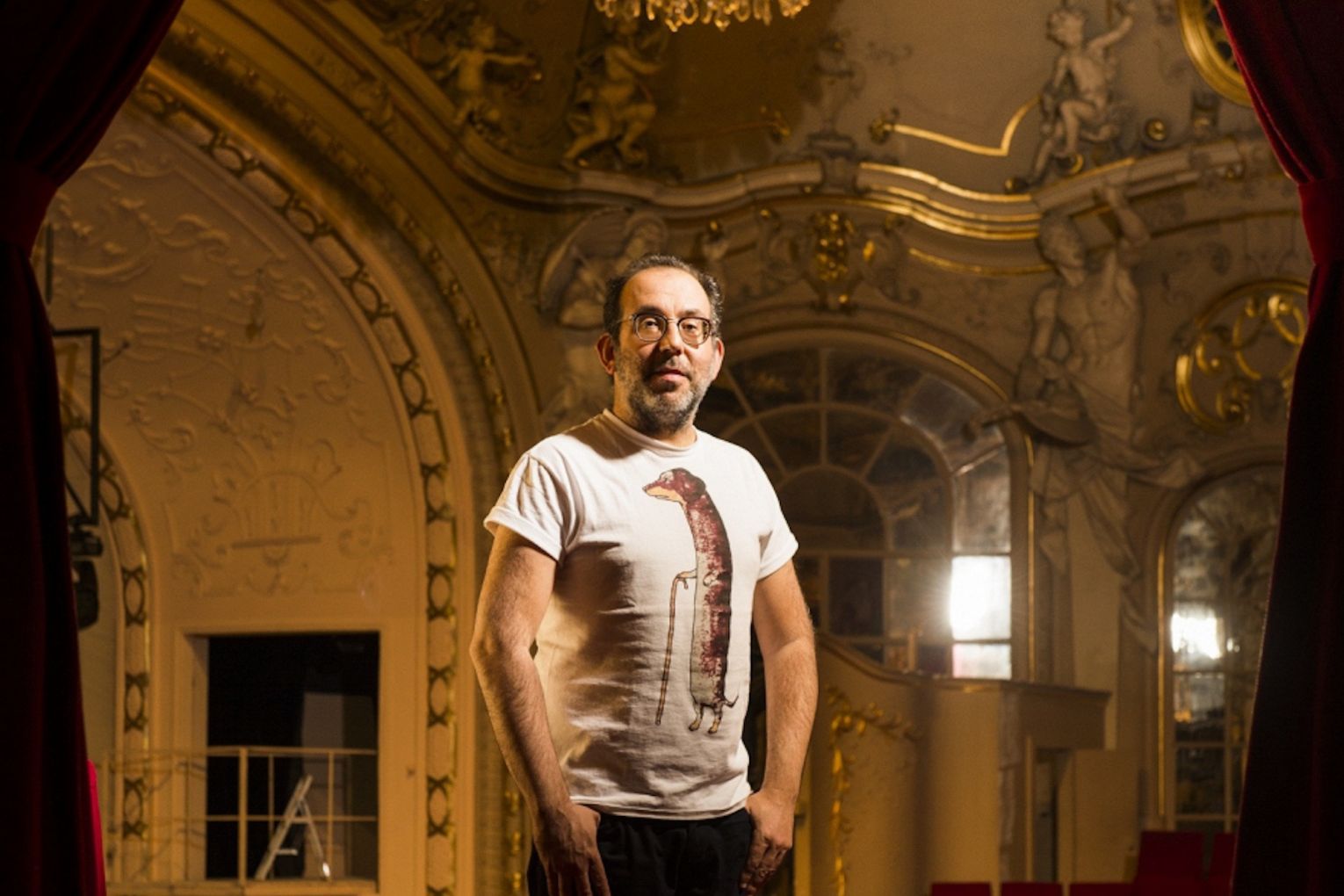
Thirty years after he delivered the 1996 Adelaide Festival, Barrie Kosky still looks back fondly on his time as its youngest ever artistic director.
“I was highly precocious and provocative – deliberately provocative, because I was so angry at Australian passivity,” the now-59-year-old tells InReview from his longtime home of Berlin. “I was, at that time, one of the only people that would throw bombs just to get dialogue happening with people – and I enjoyed it!”
Kosky will have just turned 60 when the curtain opens on his next contribution to the festival, and a decade after making his festival comeback with Handel’s Saul in 2017 – since followed by The Magic Flute in 2019, The Golden Cockerel in 2022, and The Threepenny Opera in 2024 – the onetime provocateur is now one of its most reliable staples.
Beyond a love of pot-stirring, another passion of Kosky’s then and now is the work of Franz Kafka, whose place atop his list of favourite writers hasn’t changed since a young Barrie picked up The Metamorphosis in high school.
“I was a Kafka groupie, and I never grew out of it,” Kosky explains.
His teenage brush with the “visceral” novella led Kosky to voraciously read everything he could find, and later, as a university student, he made a pilgrimage to the writer’s birthplace in Prague.
“He is a writer that never stops giving – he’s the Magic Pudding of European writers for me.”
After directing a string of Kafka-inspired works in Vienna in the early 2000s, Kosky left his favourite author on the shelf for the best part of 20 years, waiting for the right moment to tackle his 1915 novel The Trial, left unfinished when Kafka died of tuberculosis in 1924.
You might like

Posthumously published the following year, Kosky says The Trial’s post-war embrace as a prescient indictment of 20th century authoritarianism – and the subject of numerous screen and stage adaptations by the likes of Orson Welles, Harold Pinter and Phillip Glass – often misses something integral about Kafka and his work.
“Whenever you’re confronted with a great masterpiece, we get a bit blasé … it’s a great famous book, and we forget a lot of the time why it’s a great famous book,” he explains.
Kafka, Kosky argues, never intended to be a prophet, or a universal metaphor.
Rather, he says The Trial is grounded in the specificity of Kafka’s experience as a European Jew, written into a long tradition of Jewish parables going back centuries.
“The Trial is for me not a trial of Soviet authoritarianism, or you know, Terry Gilliam’s Brazil, or whatever other things have been influenced by The Trial. It’s his relationship to God; he’s been put on trial by the Old Testament God, and that was the starting point for me.”
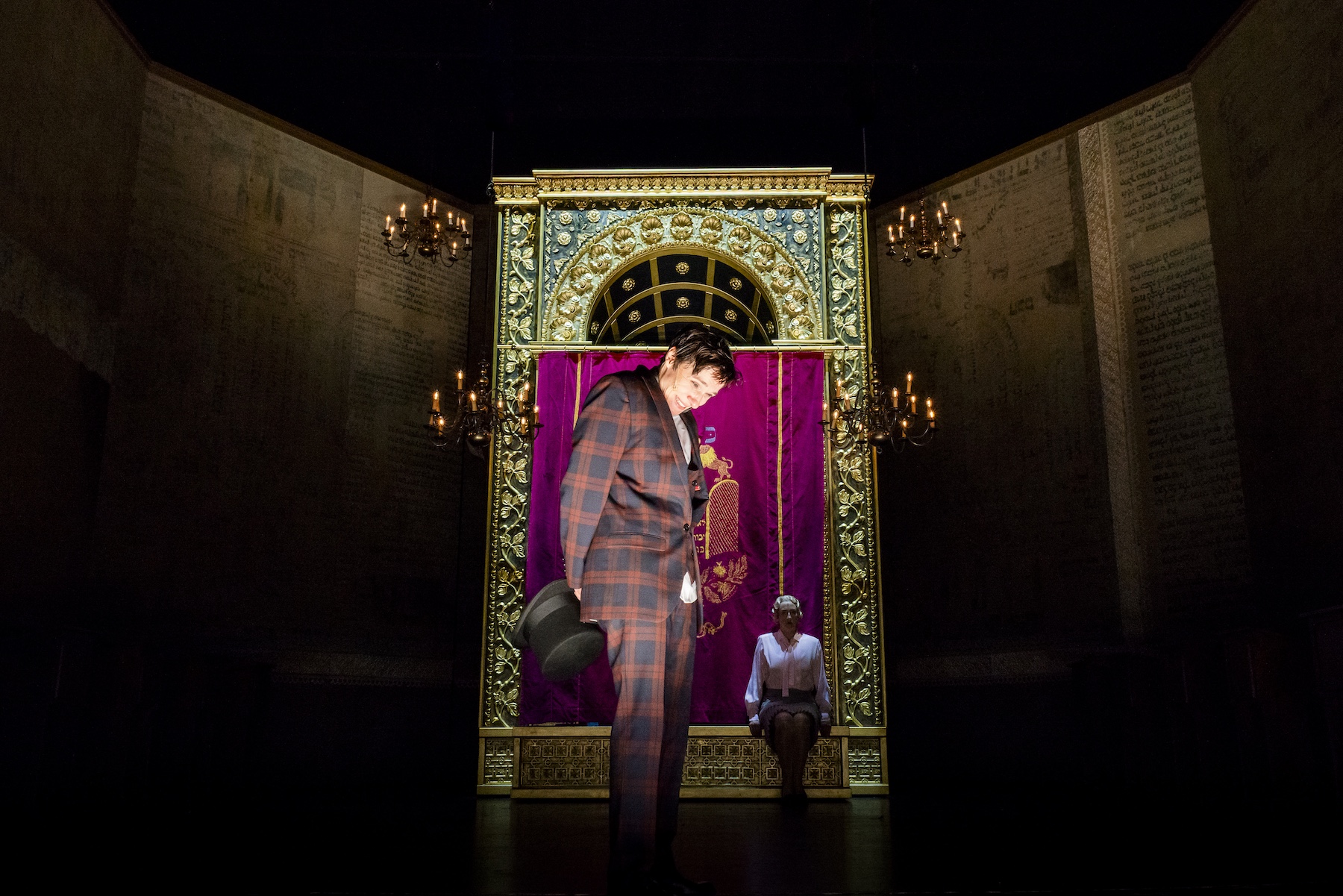
In 2025 Kosky and the Berliner Ensemble premiered K, a musical adaptation staged in Yiddish, Hebrew and German that foregrounds these themes as well one of Kafka’s other often-overlooked influences.
“He fell in love with Yiddish theatre,” Kosky says. “There was a traveling theatre troupe; this sort of vaudeville, shabby group of 25 actors and musicians who arrived in Prague from Eastern Europe and set up shop in the back of a cafe in Vienna.”
Kosky says Kafka was captivated by the troupe’s mix of biblical stories, song-and-dance routines and comedy, cobbled together with “cheap scenery and cheap costumes”.
“He was obsessed with it – it was an epiphany for him.”
It’s in this spirit that K re-centres The Trial as “a modern-day biblical parable influenced by cheap tawdry Yiddish vaudeville”.
“It’s an attempt to shift the focus of Kafka’s supposed universalism, which is great, to say, ‘Well, actually, it’s universalism shown through the prism of his Judaism’.”
Subscribe for updates
Yiddish, Kosky says, is a “Frankenstein’s monster” of a language that helped Kafka reconcile his own identity as an assimilated, German-speaking Jew.
“The language itself is a metaphor for European Jewish exile, because the language is essentially German combined with bits of Russian, bits of Polish, bits of Lithuanian, bits of Hebrew. Basically, a language that evolved through exile and moving from country to country – it’s the soul of Judaism.”
Kosky says reframing not only The Trial, but broader themes of Jewish identity, brings many challenges.
“There’s only 16 million of us in the world, and at the moment, everyone is obsessed with Jews – and not in a good way. Living in a German-speaking world for 26 years now, I’ve had to really fight the clichés and the stereotypes, and the archetypes within German culture, and I can see that extending across the world.
“Most people in the world have never met a Jew, so the Jew has always become something which is divorced from reality, divorced from the actual individual. It becomes something which is not human – it’s a force, therein lies the power of anti-Semitism.”
Kosky implores audiences not to see this production, and its perspective on Jewish experience, “through the telescope of either the Holocaust, or the Israeli army, and current Middle East politics – because this has nothing to do with it.”
“I’ve been very clear in my work, in most of my work in Europe, to say, ‘You know what? This show has zero to do with the Holocaust, and it has zero to do with Israeli politics.”
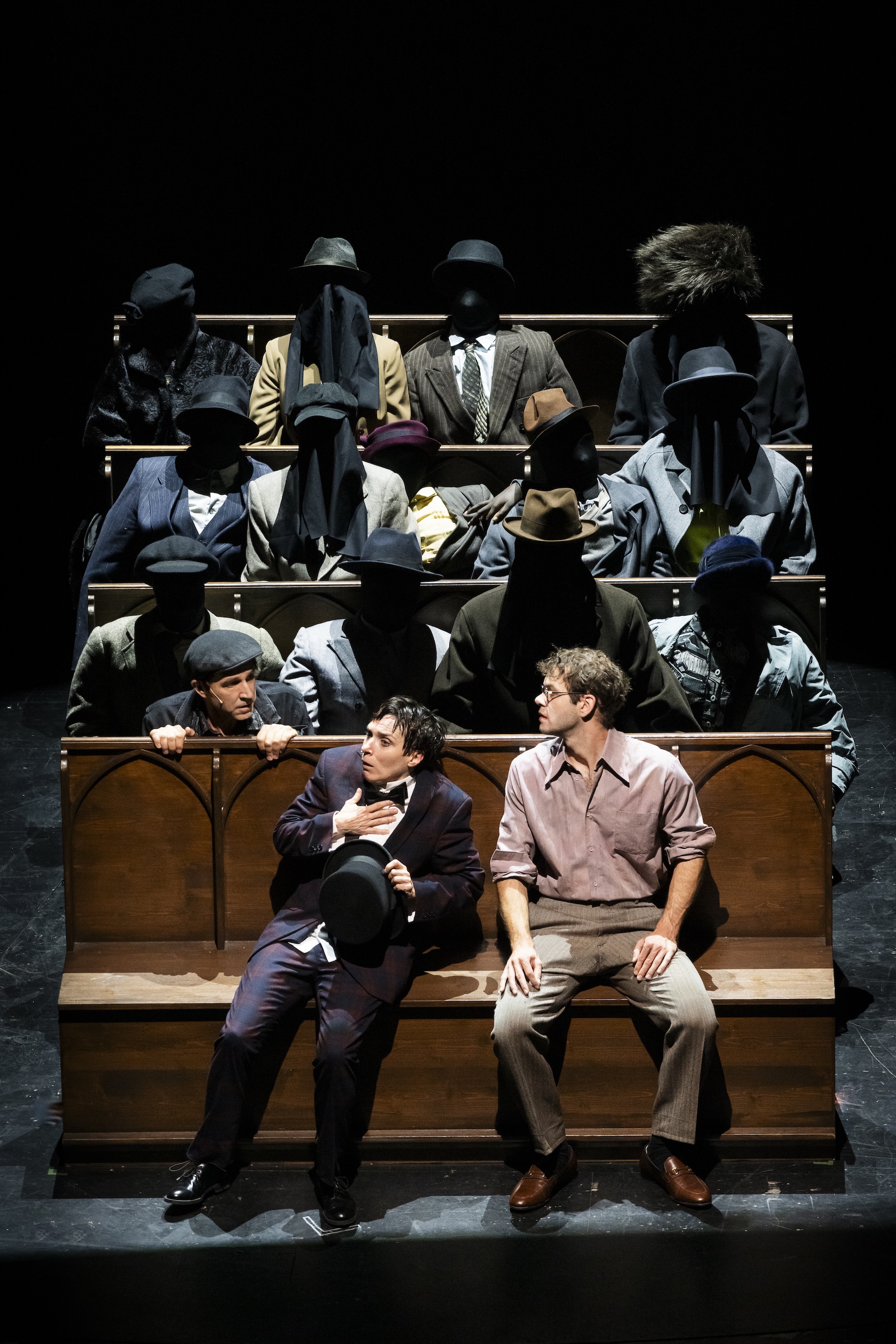
It’s a context that’s unlikely to dissipate by the time K opens at next year’s Adelaide Festival – and Kosky is conscious that K arrives after a bruising year for his former employer.
Kosky declined to join many past artistic directors in signing an open letter criticising the then-Festival board’s move to remove Palestinian Australian author Randa Abdel-Fattah from the program, and says he wrote his own letter to Premier Peter Malinauskas at the time.
“I think the whole thing was an absolute disgrace, you know, on every level – no one came out of it well,” he reflects.
“It exemplified an absolute fundamental mistake. That if an arts festival and a literary festival cannot be a forum for complex, competing ideas, in which you may not agree, but you have to listen and discuss and be part of a democratic dialogue about difficult issues… if a literary festival and arts festival is not the place for that in a society, we’re well and truly fucked. Because there is no other place for that.
“If the festival is not that, then yeah, we’re fucked – and I think that Adelaide fucked it up badly.”
Kosky’s affection for the festival – which he says remains a “seminal” moment for his career – carries a bittersweet edge, not only for what it was, but the possibility it represented.
“It was the last big Adelaide Festival,” he recalls of the “huge” 1996 program. “The festival then starts to get downsized, and got small and smaller and smaller – and then became annual, which was the biggest mistake of all time, don’t start me.
“During the festival, there was a slight possibility for me that Australia was a great cultural place,” he reflects. “Once the festival finished, I realised it wasn’t.”
K will be presented at the Festival Theatre from March 4 – 7 as part of Adelaide Festival 2027.
Tickets for K, and Béla Bartók’s Bluebeard’s Castle, directed by Romeo Castellucci, go on sale Wednesday August 26.
Want to see more stories from InDaily SA in your Google search results?
- Click here to set InDaily SA as a preferred source.
- Tick the box next to "InDaily SA". That's it.
Free to share
This article may be shared online or in print under a Creative Commons licence